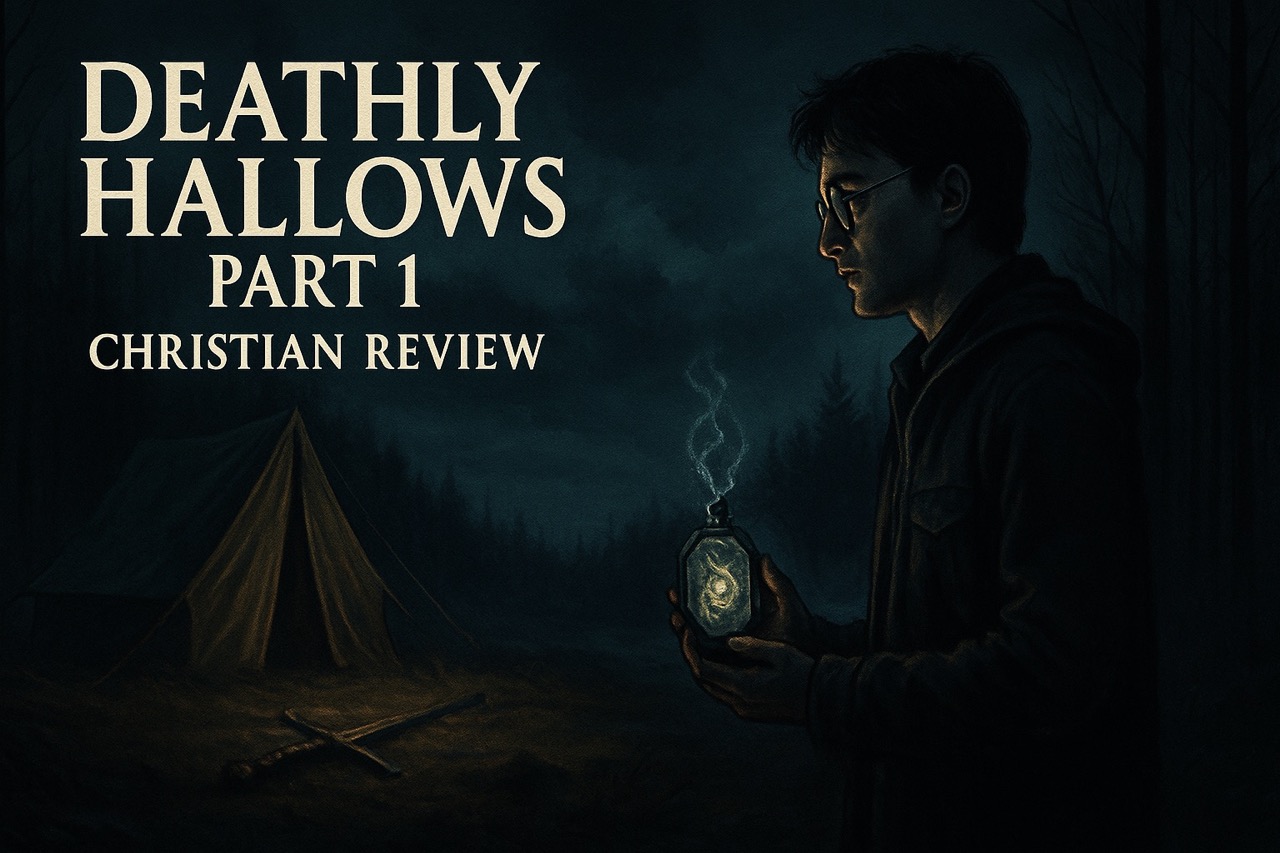

This Deathly Hallows Part 1 Christian review explores one of the darkest and most introspective chapters in the Harry Potter saga. The safety of Hogwarts is gone. What remains is a long wilderness journey full of temptation, silence, fractured relationships, and unseen enemies. Through a Christian lens, this story becomes a parable of spiritual isolation, trust under pressure, and the soul’s desperate clinging to light when everything seems lost.
🧒⚠️ Parental Review: Is Deathly Hallows Part 1 Age-Appropriate?
Suggested Viewing Age: ★★★★☆ (13+ with strong parental guidance)
Parental Discernment Level: Very High – includes intense themes of fear, spiritual oppression, death, and despair
This is not a magical adventure for children. Part 1 strips away safety and brings Harry, Ron, and Hermione face-to-face with loss, spiritual temptation, and moral exhaustion.
⚠️ Content Warnings for Christian Families:
- Spiritual oppression and despair – the Horcrux amplifies fear, anger, and hopelessness
- Dark magic and occult imagery – the Deathly Hallows legend includes necromancy and ghostly summoning
- Violence and torture – Bellatrix tortures Hermione; characters are hunted and killed
- Nudity illusion – a vision caused by the Horcrux shows Harry and Hermione kissing unclothed (stylized, but inappropriate)
- Hopelessness and isolation – repeated scenes show despair, division, and loss of direction
🗣️ Family Discussion Topics:
- What does the Horcrux symbolize spiritually?
- Why does isolation lead to temptation?
- How do Ron and Harry handle trust being broken?
- What does it mean to wait on God in silence and suffering?
- What are the biblical parallels to wandering in the wilderness?
🧠 What This Deathly Hallows Part 1 Biblical Review Reveals on Rewatch
At first glance, Part 1 can feel slow, grim, and filled with hopeless wandering. But through the lens of Scripture, it becomes something deeper: a mirror of spiritual wilderness. Like Israel in the desert, or Jesus fasting for 40 days, this film shows what happens when we’re stripped of comfort, clarity, and certainty. The heart is revealed in isolation.
✨ The Horcrux as a Symbol of Soul Corruption
The locket they wear becomes a daily spiritual battle. It whispers lies, feeds resentment, and exploits their fear. Like sin, it cannot be controlled—only destroyed.
“Throw off everything that hinders and the sin that so easily entangles…” – Hebrews 12:1
Ron’s eventual destruction of the Horcrux is a moment of spiritual warfare: a refusal to believe lies about his worth, his future, and his friends. His sword-wielding act echoes the Word of God cutting through deception (Ephesians 6:17).
✨ The Tent as Wilderness Testing
Their extended time hiding in a tent mirrors biblical wilderness journeys. Like Elijah under the broom tree or David in the caves, the trio faces doubt, silence from above, and the slow erosion of hope.
God often reveals Himself not through immediate deliverance, but through endurance:
“Even youths grow tired and weary… but those who hope in the Lord will renew their strength.” – Isaiah 40:30–31
✨ Ron’s Departure Mirrors Peter’s Denial
When Ron leaves, it feels like betrayal. But it’s more complex. He’s overwhelmed, spiritually worn down, and poisoned by the Horcrux’s lies. Like Peter denying Jesus, Ron fails—but it’s not final. His return is met not with judgment, but grace.
“The spirit is willing, but the flesh is weak.” – Matthew 26:41
✝️ Biblical Truths in Deathly Hallows Part 1
🌌 Spiritual Isolation Reveals the Heart
Much of Part 1 is spent away from the larger wizarding world. The trio is alone, without mentors, structure, or visible hope. It reflects the spiritual principle that trials test what’s truly inside us.
“These have come so that the proven genuineness of your faith… may result in praise, glory and honor when Jesus Christ is revealed.” – 1 Peter 1:7
🛡️ Armor of God Is Essential in Dark Days
From the radio broadcasts to the protective enchantments around their tent, every moment shows the need for spiritual vigilance. The Death Eaters may be fictional, but their oppressive presence mirrors real spiritual warfare.
“Put on the full armor of God, so that you can take your stand against the devil’s schemes.” – Ephesians 6:11
✨ Grace Is Still Greater Than Failure
Despite doubt, anger, and betrayal, grace remains. Harry forgives. Ron returns. Hermione endures. In the midst of the breakdown, we see glimpses of the gospel:
“But where sin increased, grace abounded all the more…” – Romans 5:20
The mercy extended between friends becomes a shadow of the mercy extended by God.
⚠️ Where Deathly Hallows Part 1 Clashes with Scripture
☠️ The Deathly Hallows Myth Echoes Occult Lore
The legend of the three brothers contains themes of necromancy, invincibility, and bargaining with Death itself. While poetic, it parallels occult concepts Scripture warns against:
“Let no one be found among you… who practices divination or sorcery… or who consults the dead.” – Deuteronomy 18:10–11
🔪 Vengeance and Violence Remain Justified
Even in desperation, the story frames some violence as necessary or redemptive. But Jesus taught a radical standard:
“Love your enemies and pray for those who persecute you…” – Matthew 5:44
💥 Despair Without Prayer
Perhaps the most haunting absence in Part 1 is hope. The characters fight and run, but there is no prayer, no divine cry, no reaching upward. The silence is deafening.
“Call to Me and I will answer you…” – Jeremiah 33:3
💔 Final Reflection – A Deathly Hallows Part 1 Biblical Lens
This isn’t a story of magic—it’s a story of perseverance. Deathly Hallows Part 1 shows us what it means to carry a burden you didn’t choose, to walk a road without clear light, and to keep going when your heart is breaking. It’s a spiritual wilderness. And for believers, it mirrors seasons when God seems silent, when faith is tested, and when the only way forward is to keep standing.
But grace whispers even in silence. The Horcrux is shattered. The friend returns. The light endures.
That’s what makes Part 1 powerful through a biblical lens: not triumph, but trust. Not magic, but mercy. Not escape, but endurance.
And in the end, it’s not the strongest spell that saves them. It’s the slow, relentless choice to love in the dark.
🔗 Related Reading on Paranoid Prophet
🧙♂️ Other Harry Potter Biblical Reviews
- Half-Blood Prince – A Christian Lens on Legacy and Temptation
- Order of the Phoenix – A Biblical Review
- Goblet of Fire – A Biblical Review
- Prisoner of Azkaban – A Biblical Review
- Chamber of Secrets – A Biblical Review
- Sorcerer’s Stone – Faith and Foundations
- Cedric Diggory – A Reflection on Honor and Sacrifice
- Mad-Eye Moody – A Christian Look at Vigilance
- Neville Longbottom – Courage Born of Calling
💔 Themes of Isolation, Failure, and Redemption
- Peter’s Martyrdom – From Denial to Devotion
- Proverbs 24:16 – The Righteous Fall and Rise
- Proverbs 4:18 – Light in the Darkness
- Proverbs 3:5–6 – Trusting God When the Path Is Hidden
🔗 Related External Reading
🕯︎ Christian Film & Faith-Based Perspectives
- Harry Potter and the Deathly Hallows: Part 1 – ChristianAnswers.net review – Highlights the emotional darkness contrasting with loyalty and hope in friendship
- Plugged In by Focus on the Family – Notes mature themes, moral contrasts of light vs. dark, and cautions for younger teens
- Movieguide review – Appreciates redemptive moments and excitement, while critiquing reliance on magical power
✝️ Christian Symbolism & Theological Analysis
- Christian Imagery in Harry Potter and the Deathly Hallows Part One – Explores visual and narrative motifs like resurrection, angels, and references to God
- HogwartsProfessor.com – Christian Ending Discussion – Discusses sacrificial themes and resurrection imagery in key scenes
🌎 Broader Religious Context & Cultural Dialog
- Religious Debates over the Harry Potter series – Wikipedia – Summarizes global religious responses and how Christian themes have been highlighted or contested
🙋♂️ FAQ – Deathly Hallows Part 1 Christian Review
🎞️ Movie & Message Clarity
Q: What is the Christian meaning behind Deathly Hallows Part 1?
A: Spiritually, it reflects isolation, inner warfare, and the testing of faith during wilderness seasons—similar to the trials of Job or the desert temptation of Jesus.
Q: Is there a biblical message in the Horcrux scenes?
A: Yes. The Horcrux symbolizes hidden sin and spiritual oppression, whispering lies that fracture relationships and identity—mirroring James 1:14-15.
Q: Is Deathly Hallows Part 1 too dark for Christian families?
A: While artistically powerful, it includes despair, dark magic, and stylized nudity. It’s best for mature teens with spiritual discussion.
Q: How does Ron’s departure mirror Christian failure and forgiveness?
A: Ron’s exit reflects human weakness under pressure, like Peter’s denial. His return is a picture of grace and restoration.
Q: What does the tent symbolize spiritually in Deathly Hallows?
A: The tent becomes a wilderness—a biblical space of testing, reflection, and reliance on unseen hope.
✝️ Theology & Allegory
Q: Are there Christian allegories in Deathly Hallows Part 1?
A: Yes. Themes of sacrificial friendship, spiritual testing, hidden evil, and redemptive grace echo many biblical truths.
Q: Is Harry a Christ figure in Part 1?
A: Not directly in Part 1. He’s more like a prophet or psalmist—burdened, isolated, misunderstood, and walking a painful path toward sacrifice.
Q: Does the Horcrux represent sin or demonic oppression?
A: Symbolically, it represents both: sin clinging to the soul, and external voices accusing and dividing—like demonic lies in spiritual warfare.
Q: What’s the biblical parallel to the Deathly Hallows legend?
A: It parallels occult myths and forbidden power. Christians are warned not to seek control over death, as in Deuteronomy 18.
Q: How does this movie reflect the Book of Job or Psalms?
A: Like Job, the characters suffer without clear answers. Like David in the Psalms, they wrestle with despair and cry out in silence.
👪 Parental & Viewer Guidance
Q: What age is appropriate for Deathly Hallows Part 1 from a Christian perspective?
A: Ages 13+ with strong parental guidance and spiritual context. The tone is intense, and imagery is emotionally weighty.
Q: What should Christian parents discuss after watching this film?
A: Talk about spiritual oppression, forgiveness, emotional endurance, truth in friendship, and how God meets us in silence.
Q: Is the Harry/Hermione kiss scene appropriate?
A: No. While stylized and not explicit, it’s fueled by temptation and illusion—something to discuss as deceptive imagery.
Q: How does this movie handle death compared to Christian belief?
A: It portrays death as tragic or escapable, not redemptive or transcended through resurrection—unlike the Christian hope in Christ.
Q: Should Christians watch Harry Potter at all?
A: Opinions differ. Some reject it due to magic; others watch discerningly, looking for teachable truth amidst fantasy.
🔍 Search & Spiritual Curiosity
Q: What Bible verses connect with Deathly Hallows Part 1?
A: Hebrews 12:1, Isaiah 40:31, 1 Peter 1:7, Ephesians 6:11, and Romans 5:20 all align with the film’s deeper themes.
Q: Is there a lesson about temptation and isolation in this film?
A: Absolutely. Isolation exposes internal battles. Like Jesus in the wilderness, what we believe in solitude shapes who we become.
Q: Can you explain Ron’s Horcrux scene from a Christian view?
A: It’s spiritual warfare—a symbolic battle where lies about his worth are confronted by courage and truth (Ephesians 6:17).
Q: What’s a Christian perspective on fantasy stories like Harry Potter?
A: Fantasy isn’t inherently evil—but it must be filtered through biblical discernment. Themes of good vs. evil can be valuable if rightly understood.
Q: How do you explain grace in this film?
A: Grace appears when characters forgive, return, and continue despite failure. It’s not shouted—but it quietly redeems the broken moments.