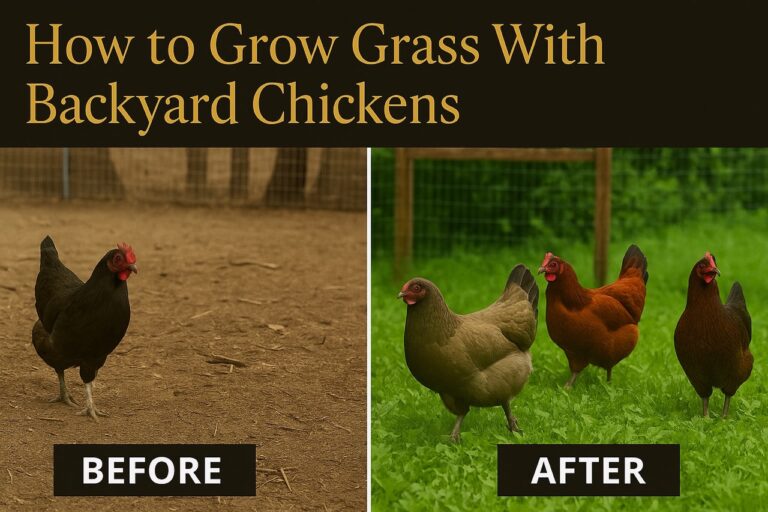


Winter cover crops for chickens are one of the best-kept secrets of sustainable backyard gardening. In the Southeastern U.S., where winters are mild but soil health can struggle, these crops improve fertility, reduce erosion, suppress weeds, and double as nutritious forage for your flock.
In this guide, we’ll explore how to choose, plant, and manage winter cover crops that benefit both your soil and your chickens—all while setting the stage for a productive spring garden.
Article Guide11 sections
1. Choosing the Right Winter Cover Crops for Chickens
The best winter cover crops thrive in cooler temperatures and serve a dual purpose: improving soil structure and feeding free-range chickens. Top picks include:
- Winter Rye – Fast-growing, great for erosion control and weed suppression.
- Crimson Clover – Nitrogen-fixing legume with early spring blooms.
- Winter Wheat – Cold-hardy and rich in organic matter.
- Austrian Winter Peas – Adds nitrogen and provides tasty greens for chickens.
- Daikon Radish – Breaks up compacted soil with deep roots.
Why They Work:
Each plant brings something unique. Rye and wheat form dense ground covers, clover and peas enrich soil nitrogen, and radishes improve water flow and aeration for spring crops.
2. Soil Improvement + Chicken Forage = Perfect Pairing
Combining multiple crops creates diversity in root systems and foliage. This improves soil health on multiple levels while giving your chickens a varied, nutrient-rich grazing buffet.
Ideal Crop Mixes:
- Rye + Clover + Radish — Erosion control, nitrogen fixation, and soil aeration.
- Wheat + Winter Peas — Stabilizes soil and feeds your flock at the same time.
💡 Always include legumes like peas or clover. They naturally “fix” nitrogen into the soil, acting as organic fertilizer.
3. Broadcasting and Seeding Techniques
Broadcasting is the easiest method to sow large areas with cover crops.
How to Broadcast:
- Prepare the soil – Remove debris and lightly till.
- Mix seeds together – Use a bucket and blend your chosen seed types.
- Scatter evenly – Walk and toss for broad, even coverage.
- Lightly rake – Aim for ¼ to ½ inch seed depth.
Pro Tip:
Reduce each seed’s rate by 20–25% when planting a mix. This gives each plant room to grow.
4. Protecting Cover Crops from Chickens
Chickens love to dig and scratch—so your freshly seeded ground might look like a playground. Protect it until crops are established.
Protection Strategies:
- Straw Mulch – Light coverage keeps birds off and retains moisture.
- Temporary Fencing – Simple garden netting works great.
Once the crops mature, they can handle light grazing just fine.
5. Timing and Rotation for Long-Term Success
Plant Early:
For the Southeast, November is ideal. It gives crops time to germinate and grow before the first freeze.
In Early Spring:
- Mow or till the crops under 2–3 weeks before planting spring vegetables.
- This lets them decompose and enrich the soil naturally.
Bonus:
Let crimson clover reseed on its own for easy, recurring ground cover.
6. Managing Chicken Access with Rotational Grazing
Cover crops offer excellent winter forage—but overgrazing can ruin them.
Rotational Grazing Tips:
- Divide areas into zones.
- Let sections rest between grazing periods.
- Watch digestion: Some greens like mustard can upset chickens if over-eaten.
This strategy keeps your cover crops growing and your chickens happy all season long.
7. Spring Benefits from Winter Planting
Cover crops don’t just help in winter—they supercharge your garden come spring.
Key Benefits:
- 🌱 Improved Soil Fertility – Especially from legumes like clover and peas.
- 🚫 Weed Suppression – Dense crops crowd out problem weeds.
- 🌿 More Organic Matter – Breaks down into nutrients that feed crops like tomatoes, squash, and corn.
A well-managed winter cover crop reduces your need for spring fertilizer by 30–50%—naturally.
🐔 Final Thoughts
Planting winter cover crops for chickens isn’t just smart—it’s sustainable. With the right crops, timing, and grazing techniques, you can create a resilient garden that feeds both your soil and your flock.
📚 Further Reading on Paranoid Prophet
- 🐔 Winter Chicken Memes and Facts
A funny, fact-filled guide to how chickens survive—and thrive—during winter. - 🌾 Wheatgrass Hay & Winter Chickens
Why wheatgrass can be a winter superfood for your flock. - 🧠 Backyard Chickens & Mental Health
Explore the therapeutic side of poultry care.
Sources
Planting winter cover crops in the Southeastern U.S. offers numerous benefits, including soil enrichment, erosion control, weed suppression, and providing forage for free-range chickens. The following resources offer valuable insights into selecting and managing appropriate cover crops for this region:
- Winter Annual Cover Crops – NC State Extension Publications
This publication discusses the use of winter annual cover crops in the Southeast, highlighting species like cereal rye, crimson clover, and Austrian winter peas. It provides guidance on planting dates, seeding rates, and the benefits of each crop in terms of soil health and erosion control. - Managing Forage for Free-Range Chickens – Cackle Hatchery
This article explores various forage options for free-range chickens, including the use of cover crops such as spelt, which serves as a winter cover crop providing early spring greens. It emphasizes the importance of nutritious forage in maintaining healthy poultry. - Winter Cover Crops for North Carolina | NC State Extension
This resource lists suitable winter cover crops for North Carolina, including legumes like crimson clover and Austrian winter pea, and non-legumes such as cereal rye and barley. It offers insights into the benefits of each crop and considerations for their use in sustainable farming practices. - Best Cover Crops For Chickens – Gardening Know How
This article discusses the advantages of growing cover crops for chicken feed, such as buckwheat and cowpea. It explains how allowing chickens to forage on these crops can enhance their health and contribute to natural soil fertilization through their manure.
These resources provide comprehensive information on selecting and managing winter cover crops in the Southeastern U.S., benefiting both soil health and free-range chicken foraging.
FAQ: Winter Cover Crops for Chickens
Understanding Winter Cover Crops
1. What are winter cover crops, and why are they beneficial for chickens?
Winter cover crops are plants grown in cooler months to protect and improve soil. They benefit soil health, suppress weeds, reduce erosion, and offer supplemental forage for free-range chickens.
2. How do winter cover crops improve soil health?
They enhance soil by adding organic matter, fixing nitrogen (with legumes like clover), and aerating compacted ground (with crops like daikon radish). This creates fertile, nutrient-rich soil for spring planting.
3. Are winter cover crops suitable for all climates?
While particularly effective in the Southeastern U.S. due to mild winters, winter cover crops can be adapted to various climates by choosing cold-hardy species like winter rye and wheat.
Best Crops for Chickens and Soil
4. What are the best winter cover crops for chickens in the Southeast?
The best options include:
- Winter Rye: Erosion control and weed suppression.
- Crimson Clover: Nitrogen-fixing and forage.
- Austrian Winter Peas: High-protein forage and nitrogen-fixing.
- Daikon Radish: Soil aeration with deep roots.
- Winter Wheat: Organic matter and soil stabilization.
5. Can I use a mix of cover crops?
Yes, mixing crops like rye, clover, and radish provides multiple benefits: erosion control, nitrogen enrichment, and diverse forage for chickens.
6. Do chickens have a preference for certain cover crops?
Chickens prefer tender greens like ryegrass, clover, and peas. Mustard greens can also be used sparingly but may upset digestion if consumed in large amounts.
Planting and Timing
7. When should I plant winter cover crops for chickens?
Plant them in early November to allow establishment before the coldest months. By spring, they’ll be ready for tilling or grazing.
8. How do I plant winter cover crops?
Broadcast seeds across prepared soil, rake lightly to cover them, and aim for a planting depth of ¼ to ½ inch.
9. Can I let cover crops reseed naturally?
Yes, some crops like crimson clover will self-reseed if allowed to bloom, reducing maintenance for future seasons.
Protecting and Managing Crops
10. How do I protect cover crops from chickens?
Use straw mulch or temporary fencing to shield seeds and seedlings from scratching until plants are established.
11. How can I prevent overgrazing by chickens?
Divide the planting area into zones and rotate chicken access to allow crops time to recover and regrow.
12. Are cover crops safe for free-range chickens?
Yes, most cover crops are safe and nutritious. However, avoid overfeeding certain plants like mustard greens, which can cause digestive upset.
Seasonal and Long-Term Benefits
13. What are the long-term benefits of winter cover crops?
They enhance soil structure, add organic matter, reduce weeds, and naturally fertilize the soil with nitrogen, cutting down on the need for synthetic fertilizers in spring.
14. How do I manage cover crops in spring?
Mow or till the cover crops into the soil two weeks before planting. This allows organic material to decompose, enriching the soil with nutrients.
15. Can cover crops replace chicken feed?
No, cover crops are a supplemental forage source. They enhance the diet of free-range chickens but do not replace the balanced nutrition provided by commercial poultry feed.