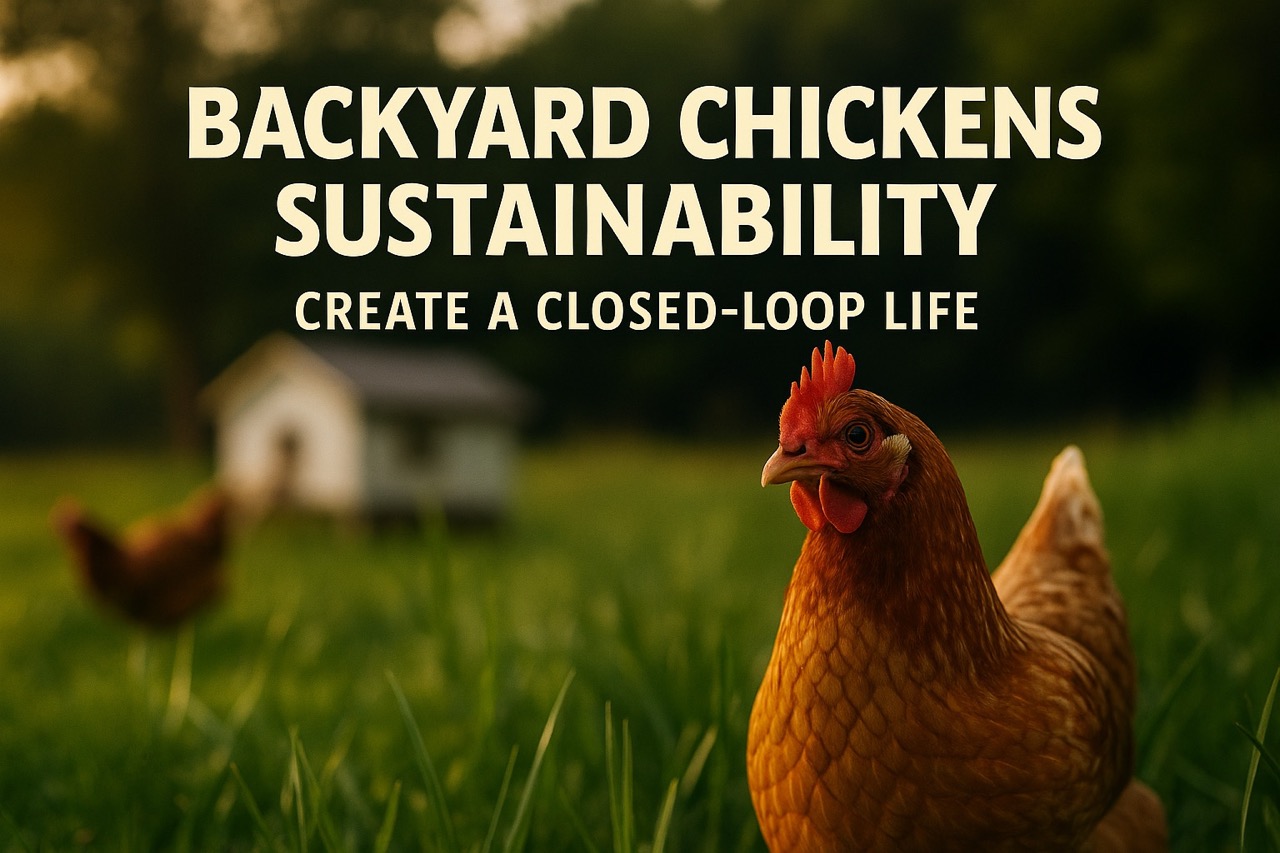

Backyard chickens and sustainability are deeply connected. More than just a homesteading trend, chickens help reduce food waste, fertilize gardens, and support a regenerative lifestyle grounded in biblical stewardship.
From composting waste to enriching soil to producing daily protein, chickens create a closed-loop system that echoes the wisdom of God’s creation: nothing wasted, everything redeemed.
Let’s explore how these feathered helpers reduce your footprint, feed your family, and fertilize your faith.
💩 How Backyard Chickens Support Sustainability Through Fertilizer
One of the most overlooked benefits of chickens is their ability to transform waste into fertility.
Chicken manure is rich in:
- Nitrogen – boosts leafy growth
- Phosphorus – strengthens root systems
- Potassium – promotes fruiting and resilience
Once composted (to neutralize acidity and pathogens), chicken manure becomes a high-powered, organic fertilizer. It:
- Replaces store-bought chemical fertilizers
- Boosts soil health and microbial activity
- Supports truly organic gardening
“The Lord God took the man and put him in the garden… to work it and take care of it.” – Genesis 2:15
Caring for your land isn’t just environmental — it’s biblical.
🥕 Backyard Chickens and Food Waste: Closing the Sustainability Loop
Chickens love your leftovers.
Fruit peels, vegetable ends, stale bread, grain remnants — all become calorie-rich fuel for your flock. Instead of throwing scraps in the trash, you:
- Reduce landfill contributions
- Avoid methane production from rotting food
- Upcycle waste into fresh eggs
This isn’t just recycling. It’s resurrection — turning death into life, waste into nourishment.
Every peck and scratch your hens make reminds you: God’s systems are circular, not disposable.
🔁 Closed-Loop Living: God’s Design, In Motion
Chickens are regenerative creatures. With just a small flock, you can create a closed-loop cycle that sustains itself:
- Chickens eat your leftovers
- They lay eggs and produce manure
- The manure feeds your soil
- The soil grows your vegetables
- You eat the food and feed the scraps to chickens
- Repeat
This system reflects God’s pattern of stewardship — where nothing is wasted, and all things serve the greater good.
It’s sustainable… but it’s also sacred.
🧠 Frequently Asked Questions About Chickens and Sustainability
Q: Is chicken manure safe for vegetable gardens?
Yes — but it must be composted first. Raw chicken manure is high in nitrogen and can burn plants or carry pathogens like salmonella if applied directly. Composting it for 4–6 weeks allows:
- Heat to kill harmful bacteria
- Nutrients to stabilize
- Odors to reduce naturally
Properly aged chicken manure becomes a powerful organic fertilizer rich in nitrogen, phosphorus, and potassium — ideal for fruit trees, raised beds, and regenerative gardening.
Bonus tip: Use a deep litter method in the coop for passive composting.
Q: What food scraps are safe for chickens to eat?
Backyard chickens can safely consume:
- Vegetable peels (carrots, cucumbers, squash)
- Fruits (apples, melons, berries)
- Grains, rice, pasta, and non-moldy bread
- Cooked eggs and shells (crushed for calcium)
Avoid feeding:
- Avocados (toxic pits/skins)
- Chocolate, caffeine, alcohol
- Raw potato skins or green potatoes
- Salty or processed foods
- Onions or garlic in excess (can flavor eggs)
Chickens are excellent at turning leftovers into eggs, but like all things — moderation and discernment matter.
Q: How much food waste can chickens actually eliminate?
A flock of 4–6 hens can consume 3–5 pounds of food scraps per week — that’s over 260 pounds per year diverted from the landfill.
This reduces:
- Your household’s methane footprint
- Your dependency on commercial feed
- The volume of organic waste in trash bins
It’s a micro-scale solution to a macro-scale problem.
“Gather the fragments that remain, so that nothing is lost.” — John 6:12
Q: Can I use chicken manure as fertilizer without composting?
Technically yes — but only in limited, non-food-growing areas. Use raw manure in:
- Ornamental flower beds
- Under compost piles to activate heat
- Areas that will be planted later (after a 90-day waiting period)
For edible gardens, always compost first. This ensures safety and optimal nutrient availability.
Q: How do chickens help create a closed-loop homestead system?
Chickens fit into a God-designed, regenerative cycle:
- You feed them leftovers
- They give you eggs and manure
- The manure feeds your garden
- The garden feeds your family
- Scraps go back to the chickens
It’s efficient, low-waste, and spiritually resonant — a picture of creation’s order and renewal.
Q: Can I raise chickens sustainably in a small urban yard?
Yes — many cities now allow 4–6 hens in backyard coops. Urban chicken-keeping:
- Reduces reliance on commercial agriculture
- Produces local protein
- Builds neighborhood engagement (eggs to share!)
Just check your city ordinances for:
- Flock size limits
- Rooster restrictions
- Coop setback or sanitation rules
Urban sustainability is not just possible — it’s powerful.
Q: How do backyard chickens impact the environment positively?
Chickens:
- Offset carbon emissions by reducing food miles
- Minimize food waste by eating scraps
- Enrich soil through composted manure
- Support pollinator habitats by encouraging healthy gardens
Compared to industrial poultry systems, a small flock in your yard is orders of magnitude more sustainable — and spiritually grounded.
Q: What other systems can I combine with chickens for sustainability?
To maximize a closed-loop lifestyle, pair chickens with:
- Rainwater collection → to hydrate garden or coop
- Composting bins → for coop litter and food waste
- Raised beds or permaculture zones → for self-grown produce
- Herb spirals or food forests → fed by chicken-enriched soil
This transforms your backyard into a mini-ecosystem of provision, not just production.
📚 Related Internal Articles
- ✅ Benefits of Raising Backyard Chickens
- ✅ Genesis and Time Perception
- ✅ Proverbs 4:23 – Guarding the Heart
🔗 Recommended Reading from Trusted Sources
- 🌎 5 Environmental Benefits of Backyard Chickens – Earth911
This article explores how chickens reduce food waste, lower carbon footprints, and produce natural fertilizer — all key to a more eco-friendly home. - 🌿 The Many Benefits of Backyard Chickens – Green America
Covers sustainability, ethical sourcing, reduced reliance on industrial farming, and how chickens complete the closed-loop cycle in your yard. - ♻️ EPA Guide to Reducing Food Waste at Home
Although not chicken-specific, this guide explains how household waste reduction starts in your kitchen — a perfect complement to feeding scraps to chickens.
✝️ Final Reflection
Backyard chickens aren’t just a food source — they’re a picture of God’s wisdom in motion.
They turn waste into life… and call us to live with care, purpose, and cycles of renewal.