
Backyard chickens can support a lower-waste household, but keeping hens is not automatically the greener choice. Feed, water, housing materials, transport and pressure on the yard still count.
Chickens can connect kitchen scraps, garden compost, and fresh eggs in a lower-waste household. That cycle still needs balanced feed, clean water, suitable housing, and careful manure handling; it does not sustain itself without outside inputs.
Here is how to make that cycle useful, with practical limits and a Christian understanding of stewardship.
Updated October 7, 2026. Sources checked for this consolidation.
GUIDED ARTICLE EXPERIENCE
Are Backyard Chickens Sustainable? Food Waste, Manure & Real Tradeoffs
Read along as the narration moves through the article.
Private device narration · No hosted audio or tracking
CONTINUE GUIDED TOUR
Continue where you left off.
GUIDED TOUR COMPLETE
You have reached the end of this study.
Study record saved on this device.
GUIDED TOUR
Are Backyard Chickens Sustainable? Food Waste, Manure & Real Tradeoffs
Narrator: Paranoid Prophet Recommended Voice Native device narration
Prepare to follow the article as it is narrated.
VOICE & TOUR OPTIONS
Voice & Listening
NARRATOR
Finding a narrator…
Checking the best narrator available on this device.
Restores the best curated narrator available on this device.
Narrator choices are curated for clear, long-form listening on this device.
Screen-awake support will be checked when narration starts.
CHOOSE A NARRATOR
Curated for this device
Choose a verified narrator for this browser, or use System Narrator. Automatic mode uses the best reliable route exposed by this device; your chosen narrator is preserved even if this device needs a temporary fallback.
Preparing the guided article experience…
RESUME GUIDED TOUR?
Continue where you left off.
GUIDED TOUR COMPLETE
You have reached the end of this study.
Use the sections below to plan the system you can actually maintain.
Article Guide8 sections
Using Chicken Manure in the Garden
Manure is a useful nutrient source when the garden needs it and you can manage it safely.
Manure contains plant nutrients, although concentrations vary with bedding and management:
- Nitrogen
- Phosphorus
- Potassium
Properly treated chicken manure can supply nutrients and organic matter to garden soil. Use a soil test to guide application; composting alone does not guarantee pathogen removal. It:
- Can reduce purchased fertilizer when matched to the soil’s needs
- Can improve soil structure when suitable compost is applied appropriately
- Adds organic matter when properly managed
Genesis 2:15 describes God placing the man in the garden to work it and care for it. Read Genesis 2:15 in its setting.
For Christians, care for land belongs within accountable stewardship. Scripture supplies the moral frame, not a manure-treatment protocol.
Reducing Food Waste Without Unbalancing the Flock’s Diet
Suitable scraps are a supplement, not a feeding plan.
Suitable fruit and vegetable scraps can supplement a balanced poultry ration. They should not replace the feed that supplies the flock’s protein, vitamins, and minerals. Using appropriate scraps can:
- Divert some organic material from landfills
- Put suitable leftovers to use without replacing complete feed
Start by preventing avoidable waste: plan meals, store food well, and use edible leftovers yourself. The EPA’s household food-waste guide explains that priority. Feeding hens is one use for suitable remaining scraps, alongside composting what cannot be fed.
Christian stewardship gives ordinary work a moral purpose: care for the animals, use resources thoughtfully, and avoid promising more than your system can deliver.
Connecting the Flock, Compost, and Garden
A small flock can connect several parts of a garden system:
- Chickens receive balanced feed and suitable scraps
- They lay eggs and produce manure
- Properly treated manure supplies garden nutrients
- The soil grows your vegetables
- You eat the harvest and offer suitable remaining scraps to the flock
- Repeat
Keep records of feed purchased, eggs collected, scraps used, and garden amendments applied. Those observations show whether the system is reducing waste and meeting the flock’s needs.
Calling this a closed loop describes connections between activities; it does not mean the household is fully self-sufficient.
Count the Inputs Before Calling the Flock Sustainable
A flock uses resources even when the eggs never pass through a grocery store. Count complete feed and its transport, drinking water, bedding, enclosure materials, repairs and any energy used. Compare those inputs with the eggs actually collected and the manure you can use responsibly. Age, season and health can change output while daily care continues.
Our practical recommendation is to keep a simple monthly record: feed purchased, usable eggs, suitable scraps consumed, bedding added and manure removed or applied. That is useful household accounting, not a full life-cycle assessment. We have not measured our flock’s carbon footprint, and this guide does not rank backyard eggs above every commercial production system. The cost guide helps organize quantities; the egg comparison keeps nutrition, safety and welfare separate from provenance.
The EPA’s compost guidance supports recycling organic material into a useful soil amendment. That benefit can occur without owning chickens. Composting suitable scraps directly may be a better fit for a household that does not want daily animal care.
Do Backyard Chickens Increase Biodiversity?
Not automatically. Chickens forage for small animals and seeds; they do not distinguish every pest from every beneficial organism. Eating an insect does not establish population-level control. Our pest-control evidence guide explains that boundary.
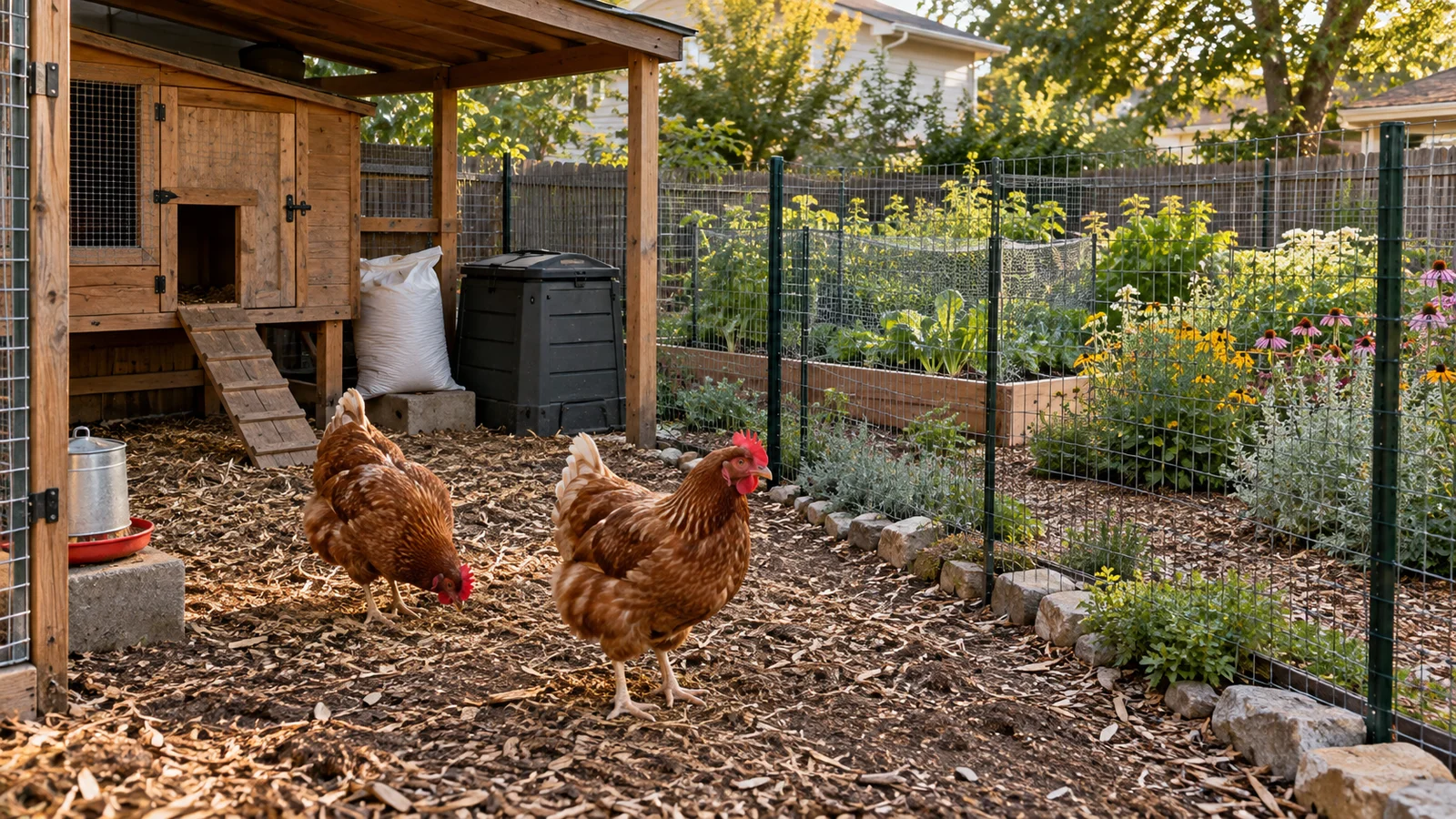
Oregon State poultry specialist James Hermes describes how scratching and concentrated manure can damage plants and recommends fencing birds away from young plants and vegetable gardens. Under sustained pressure, a run can lose groundcover, expose soil and disturb planted or mulched habitat. That is a management risk, not proof that every flock has the same ecological outcome.
By about the end of our first year, sustained flock pressure had essentially stripped our backyard grass. That is our household experience, not a biodiversity experiment. If you want vegetation to survive, plan protected areas and recovery before access; our grass-recovery guide covers those decisions.
For pollinators, the direct work is habitat: suitable flowering plants across the season, diverse vegetation, protected nesting resources and reduced unnecessary pesticide exposure. USDA NRCS pollinator guidance identifies those needs. Hens can coexist with protected habitat; their presence does not itself create it. Bare soil in an overused run is not equivalent to deliberately managed nesting habitat.
A flock may add movement and enjoyment to a yard. Those are preferences, not evidence of improved biodiversity. The Benefits guide weighs those rewards against the daily responsibilities.
Frequently Asked Questions About Chickens and Sustainability
Q: Is chicken manure safe for vegetable gardens?
Chicken manure can carry pathogens and damage plants when overapplied. Four to six weeks in a pile does not establish that it is safe. Fully treated compost has a lower contamination risk; simply aged manure should be handled as untreated.
The University of Minnesota Extension manure safety guide distinguishes fully treated compost from untreated or simply aged manure. For untreated amendments, its recommended application-to-harvest interval is at least 90 days for crops without soil contact and 120 days for crops with soil contact. These intervals reduce risk; they do not guarantee safety. University of New Hampshire Extension gives comparable raw/aged-manure precautions and warns that repeated applications can build excess phosphorus. Compost labels, age and appearance do not verify treatment.
Deep litter can help manage coop bedding, but age or appearance alone does not establish that the material is safe for edible gardens.
Q: What food scraps are safe for chickens to eat?
The University of Minnesota Extension chicken-care guide recommends prepared feed balanced for protein, vitamins, and minerals, with continual access to clean water. It notes that chickens can eat fruit and vegetable scraps; treats do not meet all their nutritional needs.
Offer small amounts of suitable scraps after ensuring the flock has its normal ration. Remove uneaten material rather than letting it accumulate. If you are unsure about a particular food, check poultry-specific guidance before feeding it; a bird’s willingness to eat something does not establish that it is appropriate. Check our safe-feeding guide for specific foods.
Q: How much food waste can chickens actually eliminate?
The amount varies with flock size, the scraps available, and the birds’ nutritional needs. Track what your hens actually eat rather than assuming a fixed annual total. Suitable scraps can reduce the organic material in your trash, but they should supplement a balanced poultry ration.
In John 6:12, Jesus tells the disciples to gather leftovers after feeding the crowd. That setting is distinct from chicken keeping, but it can inform a Christian concern for avoiding needless waste.
Q: Can I use chicken manure as fertilizer without composting?
Untreated manure can carry pathogens. For edible gardens, choose fully treated compost where possible. If you use untreated or simply aged material, keep it from touching edible plant parts and follow the 90- or 120-day application-to-harvest guidance above. Keep manure out of water sources, and use a soil test to avoid applying excess nutrients.
Q: How do chickens help create a closed-loop homestead system?
They connect suitable kitchen scraps, egg production, and manure management with the garden cycle described above. Purchased feed and other inputs remain necessary. The useful goal is less waste and responsible care, rather than a claim of complete self-sufficiency.
Q: Can I raise chickens sustainably in a small urban yard?
Possibly, if local rules and the space available allow a healthy flock. Check your municipality’s current ordinances for permits, hen limits, rooster restrictions, setbacks, and sanitation requirements before buying birds. Rules vary, and some places prohibit poultry.
Plan for predator protection, ventilation, manure storage, and daily access to clean water. A yard that can fit a coop may still be unsuitable for the number of birds you want.
Q: How do backyard chickens impact the environment positively?
A well-managed flock can use suitable scraps and supply garden nutrients through properly treated manure. The overall environmental benefit depends on feed, housing, transport, waste handling, and egg production. This guide does not establish that backyard eggs always have a smaller footprint than commercially produced eggs.
Q: What other systems can I combine with chickens for sustainability?
Choose compatible systems only when you can manage them:
- Rainwater collection → for suitable garden uses; birds still need clean, safe drinking water
- Composting bins → for coop litter and food waste
- Raised beds or permaculture zones → for protected garden produce
- Herb spirals or food forests → with amendments chosen from soil-test results
Choose the systems you can maintain well. A manageable flock and a carefully tended compost pile are more useful than a complicated setup that outgrows your space or time.
Related Reading
- Benefits of Raising Backyard Chickens
- Grass Recovery and Flock Pressure
- Christian Animal Stewardship
Practical Sources and Further Reading
University of Minnesota Extension: Raising chickens for eggs; balanced feed, water, housing, and local-rule considerations.
University of Minnesota Extension: Animal-based compost and food safety; treated versus untreated manure and application-to-harvest precautions.
EPA: Preventing Wasted Food at Home; preventing avoidable waste before deciding how to handle scraps.
Final Reflection
Careful stewardship is practiced in ordinary decisions: feeding birds well, keeping manure away from harvests, and using resources without waste. For Christians, that work belongs within a life of gratitude and obedience to Jesus Christ. A productive garden does not save us; the risen Lord does. We care for His creation because we belong to Him.