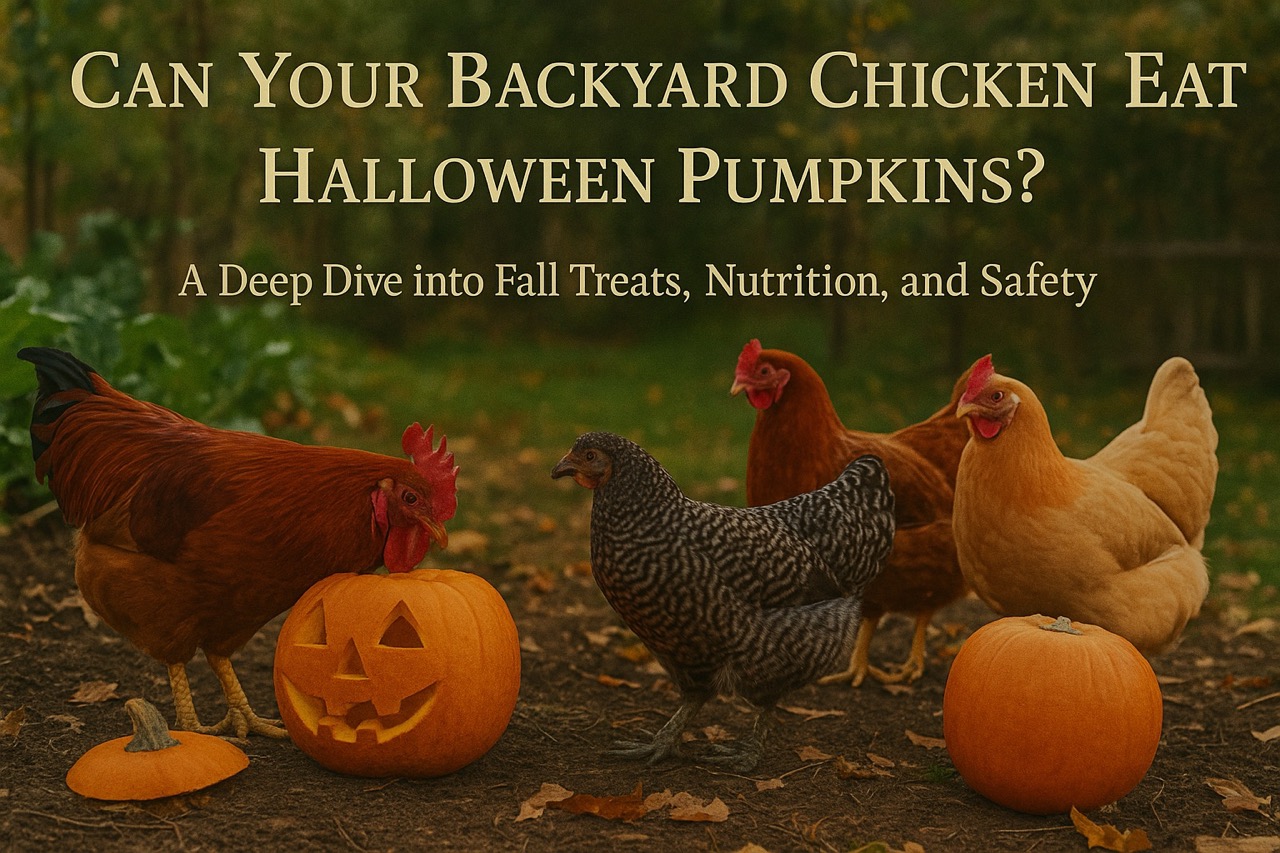

As Halloween passes and porch pumpkins begin to sag, backyard chicken keepers often ask: Can chickens eat pumpkins? The short answer is yes—pumpkins are a nutritious, enriching seasonal treat when served properly. But not all pumpkins are safe, and how you feed them matters.
This guide explores the benefits, risks, and best practices for feeding pumpkins to your chickens—especially post-Halloween.
🎃 Are Pumpkins Safe for Chickens?
Yes, but with caution.
✅ Safe Parts Chickens Can Eat:
- Flesh – Soft, water-rich, and full of nutrients
- Seeds – Great for adults; best crushed for chicks
- Skin – Tough but edible, especially after softening
❌ What to Avoid:
- Moldy or rotten pumpkins
Mold can contain harmful mycotoxins that cause diarrhea, respiratory issues, or poisoning.
💡 Pro Tip: Shriveling is fine. Visible mold is not. If in doubt, throw it out.
🧠 Health Benefits of Pumpkins for Chickens
🥕 Nutrient-Rich
Pumpkin is packed with immune-boosting and vision-supporting vitamins:
- Vitamin A – Vital for skin, feathers, and eyesight
- Vitamin C & E – Strengthens the immune system
- Antioxidants – Help reduce inflammation
💧 Hydration and Digestion
- High water content supports hydration in dry weather
- Natural fiber promotes regular digestion
🧬 Natural Deworming (Debatable but Popular)
Pumpkin seeds contain cucurbitacin, a compound believed to paralyze parasites in the gut. While not a proven dewormer, many chicken keepers use it as a natural supplement.
✅ Safe to offer—but don’t rely on it to replace proper parasite management.
🧠 Enrichment + Boredom Buster
Chickens love pecking, scratching, and gutting pumpkins. It keeps them occupied, especially during slow winter months.
🛠 How to Feed Pumpkins Safely
Here’s how to turn your leftover pumpkins into flock-friendly fun:
1. Use Fresh or Slightly Wilted Pumpkins
- Avoid mold
- Rinse off any paint, wax, or candle residue from jack-o’-lanterns
2. Slice It Up
- Cut pumpkins into manageable pieces
- Smaller chunks = easier pecking + less mess
3. Limit Portions
- Treat pumpkins like a snack
- Keep total intake to under 10% of their daily food
4. Seed Safety
- Seeds are great for adult chickens
- For chicks, crush or remove seeds to avoid choking
⚠️ Potential Risks of Feeding Pumpkins
While pumpkins are flock-friendly, there are a few watchouts:
🥄 Imbalanced Diet
Too much pumpkin can displace essential nutrients from layer feed. Keep treats limited.
🦠 Mold and Spoilage
Once a pumpkin is split, it can turn fast, especially in damp coops or warm runs. Spoiled pumpkins = risk of illness.
🔁 Pro Tip: Remove uneaten pumpkin pieces within 24 hours—especially in humid weather.
🧡 Fun Pumpkin Feeding Ideas for Chickens
Want to spice things up? Try one of these chicken-approved autumn activities:
🎃 Pumpkin Feeder
Hollow out a pumpkin, stuff it with feed or scratch grain, and let the flock dig in.
❄️ Frozen Pumpkin Cubes
Dice pumpkin and freeze for a refreshing summer treat.
🥚 Pumpkin Forage Hunt
Scatter pieces and seeds around the run or garden for an exciting scavenger game.
✅ Can Chickens Eat Pumpkins? Final Verdict:
Yes—but serve fresh, clean, and in moderation.
Pumpkins are an excellent seasonal treat that:
- Boost nutrition
- Hydrate naturally
- Offer behavioral enrichment
- Reduce food waste
Just avoid mold, limit quantities, and watch for spoilage. Pumpkins may symbolize fall’s end for us—but for your flock, they’re just the beginning of another great treat cycle.
🍂 Let your chickens turn your post-Halloween waste into wellness.
Nature has a way of recycling what we forget—and your flock is happy to help.
Sources
Feeding pumpkins to chickens can be a nutritious and enjoyable treat for your flock. The following resources provide valuable insights into the benefits and considerations of incorporating pumpkins into your chickens’ diet:
- Feeding Chickens Pumpkins: Why, How, and When
This article discusses the nutritional advantages of pumpkins for chickens, highlighting their rich content of vitamins, minerals, and antioxidants. It also offers practical advice on how to safely prepare and serve pumpkins to your flock. - Can Chickens Eat Pumpkins? Feeding Tips & Benefits
This resource explores the various parts of the pumpkin that are safe for chickens to consume, including the flesh and seeds. It provides guidance on preparation methods and discusses the potential health benefits for your birds. - Can Chickens Eat Pumpkin Seeds for Worms?
This article examines the claim that pumpkin seeds act as a natural dewormer for chickens. It delves into the scientific evidence (or lack thereof) supporting this belief and offers recommendations for flock management. - Can Chickens Eat Pumpkin? A Concise, Full Feeding Guide
This guide provides comprehensive information on feeding pumpkins to chickens, including which parts are safe, how to prepare them, and the importance of moderation in their diet.
These resources offer a well-rounded understanding of the role pumpkins can play in your chickens’ nutrition and health.
🔗 Related Reading on Paranoid Prophet
- How Many Chickens to Start With
- Benefits of Raising Backyard Chickens
- Mental Health Perks of Chicken Keeping
- Chicken Dust Bath Guide
- Backyard Chickens for Kids
FAQ: Can Chickens Eat Pumpkins?
Understanding Pumpkins in a Chicken’s Diet
1. Can chickens eat pumpkins?
Yes, chickens can eat pumpkins. Both the flesh and seeds are safe and nutritious treats for your flock, providing vitamins, fiber, and other essential nutrients.
2. Are pumpkin seeds safe for chickens?
Absolutely. Pumpkin seeds are safe and often enjoyed by chickens. They are believed to have natural deworming properties, though this claim is not scientifically proven.
3. What nutrients do pumpkins provide for chickens?
Pumpkins are rich in:
- Vitamins A and C: Boost immunity and support healthy feathers.
- Fiber: Aids digestion.
- Zinc and Magnesium: Enhance overall health and egg production.
Feeding Pumpkins Safely
4. How should I prepare pumpkins for chickens?
- Cut pumpkins into smaller pieces for easier pecking.
- Serve the seeds along with the flesh.
- Avoid moldy or chemically treated pumpkins.
5. Can I give my chickens leftover Halloween pumpkins?
Yes, as long as they are untreated and free of paint, wax, or chemicals. Ensure they are not moldy or rotten.
6. Are there risks to feeding chickens pumpkins?
The main risks are:
- Moldy pumpkins: These can be toxic to chickens.
- Overfeeding: Too much pumpkin can upset digestion or reduce their intake of essential feed.
Seasonal and Nutritional Benefits
7. Why are pumpkins a good seasonal treat for chickens?
Pumpkins are abundant in fall, making them a cost-effective and nutritious treat. They also provide enrichment, keeping chickens entertained and reducing boredom.
8. Do pumpkins help with deworming?
Pumpkin seeds contain cucurbitacin, believed to have deworming properties, but scientific evidence is inconclusive. They can complement, but not replace, regular parasite control measures.
9. Can pumpkins replace chicken feed?
No. Pumpkins should be treated as a supplement to a balanced poultry diet, not a substitute for formulated feed.
Fun and Creative Feeding Ideas
10. How can I use pumpkins for chicken enrichment?
- Hanging Feeder: Hang pumpkin halves in the coop for pecking.
- Frozen Treats: Freeze small pieces for warm days.
- Forage Hunt: Scatter seeds in the run to encourage natural foraging behavior.
11. How often can I feed pumpkins to my chickens?
Pumpkins should make up no more than 10% of their diet. A small portion once or twice a week is ideal.
12. Can chickens eat cooked pumpkins?
Yes, cooked pumpkins are safe, but they are best served raw to retain their full nutritional benefits.