
Yes, chickens can eat fresh, plain pumpkin as an occasional supplemental treat. Offer a small amount of accessible flesh and seeds, keep their normal complete feed available, and skip spoiled or decorated pumpkins. Pumpkin seeds are not an established substitute for veterinary parasite diagnosis or treatment.
A porch full of pumpkins can make feeding the flock feel like an easy cleanup job. The useful question is which fruit is still suitable food. A chicken yard should not become the disposal route for a pumpkin you cannot confidently assess.
Updated October 6, 2026. Poultry feeding and parasite evidence reviewed.
GUIDED ARTICLE EXPERIENCE
Can Chickens Eat Pumpkin? Safe Portions, Seeds & Halloween Risks
Read along as the narration moves through the article.
Private device narration · No hosted audio or tracking
CONTINUE GUIDED TOUR
Continue where you left off.
GUIDED TOUR COMPLETE
You have reached the end of this study.
Study record saved on this device.
GUIDED TOUR
Can Chickens Eat Pumpkin? Safe Portions, Seeds & Halloween Risks
Narrator: Paranoid Prophet Recommended Voice Native device narration
Prepare to follow the article as it is narrated.
VOICE & TOUR OPTIONS
Voice & Listening
NARRATOR
Finding a narrator…
Checking the best narrator available on this device.
Restores the best curated narrator available on this device.
Narrator choices are curated for clear, long-form listening on this device.
Screen-awake support will be checked when narration starts.
CHOOSE A NARRATOR
Curated for this device
Choose a verified narrator for this browser, or use System Narrator. Automatic mode uses the best reliable route exposed by this device; your chosen narrator is preserved even if this device needs a temporary fallback.
Preparing the guided article experience…
RESUME GUIDED TOUR?
Continue where you left off.
GUIDED TOUR COMPLETE
You have reached the end of this study.
Article Guide7 sections
Which parts of a pumpkin can chickens eat?
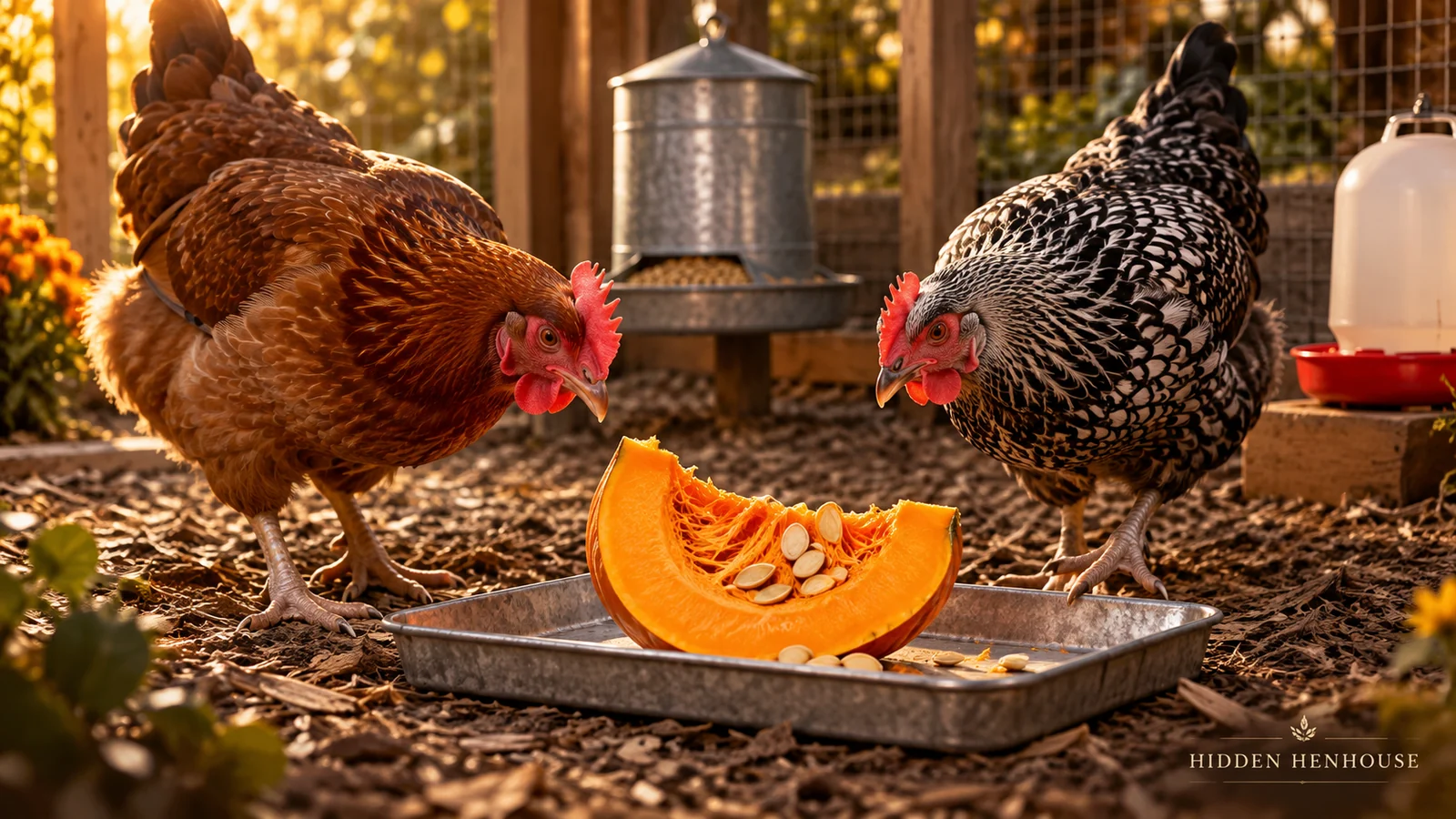
Fresh flesh and plain seeds can be offered together. Break the pumpkin open or cut a modest piece so the hens can reach the interior. The Iowa State Center for Food Security and Public Health’s Halloween guidance includes chickens among livestock that can eat pumpkin and recommends cutting pumpkins for smaller animals.
The rind is the tough outside of the same fruit. There is no need to peel every clean piece, but do not expect hens to work through an intact hard shell or insist that they finish it. Our practical recommendation is to expose the flesh, let the birds choose what to peck, and remove the remaining rind with the leftovers. The aim is manageable enrichment, not a clean plate.
Use plain pumpkin rather than salted snack seeds or a seasoned pumpkin dish. Raw pumpkin is an easy option. Plain cooked pumpkin, cooled before serving, is another preparation choice; cooking is not necessary, and neither method deserves a blanket “more nutritious for chickens” claim. Pie filling, sugary desserts and leftovers with uncertain ingredients are different foods.
How much pumpkin is enough?
Complete feed suited to the birds’ species and life stage remains the foundation. Texas A&M veterinary guidance advises keeping treats below ten percent of a chicken’s diet. Treat that as a practical upper limit across all extras, not a pumpkin allowance to use every day or a target that improves health.
Alabama Extension is more conservative in its wording: extras should be used sparingly or not at all because they can displace complete feed. These recommendations are compatible. A small treat may fit a balanced feeding routine; a fruit buffet that replaces the ration does not.
Start with a small shared portion and watch whether the hens continue eating their normal feed. Do not turn watery pumpkin and dry feed into a precise home nutrition formula. You do not need a universal “twice a week” rule. Offer less, or none, when the flock already gets other extras. Fresh drinking water remains essential.
For chicks, prioritize the appropriate complete starter feed. This guide does not prescribe pumpkin treats or claim that crushing a seed establishes safety for every chick. Ask your poultry adviser about feeding extras to young, unwell or nutritionally vulnerable birds. See our feed-saving guide for ways to reduce waste without diluting the diet.
Can chickens eat a Halloween jack-o’-lantern?
Carving alone is not the same issue as contamination. A recently cut, clean, plain pumpkin may still be food; a display pumpkin needs a much closer look. Iowa State specifically says not to feed pumpkins with candle wax inside or paint outside. Do not use the old advice to rinse paint or candle residue off and then feed the fruit.
Our conservative screening rule is to reject pumpkins with glitter, coatings, preservatives, unknown craft materials or an uncertain display history. This is a food-selection precaution, not a toxicology claim that every paint, wax or decoration causes the same poisoning. There is little reason to gamble on a questionable jack-o’-lantern when treats are optional.
- Fresh and plain: a small portion may be suitable.
- Painted, wax-contaminated or chemically decorated: keep it out of the flock’s food.
- Moldy, slimy, rotten or smelling spoiled: do not feed it.
- Unknown condition or treatment: choose a different treat or skip the treat.
Texas A&M warns that moldy and spoiled scraps can make chickens sick. Shriveling is not a certificate of safety, and scraping away visible mold is not our recommended rescue method. Dispose of unsuitable fruit through an appropriate route that the hens cannot raid.
Do pumpkin seeds deworm chickens?
Do not rely on pumpkin seeds to treat a suspected worm problem. The research is mixed, and it would be inaccurate to say that no chicken studies exist.
A 2019 chicken trial reported moderate reductions for some worm counts and marginal activity against Heterakis. A 2025 study in laying hens did not find a significant reduction in Ascaridia galli worm burdens with pumpkin-seed powder.
A 2026 research manuscript also reported activity in laboratory assays without a significant reduction in parasite burden in live birds. That repository labels the manuscript submitted for peer review, not accepted; it is preliminary evidence.
Different parasite species, preparations and experimental settings help explain why these results should not be flattened into one universal answer. Lab activity does not establish that a handful of seeds from a jack-o’-lantern is effective treatment. Nor do the negative studies prove that every possible preparation has no biological effect. They leave us without a dependable backyard treatment recommendation.
Penn State’s veterinary guidance, updated June 2026, recommends fecal examination to establish parasite problems and veterinary help with treatment and control. Weight loss, diarrhea or reduced laying are not specific enough to diagnose worms yourself. Keep pumpkin in the treat category; do not delay care while testing a folk remedy.
A simple pumpkin enrichment routine
Minnesota Extension includes pumpkins among treats that can keep hens occupied, while emphasizing that treats never replace a balanced ration. You can make that work without elaborate hanging fixtures or a run covered in scraps.
Our practical approach is a small clean portion on a washable tray, normal feed and water available, and enough space that one dominant hen does not control access. Watch the flock, then remove wet or soiled leftovers and clean the tray. Warmth, rain and contamination change how quickly food deteriorates; there is no universal twenty-four-hour safe window. Do not leave a whole pumpkin in the coop until the flock finishes it.
For the broader safety checklist, read what not to feed chickens. The related Easter safety guide addresses another common collision between decorations and flock areas.
Questions keepers ask
Will pumpkin improve egg production or boost immunity?
This guide makes no such promise. Nutrients in a food do not demonstrate those outcomes in your flock. The dependable priority is appropriate complete feed, clean water and good care.
Can I give the flock every leftover pumpkin?
No. Select only suitable fruit and keep the quantity modest. Being edible does not make an unlimited amount a balanced poultry diet.
Do hens need pumpkin in autumn?
No. It is optional variety and enrichment. Your hens can receive excellent care without a seasonal pumpkin ritual.
Sources and the keeper’s responsibility
The linked veterinary and Extension guidance supports feeding and safety decisions; the primary research links show the limits of the deworming claim. Iowa State’s holiday guidance was updated in April 2026, and Penn State’s parasite article in June 2026. The 2026 manuscript’s unaccepted status is stated rather than hidden behind its recent date.
Christian stewardship includes knowing when a useful bit of garden abundance is still food and when it belongs elsewhere. Offer the flock a little variety if it fits their care, and keep the dependable daily work—feed, water and a clean yard—at the center.