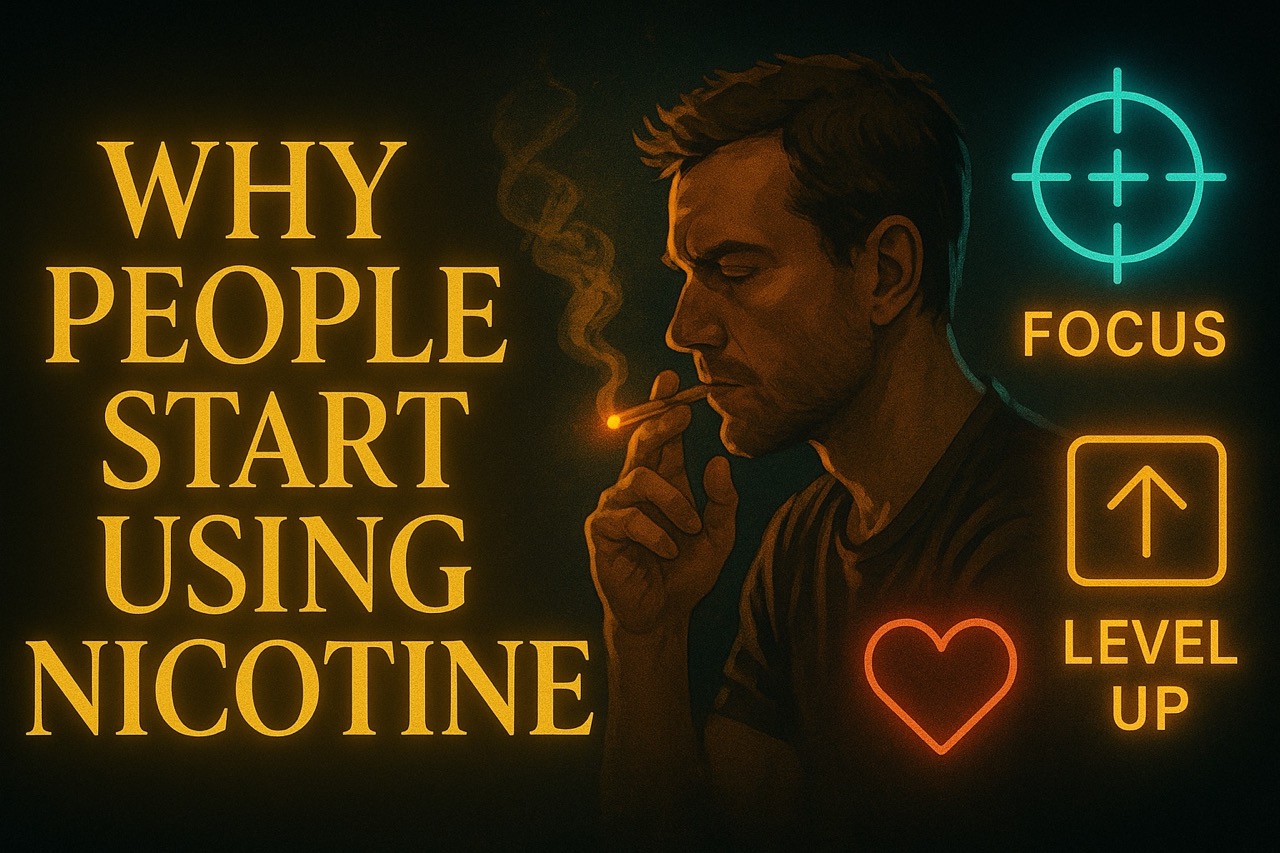

Why do people start using nicotine in the first place? It’s not always rebellion or peer pressure. In fact, for many users — especially teens and young adults — nicotine feels like a secret advantage. A quick edge. A cheat code for modern life. Whether it’s to focus during study sessions, ease social anxiety, curb appetite, or just stay awake through exhaustion, nicotine delivers fast. That’s what makes it so seductive… and so dangerous.
It feels like a superpower:
Focus sharpens. Appetite vanishes. Energy surges.
You’ve just found a hidden upgrade.
But the cost? That comes later.
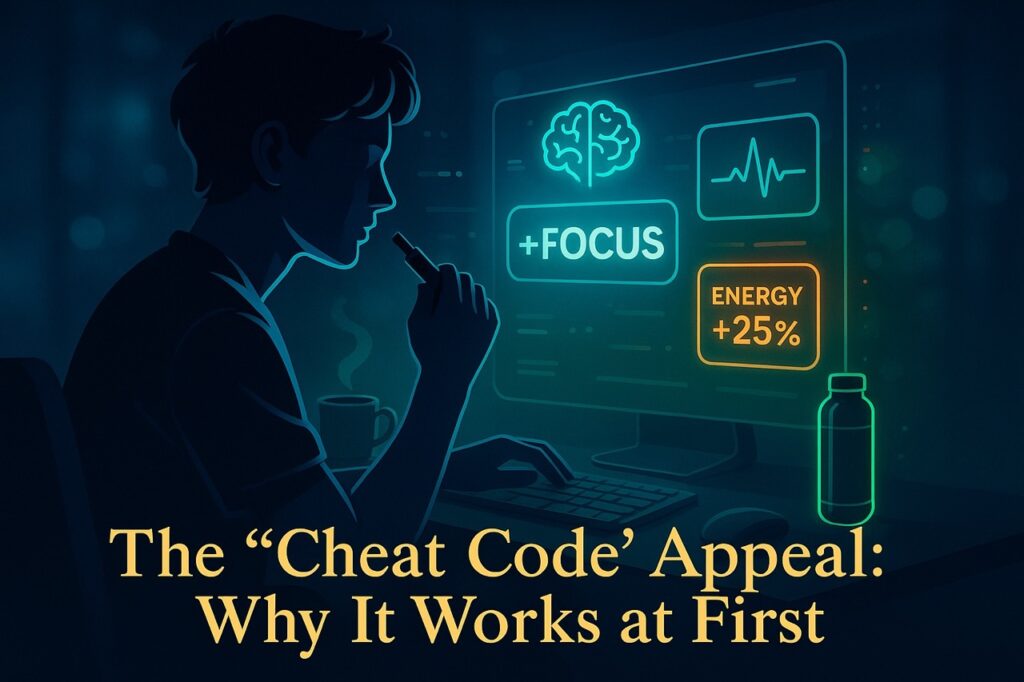
🎯 The “Cheat Code” Appeal: Why It Works at First
Nicotine stimulates key neurotransmitters like dopamine and acetylcholine, leading to:
- Faster focus and reaction time
- Mild mood elevation
- Appetite suppression
- A sense of mental clarity and control
For a student cramming for finals or a new employee grinding through 10-hour shifts, these effects can feel like performance enhancers. Add in the sleek, pocket-sized design of vapes or discreet pouches, and nicotine becomes a portable productivity hack — a legal, accessible stimulant with no obvious downside… at first.
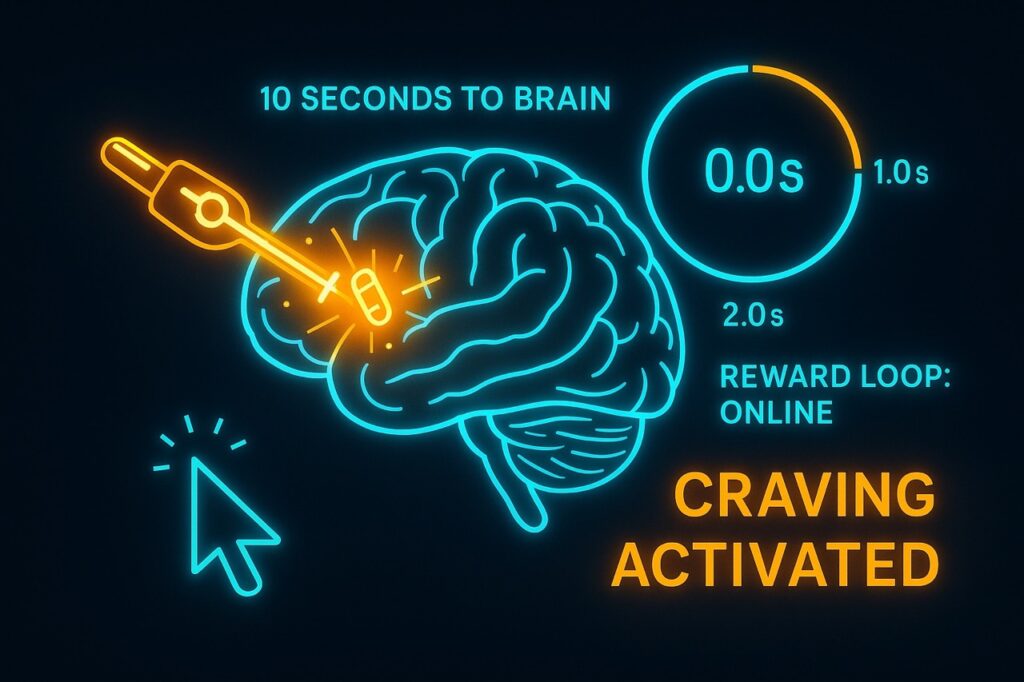
⏱️ Speed = Seduction: Why It Reinforces So Quickly
Nicotine reaches your brain in about 10 to 20 seconds when inhaled — faster than coffee, food, or even most medications. That near-instant reward trains the brain to crave the experience again and again.
This is what addiction science calls a “high reinforcement loop.”
- Take a hit → feel better
- Repeat → tolerance rises
- Miss a dose → feel worse
Over time, your brain doesn’t just enjoy nicotine — it depends on it to feel normal.
📱 Modern Triggers: Why This Generation Starts Differently
While cigarettes used to be about rebellion or image, today’s nicotine users are often:
- Stressed out by work, school, or social media
- Sleep-deprived and looking for energy
- Overstimulated but emotionally drained
- Chasing productivity in a burnout culture
- Surrounded by peers who vape openly and casually
And the product design reflects that shift. Devices are smaller, stronger, and flavored — appealing to the very people least equipped to weigh the risks.
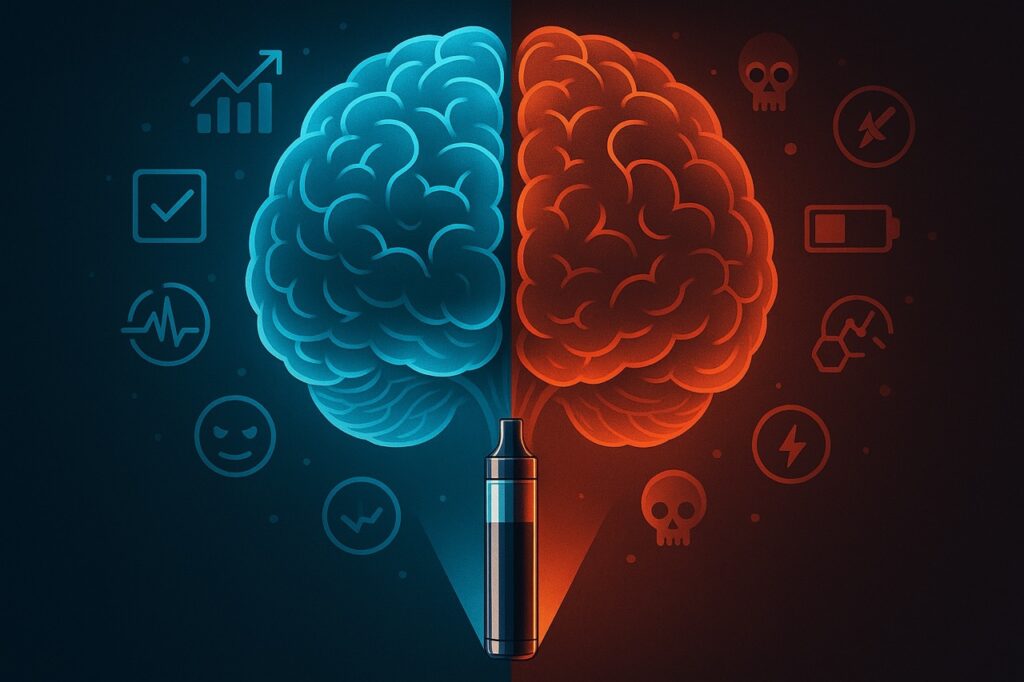
⚖️ Is It All Bad? The Honest Truth About Early Benefits
To be clear: nicotine does work — temporarily.
Some studies show that nicotine may improve short-term:
- Working memory
- Reaction speed
- Alertness and task engagement
But there’s a problem: these boosts come at a cost. And the cost rises over time:
- You need more for the same effect
- Your body’s baseline energy drops
- You think you’re focused — but you’re just avoiding withdrawal
- Your system is flooded with stress chemicals
So the “cheat code” becomes a trap. You’re no longer winning — you’re just chasing the high that once came free.
🧠 Final Thoughts: Know the Cheat Code… and the Cost
Most people don’t start using nicotine to become addicted.
They start because it works — fast.
Because in a chaotic, high-pressure world, it feels like control.
But over time, what looked like a boost becomes a burden.
And the cheat code… breaks the game.
🔄 What’s Next in the Series?
- 👉 How Nicotine Works in the Brain: The Dopamine Trap
- 👉 The Real Benefits of Nicotine (Short-Term Only)
- 👉 How Much Nicotine Is Too Much? Dosage & Toxicity Guide
🧠 Related Reads from Paranoid Prophet:
- Optimized Living: Low-Cost Chicken Feed Ideas
Sustainable living starts with intentional choices — even in what you feed your flock. Learn how to reduce waste, save money, and steward resources. - How to Grow Grass with Backyard Chickens
You can rebuild nature — even under daily stress. Here’s how to restore your yard with wisdom, patience, and smart planting habits. - Sacred Stewardship: Caring for Backyard Chickens
The way we treat our animals and our health reflects our values. Learn how stewardship starts at home — and with the body you’re given. - Was Jesus a Liar? Examining the Evidence Against Deception
In a world full of manipulation, truth matters. This article explores why Jesus can be trusted — and what honesty really looks like. - Christian Review of The Phantom Menace
Even Jedi miss the truth. This pop-culture parallel explores how pride, blindness, and deception mirror real-world spiritual struggles.
🔗 Related Reading
- Why People Start Smoking and Why It’s Hard to Stop – American Cancer Society
Explains the psychological and social reasons behind tobacco initiation, especially among teens, and explores the powerful grip of nicotine addiction - Nicotine Dependence – Wikipedia
A comprehensive overview of nicotine dependence, covering neurobiology, tolerance, withdrawal, genetic factors, and global health implications - Tobacco and Nicotine Use – Nature Reviews Disease Primers
A deep dive into how nicotine hijacks the brain’s reward system and contributes to addiction and chronic disease worldwide - Nicotine: Facts, Effects, and Dependency – Medical News Today
A clear summary of nicotine’s short‑term effects on mood, stress, heart rate, and its broader impact on health and well‑being - Effects of Nicotine on Human Brain Development – Wikipedia
Highlights the particular vulnerability of adolescent brains to nicotine’s effects on synapses, impulse control, and future addiction risk
❓ FAQ: Why People Start Using Nicotine
🔹 General Questions About Nicotine Use
Q: Why do people start using nicotine?
A: Many people start using nicotine because it provides short-term benefits like increased focus, reduced anxiety, and appetite suppression. It often feels like a productivity “cheat code” in high-pressure environments like school, work, or social settings.
Q: Is nicotine really that addictive from the start?
A: Yes. Nicotine creates dependence quickly because it stimulates dopamine release in the brain within seconds. This instant reward loop reinforces the habit early and strongly.
Q: What age do most people start using nicotine?
A: The majority of users begin in adolescence or early adulthood. Peer influence, stress, curiosity, and vape marketing all contribute to early use.
🔹 Physical & Psychological Effects
Q: What does nicotine do to the brain when you first use it?
A: Nicotine boosts dopamine and acetylcholine, enhancing alertness, focus, and mood temporarily. However, these benefits fade quickly, requiring repeat use and building tolerance.
Q: Is nicotine ever good for your brain or focus?
A: In the short term, yes — it can improve focus and working memory. But long-term use often leads to dependence, reduced baseline mental clarity, and emotional dysregulation.
Q: Does nicotine help with anxiety or make it worse?
A: Initially, nicotine may reduce anxiety by calming nerves. Over time, it worsens anxiety by creating withdrawal cycles and increasing the body’s stress response.
🔹 Cultural & Lifestyle Factors
Q: Why is nicotine use so popular among students and young adults?
A: Because it feels like a mental edge — helping with studying, focus, and stress. Modern devices like vapes also make nicotine use feel clean, discreet, and even “healthy,” which masks the danger.
Q: What role does social media play in nicotine use?
A: Platforms like TikTok and Instagram have normalized and glamorized vaping, especially flavored products, making them more appealing to teens and young adults.
Q: Why do people say nicotine is a “cheat code”?
A: Because it mimics the effects of self-discipline — alertness, control, reduced appetite — without the hard work. But it also masks exhaustion and stress, leading to burnout and dependency.
🔹 Addiction, Tolerance & Long-Term Risks
Q: How fast can someone get addicted to nicotine?
A: Addiction can develop in just days to weeks, especially with high-concentration products like nicotine salts used in vapes.
Q: What happens when you stop using nicotine after regular use?
A: Withdrawal symptoms may include irritability, fatigue, anxiety, sleep issues, and strong cravings. These symptoms can last from a few days to several weeks.
Q: Can you use nicotine occasionally without getting addicted?
A: Occasional use might not cause full addiction, but because of nicotine’s potency and fast reward cycle, even infrequent use can quickly turn into daily dependence.