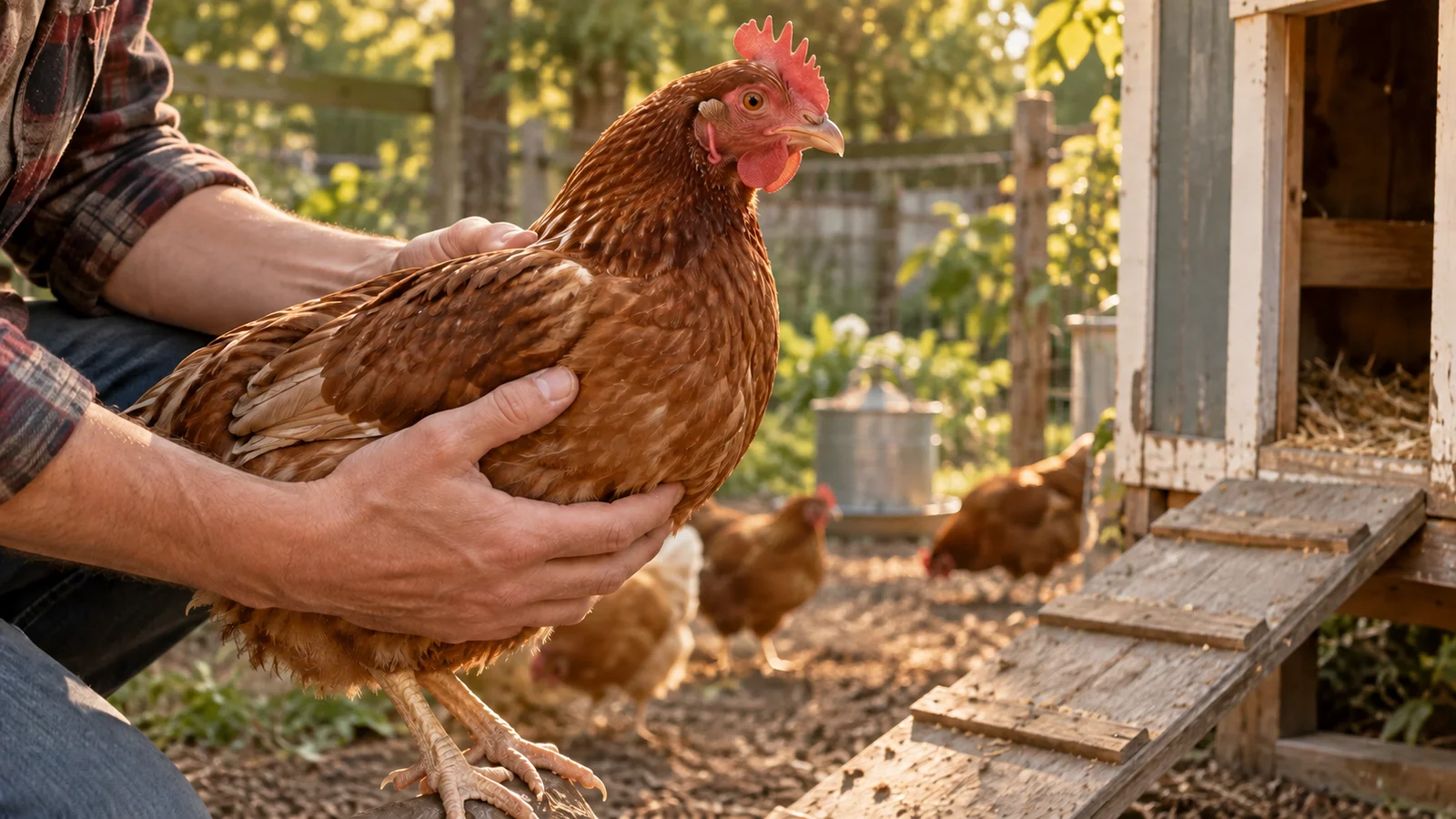

Backyard chicken keeping can be spiritually meaningful, but not because a coop is automatically sacred or a fresh egg is automatically more righteous than a store-bought one.
The Christian question is more demanding:
What does faithful care look like when a living creature actually depends on you?
Updated October 6, 2026. Sources checked for this remaster.
GUIDED ARTICLE EXPERIENCE
Christian Stewardship and Backyard Chickens: Caring Well for Animals Entrusted to Us
Read along as the narration moves through the article.
Private device narration · No hosted audio or tracking
CONTINUE GUIDED TOUR
Continue where you left off.
GUIDED TOUR COMPLETE
You have reached the end of this study.
Study record saved on this device.
GUIDED TOUR
Christian Stewardship and Backyard Chickens: Caring Well for Animals Entrusted to Us
Narrator: Paranoid Prophet Recommended Voice Native device narration
Prepare to follow the article as it is narrated.
VOICE & TOUR OPTIONS
Voice & Listening
NARRATOR
Finding a narrator…
Checking the best narrator available on this device.
Restores the best curated narrator available on this device.
Narrator choices are curated for clear, long-form listening on this device.
Screen-awake support will be checked when narration starts.
CHOOSE A NARRATOR
Curated for this device
Choose a verified narrator for this browser, or use System Narrator. Automatic mode uses the best reliable route exposed by this device; your chosen narrator is preserved even if this device needs a temporary fallback.
Preparing the guided article experience…
RESUME GUIDED TOUR?
Continue where you left off.
GUIDED TOUR COMPLETE
You have reached the end of this study.
Article Guide10 sections
Stewardship starts with ownership belonging to God
Christian stewardship begins with a basic claim: creation belongs to God.
Humans are given real authority within creation, but we are not ultimate owners in the sense of being accountable to no one.
Genesis 1:26–28 presents humanity as bearing God’s image and exercising dominion over other creatures. That authority is real. Scripture does not describe humans and animals as morally interchangeable.
But biblical authority is never a license for careless cruelty.
The person exercising dominion remains under God’s judgment.
Proverbs 12:10 is the clearest backyard-flock text
“The righteous care for the needs of their animals…” Proverbs 12:10, NIV (excerpt)
For chicken keepers, this verse does not tell us what percentage protein to feed or how many square feet a coop requires.
It gives something more basic: the condition and needs of the animal matter morally.
That principle shows up in practical questions:
- Is clean water available?
- Is the ration appropriate?
- Is housing secure from predators?
- Is the bird suffering from an untreated injury?
- Is the flock crowded because the keeper wanted more eggs than the property can support?
- Is a sick bird getting timely care?
Those technical answers come from husbandry evidence, including poultry Extension biosecurity guidance, rather than a verse-derived treatment protocol. The moral reason to take them seriously fits naturally with Proverbs 12:10.
Dominion is responsibility, not a slogan
Genesis 1:26-28 is sometimes used in opposite ways.
One side hears dominion and treats animals as though their suffering is irrelevant.
Another side reacts by pretending Scripture gives animals the same role and status as humans.
Neither move is necessary.
The biblical picture can hold both truths:
- humans have a distinct God-given role
- animals remain creatures under God’s care and should not be treated wantonly
For a backyard keeper, dominion looks less like a slogan and more like competence, restraint and responsibility.
Genesis 2:15 describes a vocation, not a care manual
A biblical word study can clarify a passage, but it should not manufacture detailed poultry-care instructions.
Genesis 2:15 describes Adam’s vocation in the garden. It belongs in a broader biblical theology of human work and care for creation.
It does not give a chicken keeper technical instructions.
Use Scripture for theology. Use poultry science for poultry facts.
Stewardship is visible when production slows
The older-hen care guide turns this responsibility into practical checks for mobility, nutrition, flock compatibility and veterinary support beyond peak laying.
It is easy to care about hens when egg baskets are full.
The real test comes when a bird:
- molts
- stops laying
- becomes sick
- grows old
- needs treatment
- requires a difficult end-of-life decision
If an animal has value only while producing, the keeper’s idea of stewardship is too thin.
That does not mean every chicken must be treated exactly like a household dog, or that livestock can never be culled or used for food.
It means decisions should be made deliberately, humanely and without needless suffering. Seek qualified veterinary guidance rather than improvising a painful treatment or euthanasia method. The Living Memorial guide discusses remembrance after a loss without replacing practical animal-health responsibilities.
Backyard does not automatically mean ethical
A backyard flock can be poorly managed.
Birds can be underfed, overcrowded, exposed to predators, left with untreated parasites or forced to live in chronic mud and manure.
Meanwhile, commercial systems are not all identical, and labels such as cage-free, free-range and organic have defined standards in certain regulated contexts. The USDA egg-grading program defines housing terms within its program; a label alone does not assess every aspect of welfare. The egg comparison guide explains those distinctions.
So the Christian claim should not be:
“My eggs are ethical because they came from my yard.”
A better claim is:
“These animals are under my care, so I am responsible for the conditions I provide.”
Good stewardship includes limits
Sometimes responsible care means not adding more birds.
Our own flock stripped most of the grass from our backyard by about the end of its first year. That observation illustrates land pressure; it does not establish what every yard or flock can sustain.
The same principle applies to:
- flock size
- feed budget
- predator protection
- drainage
- travel plans
- veterinary access
- neighbor impact
Wanting chickens does not create the capacity to care for chickens.
The site’s How Many Chickens Should You Start With?, Chicken Space Requirements, Cost of Raising Backyard Chickens and What Not to Feed Chickens guides help answer those practical questions with evidence. The benefits guide keeps the reasons for ownership in perspective.
Gratitude without romanticizing the flock
There is still room for joy.
Collecting eggs, watching hens forage and sharing extras with neighbors can create ordinary moments of gratitude.
In Luke 12:4–7, Jesus tells His followers to fear God rather than human persecutors, then uses God’s attention to sparrows to assure them that they are valued. Verse 6 supports God’s attention to small creatures within that human-directed teaching.
That passage is not a chicken-care manual. It can still train a Christian imagination away from contempt for small creatures.
The goal is not to spiritualize every feeding or coop cleaning.
Sometimes faithful stewardship simply looks like doing the chore well because the animal needs it done.
FAQ
Does the Bible say we should care for animals?
Proverbs 12:10 directly connects righteousness with care regarding one’s animals. Other passages contribute to a broader biblical theology of creation and human responsibility.
Does dominion mean humans can treat animals however they want?
No. Human authority is exercised under God’s authority. Scripture does not make cruelty morally irrelevant.
Does Christian stewardship require backyard chickens?
No. Keeping chickens is a practical choice, not a spiritual requirement.
Are backyard eggs automatically more ethical?
No. Welfare depends on actual care and conditions, not simply the size or location of the flock.
Does the Bible tell me how to feed or house chickens?
No. Use reliable poultry husbandry evidence for technical decisions.
Scripture anchors: Genesis 1:26–28; Genesis 2:15; Proverbs 12:10; Luke 12:4–7; Colossians 1:16–17. Moral applications are distinguished from the technical care guidance linked above.
The quiet standard
Christian stewardship does not need homestead fantasy.
It looks like animals fed before convenience, water checked when the weather is miserable, a sick hen noticed because someone was paying attention, and flock size kept within what the household can actually support.
Colossians 1:16–17 presents creation as made through and for Christ, and sustained in Him. Faithful care is one ordinary responsibility under His lordship; owning a flock does not make someone more righteous.
The animal in front of you needs competent care today. A Christian keeper can meet that need with gratitude to Christ, without turning a useful chore into a spiritual achievement.