
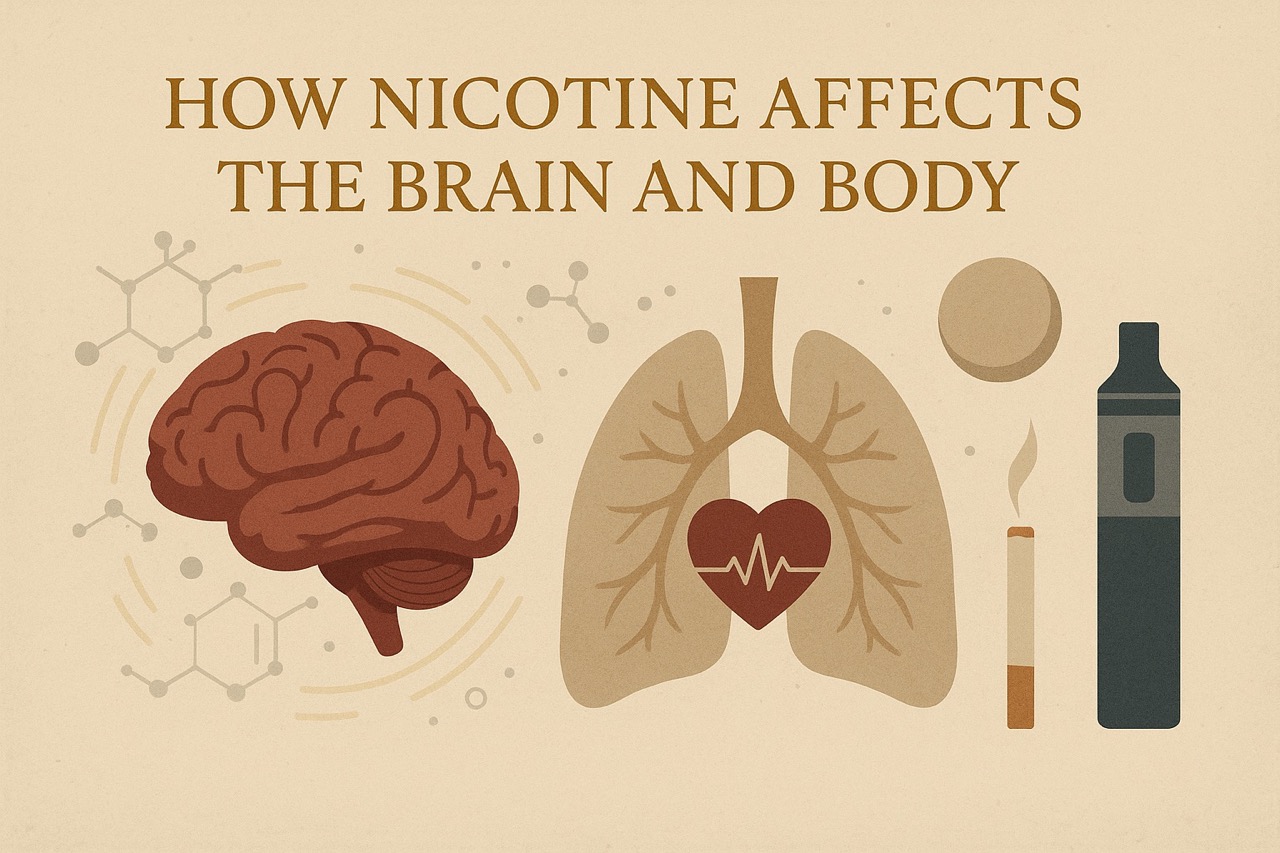

Nicotine is often treated like a simple stimulant — a quick fix for stress, boredom, or focus. But the truth is, it’s one of the most neurologically active substances you can legally use. Have you ever wondered about how nicotine affects the brain and body?
To fully understand how nicotine affects the brain and body, we need to look beneath the surface: what it does to your neurons, hormones, and nervous system from the very first dose… and what changes over time as your body builds tolerance.
Whether you smoke it, vape it, or take it orally with pouches or gum, nicotine doesn’t just pass through you — it rewires you. And that “cheat code” feeling? It’s not free.
⚡ How Nicotine Rewires the Brain’s Reward System
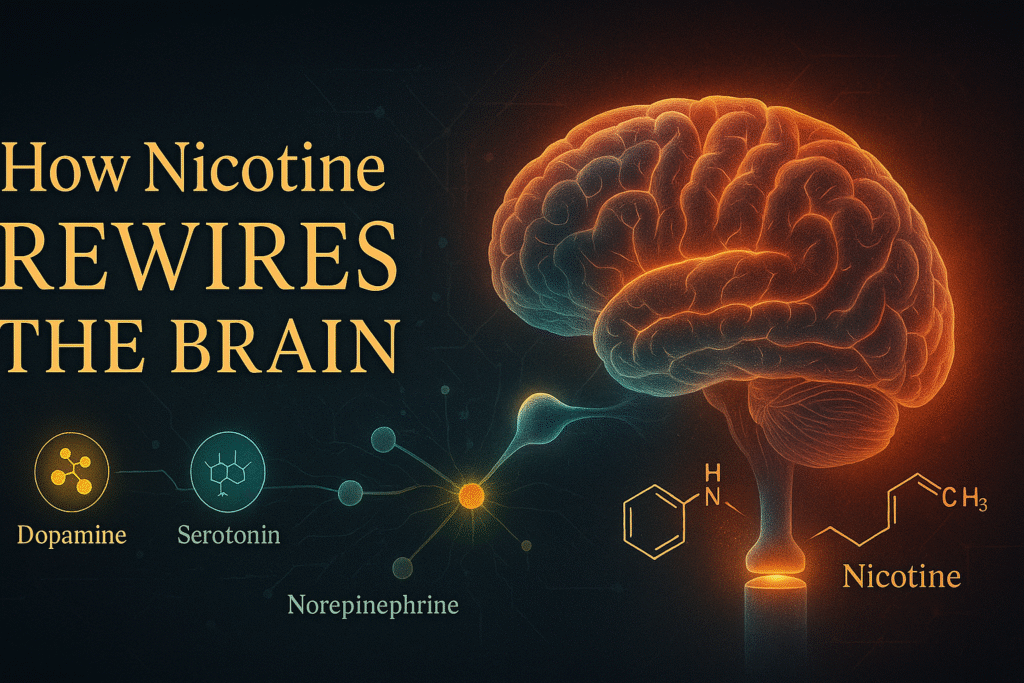
Nicotine primarily targets a group of receptors in the brain called nicotinic acetylcholine receptors (nAChRs). These are normally activated by acetylcholine, a neurotransmitter responsible for attention, memory, and arousal.
But nicotine is a far more aggressive intruder. When it binds to those receptors, it sends a powerful signal — and sets off a domino effect of neurotransmitter release, especially:
- Dopamine: triggers feelings of pleasure, reward, and motivation
- Norepinephrine: sharpens focus, increases vigilance
- Serotonin: balances mood and anxiety
- Beta-endorphins: dull physical pain and increase well-being
📌 Why it matters:
Nicotine doesn’t just activate reward systems — it hijacks them. Your brain begins associating positive feelings with nicotine, not with actual achievements or social connection. This is why even casual use can spiral into dependence.
Over time, your brain stops producing the same amount of natural dopamine on its own — leading to baseline depression, low motivation, or emotional flatness when not using.
💓 The Body’s Reaction: Heart, Hormones, and Stress
Nicotine isn’t just a brain chemical — it hits the entire sympathetic nervous system. That’s the part of your body responsible for “fight or flight.”
Within seconds or minutes (depending on ingestion method), nicotine causes your adrenal glands to release epinephrine (adrenaline) and cortisol.
System-wide effects include:
- Increased heart rate and blood pressure
- Sudden release of stored glucose → short-term energy spike
- Constriction of blood vessels
- Suppressed insulin release → raised blood sugar
- Elevated stress hormones — even if it feels calming
🧠 Key paradox:
Although nicotine can feel calming due to dopamine and endorphins, it’s also stimulating your stress system. This leads to a dangerous cycle: you feel calm because your stress system is overwhelmed — until it crashes.
🌀 How Tolerance Builds and the Effects Fade
The more often nicotine hits your system, the more your brain adapts — in all the wrong ways.
Here’s how your tolerance builds:
- Your receptors downregulate (fewer are active)
- You need more nicotine to get the same effect
- Your brain’s baseline dopamine levels drop
- Eventually, you use nicotine just to feel normal
This is why users go from “one Zyn every now and then” to “six tabs a day just to get through work.”
📌 Important: This process starts within days of repeated use — especially for high-dose products like vape salts or dip, where absorption is fast and intense.
😩 Withdrawal: What Happens When You Stop Using Nicotine
Because nicotine rewires your reward system and alters your stress response, going without it can feel like an emotional and physical crash.
Common withdrawal symptoms include:
- Irritability and anxiety
- Depression or low mood
- Trouble focusing or remembering
- Cravings and restlessness
- Headaches, fatigue, and flu-like feelings
⏳ How long it lasts:
Acute withdrawal usually peaks around 24–72 hours after your last dose. But mood and focus disruptions can persist for 1–3 weeks or longer depending on duration of use.
🧬 Long-Term Effects: What Chronic Nicotine Use Does to Your System
Even if you avoid smoking’s well-known dangers (like cancer and emphysema), nicotine alone still has long-term impacts — especially on mental performance and emotional health.
Chronic exposure has been linked to:
- Blunted reward sensitivity → less joy from everyday activities
- Increased anxiety baseline when not using
- Cognitive fog and poor memory in heavy users
- Disrupted sleep cycles (especially with night use)
- Hormonal imbalances tied to cortisol and insulin resistance
🧠 And in young users (teens to mid-20s), nicotine can permanently alter prefrontal cortex development, affecting decision-making, impulse control, and emotional regulation.
🧭 Different Methods, Same Core Impact — Just Different Timing
Let’s break down how nicotine affects the brain and body depending on how you take it:
| Method | Onset Speed | Peak Effect | Duration | Risk of Addiction |
|---|---|---|---|---|
| Cigarettes | 10–15 sec | ~2 min | ~45 min | Very High |
| Vape (nic salts) | 10–30 sec | ~2 min | ~60 min | Very High |
| Dip/Snus | 3–5 min | ~15–30 min | ~2 hrs | High |
| Zyn/Pouch | 5–10 min | ~30 min | ~1.5 hrs | High |
| Gum/Lozenge | 10–20 min | ~30–60 min | ~2–3 hrs | Moderate |
💡 Final Word: You’re Not Weak — It’s Potent Chemistry
If you’ve ever felt like nicotine was running your brain, you’re not imagining it. From dopamine to adrenaline to your heart rate and cravings, nicotine changes your internal wiring fast.
But understanding how nicotine affects your brain and body gives you a clear edge. It turns blind habits into conscious decisions. It opens the door to strategy — whether you’re cutting back, quitting, or just getting informed.
You can outthink it. You just have to know what it’s doing.
📚 Explore More from the Nicotine & Theology Series
Want to keep learning how nicotine works — and how it fits into a bigger spiritual and scientific picture? Dive deeper with these related reads from Paranoid Prophet:
- 🔥 Why People Start Using Nicotine
Understand the “cheat code” appeal and early benefits that hook millions — and why it works so well at first. - 🧠 Lucifer vs. the Watchers: Are They the Same Rebellion?
Explore how spiritual rebellion parallels human self-destruction — from ancient angelic sin to modern addictive cycles. - 🕳️ The Three-Tier UAP Theory
A dive into divine vs. deceptive influence — including tech, temptation, and the unseen forces shaping human behavior. - 🦾 What Did the Watchers Teach?
From forbidden knowledge to manipulation of flesh and spirit — this breakdown shows how dark knowledge still corrupts today. - 📖 Who Is God?
If you’re searching for freedom from what controls you — start here. A clear answer to life’s biggest question.
🌐 External Reading
- Nicotine’s Effects on the Brain & Body (YouTube explainer)
A clear, engaging breakdown of nicotine’s impact on brain chemistry, focus, stress, and how to quit.
🔗 Watch here - Nicotine Withdrawal Symptoms & Duration (WebMD)
A comprehensive overview of withdrawal—symptoms, timeline, and tips to cope.
🔗 Read it - How Nicotine May Buffer the Brain (Yale Medicine)
Explains nicotine’s temporary stress and pain reduction effects, including dopamine and opioid interactions.
🔗 Explore further - Nicotine Withdrawal Timeline (Healthline)
A detailed chart of withdrawal phases—onset, peak, duration—and what to expect each week.
🔗 Check the timeline - Effects of Nicotine on Brain Development (Wikipedia summary)
Covers how nicotine impacts developing brains—neuroplasticity, long-term dependence, and vulnerability in youth.
🔗 Review findings
❓ Frequently Asked Questions
💥 Brain & Neurochemistry
How does nicotine affect the brain’s reward system?
Nicotine hijacks the brain’s reward system by binding to nicotinic acetylcholine receptors, causing a surge in dopamine. This makes activities that naturally release dopamine (like exercise or achievement) feel less rewarding over time, reinforcing dependence on nicotine to feel good or even “normal.”
Does nicotine increase dopamine levels permanently?
No — nicotine causes a temporary spike in dopamine, but chronic use leads to receptor downregulation. Over time, your brain produces less dopamine naturally, contributing to mood swings, low motivation, and emotional flatness when you’re not using.
🧠 Cognitive and Emotional Impact
Can nicotine help with focus and attention?
Yes — nicotine boosts norepinephrine and acetylcholine, which can temporarily enhance attention and reaction time. However, the long-term cost includes tolerance, cognitive fatigue, and focus crashes once the effects wear off.
Does nicotine make anxiety worse or better?
It can feel calming at first due to dopamine and endorphin release, but nicotine also increases adrenaline and cortisol, which can raise your baseline stress level. Over time, many users develop higher anxiety levels between doses.
🧬 Body Effects & Physical Changes
What are the short-term effects of nicotine on the body?
Short-term effects include:
- Elevated heart rate
- Increased blood pressure
- Higher blood sugar
- Shallow breathing
- Mild muscle tension
These changes reflect sympathetic nervous system activation, mimicking a fight-or-flight state.
What are the long-term effects of nicotine on the body?
Chronic nicotine use has been linked to:
- Cardiovascular stress
- Insulin resistance
- Poor sleep quality
- Reduced immune response
- Hormonal imbalances (especially cortisol)
It also damages vascular and neural systems even without the added toxins of smoking.
⏱️ Tolerance, Addiction & Duration
How long does nicotine stay in your system?
Nicotine has a half-life of 1–2 hours, but its metabolite cotinine can stay in the body for up to 3 days. The full timeline depends on metabolism, method of use, and frequency.
Why do people build tolerance to nicotine so quickly?
Your brain adapts to overstimulation by reducing receptor sensitivity and quantity, meaning it takes more nicotine to get the same effect. This is especially fast with vape salts, cigarettes, and dip — all high-absorption methods.
Is oral nicotine (Zyn, lozenges) addictive too?
Yes. While it avoids combustion and some toxins, the core mechanism of addiction — dopamine disruption and acetylcholine hijacking — still applies. Many users find oral pouches easier to use constantly, which increases dependence.
🌀 Withdrawal & Recovery
What are the symptoms of nicotine withdrawal?
Common symptoms include:
- Irritability
- Anxiety
- Brain fog
- Low mood
- Sleep disruption
- Intense cravings
These symptoms often peak between 24–72 hours after quitting and may persist for 2–4 weeks depending on use history.
How long does it take to reset your brain after quitting nicotine?
Dopamine receptor activity and mood often begin normalizing within 3–6 weeks, though full neurochemical recovery can take several months — especially for long-term or heavy users.