
GUIDED ARTICLE EXPERIENCE
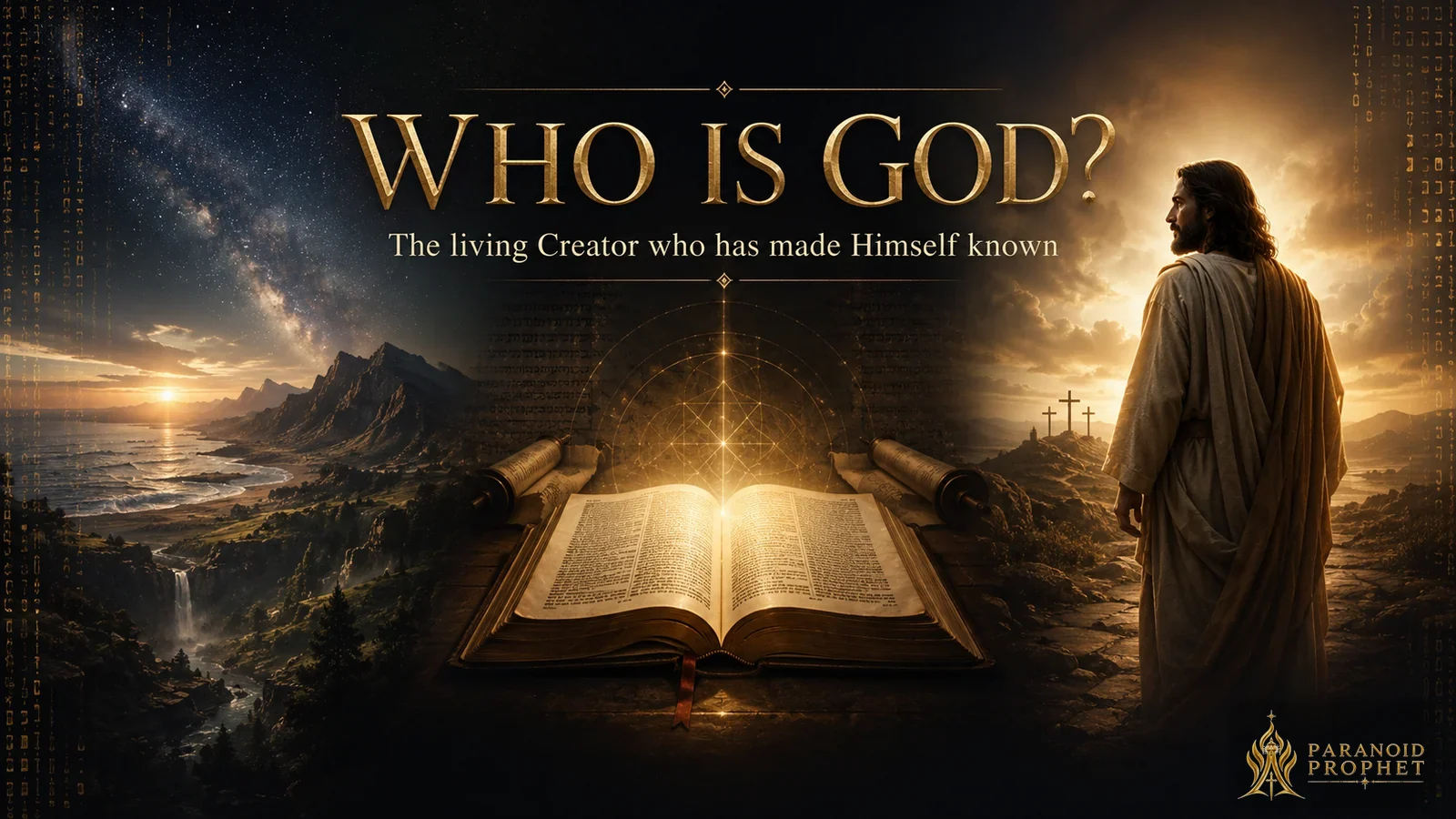
Who Is God? The Biblical Answer Revealed in Jesus Christ
Read along as the narration moves through the article.
Private device narration · No hosted audio or tracking
CONTINUE GUIDED TOUR
Continue where you left off.
GUIDED TOUR COMPLETE
You have reached the end of this study.
Study record saved on this device.
GUIDED TOUR
Who Is God? The Biblical Answer Revealed in Jesus Christ
Narrator: Paranoid Prophet Recommended Voice Native device narration
Prepare to follow the article as it is narrated.
VOICE & TOUR OPTIONS
Voice & Listening
NARRATOR
Finding a narrator…
Checking the best narrator available on this device.
Restores the best curated narrator available on this device.
Narrator choices are curated for clear, long-form listening on this device.
Screen-awake support will be checked when narration starts.
CHOOSE A NARRATOR
Curated for this device
Choose a verified narrator for this browser, or use System Narrator. Automatic mode uses the best reliable route exposed by this device; your chosen narrator is preserved even if this device needs a temporary fallback.
Preparing the guided article experience…
RESUME GUIDED TOUR?
Continue where you left off.
GUIDED TOUR COMPLETE
You have reached the end of this study.
Who is God? To answer that question, Christians must begin where the Bible begins: not with human speculation, spiritual instinct, or personal preference, but with God’s own self-revelation.
The Bible presents God as the eternal Creator, holy Lord, righteous Judge, faithful Redeemer, and personal Father of His people. He is not a vague spiritual force, a projection of human desire, or merely the strongest being in the universe. He speaks, acts, judges, saves, keeps covenant, and reveals His character.
His glory is visible in creation. His will is made known through Scripture. His heart is revealed most fully in Jesus Christ. God is powerful, but His power is holy. He is just, but His justice is never cruel. He is merciful, but His mercy does not treat evil as unimportant. He is one God, eternally Father, Son, and Holy Spirit.
In brief: The Bible presents God as the one eternal Creator who is holy, just, merciful, faithful, and personally knowable. He is distinct from creation without being distant from it. He has revealed Himself through creation and Scripture, and most fully through Jesus Christ, the eternal Son made flesh.
Source discipline: Scripture is the final authority for who God is. Theology, history, and philosophy can clarify language and answer objections, but they do not stand above God’s self-revelation. This article distinguishes clear biblical teaching from later theological vocabulary and unresolved questions. See Sources and Verification for the wider Paranoid Prophet approach.
Before there was a nation, a law, a temple, a prophet, or a human question about meaning, God already was. “In the beginning, God created the heavens and the earth” (Genesis 1:1). Everything in creation depends on Him. He depends on nothing outside Himself.
God is infinite while human beings are creatures. We do not master Him. Yet He is not unknowable. He has made Himself known so that people may worship Him, trust Him, repent before Him, receive His mercy, and live under His good rule.
Article Guide11 sections
God Makes Himself Known
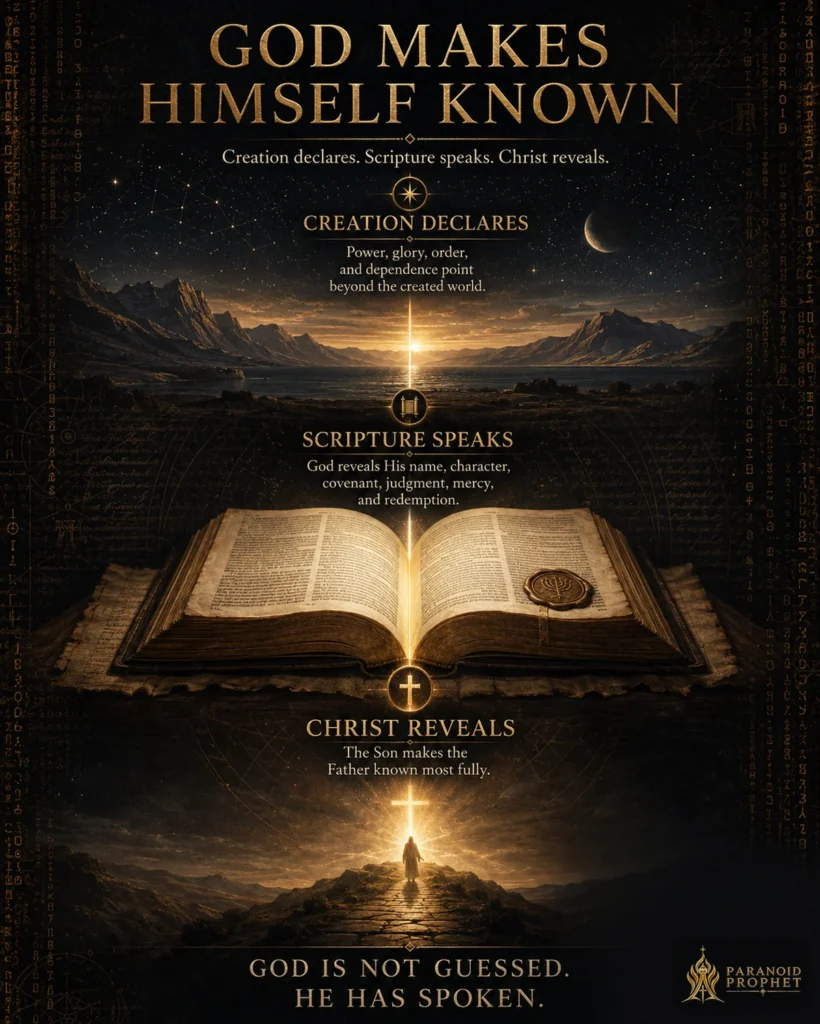
Creation gives real witness to God’s power and glory, but Scripture shows that God also speaks personally. He identifies Himself, declares His character, confronts sin, makes promises, and calls people into covenant fellowship.
God Reveals His Name and Character
When God sends Moses to Israel, Moses asks what he should say if the people ask for God’s name. In Exodus 3:13–15, God reveals the covenant name by which Israel is to remember Him.
This is more than a philosophical statement that God exists. God identifies Himself as the God of Abraham, Isaac, and Jacob—the God who has seen His people’s suffering, remembered His covenant, and will act in history. His name is bound to His faithfulness.
Later, when God reveals His glory to Moses, He declares Himself “merciful and gracious, slow to anger, and abounding in steadfast love and faithfulness,” while also refusing to treat guilt as meaningless (Exodus 34:5–7).
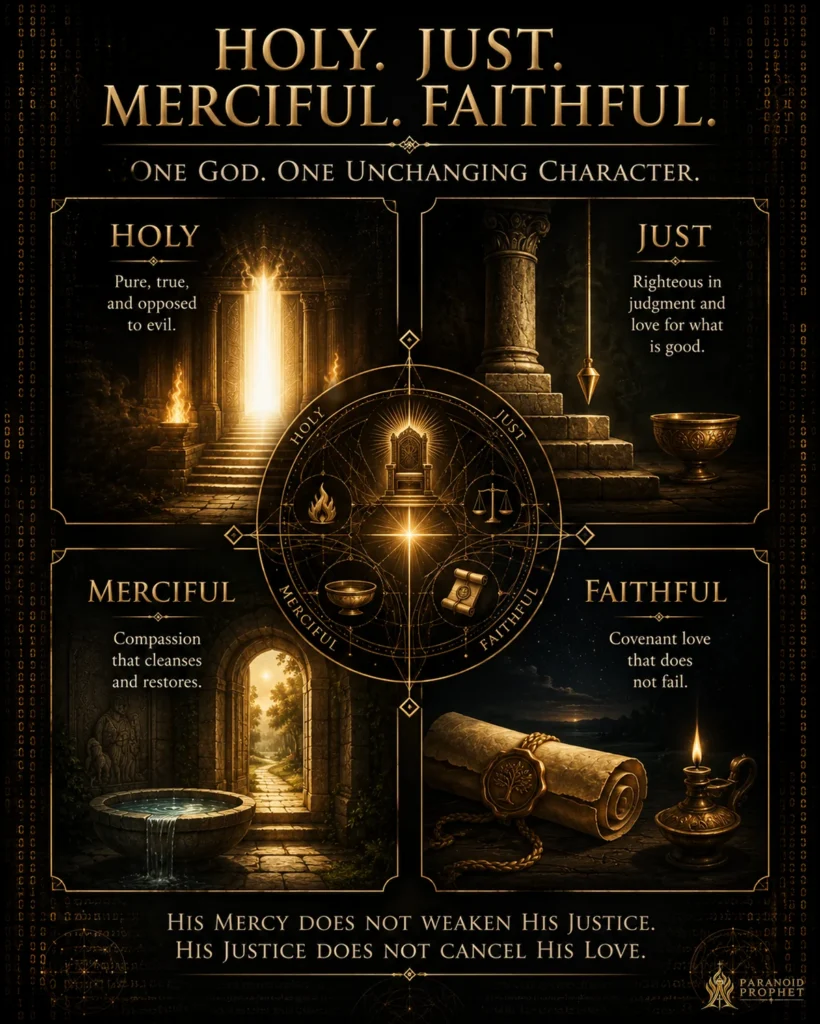
That passage holds together what people often divide. God is not forced to choose between love and justice, as though mercy softens a harsh God or judgment interrupts a loving one. He is holy, just, merciful, and faithful. His compassion does not make evil harmless, and His justice does not make Him distant from the broken.
God’s self-revelation means that human beings do not have the freedom to remake Him according to cultural preference. We do not define God by choosing only the traits we find easiest to accept. The living God reveals His own name, character, authority, and purpose.
God Reveals Himself in Creation and Scripture
Creation is not silent. Psalm 19 says that the heavens declare the glory of God, and Isaiah calls readers to lift their eyes and consider the One who calls the stars by name (Psalm 19:1–4; Isaiah 40:25–28). The created order points beyond itself. Its beauty, order, scale, dependence, and intelligibility invite worship rather than self-exaltation.
Creation does not, however, tell the whole story of God’s saving purpose. The heavens can declare glory, but they do not announce the covenant with Abraham, the exodus, the cross, forgiveness of sins, or the resurrection of Jesus. For that, God speaks through Scripture.
Hebrews describes a movement from God’s earlier speech through prophets to His climactic speech in the Son (Hebrews 1:1–4). God’s revelation is not a collection of disconnected spiritual impressions. It is a coherent story of creation, covenant, judgment, promise, redemption, and the coming of Christ.
Readers who want to explore creation, time, and faith-and-science questions further can continue with God as Creator beyond time and creation. That article is a related exploration. The foundation remains God’s self-revelation in Scripture.
God Is Not a Force or a Created Being
Many people use the word “God” for an energy field, universal consciousness, the moral good within humanity, or nature itself. Scripture uses it differently. God is the living Creator and Lord, not a force to be used, manipulated, or absorbed into private spirituality.
God Is the Eternal Creator
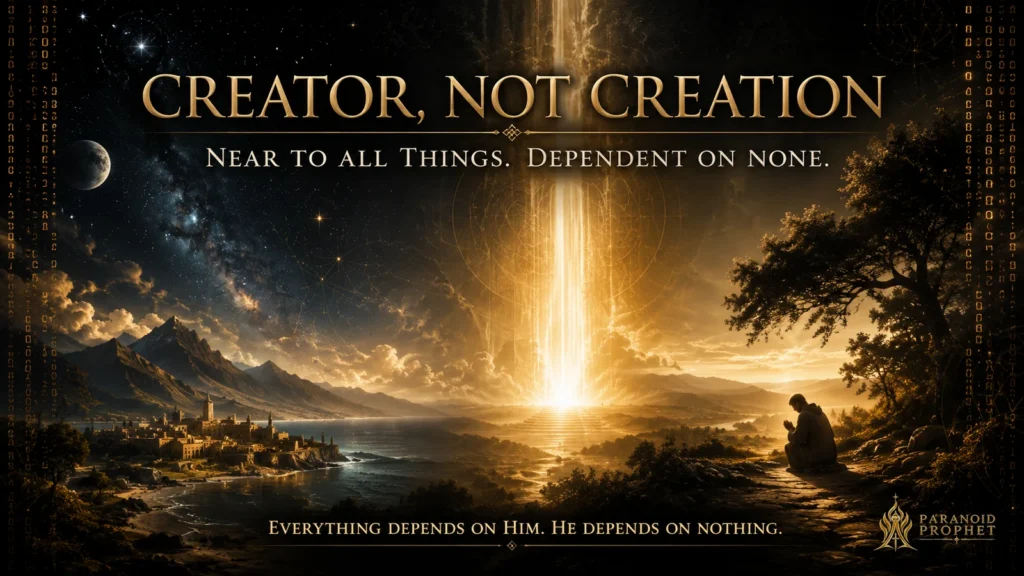
God is not one item inside the universe or merely the most impressive being within a larger system. Isaiah declares, “I am the first and I am the last; besides me there is no god” (Isaiah 44:6–8). The Lord is distinct from every created power, ruler, image, star, nation, or spiritual rival.
Paul makes the same distinction in Athens. In Acts 17:24–28, he proclaims the God who made the world and everything in it. This God is not confined to temples made by human hands, is not served as though He needed anything, and gives life and breath to all people.
God’s eternity does not make Him unreal, detached, or inaccessible. It means that He does not begin, decay, depend, or fade as creatures do. Psalm 90 says that before the mountains were brought forth and before the earth was formed, God was God from everlasting to everlasting (Psalm 90:1–2).
Creation is good because God made it. It is not ultimate because He alone is God.
God Is Spirit and Not an Idol
Jesus tells the Samaritan woman, “God is spirit, and those who worship him must worship in spirit and truth” (John 4:19–26). He is not saying that God is vague, impersonal, or less real than material things. He is teaching that God cannot be confined to one sacred location, controlled through religious performance, or reduced to an object made by human hands.
That is why Scripture rejects idols. An idol is a created thing treated as though it were God: an image, power, nation, ideology, possession, desire, or spiritual experience elevated above the Creator. God is not made by us, carried by us, or managed by us. He calls us to worship Him in truth.
Because God is Spirit, He is not limited by distance, geography, or bodily boundaries. No one can flee beyond His sight, and no place lies outside His rightful rule.
God Is Near Without Becoming Part of Creation
The Bible does not force readers to choose between a distant God and a God identical with the world. God is higher than creation, yet He sustains it. He is distinct from His creatures, yet He is near to them. He speaks, hears prayer, judges evil, comforts the broken, and calls people to Himself.
Paul says that God is not far from each one of us, for in Him we live and move and have our being (Acts 17:24–28). That does not mean human beings are fragments of God. It means every breath, every moment, and every created reality depends on Him.
This truth gives worship both humility and hope. We are not the center of reality, and we are not abandoned within it. The God who made all things is near enough to call sinners, hear prayer, reveal mercy, and bring His people into fellowship with Himself.
God Is Holy, Just, Merciful, and Faithful
The Bible does not present God as raw power without character. His holiness, justice, mercy, faithfulness, and love belong together.
Some want a God of love without judgment. Others speak of justice without tenderness. Scripture refuses both distortions. God’s love is holy. His justice is righteous. His mercy is costly. His faithfulness does not fail when people fail.
God’s Holiness Is Not Mere Distance
God’s holiness means more than that He is impressive, mysterious, or far above ordinary life. Scripture presents Him as morally pure, utterly faithful, and entirely free from evil. He is not simply better than human beings by degree. He is the holy Creator before whom every creature stands accountable.
When Isaiah sees the Lord high and lifted up, the heavenly beings cry, “Holy, holy, holy is the Lord of hosts” (Isaiah 6:1–7). Isaiah’s response is not casual admiration. He becomes aware of his own uncleanness and the uncleanness of the people among whom he lives.
God’s holiness exposes sin because sin is not merely a mistake, private preference, or unfortunate weakness. It is rebellion against the One who made us, knows us, and rightly calls us to love Him and one another.
Yet holiness does not mean that God remains distant from broken people. In Isaiah’s vision, God does not leave Isaiah condemned. He provides cleansing and then sends him. The God who is holy makes a way for sinners to be cleansed, restored, and called into His service.
God’s holiness speaks to worship, truthfulness, sexual integrity, justice, compassion, idolatry, pride, and the way human beings treat one another. A holy God cannot be reduced to a spiritual accessory for the life we already want to live.
God’s Justice Opposes Evil
God’s justice is His righteous opposition to evil and His commitment to what is true, good, and right. Psalm 89 says that righteousness and justice are the foundation of God’s throne, while steadfast love and faithfulness go before Him (Psalm 89:14).
God’s throne is not founded on arbitrary power. He does not rule by force detached from goodness. His justice is joined to steadfast love, and His faithfulness is joined to righteous judgment.
A God who never judged evil would not be more loving. He would be morally indifferent. He would treat violence, abuse, oppression, betrayal, cruelty, exploitation, and deceit as though they were finally insignificant. Scripture gives no comfort in that direction. God sees evil. He judges it. He will not allow it to have the final word.
This truth includes the forms of sin people excuse in themselves. Scripture does not let readers stand at a safe distance and condemn only the evil of others. God’s holiness and justice expose the pride, selfishness, dishonesty, bitterness, greed, and rebellion that run through the human heart.
But the biblical answer is not despair. God’s justice prepares us to understand why mercy is necessary and why redemption must be more than God pretending sin does not matter.
God’s Mercy Does Not Cancel His Justice
Exodus 34 presents God as merciful and gracious, slow to anger, abounding in steadfast love and faithfulness, forgiving iniquity, transgression, and sin. The same passage also says that He will not simply clear the guilty as though evil had no consequence (Exodus 34:5–7).
That is not a contradiction in God. It is the beginning of the gospel. God’s mercy does not mean He lowers His standard until sin becomes harmless. God’s justice does not mean He refuses compassion to the guilty. At the cross, Scripture presents God dealing seriously with sin while providing redemption through His Son.
Romans 3 brings together God’s righteousness, human sin, grace, redemption, and Christ’s sacrificial death (Romans 3:21–26). Paul does not present salvation as God ignoring guilt. He presents it as God acting in Christ so that He may be just and the justifier of the one who has faith in Jesus.
Second Corinthians says that God made Christ, who knew no sin, to be sin for us so that in Him we might become the righteousness of God (2 Corinthians 5:21). First John says that God’s love is shown not merely by warm feeling but by the sending of His Son as the atoning sacrifice for sins (1 John 4:7–10).
The cross is where God’s holiness, justice, mercy, and love are seen together. God does not call evil good. He confronts it. He does not abandon sinners to judgment without hope. He provides salvation through Christ.
A fuller treatment of the cross can explore sacrifice, substitution, victory, reconciliation, ransom, and other biblical dimensions of Christ’s saving work. The essential point here is simpler: God’s mercy does not make His justice weaker. In Christ, His mercy fulfills His righteous purpose to save sinners without pretending sin is nothing.
God Is Faithful When People Are Not
God’s faithfulness means that His character, word, and covenant promises do not drift with human instability. He does not become less truthful when people lie, less loving when people fail, or less righteous when a generation turns away from Him.
Moses tells Israel that the Lord is God, “the faithful God who keeps covenant and steadfast love” with those who love Him and keep His commandments (Deuteronomy 7:6–11). Lamentations declares that the steadfast love of the Lord never ceases and that His mercies are new every morning (Lamentations 3:19–26).
God’s faithfulness is not permission to presume upon grace. Scripture repeatedly joins God’s promises to repentance, trust, obedience, and perseverance. But His faithfulness means that His people are not finally sustained by their own emotional consistency. They are sustained by the God whose character remains true.
Faith does not require pretending every loss is easy to understand. It means trusting that God remains worthy of trust when circumstances are dark, questions are unresolved, and the path forward cannot yet be seen clearly.
God Reigns Without Becoming the Author of Evil
God’s sovereignty is one of the most comforting and one of the most difficult truths in Scripture. The Bible presents God as King over creation, nations, history, life, death, judgment, redemption, and the future. Nothing can overthrow His ultimate purposes.
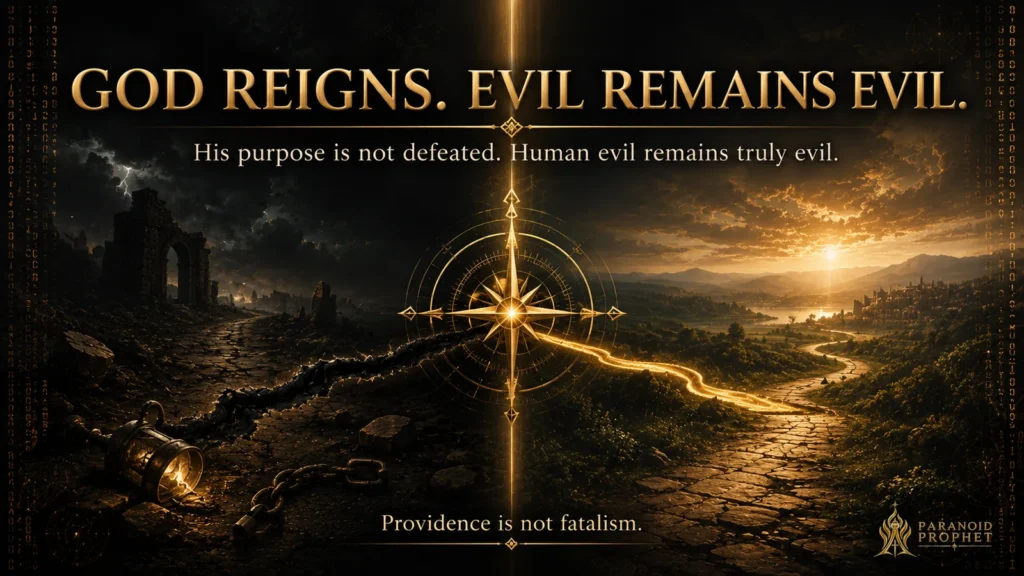
Yet Christians must speak of sovereignty carefully. Saying that God reigns does not mean evil becomes good, human choices become meaningless, prayer becomes pointless, or suffering always comes with an explanation we can immediately see.
God’s Rule Is Real
Psalm 103 says that the Lord has established His throne in the heavens and that His kingdom rules over all (Psalm 103:19). Daniel praises God whose dominion is everlasting and whose kingdom endures from generation to generation (Daniel 4:34–35).
God’s sovereignty means that no ruler, empire, disaster, rebellion, or spiritual power can finally overthrow Him. History is not a machine running without purpose, and creation is not abandoned to chaos. God remains Lord even when people cannot see the whole pattern of His providence.
That truth gives courage without making believers passive. Because God reigns, prayer matters. Obedience matters. Justice matters. Mission matters. Scripture never uses God’s sovereignty as an excuse to stop acting faithfully in the world He governs.
Human Evil Remains Human Evil
The Bible does not protect God’s sovereignty by denying human responsibility. It often presents both truths together.
Joseph tells his brothers, “You meant evil against me, but God meant it for good” (Genesis 50:15–21). Their betrayal was real evil. God did not call it righteous simply because He later brought good from it. Yet God was not defeated by their sin. He worked through what they intended for harm in order to preserve life.
The cross gives the clearest New Testament example. Peter says that Jesus was delivered up according to God’s definite plan and foreknowledge, while those who crucified Him acted through lawless hands (Acts 2:22–24). Acts 4 likewise speaks of Herod, Pontius Pilate, the Gentiles, and the peoples of Israel doing what God’s hand and plan had predestined to take place, while the passage still treats their actions as opposition to God’s holy servant Jesus (Acts 4:23–31).
Christians have long debated how divine sovereignty and human freedom should be explained philosophically. This article does not attempt to settle every system. The biblical witness is enough to establish the essential point: God is sovereign, people are morally responsible, evil is truly evil, and God is able to bring His righteous purposes through a world marked by sin without becoming morally guilty of sin Himself.
Providence Is Not Fatalism
Fatalism says that events happen by blind necessity and that human choices make no meaningful difference. Biblical providence says something else. God rules personally, wisely, and purposefully. Human beings are called to pray, repent, work, love, resist evil, seek justice, care for the weak, and trust God through uncertainty.
Romans 8:28 is often quoted quickly in suffering: “for those who love God all things work together for good.” The verse is a profound promise, but it is not a slogan telling every grieving person that every tragedy will soon make sense. Paul addresses those who love God and are called according to His purpose. The surrounding chapter speaks honestly about weakness, groaning, suffering, prayer, hope, and the future redemption of creation (Romans 8:18–30).
God has not promised to explain every sorrow in this life. He has promised that evil will not have the final word. Scripture permits lament, grief, protest, and tears. It also directs believers to the cross, where God does not remain distant from suffering, and to the resurrection, where death itself is not allowed the final victory.
God’s rule is not a reason to minimize pain. It is the reason Christians can grieve without despair. The God who reigns is also holy, merciful, faithful, and near. His sovereignty is never separated from His character.
God Is Unchanging, Powerful, and Good
God’s power is never detached from His character. He is not unstable, arbitrary, dishonest, or morally unpredictable. The God who rules creation is the same God who keeps covenant, hears prayer, judges evil, shows mercy, and remains worthy of trust when circumstances are dark.
God’s Character Does Not Change
God does not become more holy, more loving, more truthful, or more faithful over time. He does not make a promise in one generation and abandon His character in the next. His people can trust Him because He is not ruled by weakness, mood, or changeable desire.
Through the prophet Malachi, God says, “For I the Lord do not change” (Malachi 3:6). James describes the Father of lights as the One with whom there is no variation or shadow due to change, while Titus and Hebrews affirm that God does not lie (James 1:17; Titus 1:1–3; Hebrews 6:17–18).
These texts do not present God as distant or uninvolved. Scripture also portrays Him as hearing prayer, warning, forgiving, judging, responding to repentance, comforting the broken, and acting within history. Christians differ on how best to explain every passage where God is described as relenting, grieving, or responding. The central truth is clear: God is perfectly faithful and personally present.
Christian faith is therefore more than optimism. It rests on the God whose character remains true when people fail, suffering comes, and human understanding reaches its limit.
God’s Power Is Holy, Wise, and Good
Scripture presents God as the Creator who made heaven and earth, the King who rules over history, and the Redeemer who accomplishes what human beings cannot accomplish for themselves.
Jeremiah prays, “Ah, Lord God! It is you who have made the heavens and the earth by your great power and by your outstretched arm! Nothing is too hard for you” (Jeremiah 32:16–27). Jesus tells His disciples that what is impossible with human beings is possible with God in the context of salvation and the kingdom (Matthew 19:23–26).
To say that God is all-powerful does not mean that He contradicts His own character or makes nonsense true. Scripture says that God cannot lie, cannot be tempted with evil, and does not tempt anyone toward evil (Hebrews 6:17–18; James 1:13). These are not weaknesses imposed on Him. They reveal the perfection of who He is.
God’s power does not make every tragedy easy to explain. Scripture never tells grieving people that pain is imaginary or that every loss will quickly make sense. It tells them that God remains Lord, that evil will not have the final word, and that He has entered the world’s suffering through the cross of Christ.
The God who has power to create also has power to redeem and raise the dead. Christian hope is not built on human strength, moral progress, or the certainty that life will become easier. It is built on the living God whose power is always joined to holiness, wisdom, justice, and love.
God Is One: Father, Son, and Holy Spirit
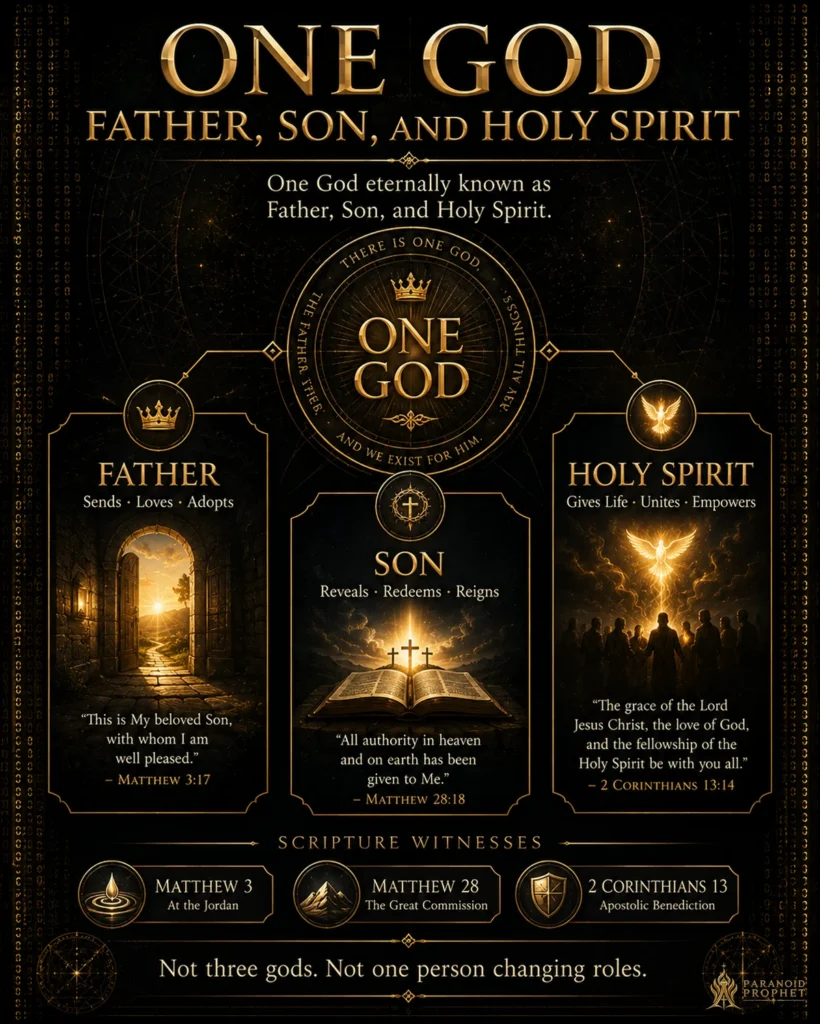
Christians do not believe in three gods. Scripture is uncompromising that God is one. Israel’s foundational confession declares, “Hear, O Israel: The Lord our God, the Lord is one” (Deuteronomy 6:4–5). Jesus affirms this confession when asked about the greatest commandment (Mark 12:28–34).
The Christian doctrine of the Trinity begins there: there is one God. Yet the New Testament also speaks of the Father, Son, and Holy Spirit in ways that cannot be reduced to one person merely appearing under different names. The Father sends the Son. The Son prays to the Father. The Father sends the Spirit in the Son’s name, and Jesus speaks of sending the Spirit from the Father. The three are personally distinguished while Scripture continues to confess one God.
God Is Father Through the Son and Spirit
The Bible calls God Father, but that truth needs to be understood carefully. God is the Creator and rightful Lord of all people. Every human life depends on Him. Yet the New Testament speaks of adoption in a deeper covenant sense: through Jesus Christ, believers are brought into the family of God.
Jesus teaches His disciples to pray, “Our Father in heaven” (Matthew 6:5–15). Paul gives this truth its redemptive shape: God sends His Son so that those under the law might receive adoption, then sends the Spirit of His Son into believers’ hearts, crying, “Abba! Father!” (Galatians 4:4–7; Romans 8:12–17).
This protects the uniqueness of Jesus. Christians do not become children of God in the same way Jesus is the Son of God. He is the eternal Son. Believers become adopted children through Him. His sonship is by nature; theirs is by grace.
God’s fatherhood is not sentimental permissiveness. A good father does not celebrate destruction in the lives of his children. He corrects, provides, protects, disciplines, forgives, and leads them toward life. The Father revealed in Scripture is holy and loving together.
One God, Not Three Gods
The word Trinity does not appear in the Bible. Christians use it as shorthand for the Bible’s united witness: the Father is God, the Son is God, the Holy Spirit is God, and there is only one God.
That doctrine is not a mathematical riddle invented to make Christianity confusing. It is an attempt to speak faithfully about all that Scripture says. Christians cannot deny the Father’s deity, reduce the Son to a created messenger, treat the Holy Spirit as an impersonal force, or abandon biblical monotheism. The doctrine of the Trinity protects each of those truths together.
Human analogies often create more confusion than clarity. Water, ice, and steam do not explain the Trinity. Neither do eggs, clovers, or three-part objects. The goal is not to make God small enough to fit inside a metaphor. It is to speak truthfully about the God who has revealed Himself.
The Father, Son, and Spirit in Scripture
At Jesus’ baptism, the Son stands in the water, the Spirit descends like a dove, and the Father speaks from heaven (Matthew 3:13–17). The scene presents the Father, Son, and Spirit together in the unfolding mission of redemption.
Jesus commands His disciples to baptize “in the name of the Father and of the Son and of the Holy Spirit” (Matthew 28:16–20). Paul closes 2 Corinthians with a blessing that names “the grace of the Lord Jesus Christ and the love of God and the fellowship of the Holy Spirit” (2 Corinthians 13:11–14).
These passages do not give a complete technical definition of the Trinity in one verse. They show why the church came to confess one God who is eternally Father, Son, and Holy Spirit. The New Testament does not permit Christians to separate God’s unity from the divine identity and work of the Son and Spirit.
Why the Trinity Matters for Love, Salvation, and Worship
The Trinity matters because Christians are not saved by a vague spiritual power. The Father sends the Son. The Son takes on flesh, lives in obedience, bears sin, dies, rises, and reigns. The Holy Spirit gives new life, unites believers to Christ, assures them of adoption, and equips them for faithful living.
The Trinity also matters because God’s love is not created by human need. Jesus says that the Father loved Him before the foundation of the world (John 17:24). God’s love flows from who He eternally is.
This is why Christians worship the Father through the Son by the Holy Spirit. The Christian life is not an attempt to reach an unknown God by spiritual effort. It is an invitation into the life of the God who has made Himself known and opened the way to Himself through Christ.
Jesus Christ Is the Fullest Revelation of God
God is known through creation, covenant, Scripture, and His acts in history. But the New Testament says that God has made Himself known most fully in Jesus Christ.
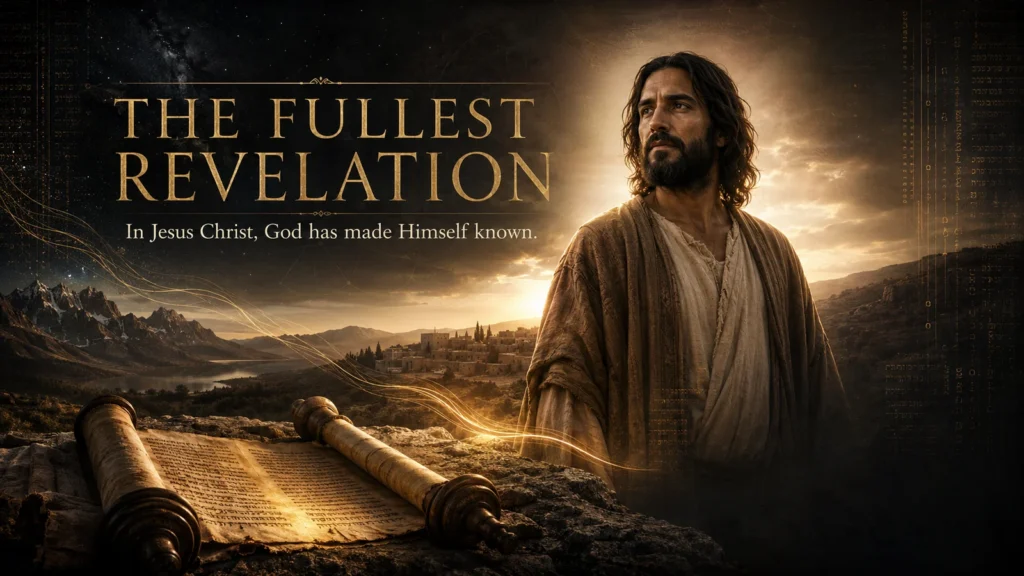
John opens his Gospel by declaring that the eternal Word was with God and was God, that all things were made through Him, and that the Word became flesh and dwelt among us (John 1:1–18). Jesus is not merely a prophet carrying information about God. He is the eternal Son who has come from the Father and made the Father known.
When Philip asks Jesus to show the disciples the Father, Jesus answers, “Whoever has seen me has seen the Father” (John 14:8–11). Jesus does not mean that the Father and Son are the same Person. He means that the Son perfectly reveals the Father because He shares the divine identity and carries out the Father’s will without error or division.
Paul calls Christ “the image of the invisible God” and says that all things were created through Him and for Him (Colossians 1:15–20). Hebrews says that the Son is the radiance of God’s glory and the exact imprint of His nature (Hebrews 1:1–4). These are not decorative titles. For Christians, the question “Who is God?” finds its clearest answer in Jesus Christ.
In Jesus, God’s holiness is not softened into permissiveness. His mercy is not reduced to sentiment. His justice is not detached from love. At the cross, the Son gives Himself for sinners. In the resurrection, God vindicates the crucified Christ and reveals that sin, death, and evil will not have the final word.
The full biblical and historical case for Christ’s identity belongs in the evidence that Jesus is the Son of God. The essential point here is clear: God has not left humanity with only speculation, nature, or religious instinct. He has made Himself known in His Son.
What Does God’s Character Mean for Us?
Knowing who God is changes how we see ourselves. If God is Creator, we are not self-made. If He is holy, sin is more serious than personal preference. If He is just, evil will not be ignored. If He is merciful, guilt does not need to become despair. If He is faithful, suffering does not make hope irrational. If He is Father through Christ, no believer approaches Him as an unwanted stranger.
God’s character calls for worship rather than self-made religion. We do not choose which parts of God to accept while rejecting the parts that confront us. He is not a spiritual tool for achieving private goals. He is Lord, and worship begins with receiving Him as He has revealed Himself.
God’s holiness also calls for repentance. The gospel does not tell people to deny sin, excuse it, or manage appearances. It calls them to turn from sin and trust the mercy God provides through Jesus Christ. Repentance is not hopeless self-condemnation. It is leaving false masters and returning to the God who is both holy and gracious.
God’s character gives hope in a world marked by grief, injustice, and change. Scripture permits tears and lament. It does not promise that every suffering will be explained in this life. But it does promise that God is near to the broken, that Christ has entered suffering, that death has been defeated in His resurrection, and that God will make all things new (Romans 8:18–25; Revelation 21:1–5).
The God of Scripture is not an answer to use against pain. He is the Lord who meets His people within it, calls them to endure in faith, and promises that evil will not win. For a fuller picture of the risen Christ’s holiness, authority, and glory, see the glorified Christ in Revelation 1.
Frequently Asked Questions
Is God male or female?
God is spirit and is not a creature with a human body or biological sex. Scripture consistently reveals God as Father, and Jesus teaches His disciples to pray to “Our Father.” The Bible also uses maternal imagery for God’s care and compassion. Christians should receive the language God uses for Himself without reducing Him to human categories.
Is God a person or a force?
God is not an impersonal force. He speaks, knows, wills, judges, loves, makes promises, hears prayer, and reveals Himself. He is not less than personal, though He is not merely a larger version of a human person. He is the living Creator and Lord.
How can God be one and three?
Christians believe there is one God who eternally exists as Father, Son, and Holy Spirit. This does not mean three gods, and it does not mean one God merely changing roles. The word “Trinity” summarizes the Bible’s united witness about God’s unity and the divine identity of the Father, Son, and Spirit.
Does God change His mind?
Scripture teaches that God does not change in character, holiness, truthfulness, or faithfulness. It also portrays Him as personally engaged with people—hearing prayer, warning, forgiving, judging, and responding to repentance. Christians differ on how best to explain every passage, but Scripture clearly presents God as both faithful and personally active.
How can God be loving and still judge sin?
Love without justice would leave evil unopposed. Justice without mercy would leave sinners without hope. The cross shows that God does not ignore sin, yet He provides redemption through Christ. His judgment is not the opposite of love; it is part of His righteous opposition to what destroys His creation and harms those made in His image.
Why does a good God allow evil?
Scripture never calls evil good or promises an immediate explanation for every sorrow. It permits lament, shows God entering suffering through Christ, promises judgment against evil, and points to resurrection and new creation as God’s final answer. God has not promised to explain every pain now; He has promised that evil will not have the final word.
Can people know God personally?
Yes. God is not fully comprehended by any creature, but He is truly knowable because He reveals Himself. Through Jesus Christ, believers are forgiven, reconciled to God, adopted as His children, and given the Holy Spirit. Knowing God is not merely knowing facts about Him. It is entering a real relationship of worship, trust, obedience, and love.
Continue the case: Explore the evidence that Jesus is the Son of God, consider God as Creator beyond time and creation, see the glory of Christ in Revelation 1, or review how Paranoid Prophet weighs Scripture, evidence, and uncertainty.
Sources and Further Reading
Scripture is the final authority for this article’s doctrine of God. Historic Christian confession and theological works can help explain how believers have received and articulated the Bible’s teaching, but they do not stand above God’s Word.
- Primary biblical texts: Exodus 3 and 34; Deuteronomy 6; Isaiah 40; John 1 and 14; Colossians 1; Hebrews 1; Romans 3 and 8.
- The Nicene Creed: a historic Christian summary of the church’s confession of one God—Father, Son, and Holy Spirit. Read it as a doctrinal witness seeking to summarize Scripture, not as a replacement for Scripture.
- J. I. Packer, Knowing God: an accessible and influential guide to God’s holiness, love, truth, justice, and faithfulness.
- Michael Reeves, Delighting in the Trinity: an accessible introduction to why the Trinity matters for worship, salvation, and Christian joy.
- Paranoid Prophet: Sources and Verification: explains how this site distinguishes Scripture, history, scholarship, tradition, uncertainty, and apologetic inference.
Final Verdict: God Has Made Himself Known
The Bible does not present God as a vague force, a distant creator, or a reflection of whatever human beings most want Him to be. He is the one eternal Creator, holy Lord, righteous Judge, merciful Redeemer, faithful Father, and King over all things.
God’s holiness means evil matters. His justice means evil will not have the final word. His mercy means sinners are not left without hope. His faithfulness means His promises do not collapse when human beings fail. His sovereignty means history is not abandoned to chaos. His fatherhood means that through Christ, believers are not merely tolerated but welcomed as children.
But Scripture’s answer rises higher than an attribute list. God has made Himself known in Jesus Christ. The eternal Son became flesh, revealed the Father, bore sin at the cross, rose in victory, and now reigns as Lord. To know who God is, Christians must look finally to Christ.
God is not merely an idea to consider. He is the living Lord before whom every person stands. He calls us away from idolatry, sin, self-rule, and false religion. He calls us to repentance, faith, worship, and life through His Son. The God who made all things has made Himself known. His name is holy. His mercy is real. His kingdom will stand. And in Jesus Christ, He invites sinners to come near.
CONTINUE THE INVESTIGATION
Christ-centered continuation
Is Jesus the Son of God? Evidence from History, Prophecy, Resurrection, and Scripture
Continue from God’s biblical attributes into the Christ-centered question of Jesus’ identity, claims, cross, and resurrection.