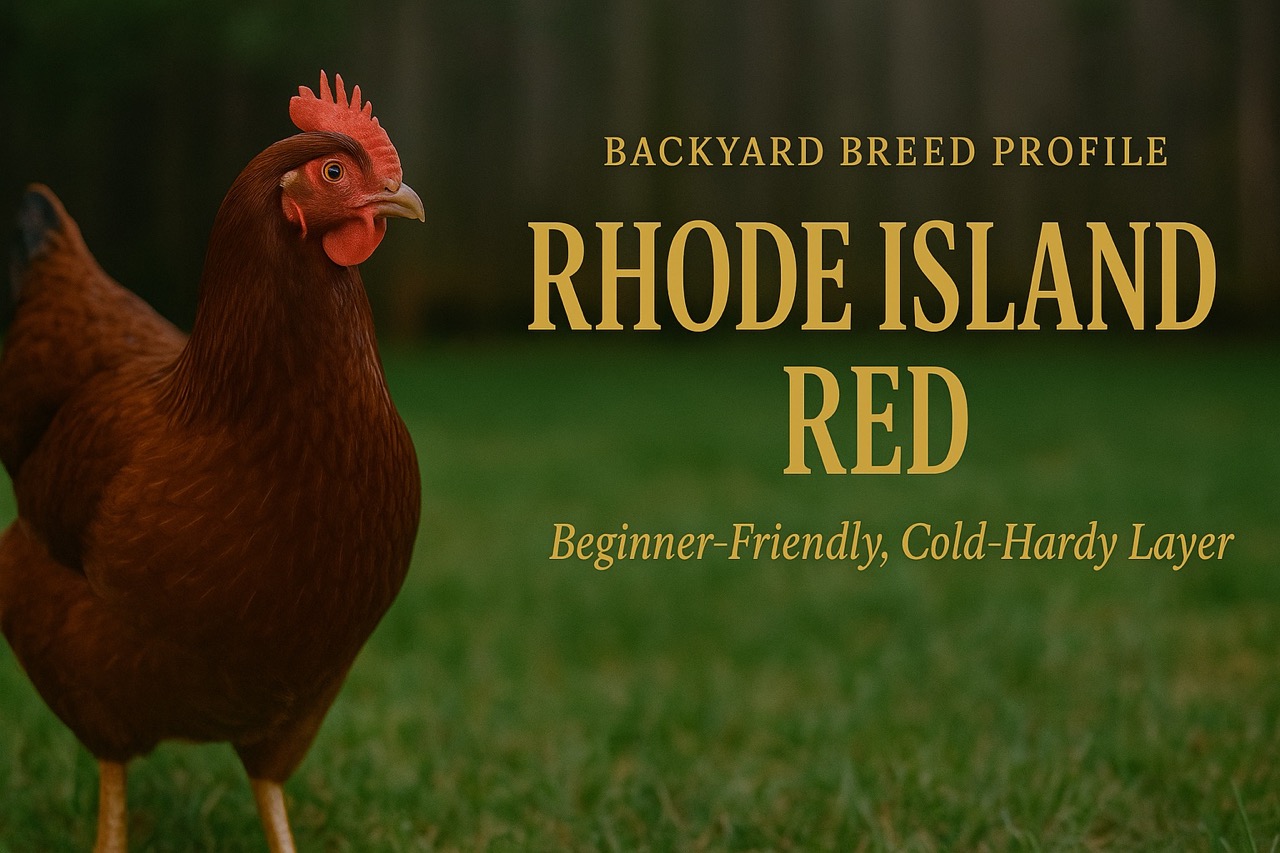

Looking for a beginner-friendly backyard chicken breed? The Rhode Island Red chicken is one of the best choices you can make. Known for its hardiness, strong egg production, and low-maintenance personality, this heritage breed is ideal for new chicken keepers and seasoned homesteaders alike.
📜 Breed Overview
- Breed Name: Rhode Island Red
- Origin: United States, late 1800s
- Type: Dual-purpose (eggs & meat)
- Temperament: Friendly, confident, independent
- Egg Color: Brown
- Egg Production: 250–300 eggs/year
- Cold Hardy: ✅ Yes
- Heat Tolerant: ✅ Yes
- Best For: Beginners, families, homesteads, egg-lovers
🌟 Why Choose Rhode Island Reds?
Rhode Island Reds are known as one of the most beginner-friendly chicken breeds for a reason. They offer:
💪 Hardiness — These birds were bred to endure harsh New England winters and hot summers. Their rugged constitution makes them incredibly adaptable.
🥚 Reliable egg production — You’ll get 250–300 large brown eggs per year from a healthy hen. That’s nearly 5–6 eggs per week — per bird.
🤝 Independent nature — While friendly and approachable, they’re also content to roam, forage, and entertain themselves. Perfect for busy families or hands-off keepers.
🧠 Rhode Island Red Chicken Temperament and Behavior
Rhode Island Reds have a personality that suits many situations:
- They’re gentle enough for children to handle with supervision.
- They socialize well with other chickens but may show leadership in the flock.
- They’re independent foragers, meaning they’ll help with bugs and weeds in the yard — and don’t need constant human attention.
✅ They’re not aggressive, but they are confident — which helps them integrate well into mixed flocks.
🥚 Egg Production: Daily Layers of Deep Brown Eggs
When it comes to egg-laying, Rhode Island Reds are true workhorses. You can expect:
- 250–300 eggs per year per hen
- Large, brown, hard-shelled eggs
- Winter laying that outperforms most other breeds
This reliability makes them a favorite not just for hobby keepers, but also for small-scale farms and egg-selling operations.
🌡️ Climate Tolerance: One of the Hardiest Breeds Available
From muggy summers to icy winters, Rhode Island Reds hold up remarkably well. With proper shade and ventilation in summer and shelter from wind in winter, they’ll continue laying and thriving through the seasons.
They have:
- Dense feathering for insulation
- Strong immune systems
- Minimal breed-specific health problems
📍Whether you’re in Texas or Maine, they adapt beautifully.
🏡 Who Are Rhode Island Reds Best For?
If any of these describe you, this breed might be the perfect match:
- ✅ You’re new to chicken keeping
- ✅ You want lots of eggs without complicated care
- ✅ You’re building a small homestead or family flock
- ✅ You need chickens that can handle both cold and heat
- ✅ You want chickens that free-range well but don’t need supervision
🧰 Tips for Raising Rhode Island Reds
🪺 Space Requirements:
- At least 4 sq ft per hen inside the coop
- 10–15 sq ft per hen in the run or yard
🧠 Flock Compatibility:
- Confident but not aggressive — keep an eye on dynamics if mixing with more docile breeds like Silkies or Cochins.
🎯 Enrichment Ideas:
- Dust baths
- Foraging zones
- Hanging treats, stumps, or swing perches
💡 Pro Tip: Offer extra calcium (like crushed oyster shells) during peak laying to support shell strength.
💭 Should You Choose the Rhode Island Red Chicken?
If you want a no-fuss, high-output, cold-hardy chicken that’s both charming and productive, the Rhode Island Red is an all-star.
They’re ideal for families, homesteaders, and anyone looking to start a flock that actually earns its keep. Even with minimal effort, they’ll give you a return in eggs, joy, and garden help.
🐔 Related Reading on Paranoid Prophet
- 🐣 How Many Chickens Should I Start With?
- 🪺 Broody Hen Solutions – What to Do When She Won’t Leave the Nest
- 🌾 Winter Cover Crops for Chickens
- 🧠 Backyard Chickens & Mental Health Benefits
- 🥚 Backyard Eggs vs Store-Bought – What’s Better?
🐔 Comprehensive Guides and Breed Profiles
- Grubbly Farms: This article provides an in-depth look at the Rhode Island Red’s history, unique features, and adaptability to different climates. It also discusses the differences between heritage and production strains, offering insights into their temperament and suitability for various flock settings. Grubbly Farms
- Backyard Barnyard: This comprehensive guide explores the Rhode Island Red’s history, distinctive traits, and care tips, making it a great starting point for those interested in adding this breed to their flock. Backyard Barnyard
🥚 Egg Production and Care Tips
- Agriculture.com: This article offers practical advice on feeding Rhode Island Reds, including dietary recommendations to enhance egg production and overall health. Successful Farming
🏛️ Historical Context and Recognition
- Wikipedia: Provides a comprehensive overview of the Rhode Island Red’s origins, development, and status as Rhode Island’s state bird. It also discusses the breed’s role in the poultry industry and its recognition by the American Poultry Association. Backyard Barnyard+2Wikipedia+2ThriftyFun+2
❓ Frequently Asked Questions About Rhode Island Red Chickens
Are Rhode Island Reds good for beginners?
Yes, Rhode Island Reds are one of the best chicken breeds for beginners. They’re hardy, low-maintenance, and prolific egg layers. Their friendly but independent nature makes them easy to care for, even for first-time flock owners.
How many eggs do Rhode Island Reds lay per year?
On average, a Rhode Island Red hen lays 250–300 brown eggs per year. That’s around 5–6 eggs per week, making them one of the most productive backyard layers.
Are Rhode Island Reds aggressive?
Rhode Island Reds are generally confident and assertive, but not usually aggressive. In mixed flocks, they may become dominant, especially with more docile breeds. They’re a good fit for flocks where balance and space are maintained.
Can Rhode Island Reds tolerate cold weather?
Yes. Rhode Island Reds are extremely cold-hardy, thanks to their dense feathering and strong genetics. With basic shelter and wind protection, they continue to lay eggs through the winter months better than many heritage breeds.
Do Rhode Island Reds do well in hot climates?
They’re also heat-tolerant, as long as they have access to shade, ventilation, and fresh water. Their versatility makes them ideal for both northern and southern U.S. climates.
How big do Rhode Island Reds get?
A mature Rhode Island Red hen typically weighs 6.5–7.5 lbs, while roosters can reach 8.5 lbs or more. They are medium-to-large birds with a deep, rich mahogany color.
Are Rhode Island Reds noisy?
They are relatively quiet compared to other breeds, though roosters may crow more frequently. Hens may cluck during egg-laying or when excited, but they’re not known to be loud or disruptive.
Do Rhode Island Reds go broody?
Some do, but not often. Rhode Island Reds are not known for frequent broodiness, which is helpful if you’re focused on egg production rather than raising chicks.
Can I keep Rhode Island Reds with other chicken breeds?
Yes — they integrate well into mixed flocks, especially with other hardy or confident breeds. Avoid pairing with overly timid chickens unless you have plenty of space to reduce conflict.
How long do Rhode Island Reds live?
With proper care, Rhode Island Reds can live 5–8 years on average. Some may live longer in peaceful environments with good nutrition and low stress.