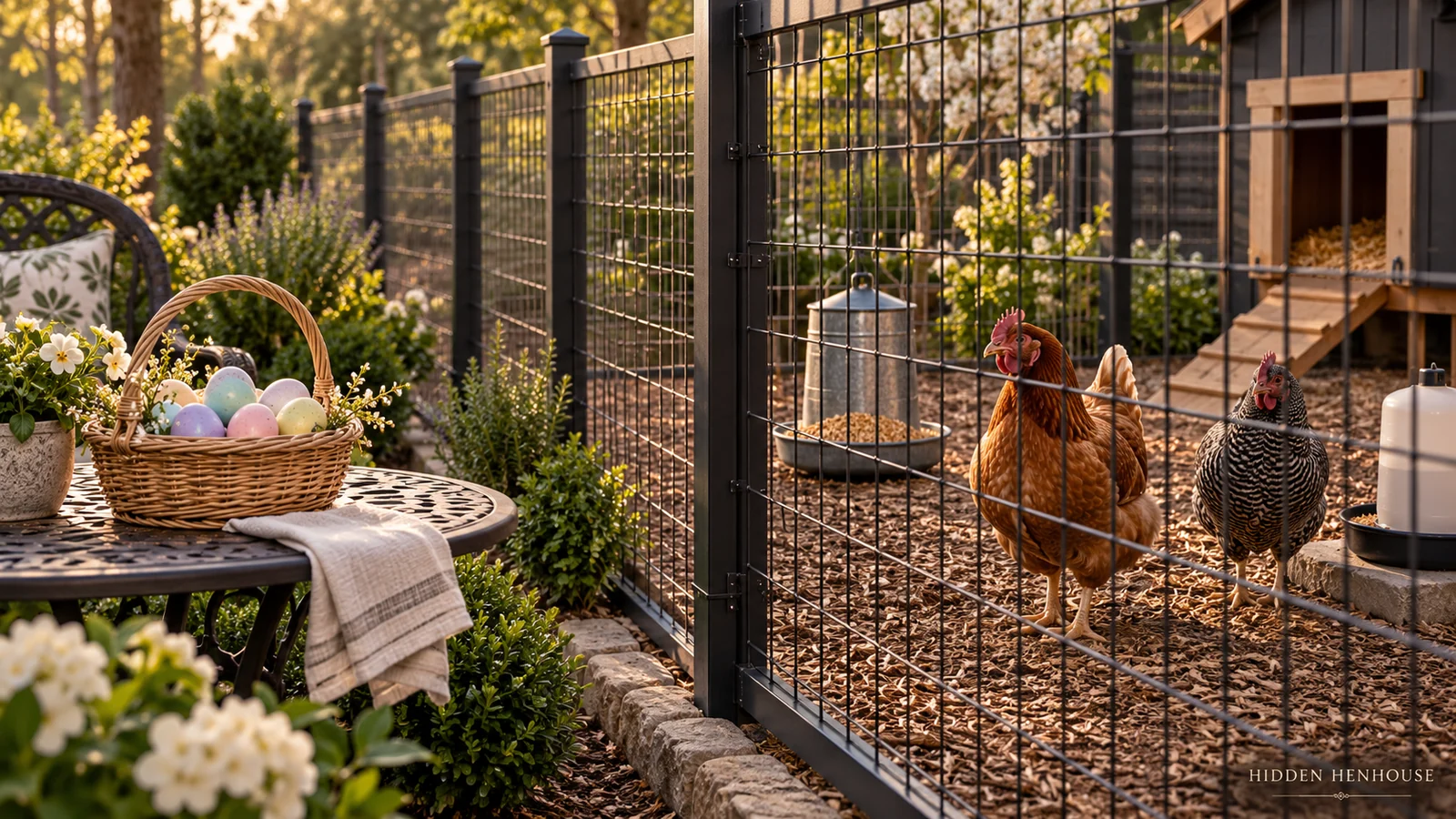

Keep the Easter egg hunt outside the areas where chickens live or roam. Candy, plastic eggs, wrappers and decorative grass do not belong in the flock’s space. Plain, properly handled cooked egg is a different question from an egg that has spent the afternoon as a decoration.
The simplest plan is also the easiest to clean up: one area for the flock, another for the celebration. You can enjoy the hens without asking them to share a yard full of holiday materials.
Updated October 6, 2026. Poultry, visitor hygiene and egg-safety sources reviewed.
GUIDED ARTICLE EXPERIENCE
Easter Eggs and Chickens: What’s Safe Around Your Flock
Read along as the narration moves through the article.
Private device narration · No hosted audio or tracking
CONTINUE GUIDED TOUR
Continue where you left off.
GUIDED TOUR COMPLETE
You have reached the end of this study.
Study record saved on this device.
GUIDED TOUR
Easter Eggs and Chickens: What’s Safe Around Your Flock
Narrator: Paranoid Prophet Recommended Voice Native device narration
Prepare to follow the article as it is narrated.
VOICE & TOUR OPTIONS
Voice & Listening
NARRATOR
Finding a narrator…
Checking the best narrator available on this device.
Restores the best curated narrator available on this device.
Narrator choices are curated for clear, long-form listening on this device.
Screen-awake support will be checked when narration starts.
CHOOSE A NARRATOR
Curated for this device
Choose a verified narrator for this browser, or use System Narrator. Automatic mode uses the best reliable route exposed by this device; your chosen narrator is preserved even if this device needs a temporary fallback.
Preparing the guided article experience…
RESUME GUIDED TOUR?
Continue where you left off.
GUIDED TOUR COMPLETE
You have reached the end of this study.
Article Guide6 sections
Choose an egg-hunt area away from the flock
The concern is not only what a hen might swallow. CDC guidance explains that backyard poultry can carry harmful germs even when they look healthy. Do not eat or drink where poultry live or roam. Our practical recommendation is to keep the hunt and its food out of those areas too; briefly shutting the birds away does not turn their usual roaming ground into a food-clean surface.
CDC says children younger than five should not handle or touch poultry. Supervise children around the birds and during handwashing afterward, and do not give chicks or ducklings to young children as gifts. For families who want to learn about the flock, our chickens-for-kids guide offers activities with appropriate boundaries.
Cooked eggs and eggshells: food, not decorations
A small amount of plain, hard-cooked egg can be an occasional supplement. An older Penn State poultry-veterinary guide discusses crumbled cooked egg in a feeding context. That is not a reason to replace the ration, prescribe it as a treatment or promise extra egg production. Texas A&M’s veterinary guidance keeps appropriate complete feed as the main food and treats limited.
If you choose to offer egg, prepare a fresh, plain portion, cool it, and remove leftovers before they deteriorate. Do not serve a seasoned egg dish, an egg of uncertain storage history or food recovered from the hunt. The hens do not need a special Easter menu.
Eggshell recycling is a separate calcium-management decision. Alabama Extension includes properly prepared dried eggshells among calcium sources for laying hens. This does not make painted or decorated shells suitable supplements, or mean extra layer calcium belongs in every young bird’s diet. A purpose-made poultry calcium source, used appropriately for laying hens, is a simpler choice than trying to reclaim holiday shells.
Food-safe dye is different from craft paint
USDA’s Easter food-safety guidance permits food-grade dye on eggs intended for people to eat. It would be wrong to call every synthetic food coloring toxic while assuming everything plant-derived is safe.
However, human food-grade approval is not a poultry feeding trial or approval of every decorated shell. Check the product’s intended use. Craft paint, coatings, glitter, glue and unknown materials should stay out of poultry food and reach. Our editorial recommendation is to choose plain uncolored egg for an intentional flock treat and keep decorated eggs for the human celebration.
The FDA’s egg-safety guidance also warns people not to eat eggs after hiding or playing with them because contamination on the shell can transfer to the edible part. That is human food-safety advice; it is not evidence that those eggs become acceptable chicken scraps. Keep the two purposes separate.
Candy, plastic grass and wrappers stay outside
Chocolate is not a flock treat. UF/IFAS chicken-feeding guidance from May 2026 advises keeping chocolate candy and baked goods away from chickens. Merck’s general pet-bird guidance likewise advises avoiding chocolate, caffeinated drinks and sweets. The latter is avian guidance, not a chicken-specific dose chart.
Other candy is still unsuitable holiday food for the flock. We do not need to claim that every sweet contains a lethal ingredient to keep it out. This guide does not transfer dog-specific xylitol warnings into an unsupported chicken claim.
Plastic eggs, ribbons, decorative grass and wrappers are also unnecessary in a run. Merck describes foreign-body ingestion in young pet birds; that is related avian evidence, not a measured Easter injury rate for chickens. Excluding swallowable non-food materials is a conservative housekeeping choice. Avoid unsupported claims that every plastic egg leaches poison, every wrapper causes a blockage, or every jelly bean causes choking.
A practical cleanup and response plan
- Keep the celebration and food outside poultry living and roaming areas.
- Use a physical boundary to prevent access to decorations; do not rely on watching every beak.
- Count plastic eggs and collect wrappers, ribbons and grass after the hunt.
- Keep props beyond reach during photos and avoid restrictive costumes or stressful handling.
- Remove spoiled leftovers rather than using the flock as a disposal service.
If a hen gets access to candy or craft materials, remove the remaining material and keep its packaging. Record what she may have eaten, when and roughly how much. Contact a poultry veterinarian for suspected ingestion of chocolate or foreign material, and promptly for breathing difficulty, weakness or other concerning changes. Do not induce vomiting or improvise a home remedy.
For everyday feeding decisions, see what not to feed chickens and the pumpkin treat guide. Neither seasonal fruit nor holiday leftovers replace dependable poultry nutrition.
A celebration with room for good care
The government, veterinary and university sources linked above support distinct questions: visitor hygiene, human egg safety, poultry nutrition and avian hazards. They are not interchangeable proof that every holiday material is toxic. Where the evidence is indirect, the recommendation is identified as a precaution.
Easter celebrates the risen Christ. Caring for the animals entrusted to us can be a quiet part of that day: keep their familiar space secure, give the family a separate place to celebrate, and let good boundaries do their work.