

GUIDED ARTICLE EXPERIENCE
What Do Jehovah’s Witnesses Believe? Jehovah’s Witnesses and Christianity Compared
Read along as the narration moves through the article.
Private device narration · No hosted audio or tracking
CONTINUE GUIDED TOUR
Continue where you left off.
GUIDED TOUR COMPLETE
You have reached the end of this study.
Study record saved on this device.
GUIDED TOUR
What Do Jehovah’s Witnesses Believe? Jehovah’s Witnesses and Christianity Compared
Narrator: Paranoid Prophet Recommended Voice Native device narration
Prepare to follow the article as it is narrated.
VOICE & TOUR OPTIONS
Voice & Listening
NARRATOR
Finding a narrator…
Checking the best narrator available on this device.
Restores the best curated narrator available on this device.
Narrator choices are curated for clear, long-form listening on this device.
Screen-awake support will be checked when narration starts.
CHOOSE A NARRATOR
Curated for this device
Choose a verified narrator for this browser, or use System Narrator. Automatic mode uses the best reliable route exposed by this device; your chosen narrator is preserved even if this device needs a temporary fallback.
Preparing the guided article experience…
RESUME GUIDED TOUR?
Continue where you left off.
GUIDED TOUR COMPLETE
You have reached the end of this study.
Jehovah’s Witnesses speak often about Jesus Christ. They believe He came from heaven, died for humanity’s sins, rose from the dead, and now rules as King of God’s Kingdom. They distribute Bibles, conduct Bible studies, and call people to repentance and faith.
So why do historic Christians disagree so profoundly with their understanding of Jesus?
The difference reaches deeper than holidays, door-to-door evangelism, or the name Jehovah. It concerns who Jesus is, what happened at His resurrection, and who has the authority to interpret the Christian faith.
Jehovah’s Witnesses teach that Jesus is God’s first creation, known in heaven as Michael the archangel. Historic Christianity confesses that the Son is eternal, shares the divine identity of the Father, became truly human, and rose bodily from the grave.
Both positions appeal to Scripture. Both claim to honor Jesus.
But both cannot describe His identity in the same way.
That makes the question worth investigating through the earliest Christian testimony, the biblical texts themselves, and the historical claims behind the Watch Tower movement.
Article Guide18 sections
What Do Jehovah’s Witnesses Believe? The Short Answer
Jehovah’s Witnesses are a worldwide religious movement that identifies itself as Christian and emphasizes worship of Jehovah, the personal name it uses for God.
Their core beliefs include:
- One Almighty God: Jehovah alone is the uncreated, supreme God.
- Jesus Christ: Jesus is God’s unique Son, His first creation, the promised Messiah, and the Savior through whose ransom sacrifice humans may receive eternal life.
- The Holy Spirit: God’s active force, not a distinct divine person.
- The Bible: The inspired authority for religious truth, with the New World Translation widely used.
- God’s Kingdom: A real heavenly government under Jesus Christ that began ruling in 1914.
- Salvation: A gift made possible by Jesus’ sacrifice, requiring faith, repentance, and a life expressing obedience.
- The future: A heavenly destiny for 144,000 who reign with Christ, and the hope of everlasting life on a restored paradise earth for the great majority of God’s faithful people.
Jehovah’s Witnesses reject the doctrine of the Trinity, the inherent immortality of the soul, and the belief that God eternally tortures people in hell.
They also maintain political neutrality and emphasize public Bible teaching.
These are not assumptions made by outsiders. They are presented in the movement’s own official summary of beliefs.
Where Did Jehovah’s Witnesses Come From?
The modern movement emerged in the United States during the late nineteenth century.
In the Pittsburgh area, Charles Taze Russell and associates began examining biblical prophecy, the return of Christ, and doctrines they believed churches had misunderstood.
Their work became associated with the Bible Student movement and the publication later known as The Watchtower.
Russell played a central organizing and publishing role, although Jehovah’s Witnesses prefer to describe Jesus as the ultimate founder of their faith rather than attribute that title to Russell.
After Russell’s death in 1916, Joseph F. Rutherford became an important leader in the movement’s development.
In July 1931, the organization adopted the distinctive name Jehovah’s Witnesses, appealing to Isaiah 43:10 and the calling to testify about God.
The official history of that decision is recorded in the movement’s account of adopting its name.
Jehovah’s Witnesses understand this history as a recovery of genuine biblical Christianity after a long period of religious corruption.
Historians can document the movement’s organizational emergence, publications, and leadership changes. Whether it constitutes a divinely guided restoration is a separate religious claim requiring theological evaluation.
From Bible Study to Jehovah’s Witnesses
- 1870s: Bible Student groups develop in the Pittsburgh and Allegheny area.
- 1879: The magazine later known as The Watchtower begins publication.
- 1914: Jehovah’s Witness interpretation: Christ begins ruling as heavenly King. This is a religious claim, not an independently observed event.
- 1931: The movement adopts the name Jehovah’s Witnesses.
- 1950: The New World Translation of the Christian Greek Scriptures is released.
- 2017: The Watchtower says the Governing Body is neither inspired nor infallible.
- 2026: Policy update makes decisions about the four major donated blood components matters of individual conscience; whole-blood transfusion prohibition remains.
Why Do Jehovah’s Witnesses Emphasize God’s Name?
Jehovah’s Witnesses place extraordinary importance on identifying and honoring God by His personal name.
The Hebrew Scriptures contain the divine name represented by the consonants YHWH. English translations commonly render it as LORD, while forms such as Jehovah and Yahweh have appeared in Christian scholarship and religious usage.
The ancient pronunciation is not known with complete certainty, and Jehovah is a conventional English form.
Jehovah’s Witnesses argue that restoring God’s name helps distinguish the Father from His Son and guards against religious confusion.
Historic Christians also affirm the God revealed in Israel’s Scriptures. Their disagreement is not primarily about whether God has a divine name.
It concerns whether the New Testament includes Jesus within the identity, honors, and creative work of Israel’s one God.
That question cannot be resolved simply by using one English pronunciation rather than another.
What Do Jehovah’s Witnesses Believe About Jesus?
Jehovah’s Witnesses emphatically believe in Jesus Christ.
They affirm His prehuman existence, miraculous conception, sinless life, ransom sacrifice, resurrection, and present heavenly kingship.
Their official explanation of belief in Jesus also makes clear that they do not regard Him as Almighty God.
They identify Him as the first being Jehovah created, through whom all other things came into existence.
This is a form of nontrinitarian Christianity in the movement’s own understanding. It differs from the historic Nicene Christian confession that the Son is eternally begotten, not created.
Historic Christianity teaches that the Father is God, the Son is God, and the Holy Spirit is God, while remaining one God rather than three competing divine beings.
The distinctions among the persons are real. The unity of divine being is also real.
The two traditions therefore disagree on a central question: Is Jesus a created, exalted heavenly person, or the eternal Son who shares the one divine being with the Father?
Is Jesus Michael the Archangel?
Jehovah’s Witnesses identify Jesus in His heavenly existence with Michael the archangel.
They appeal to Daniel 12:1, Jude 9, 1 Thessalonians 4:16, and Revelation 12:7, noting parallels between Michael’s leadership of angels and the authority exercised by the risen Christ.
Their reasoning is explained in Who Is Michael the Archangel?.
This interpretation is more developed than simply saying Jesus is an ordinary angel. Witnesses regard Him as Jehovah’s unique first creation, exalted above every other creature.
Historic Christians reject the identification.
Hebrews 1 distinguishes the Son from the angels and describes Him in categories reaching far beyond an angel’s appointed authority.
But this disagreement requires careful interpretation of the whole text, not merely pointing out that the word archangel does not appear as an explicit title for Jesus.
Why Do Jehovah’s Witnesses Reject the Trinity?
Jehovah’s Witnesses argue that the Trinity is not stated as a formal doctrine in Scripture and that its later creedal language reflects developments beyond the original apostolic message.
Their strongest arguments point to passages in which Jesus distinguishes Himself from the Father, prays to the Father, receives authority from Him, and acknowledges His Father’s greatness.
John 14:28 is especially important: Jesus says the Father is greater than He is.
Mark 13:32 distinguishes what the Son knows from what the Father knows.
First Corinthians 15:24–28 describes the Son’s submission to God at the completion of His reign.
These passages deserve serious answers.
Historic Trinitarian theology does not teach that the Father and Son are the same person. Nor does it deny that Jesus lived a genuinely human life of prayer, obedience, suffering, and dependence upon the Father.
Its argument is that the Son’s mission and relationship to the Father must be interpreted alongside biblical passages presenting His preexistence, divine honors, role in creation, and relationship to the one God.
The issue is whether submission in the economy of salvation establishes that the Son is a created being.
The biblical data includes both distinction and extraordinary unity. A fair interpretation has to account for both.
What Do Jehovah’s Witnesses Believe About the Resurrection?
Jehovah’s Witnesses affirm that Jesus truly died and was resurrected.
However, they do not teach that His crucified human body was raised into transformed bodily life.
They teach that Jesus was brought back to life as a spirit creature. His later visible appearances are understood as occasions when He temporarily assumed human forms.
This is stated directly in their official article After Jesus’ Resurrection, Was His Body Flesh or Spirit?.
They appeal particularly to 1 Peter 3:18 and Paul’s discussion of the spiritual body in 1 Corinthians 15.
Historic Christianity makes a different claim.
Jesus rose in transformed embodied life. His resurrection was not merely the immortality of a disembodied spirit or the creation of an unrelated replacement body.
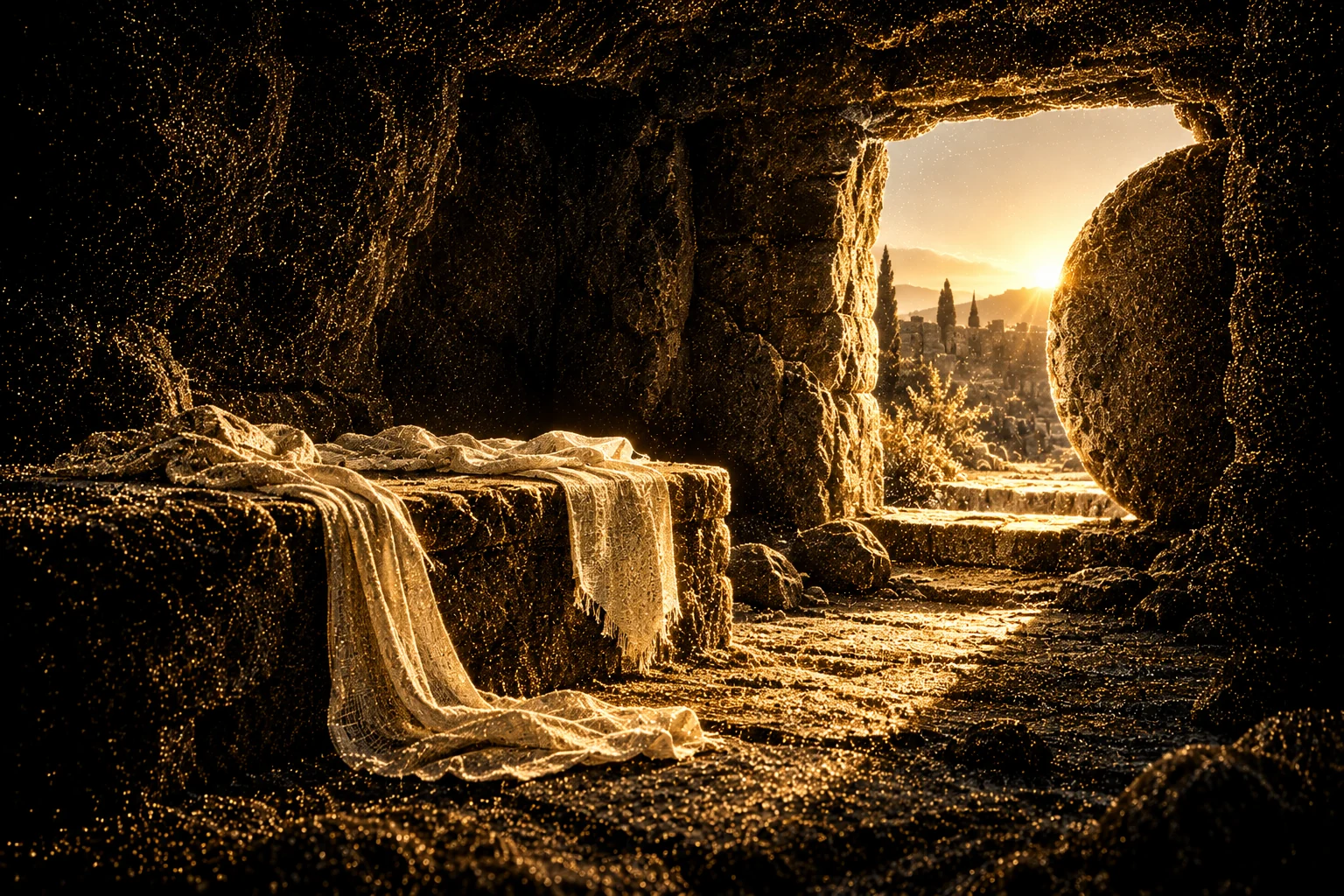
Christians appeal to the empty tomb traditions, Luke 24:36–43, John 20:24–29, and Paul’s language about the transformation of the mortal body.
A spiritual body in Paul’s argument need not mean a body made of immaterial spirit. It can describe bodily life fully transformed and empowered by God’s Spirit.
This does not settle every historical question about the Gospel accounts. It identifies the fundamental difference between the two theological readings.
We will return to this because the resurrection is not a secondary dispute. It is central to how the first Christians understood Jesus’ victory over death.
What Bible Do Jehovah’s Witnesses Use?
Jehovah’s Witnesses use the Bible, including the same basic Protestant collection of Old and New Testament books, but strongly favor the New World Translation of the Holy Scriptures.
Its Christian Greek Scriptures were first released in 1950, with later complete editions and revisions.
The translation has become central to Witness teaching and evangelism.
Jehovah’s Witnesses maintain that it restores accurate biblical meanings obscured by traditional translations.
Critics argue that some renderings reflect distinctive Watch Tower interpretations.
A translation should not be judged simply because it differs from familiar wording. Translators regularly face legitimate questions about grammar, idiom, manuscript evidence, and context.
The responsible approach is to examine the original languages, the surrounding argument, and the interpretive choices made by different translations.
Two passages are particularly important.
John 1:1: Was the Word God or a god?
The New World Translation renders the final clause of John 1:1 as “The Word was a god.”
Most mainstream English translations render the same clause in a way that identifies the Word with deity, conventionally, “the Word was God.”
The Greek uses theos without the definite article in its final clause.
Jehovah’s Witnesses argue that this supports an indefinite or qualitative understanding compatible with Jesus being divine in a subordinate sense.
Their case is presented in the New World Translation’s John 1 study notes.
A crucial distinction is that the absence of a Greek article does not automatically require the English word a.
Greek and English articles work differently. The position and function of the noun, along with the immediate literary context, matter.
A qualitative understanding can emphasize the divine nature of the Word without identifying the Word as the same person as the Father.
That interpretation fits historic Trinitarianism’s distinction between persons while affirming shared divinity.
The grammar deserves attention, but John’s entire opening passage is equally significant. It places the Word before creation and describes everything that came into existence as coming through Him.
Colossians 1:16: Why does the translation add “other”?
The New World Translation says that through Christ “all other things” were created.
The word other reflects the Witness interpretation that Jesus belongs to the category of created things and then participates in the creation of everything else.
Its own Colossians 1 study note acknowledges that a more literal rendering of the relevant Greek expression is all things.
The translators defend their contextual choice.
Historic Christians instead read Colossians 1:15–20 as placing Jesus above creation and identifying Him as the agent, goal, and sustaining source through whom creation exists.
The phrase firstborn of all creation is therefore disputed. It may be interpreted as indicating chronological origin or supreme status, depending on how the passage’s surrounding claims are understood.
The question is not merely whether one English word appears in the sentence.
It is whether Paul’s description of Christ makes Him part of the created order or places Him uniquely on the divine side of the Creator-creation distinction.
Read the passages in context
John 1:1–3
Is the Word a creature, or does the passage distinguish Him from everything made?
Colossians 1:15–20
What is the relationship between the 'firstborn of all creation' and the creation of 'all things'?
Hebrews 1
How does the author distinguish the Son from angels, and what titles and actions belong to Him?
What Is the Watch Tower Society and Governing Body?
Jehovah’s Witness congregations are connected through an international organizational structure.
Local elders provide congregational oversight, and the Governing Body offers worldwide doctrinal direction, instructional materials, and organizational guidance.
The Governing Body identifies itself with Jesus’ description of the faithful and discreet slave in Matthew 24:45–47.
In the movement’s understanding, Christ appointed this faithful slave in 1919 to provide spiritual food at the proper time.
A significant qualification appears in The Watchtower, February 2017: the Governing Body states that it is neither inspired nor infallible and can make errors in doctrine or organizational direction.
See Who Is Leading God’s People Today?.
That acknowledgment is important.
It avoids inaccurately claiming that the Governing Body openly presents itself as incapable of doctrinal error.
It also raises a serious question about religious authority: How should believers distinguish a correct interpretation of Scripture from an authoritative instruction that may later be revised?
That is a question both Witnesses and Christians outside the organization should approach seriously.
Why Is 1914 So Important to Jehovah’s Witnesses?
Jehovah’s Witnesses teach that Jesus began ruling as heavenly King in 1914 and that this marked a decisive phase of God’s Kingdom.
Their calculation involves a sequence of interpretive steps:
- The seven times in Daniel 4 are understood to have a greater prophetic fulfillment beyond Nebuchadnezzar.
- The period is connected to Jesus’ words about the times of the nations in Luke 21:24.
- The seven times become 2,520 prophetic days.
- Those days are interpreted as 2,520 years.
- The calculation begins with Jerusalem’s destruction, dated by Witness chronology to 607 BCE.
- The period consequently reaches 1914.
The organization explains its reasoning in What Does Bible Chronology Indicate About the Year 1914?.
The historical difficulty is substantial.
Mainstream archaeological and historical scholarship dates the Babylonian destruction of Jerusalem to approximately 587/586 BCE, not 607 BCE.
For example, a 2023 study in the Journal of Archaeological Science investigates material evidence from the Babylonian destruction in the conventional 586 BCE historical framework.
See Shalom and colleagues, “Destruction by fire”.
This does not mean archaeology can disprove every possible claim about God’s heavenly Kingdom.
It means the specific calculation for 1914 depends on both disputed historical chronology and a disputed interpretation connecting Daniel 4 to a much longer prophetic period.
Before trusting the conclusion, readers should examine the premises.
Daniel 4 directly concerns the humbling and restoration of Nebuchadnezzar.
Whether it also establishes a 2,520-year timetable ending in 1914 must be demonstrated, not assumed.
What Do Jehovah’s Witnesses Believe About Heaven, Salvation, and the Future?
Jehovah’s Witnesses anticipate two different destinies among faithful humans.
They teach that 144,000 will share a heavenly calling and reign with Christ, while a great multitude may live forever on a restored paradise earth.
Their hope is not simply that everyone goes to heaven upon death.
They also reject the doctrine of conscious eternal torment in hell, understanding the dead as unconscious until resurrection and final destruction as the end of those judged beyond hope.
Their salvation teaching deserves a fair explanation.
Jehovah’s Witnesses believe Jesus’ ransom sacrifice makes eternal life possible and explicitly deny that salvation can be earned through human works alone.
They also emphasize exercising faith, repentance, baptism, and obedience.
It is inaccurate to say that Jehovah’s Witnesses teach salvation without grace.
The Christian disagreement concerns, among other things, the identity of the saving Christ, the nature of union with Him, the interpretation of covenant promises, and the division between heavenly and earthly hopes.
Historic Christians differ on details of the millennium and final state. They nevertheless ordinarily understand the redeemed as sharing one fundamental salvation in Christ rather than assigning distinct ultimate covenantal identities to a fixed heavenly number and the remaining faithful.
How Do Jehovah’s Witnesses Worship and Live?
Jehovah’s Witnesses gather in Kingdom Halls for Bible instruction, discussion, worship, and training in public evangelism.
Many are known for door-to-door ministry, public literature displays, and free Bible studies.
They observe an annual Memorial of Jesus’ death, but their practice differs from most churches’ celebration of Communion.
They generally avoid Christmas, Easter, and birthday celebrations, believing those observances either lack adequate biblical warrant or carry religious associations they consider inappropriate.
They also maintain political neutrality and do not participate in military service.
These practices express convictions about worship, Christian separation from worldly powers, and loyalty to God’s Kingdom.
A Christian critique should distinguish disagreements over biblical doctrine from the sincere conduct and sacrifices of individual Witnesses.
What about blood transfusions?
Jehovah’s Witnesses have long interpreted the biblical command to abstain from blood as applying to medical uses of blood.
However, descriptions of their policy must reflect recent developments.
On September 18, 2026, the organization announced that decisions involving red blood cells, white blood cells, plasma, and platelets from donated blood would be matters of individual conscience.
Its prohibition on transfusions of donated whole blood remains unchanged.
This is described in the official September 2026 release, Each Witness Now Decides Whether to Accept or Donate Main Blood Components.
This distinction matters because an article using an older description would wrongly characterize the current policy.
Individual medical decisions require current professional medical guidance, not merely a summary of religious doctrine.
Jehovah’s Witnesses and Historic Christianity Compared
| Question | Jehovah’s Witness teaching | Historic Nicene Christianity |
|---|---|---|
| Who is God? | Jehovah alone is Almighty God | One God, Father, Son, and Holy Spirit |
| Who is Jesus? | First created Son, identified with Michael | Eternal Son, truly God and truly human |
| Is Jesus divine? | Exalted and godlike, but not Almighty God | Fully divine, distinct from the Father |
| Holy Spirit | God’s active force | Divine person |
| Resurrection of Jesus | Raised as a spirit | Raised bodily in transformed life |
| Scripture | Bible, usually the New World Translation | Bible, interpreted across historic traditions |
| Religious authority | Governing Body provides worldwide guidance | Authority understood differently across Christian traditions |
| 1914 | Beginning of Christ’s heavenly Kingdom rule | No universally accepted biblical enthronement date |
| Salvation | Made possible by Christ’s ransom, received through faith expressed in obedience | Salvation through Jesus Christ, with differing traditions on grace and cooperation |
| Future hope | 144,000 heavenly rulers; faithful humanity on paradise earth | Resurrection, judgment, new creation, and life with God |
This table describes representative teachings. It does not mean every Christian tradition agrees on every detail of the end times or church authority.
The most consequential disagreement remains Jesus’ identity.
The Christian Case: Is Jesus a Created Being or the Eternal Son of God?
We can now move from explaining the Witness position to testing the competing claims.
The strongest Christian case does not depend on portraying Jehovah’s Witnesses as ignorant of Scripture. Many study it diligently.
The real question is whether their interpretive framework makes better sense of the earliest Christian writings than the historic Christian understanding.
1. John presents the Word on the Creator’s side of reality
John 1:1–3 draws a distinction between the Word and the world that came into existence.
The Word already exists in the beginning. All that comes into existence does so through Him.
Jehovah’s Witnesses understand the Word as the first of God’s creations, with everything else made through Him.
But John’s language creates a serious interpretive difficulty for that reading.
If absolutely everything that came into existence did so through the Word, how should the Word Himself be classified as one of those things?
Witnesses may answer that the statement implicitly excludes God’s first creation.
Historic Christians find that qualification less natural than reading John as distinguishing the eternal Word from the created order.
The surrounding Gospel develops this claim through Jesus’ relation to the Father, His authority to reveal God, the divine honors associated with Him, and Thomas’s confession in John 20:28.
John does not teach that Jesus is the Father.
Rather, the Son reveals the Father while sharing the divine identity in a way that exceeds the category of a heavenly creature.
This interpretation makes sense of John’s simultaneous insistence on personal distinction and extraordinary divine unity.
2. Paul’s Christology goes beyond delegated angelic authority
First Corinthians 8:6 is particularly important.
Paul rearticulates monotheistic language around the one God, the Father, and the one Lord, Jesus Christ.
He does not simply place Jesus beside God as an additional figure who must be respected.
He associates Jesus with the creation and continuing existence of all things.
Philippians 2:5–11 describes Christ’s profound humiliation and exaltation, culminating in universal acknowledgment of His lordship.
The language evokes Isaiah 45:23, where universal acknowledgment belongs to Israel’s God.
Hebrews 1 presents the Son as superior to the angels and applies extraordinary royal and divine language to Him.
These texts do not eliminate every theological difficulty. They demand an explanation.
Jehovah’s Witnesses interpret them in terms of God’s delegation of authority to His greatest created Son.
Historic Christianity argues that the texts are more coherent when the Son shares the divine identity while remaining personally distinct from the Father.
The earliest Christian evidence predates the fourth-century creeds. Therefore, the relevant issue is not whether Paul used the exact terminology of Nicaea.
It is whether the substance of the worship, identity, and authority attributed to Christ was already present in apostolic Christianity.
3. Hebrews gives no compelling reason to identify Jesus as Michael
The Witness identification of Jesus with Michael rests on a series of parallels involving angelic leadership and heavenly conflict.
But Hebrews 1 repeatedly contrasts the Son with angels.
The author does not introduce Him as the highest member of their class.
Instead, the Son is presented as the unique heir, revealer, and exalted Lord whose status transcends that class.
Hebrews 1:10–12 also applies language concerning the enduring creator to the Son within the author’s argument.
That creates a substantial obstacle for the claim that His essential identity is that of a created angel.
A comparison with Michael’s role in Revelation 12 may establish similarities in heavenly leadership. It does not necessarily establish that Michael and Jesus are the same person.
The Christian reading has the advantage of not requiring an unstated personal identification.
The positive case is that Jesus is greater than an angel because He is the eternal Son who became human for our salvation.
4. The resurrection testimony points toward transformed bodily life
Jehovah’s Witnesses are correct to insist that resurrection involves more than simply restarting ordinary mortal existence.
Paul’s resurrection body is imperishable, glorified, and transformed.
But does it follow that Jesus’ physical body ceased to be part of His risen life?
Historic Christians believe the answer is no.
First Corinthians 15 makes Jesus’ resurrection the pattern for the future resurrection of believers.
Paul contrasts perishability with imperishability and weakness with power. His distinction between natural and spiritual bodies is not necessarily one between material and immaterial existence.
The Gospel witnesses likewise emphasize continuity between the crucified Jesus and the risen Jesus.
Luke recounts Jesus inviting the disciples to examine His hands and feet. John describes Thomas being invited to encounter the wounds.
Scholars debate the composition and development of the Gospel resurrection narratives. Those debates should be acknowledged.
Yet the early Christian proclamation was not merely that Jesus continued existing invisibly.
His victory over death was understood as an event transforming the human condition and grounding believers’ future resurrection.
Ignatius of Antioch, writing in the early second century, also insisted on the bodily reality of the risen Christ. His Letter to the Smyrnaeans, chapter 3, explicitly argues against a purely incorporeal reading.
This does not provide modern scientific verification of the resurrection.
It does show that the bodily understanding was deeply rooted in early Christian testimony, not a late invention of the medieval church.
The historic Christian position has strong grounds in both the New Testament texts and the earliest surviving post-apostolic witnesses.
5. The 1914 chronology rests on several disputed premises
Jehovah’s Witnesses regard 1914 as a central biblical milestone, and the beginning of the First World War gives the date considerable emotional force.
But a dramatic historical event occurring in a particular year does not by itself demonstrate that an intricate biblical calculation correctly predicted an invisible heavenly enthronement.
The argument depends on multiple interpretive moves:
Daniel 4 must have a long-range fulfillment beyond Nebuchadnezzar.
The seven times must represent a prophetic period measured through another set of texts.
That period must be converted into 2,520 literal years.
And it must begin in 607 BCE, despite substantial historical evidence for Jerusalem’s destruction around 587/586 BCE.
If a calculation requires every premise to be correct, uncertainty in the premises substantially weakens confidence in the conclusion.
The Christian response need not deny that Christ rules or that biblical prophecy matters.
It simply asks whether Scripture actually establishes the timetable being claimed.
Christ’s authority rests first on His identity, death, resurrection, and exaltation, not on a modern chronological system whose historical starting date is disputed.
6. What happens when an authoritative interpreter admits error?
Jehovah’s Witnesses are entitled to revise conclusions when they believe additional biblical evidence requires a change.
Christians have often corrected interpretations as well.
Honest revision is not automatically discrediting.
Nevertheless, the Governing Body’s acknowledgment that it is neither inspired nor infallible creates an important question for a movement that places such weight on its unique spiritual direction.
What grounds justify treating its interpretation as binding when the organization itself recognizes the possibility of error?
Appealing to Matthew 24:45–47 cannot resolve the entire question without first establishing that Jesus intended the parable to designate a particular modern religious governing institution.
The strongest Christian response is to return to the apostolic writings as publicly available testimony.
Christ’s identity and saving work can be examined from the earliest sources without first accepting a twentieth-century leadership claim.
That does not mean Christian denominations lack interpretive disagreements or authority structures.
It means the decisive truth about Jesus should not depend on an institution’s exclusive claim to interpret Him.
7. Salvation depends on the identity and finished work of Christ
Jehovah’s Witnesses teach that salvation is possible only through Jesus’ ransom sacrifice.
That conviction deserves recognition.
But Christianity does not merely ask whether Jesus plays a role in salvation.
It asks who the Savior is and what God accomplished through Him.
The New Testament presents reconciliation as grounded in the Son’s unique identity and completed saving work.
Romans 5 describes reconciliation through Christ’s death and life.
Ephesians 2 emphasizes salvation by grace and the good works that follow.
Hebrews 7–10 portrays Christ’s priesthood and sacrifice as decisive and sufficient.
Historic Christian traditions differ over the relationship of faith, sacraments, sanctification, and final salvation. Yet they affirm that God Himself acts decisively in Jesus Christ.
In the Christian understanding, the eternal Son enters human history, bears the consequences of sin, triumphs over death, and brings the redeemed into life with God.
The question is not whether Jehovah’s Witnesses value Jesus’ sacrifice.
They do.
The question is whether the New Testament reveals someone greater than the first creature through whom salvation was arranged.
Historic Christianity answers yes: the Lord who saves is the eternal Son who shares the identity of the one true God.
Are Jehovah’s Witnesses Christians?
Jehovah’s Witnesses consider themselves Christians because they follow Jesus, identify Him as Savior, and seek to obey His commands.
They should be represented according to that self-understanding.
Historic Nicene Christianity, however, defines central Christian doctrine through the confession of the Trinity and the full deity of Jesus Christ.
Jehovah’s Witness teaching falls outside those historic doctrinal boundaries.
Those are two different uses of the word Christian: one describes personal and communal identification with Jesus, and the other identifies continuity with a particular historic theological confession.
A fair comparison should explain the distinction without using the label as a substitute for argument.
A person’s sincerity also does not settle whether a doctrine is true.
Truth must be evaluated by the actual claims and evidence.
Frequently Asked Questions
Do Jehovah’s Witnesses believe Jesus is God?
They regard Jesus as divine or godlike in an exalted, subordinate sense, but not as Almighty God. Historic Christianity teaches that Jesus shares the eternal divine being of the Father.
Do Jehovah’s Witnesses believe Jesus rose from the dead?
Yes. They affirm His resurrection but teach that He was raised as a spirit creature. Historic Christianity confesses a transformed bodily resurrection.
Are Jehovah’s Witnesses the same as Mormons?
No. Jehovah’s Witnesses and The Church of Jesus Christ of Latter-day Saints have different histories, scriptures, doctrines of God, and views of religious authority. Read our Latter-day Saints and Christianity comparison.
Why do Jehovah’s Witnesses believe 1914 matters?
They teach that biblical prophecy points to Christ beginning heavenly Kingdom rule in 1914. The calculation depends on their interpretation of Daniel 4, the 2,520-year period, and a 607 BCE date for Jerusalem’s destruction.
Do Jehovah’s Witnesses believe only 144,000 people will be saved?
No. They believe 144,000 have a heavenly calling to reign with Christ, while many others may receive everlasting life on a restored earth.
Do Jehovah’s Witnesses believe salvation must be earned?
They expressly deny that salvation can be earned. They attribute salvation to God’s grace through Christ’s ransom and teach that genuine faith must be expressed through obedient living.
Can Jehovah’s Witnesses receive blood transfusions?
As of the September 18, 2026 policy, decisions about donated red cells, white cells, platelets, and plasma are matters of individual conscience. The organization’s prohibition on whole-blood transfusions remains in place. Individuals should use current medical and official policy guidance rather than outdated summaries.
Do Jehovah’s Witnesses worship in churches?
They ordinarily meet in buildings called Kingdom Halls, where they worship, study the Bible, and prepare for ministry.
The Central Question Is Still Jesus
An encounter with a Jehovah’s Witness can become a discussion about prophecy charts, Bible translations, holidays, or church history.
Those questions can matter.
But the most important question is simpler and deeper:
Who is Jesus Christ?
Is He Jehovah’s first creation, a heavenly Son granted extraordinary authority?
Or is He the eternal Word through whom all creation came into existence, who became human, died for sinners, and rose bodily in victory over death?
That question reaches into the earliest Christian sources.
John presents the Word as existing before creation.
Paul includes Christ within the biblical confession of the one God and Lord.
Hebrews describes the Son as transcending the angels.
The resurrection testimony proclaims more than the survival of a spirit.
Christians believe these strands converge on one extraordinary conclusion: Jesus is not merely a messenger who points toward God. He is God’s definitive self-revelation, the eternal Son who came to save us.
This conviction is not a license to treat Jehovah’s Witnesses with contempt.
It is a reason to speak with them thoughtfully, listen carefully, open the Scriptures, and examine the evidence together.
The Gospel calls us to repent, trust in Jesus Christ, and receive the reconciliation with God accomplished through His death and resurrection.
Do not rest that hope on a contested date or the claim of a modern institution.
Examine the person of Jesus and the testimony of those who first proclaimed Him risen.
That is where the Christian case ultimately stands.
Continue Exploring
- Is Jesus the Son of God? The Evidence
- What Do Latter-day Saints Believe?
- What Do Bahá’ís Believe?
- How to Compare Religions Fairly
- Evidence of Jesus Library
- World Religions Library
Sources and Further Reading
Jehovah’s Witnesses’ official teachings
- What Do Jehovah’s Witnesses Believe?
- Do Jehovah’s Witnesses Believe in Jesus?
- Who Is Michael the Archangel?
- After Jesus’ Resurrection, Was His Body Flesh or Spirit?
- New World Translation, John 1, with study notes
- New World Translation, Colossians 1, with study notes
- Daniel 4 and the 1914 Chronology
- Who Is Leading God’s People Today?
- 2026 Official Blood Components Announcement
- How Jehovah’s Witnesses Received Their Name
Independent historical and early Christian sources
- Shalom and colleagues, “Destruction by Fire: Reconstructing the Evidence of the 586 BCE Babylonian Destruction in a Monumental Building in Jerusalem”, Journal of Archaeological Science 157 (2023).
- Ignatius of Antioch, Letter to the Smyrnaeans, chapter 3. An early Christian witness to belief in Christ’s bodily resurrection.
Primary Christian texts for comparison
John 1:1–18; John 20:24–29; 1 Corinthians 8:6; 1 Corinthians 15:3–58; Colossians 1:15–20; Philippians 2:5–11; Hebrews 1; Hebrews 7–10; Luke 24:36–43; Romans 5; Ephesians 2:8–10.
Editorial note: This article explains Jehovah’s Witness teachings primarily from their own published sources and evaluates them from the perspective of historic Nicene Christianity. Historical evidence, translation judgments, and theological conclusions are identified as distinct categories rather than treated as interchangeable.