


Who was Jesus of Nazareth? The question of His existence is one of history’s most debated topics. While some dismiss Him as legend or myth, the historical evidence of Jesus tells a different story. From ancient Roman records to Jewish rabbinical writings, and from archaeological discoveries to eyewitness-based Christian documents, multiple sources converge on a striking truth: Jesus of Nazareth was a real historical figure who lived, taught, and was crucified in first-century Judea. This article explores compelling historical, textual, and physical evidence that grounds Jesus in verifiable reality and reveals the far-reaching impact of His life.
💀 They didn’t die for a lie.
See how all of Jesus’s disciples died — and what it proves.
Want the full breakdown of fulfilled messianic prophecy?
View our master guide: 351 Prophecies Jesus Fulfilled in Scripture →

Historical Evidence of Jesus from Non-Christian Writings
Josephus – Jewish Historian (c. 93 AD)
Flavius Josephus, a Pharisee and Roman citizen, wrote Antiquities of the Jews around 93 AD. In Book 18, he references Jesus as a wise man, teacher, doer of “wonderful works,” and someone crucified under Pontius Pilate. While some phrases are disputed as later Christian additions, most scholars agree a core reference is authentic and confirms:
- Jesus’s existence
- His reputation as a teacher
- His crucifixion under Roman rule
- The origin of the Christian movement
Alignment: John 19:16–18 — Jesus delivered to be crucified under Pilate
Tacitus – Roman Historian (c. 116 AD)
In Annals 15.44, Tacitus reports that “Christus” was executed during the reign of Tiberius by order of Pontius Pilate. Writing with disdain toward Christians, Tacitus offers no reason to promote their cause—his objectivity strengthens the historical weight of his account.
Alignment: Mark 15:15 — Pilate, pressured by the crowd, delivered Jesus to be crucified
Pliny the Younger – Roman Governor (c. 112 AD)
In a letter to Emperor Trajan, Pliny describes early Christians gathering before dawn to sing hymns to Christ “as to a god.” He observed their moral lifestyle and their refusal to curse Christ, even under torture—evidence of Jesus’s central place in their devotion.
Suetonius – Roman Historian (c. 120 AD)
In The Twelve Caesars, Suetonius notes that disturbances in Rome were instigated “at the instigation of Chrestus”—likely a corrupted reference to Christ. This shows the movement reached the Roman capital early in the 1st century.
Babylonian Talmud (70–200 AD)
Though hostile, the Talmud acknowledges Jesus’s existence and execution during Passover. It describes Him as being “hanged” (a term used for crucifixion) and accused of leading Israel astray.
Alignment: Matthew 26–27 — Jesus’s trial and crucifixion occurred during Passover

Christian Writings as Historical Evidence of Jesus
Pauline Epistles – Earliest Christian Texts
Paul’s letters, dated to 48–62 AD, predate the Gospels. In 1 Corinthians 15:3–8, he cites early creeds affirming:
- Jesus’s death and burial
- His resurrection on the third day
- Appearances to multiple witnesses
Paul also references interactions with Peter and James, Jesus’s brother—further affirming Jesus’s existence and influence.
The Gospels – Biographical Testimonies
Written between 60–100 AD, the Gospels provide detailed accounts of Jesus’s life, death, and resurrection. Though theological in nature, they draw from eyewitness testimony and preserved oral traditions.
Luke 1:1–4 — Luke asserts historical research and firsthand interviews
Eyewitness Consistency
Despite different authors and regions, all four Gospels agree on key events:
- Jesus’s baptism by John
- Miraculous healings and teachings
- Trial under Pilate
- Crucifixion and resurrection
This coherence across independent accounts strengthens the case for historical reliability.
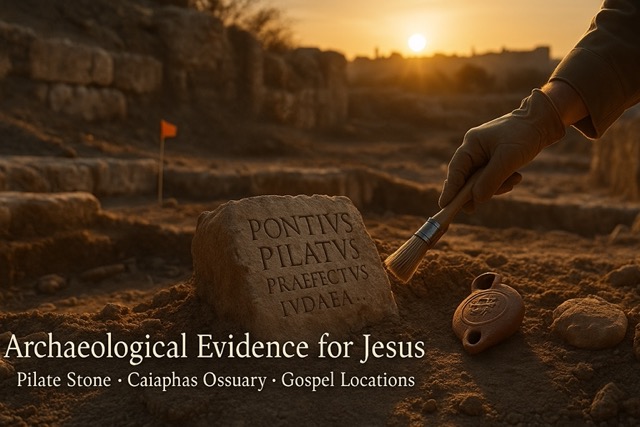
Archaeological Evidence of Jesus Supporting the Gospels
The Pilate Stone (1961)
A limestone block discovered in Caesarea Maritima bears the inscription: “Pontius Pilate, Prefect of Judea.” It confirms the historical title and existence of the man who ordered Jesus’s crucifixion.
Caiaphas Ossuary (1990)
An ornate burial box inscribed “Joseph son of Caiaphas” was found in Jerusalem. Caiaphas is named in the Gospels as the high priest involved in Jesus’s trial.
Nazareth Excavations
First-century dwellings found in Nazareth match the descriptions of a small, humble village—consistent with Gospel portrayals of Jesus’s early life.
Capernaum Ruins
Synagogue and residential structures unearthed in Capernaum align with where Jesus taught and healed. Archaeology confirms this as a real, populated center of Jewish life in His time.
Dead Sea Scrolls Context
While not mentioning Jesus directly, these texts confirm the accuracy and preservation of Hebrew scriptures quoted in the Gospels and show the theological world He entered.
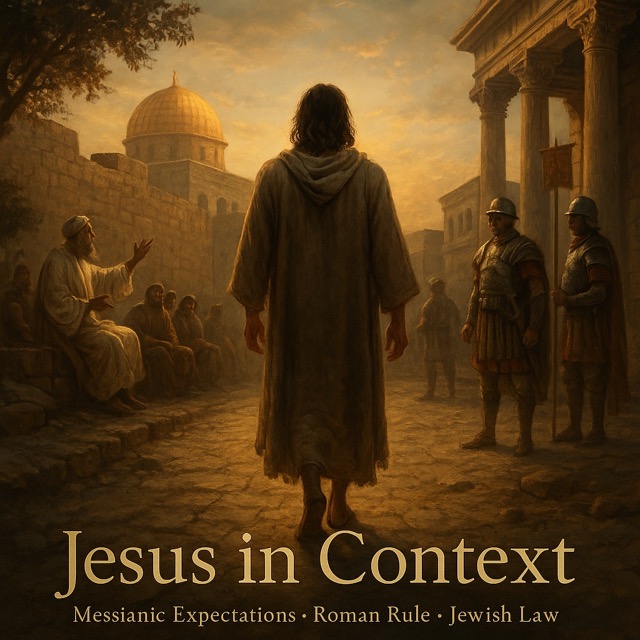
The Historical and Cultural Context of Jesus
Messianic Expectations in First-Century Judaism
Jews of Jesus’s time anticipated a Messiah to liberate Israel. Jesus’s life both fulfilled and subverted these hopes: He claimed divine authority, yet did not lead a military revolt.
Roman Political Dynamics
Crucifixion was a Roman punishment reserved for threats to public order. Jesus’s execution aligns historically with how Rome dealt with perceived insurrectionists.
Early Christian Movement’s Rise
Christianity spread rapidly despite persecution. It proclaimed a crucified and risen Messiah—a message unlikely to succeed if Jesus were fictional.

Transformation of the World: Jesus’s Enduring Impact
Within 300 years, Christianity became the dominant faith of the Roman Empire. Jesus’s teachings transformed:
- Ethics (love for enemies, forgiveness)
- Justice (value of the poor and marginalized)
- Western law, art, and education
Figures like Augustine, Aquinas, and later C.S. Lewis considered Jesus not just a historical figure but the foundation of truth and meaning.
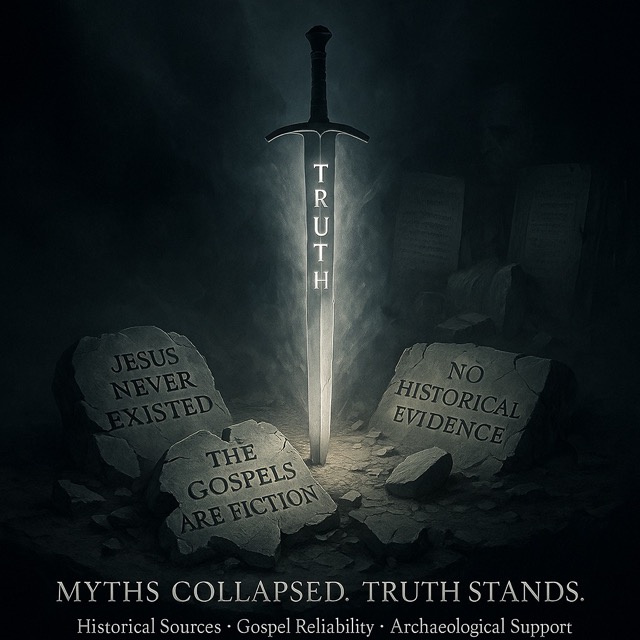
Refuting Myths About the Historical Evidence of Jesus
“Jesus Never Existed”
Disproven by:
- Non-Christian historians
- Jewish rabbinic writings
- Roman records
“The Gospels Are Pure Myth”
Disproven by:
- Eyewitness foundation
- Consistency across diverse texts
- Archaeological context
“No Physical Evidence Exists”
Disproven by:
- Pilate Stone
- Caiaphas Ossuary
- Nazareth and Capernaum excavations
📚 External Sources Confirming the Historical Evidence of Jesus
Flavius Josephus – Antiquities of the Jews
A first-century Jewish historian, Josephus provides one of the earliest non-Christian references to Jesus. In Antiquities of the Jews, he mentions Jesus as a wise teacher and the Christ, noting His crucifixion under Pontius Pilate.
- Read the full text: Project Gutenberg
Cornelius Tacitus – Annals, Book 15, Chapter 44
Tacitus, a Roman historian, references “Christus” (Latin for Christ) in his account of Emperor Nero’s persecution of Christians. He confirms that Jesus was executed during the reign of Tiberius by Pontius Pilate.
- Read the passage: Perseus Digital Library
Babylonian Talmud – References to Jesus
The Talmud, a central text in Rabbinic Judaism, contains several references to Jesus (referred to as “Yeshu”). These passages, while not flattering, acknowledge His existence and execution, providing non-Christian attestations to His life.
- Explore the references: Jewish Virtual Library
Smithsonian Magazine – “Unearthing the World of Jesus”
This article delves into archaeological discoveries that shed light on the historical context of Jesus’s life. It discusses findings that corroborate locations and events mentioned in the Gospels.
- Read the article: Smithsonian Magazine
🔗 Explore More: Related Articles on Jesus’s Identity, Prophecy, and Legacy
🔍 Investigating the Identity of Jesus
- Was Jesus a Liar? Examining the Evidence Against Deception
- Was Jesus a Madman? Analyzing the Evidence for His Sanity
- Who Is God? Biblical Attributes Explained
📜 Prophecies Fulfilled in Jesus’s Life
- Prophecies of Jesus Fulfilled in Scripture: 351 Proofs
- Prophecies About Jesus’s Birth and Early Life
- Messianic Prophecies of Jesus the Redeemer
- Prophecies of Jesus’ Betrayal and Rejection
- Messianic Prophecies of Jesus’ Suffering and Crucifixion
- Prophecies of Jesus Fulfilled in His Resurrection
- Prophecies About Jesus’s Ministry and Miracles
- Eschatological Prophecies of Jesus: His Return, Reign, and the New Creation
🌌 Supernatural Signs and Theological Context
- Ezekiel’s Wheel and Connections to UAPs
- Genesis Creation and Time Perception: Exploring Faith and Science
- Moloch Worship and Modern Parallels

FAQ: Historical Evidence of Jesus
- Q1: What historical evidence proves Jesus existed?
A: Writings by Josephus, Tacitus, Pliny the Younger, and the Talmud—all non-Christian—confirm Jesus’s existence and crucifixion. - Q2: Are the Gospels reliable as history?
A: Yes. They are based on eyewitness accounts and corroborated by archaeology and early church writings. - Q3: What archaeological discoveries support the life of Jesus?
A: The Pilate Stone, Caiaphas Ossuary, and Nazareth and Capernaum excavations ground the Gospel narratives in real locations. - Q4: Did Paul personally know Jesus?
A: Paul never met Jesus during His earthly life but knew eyewitnesses like Peter and James. - Q5: Why does it matter if Jesus was a historical figure?
A: Because His life, teachings, and claimed resurrection reshaped history, ethics, and billions of lives.
Conclusion: The Overwhelming Case for the Historical Jesus
The historical evidence of Jesus is abundant, compelling, and multidimensional. Non-Christian historians confirm His execution. Christian writings rooted in eyewitness accounts proclaim His teachings and resurrection. Archaeology supports the Gospel setting. Jesus of Nazareth was not a myth—He was a man whose words and actions left an eternal impact on the world. Whether you approach Him through faith or historical inquiry, the evidence leads to the same conclusion: Jesus lived, and He changed everything.
Want the full breakdown of fulfilled messianic prophecy?
View our master guide: 351 Prophecies Jesus Fulfilled in Scripture →