
GUIDED ARTICLE EXPERIENCE
Where Are Demons and Fallen Angels Now? A Biblical Map
Read along as the narration moves through the article.
Private device narration · No hosted audio or tracking
CONTINUE GUIDED TOUR
Continue where you left off.
GUIDED TOUR COMPLETE
You have reached the end of this study.
Study record saved on this device.
GUIDED TOUR
Where Are Demons and Fallen Angels Now? A Biblical Map
Narrator: Paranoid Prophet Recommended Voice Native device narration
Prepare to follow the article as it is narrated.
VOICE & TOUR OPTIONS
Voice & Listening
NARRATOR
Finding a narrator…
Checking the best narrator available on this device.
Restores the best curated narrator available on this device.
Narrator choices are curated for clear, long-form listening on this device.
Screen-awake support will be checked when narration starts.
CHOOSE A NARRATOR
Curated for this device
Choose a verified narrator for this browser, or use System Narrator. Automatic mode uses the best reliable route exposed by this device; your chosen narrator is preserved even if this device needs a temporary fallback.
Preparing the guided article experience…
RESUME GUIDED TOUR?
Continue where you left off.
GUIDED TOUR COMPLETE
You have reached the end of this study.
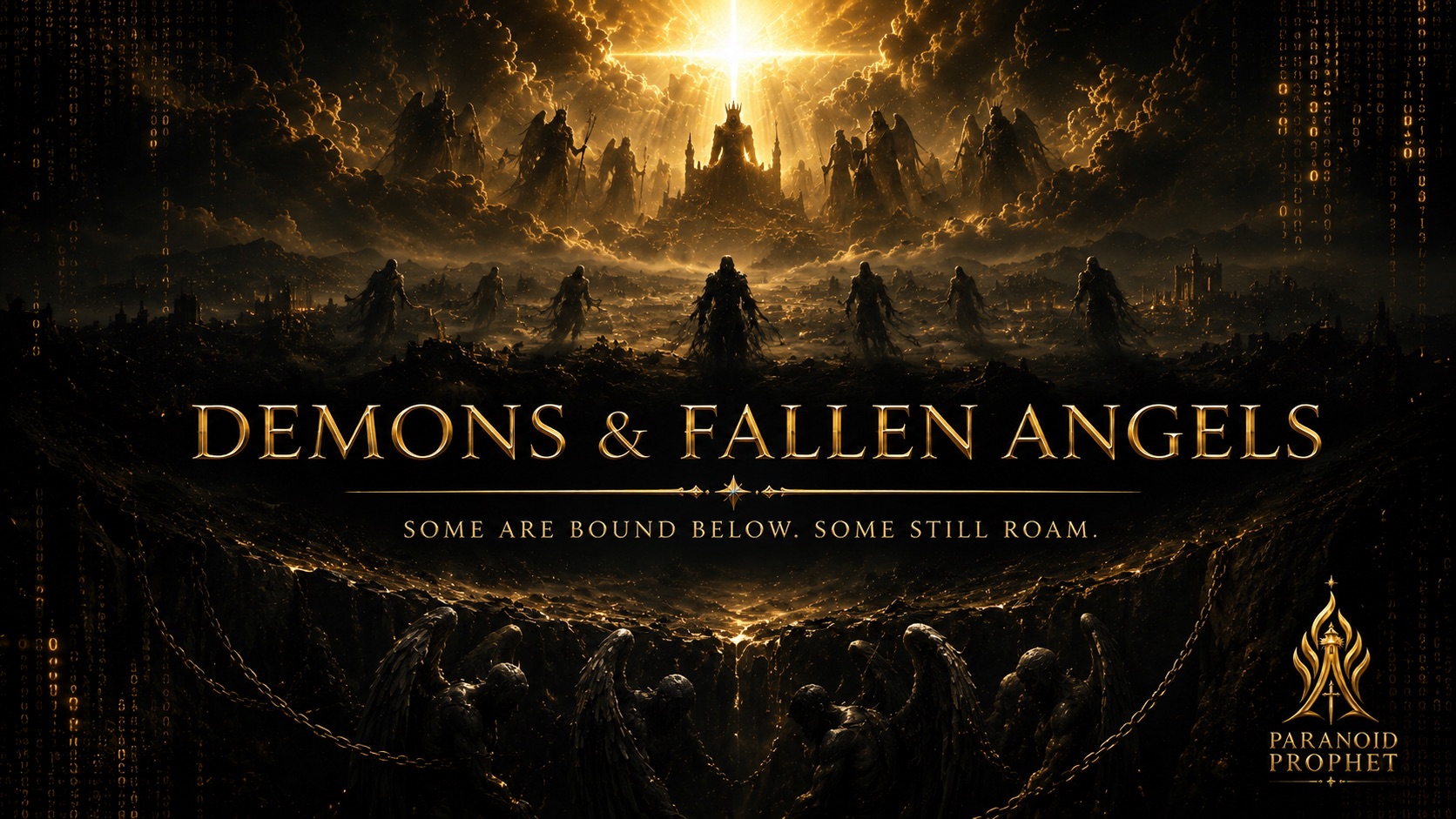
Where are demons and fallen angels now? Scripture does not place every rebellious spiritual being in one location or condition. Certain angels who sinned are kept under restraint until judgment. Demons and unclean spirits appear active in the earthly realm. Satan and other spiritual powers continue their opposition for a limited time. The Abyss is feared as confinement, Tartarus language describes severe restraint for sinning angels, and the lake of fire belongs to final judgment. Every rebel power remains beneath the authority of Jesus Christ.
The concise framework is this: Some are bound. Some still roam. Some rule for a time. All are under Christ. That answer is more layered than saying they are all in hell, but it follows the different ways Scripture speaks. Jude and 2 Peter describe angels kept in chains or gloomy darkness. The Gospels show unclean spirits speaking, afflicting, seeking continued access, and obeying Jesus when he commands them. Paul describes rulers, authorities, and spiritual forces of evil in the heavenly places. Revelation looks ahead to the final judgment of the devil and every hostile power.
In other words, “where” is not only a question of geography. It includes present status, activity, restraint, authority, and destiny. A being may be active on earth, operating in the heavenly places, held for judgment, or awaiting a final sentence. Biblical location language often tells us what a rebel power is permitted to do and how firmly God has limited it, not merely where it would appear on a map.
This distinction also prevents a common category error. “Fallen angels” can serve as a broad label for rebel heavenly beings, but Scripture does not directly identify every Gospel demon with the restrained angels of Jude 6. Nor does it give one technical origin statement for every unclean spirit. Ancient Jewish traditions may help explain why bound Watchers and active demons were treated differently, but those traditions remain context beneath Scripture.
Sometimes the safest answer is not the simplest answer. Christians do not need a complete chart of the unseen world in order to exercise discernment. We need clear categories, sober attention to the text, pastoral responsibility toward suffering people, and confidence that no hostile power stands outside Christ’s command or coming judgment.
The question is worth asking because vague language easily creates vague fear. When every hostile being is called a demon and every judgment term is called hell, passages that should clarify one another begin to compete. Careful distinctions do not weaken belief in spiritual evil. They show more clearly how thoroughly God governs its present limits and its end.
Article Guide11 sections
Where Are Demons and Fallen Angels Now?
A single answer such as “hell” is inadequate because the Bible uses several kinds of language. Some passages concern beings already restrained. Others concern spirits active among people. Still others describe conflict in the heavenly places or the final punishment that has not yet arrived. The terms are related by rebellion and judgment, but they are not interchangeable.
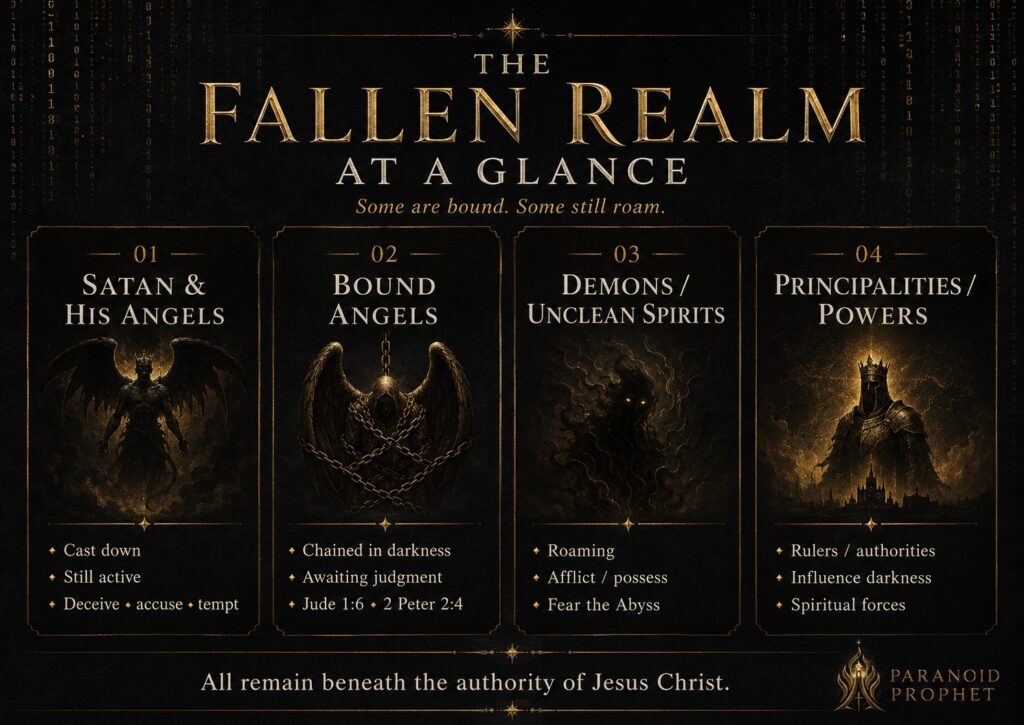
- Satan and his angels remain active as deceivers and adversaries, yet their time is limited and their final sentence is certain.
- Angels kept for judgment are described in Jude 6 and 2 Peter 2:4 as restrained under darkness after a serious transgression.
- Demons and unclean spirits appear active in the Gospels, where they afflict people, recognize Jesus, fear confinement, and submit to his command.
- Rulers, authorities, and spiritual powers belong to a wider conflict described by Paul, but they remain created powers disarmed through the cross.
The present picture is therefore mixed but not chaotic. Location, status, activity, restraint, and future destiny belong together. Evil remains active, yet never sovereign. Some rebels are already confined, while others are permitted to oppose God’s people for a time. None can escape the authority that created all things, set the limits of their activity, and appointed their judgment.
This also explains why final-destiny texts cannot be used as though they described every being’s current address. Matthew 25 and Revelation 20 announce where the rebellion ends; Jude and 2 Peter describe a present custody for particular angels; the Gospels and Epistles describe ongoing opposition. The certainty of the final sentence does not mean every stage of that sentence has already been executed.
The map is intentionally asymmetrical. Scripture says far more about God’s authority, human faithfulness, and the outcome of the conflict than it says about hidden ranks or movements among evil spirits. That emphasis should shape the reader’s attention. The unresolved details belong at the edges of Christian doctrine; the lordship of Christ belongs at its center. That order is itself a form of discernment.
A Biblical Map of Rebel Powers
The Bible names several kinds of hostile spiritual actors. Its vocabulary does not give a rigid species chart, and some terms may overlap. Even so, the differences in role and condition are substantial enough to preserve.
Satan and His Angels
Satan remains active in Scripture as adversary, tempter, accuser, and deceiver. He tempts Jesus in Matthew 4:1-11, prowls as an adversary in 1 Peter 5:8, and is identified with the ancient serpent who deceives the world in Revelation 12:7-12. Matthew 25:41 and Revelation 12 also speak of the devil’s angels. They share his rebellion and future judgment.
Activity does not make Satan God’s equal or Christ’s rival. He is a creature, not a second deity. His opposition is real, his influence is destructive, and his defeat is certain. A fuller distinction between this adversary and the Genesis 6 rebels belongs in Lucifer vs. the Watchers.
The New Testament holds Satan’s present activity and decisive defeat together. He is called the ruler of this world, yet Jesus says that ruler is judged. He blinds, tempts, accuses, and deceives, yet believers are told to resist him rather than treat him as irresistible. His remaining activity belongs to the interval between a victory already secured through Christ and a sentence that will be publicly completed.
Angels Kept for Judgment
Jude 6 and 2 Peter 2:4 describe angels whose sin brought a special restraint. Jude speaks of angels who abandoned their proper authority or dwelling and are kept in eternal chains under gloomy darkness. Peter says God did not spare sinning angels but committed them to gloomy restraint until judgment. These texts do not portray the beings as freely roaming through Gospel villages.
The restraint is present and the great judgment is future. That temporal distinction matters. “Kept” does not mean forgotten, and “until judgment” does not imply eventual release from accountability. The passages portray custody under divine authority, awaiting the final day when God’s verdict is fully disclosed.
Demons and Unclean Spirits
Demons and unclean spirits appear differently. In the Gospels they speak, recognize Jesus, afflict people, resist departure, and seek habitation or influence. They fear coming judgment and obey Christ’s command. Their active condition is one reason the word demon should not be treated as an automatic synonym for every angel already held under restraint.
Rulers, Authorities, and Spiritual Powers
Ephesians 6:10-18 places the church’s struggle beyond flesh and blood, against rulers, authorities, cosmic powers over the present darkness, and spiritual forces of evil in the heavenly places. This language widens the view beyond individual encounters with unclean spirits. It describes organized opposition operating through a larger unseen conflict.
Paul also places those powers beneath Christ. Colossians 1:15-20 and 2:13-15 say that thrones, dominions, rulers, and authorities were created through the Son and for him, and that hostile rulers and authorities were disarmed through the cross. The Unseen Rebellion Map follows these wider relationships without forcing them into one identity.
Ephesians presents the same already-and-not-yet tension. Christ is seated above every rule and authority, and believers are raised with him; nevertheless, the church must put on God’s armor and stand. The powers are defeated claimants whose opposition continues within limits. Their activity calls for faithfulness, not a revision of Christ’s enthronement.
These categories overlap in rebellion but are not automatically identical in nature, role, or present condition.
The Bound Angels: Chains, Darkness, and Tartarus
Jude and 2 Peter give the clearest New Testament evidence that some rebellious angels are presently restrained. Both passages use past examples of judgment to warn readers that rebellion does not escape God. Their concern is moral and theological before it is geographical: God knows how to hold the wicked for judgment and preserve those who remain faithful.
Jude 6 and the Abandoned Boundary
Jude says certain angels did not remain within their own position of authority but left their proper dwelling. They crossed a boundary tied to their appointed place, and God now keeps them under restraint for the judgment of the great day. The wording presents a deliberate departure followed by a divine reversal: beings who refused the limits of their proper domain are now held within limits they cannot break.
Jude’s neighboring reference to Sodom and Gomorrah has led many interpreters to see a transgressive sexual dimension, strengthening the connection with the ancient angelic reading of Genesis 6. Other readings exist, and Jude does not retell the whole event. What is explicit is enough for this article: angels abandoned what God assigned, and those angels are kept for future judgment.
Jude’s warning works because the examples share a pattern. Privilege does not protect rebellion from judgment. Israel can be rescued from Egypt and later judged for unbelief; angels can possess a glorious calling and abandon it; prosperous cities can give themselves to grave corruption and fall. The angelic example is not included to satisfy curiosity about hidden realms. It warns human readers to remain faithful.
Second Peter 2:4 and Tartarus Language
Second Peter says God did not spare angels when they sinned. The Greek verb commonly rendered “cast into hell” is related to Tartarus. Peter then moves through the ancient world, Noah and the Flood, Sodom and Gomorrah, and the rescue of Lot. The sequence presents a pattern: God judges rebellion and knows how to preserve the godly.
Peter uses Tartarus language to describe severe restraint for sinning angels. He does not provide a complete map of the underworld. The term communicates disgrace, confinement, and custody until judgment. It should not be expanded into a detailed cosmology Peter never supplies or treated as though it were simply another name for the final lake of fire.
Peter’s sequence also answers the emotional question behind the passage. False teachers may appear to escape accountability, but God did not overlook angelic sin, the violence of Noah’s generation, or the evil of Sodom. The scale of the offender never overwhelms his justice. Angelic restraint is therefore evidence of divine government, not evidence that darkness has a kingdom beyond God’s reach.
First Peter 3 and the Spirits in Prison
First Peter 3:18-22 speaks of Christ proclaiming to “spirits in prison” who were disobedient when God’s patience waited in the days of Noah. The passage has several major interpretations. The spirits may be rebellious angels associated with Noah’s era, the proclamation may concern Christ’s victory over hostile powers, or the language may be understood through a different account of preaching and imprisonment.
The text belongs in the discussion because it places disobedient spirits, imprisonment, Noah’s days, Christ’s triumph, and the subjection of angels and authorities in one passage. Its interpretive difficulty means it should support, rather than carry, the doctrine of restrained angels. Jude 6 and 2 Peter 2:4 remain clearer controlling witnesses.
Interpreters also disagree about the timing and content of Christ’s proclamation. Some understand a victory announcement made after his death; others see Christ preaching through Noah to that generation; still others connect the passage to Christ’s ascension and triumph over powers. The article need not choose among them to recognize Peter’s conclusion: Jesus is risen, exalted, and has angels, authorities, and powers subjected to him.
The Watcher Connection
Ancient Jewish readers connected angelic transgression and the Flood through the Watcher tradition. First Enoch names the heavenly rebels Watchers, describes their descent and forbidden unions, and portrays their binding until judgment. That narrative helps explain why Jude and Peter have so often been read beside Genesis 6. The Watchers Explained examines the figures, while The Book of Enoch Explained addresses the source’s historical value and canonical limits.
Jude and Peter remain the controlling scriptural witnesses. They teach that some angels are restrained. The Gospels portray active demons. That difference does not prove one demon-origin theory, but it does prevent an automatic identity. Relationship does not require identity.
Demons and Unclean Spirits in the Gospels
The Gospels do not treat demons as impersonal bad energy or as a poetic name for every human problem. They appear as personal hostile spirits that speak, recognize Jesus, afflict people, resist departure, and fear judgment. Yet they never meet Jesus as equals. Every confrontation reveals the arrival of a kingdom stronger than theirs.
Personal Hostile Spirits Under Command
In Mark 1, Mark 5, and Luke 8, unclean spirits know who Jesus is. The spirit in the synagogue calls him the Holy One of God. Legion addresses him as Son of the Most High God and begs not to be tormented. Jesus silences, commands, and expels them. Their recognition is not saving faith; it is compelled acknowledgment of superior authority.
Matthew 8:28-34 adds the demons’ question about torment “before the time.” They know a judgment is appointed and that Jesus has authority over their present activity. Their hostility is serious, but the narrative focus is the King who restores people whom evil had isolated and harmed.
The human person, not the demon, remains the object of Jesus’ compassion. Mark describes a man driven among tombs, cut off from community, and beyond ordinary restraint. After the encounter he is clothed, in his right mind, and commissioned to tell what the Lord has done for him. The movement is from dehumanization to restoration. Christian teaching loses the Gospel’s emphasis when it studies the spirits more eagerly than the person Christ frees.
Habitation and Influence
The Gerasene demons ask to enter pigs rather than be sent away. In Matthew 12:43-45 and Luke 11:24-26, an unclean spirit passes through waterless places seeking rest, then speaks of returning to “my house.” The image appears within a warning about an unreformed generation, so it should not be detached from Jesus’ moral point and turned into a technical manual.
The Gospel accounts portray unclean spirits seeking habitation, embodied access, or continued influence, although Scripture does not provide a complete metaphysical explanation of that desire. This behavior may fit more than one origin theory. It does not prove that the spirits are disembodied giants, nor does it authorize speculation about the mechanics of possession.
The Abyss and Feared Confinement
Luke 8 says the demons beg Jesus not to command them into the Abyss. Revelation later uses Abyss imagery for the confinement and release of hostile powers, including the temporary restraint of Satan in Revelation 20. The term communicates a place or condition of divine confinement. It is not automatically identical with Peter’s Tartarus language or with the lake of fire that represents final judgment.
Active but Limited
Demons are active in the Gospel world, but their limits are visible whenever Jesus appears. He does not negotiate with them as rival powers. He commands them, ends their occupation, and restores those they had afflicted. His works demonstrate that the kingdom of God has come upon the kingdom of darkness.
In Matthew 12:28 and Luke 11:20, Jesus interprets exorcism as a sign that God’s kingdom has arrived. Deliverance is not an isolated display of spiritual force. It belongs to the Messiah’s assault on the strong man’s house and the recovery of people from oppression. The authority over demons is one part of the larger good news that God’s reign is breaking into a fallen world.
A Christian article on demons should not leave readers more afraid of darkness than confident in Christ. The reality of spiritual evil calls for vigilance, prayer, and truth, not dread. Demons recognize the authority believers confess: Jesus Christ is Lord.
Not Every Affliction Is Demonic
The Gospels distinguish demonic affliction from other forms of suffering rather than collapsing them. Scripture does not authorize Christians to blame every illness, disability, mental-health struggle, temptation, conflict, hardship, or unusual experience on demons. Some passages explicitly involve unclean spirits; many accounts of disease, grief, sin, and ordinary human weakness do not.
Pastoral care should therefore combine prayer, Scripture, church community, wise counsel, and appropriate medical or mental-health care. Denying spiritual evil is unbiblical, but assigning a demonic diagnosis without evidence can deepen fear and delay needed help. This article offers categories for discernment, not an individualized diagnosis or a deliverance procedure.
The distinction is visible inside the Gospels themselves. Jesus heals fevers and physical diseases without addressing a spirit, while other narratives explicitly name demonic oppression. Human beings can also sin from their own desires without an unclean spirit supplying the impulse. A mature Christian account leaves room for bodily illness, trauma, moral agency, social harm, spiritual temptation, and demonic activity without forcing every case into one cause.
Are Demons Fallen Angels or Spirits of Giants?
Scripture clearly reveals what demons do and who commands them, but it does not give one technical sentence explaining the origin of every demon. Two broad views have shaped Christian discussion. They should be compared fairly without pretending that either resolves every biblical category.
The Broad Fallen-Angel View
Many Christians call demons fallen angels because Matthew 25:41 speaks of the devil and his angels, Revelation 12 depicts the dragon and his angels, and the New Testament places demons within the kingdom opposed to God. Used broadly, the label communicates allegiance: demons serve the same rebellion and face the same final defeat.
The difficulty is present status. Jude and 2 Peter describe a group of sinning angels as restrained, while Gospel demons remain active. A broad fallen-angel view can account for this by proposing different angelic groups or different judgments, but Scripture does not explicitly map those subdivisions. The view is reasonable as an umbrella description, provided it does not erase the bound-versus-active distinction.
The Spirits-of-Giants View
First Enoch 15-16 offers a different ancient explanation. In that story the Watchers are heavenly rebels who father giants. The giants die under judgment, but spirits proceeding from their dead bodies become evil spirits on earth. The Watchers are bound; the giant spirits remain active. Jubilees 10 develops a related post-Flood picture in which malignant spirits continue to trouble Noah’s descendants.
This view helps explain why ancient readers could distinguish restrained heavenly rebels from roaming demons. It also clarifies an important cluster question. Did the Nephilim Survive the Flood? distinguishes bodily giant continuity from spiritual aftermath. The Enochic demon theory does not claim that fleshly Nephilim bodies simply escaped the Flood; it claims their spirits remained active after their destruction. Who Were the Nephilim? establishes the identity question behind that tradition.
That ancient distinction protects two conversations that are often confused. The biblical post-Flood giant trail concerns peoples such as the Anakim and Rephaim and asks how giant-associated continuity appeared after Noah. The Enochic demon tradition concerns the spiritual aftermath of giants who died. A theory about continuing spirits neither proves that giant bodies survived nor explains the later clans by itself.
Why the Ancient View Explains Some Patterns
Restless spirits, waterless places, a desire for habitation, the request to enter pigs, and fear of confinement fit coherently within the ancient spirits-of-giants account. The view also has genuine historical depth: it appears in Second Temple Jewish literature rather than in a recent attempt to solve a modern puzzle.
These patterns make the theory coherent within ancient demonology. They do not independently prove it. The Gospels never identify a demon as the spirit of a dead giant, and First Enoch is not canonical Scripture for most Christians. Ancient context can explain how a category developed without turning that explanation into a required doctrine.
The Safest Biblical Conclusion
Demons are real hostile spirits. Some angels are bound. Satan and other powers remain active for a limited time. The spirits-of-giants view is ancient and has explanatory value, while the broad fallen-angel view expresses a real unity within the kingdom of darkness. Scripture does not require one complete demon-origin theory before Christians can recognize evil, resist deception, and trust Christ.
Demons and fallen angels may belong to the same kingdom of darkness without being the same kind of being.
Tartarus, the Abyss, and Final Judgment
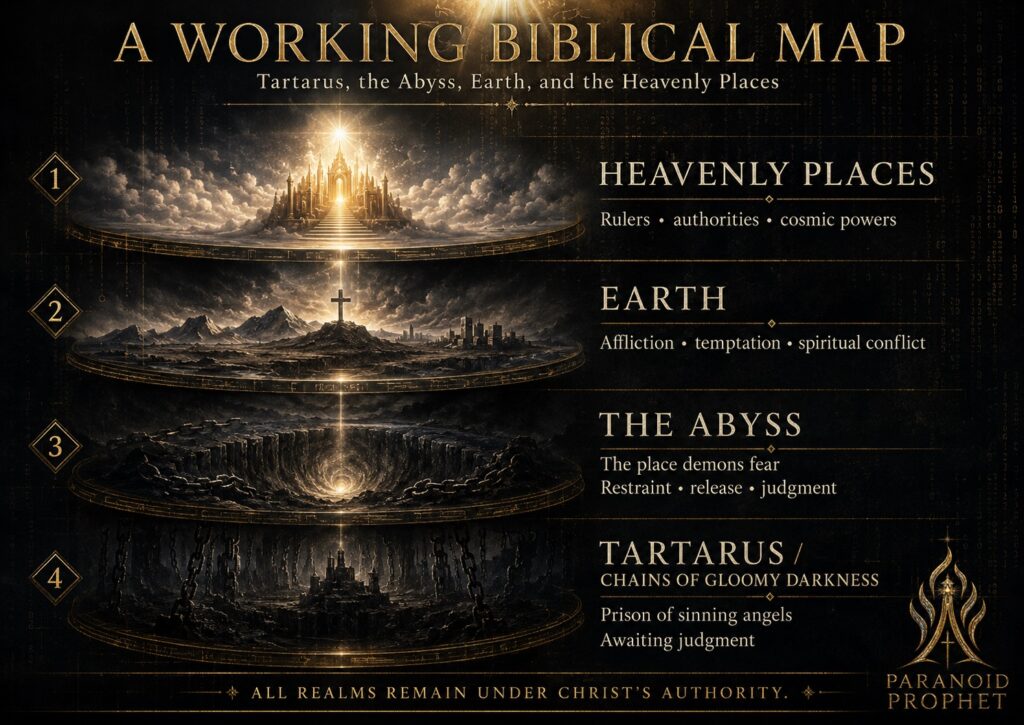
The Bible’s location language should be read with precision. Earth, the heavenly places, Tartarus, prison, the Abyss, Hades, Gehenna, eternal fire, and the lake of fire do not all perform the same function in every passage. Some terms describe present activity, others temporary restraint, the realm of the dead, or final punishment. They may relate within a larger biblical cosmology without becoming interchangeable labels.
Genre matters as well. The Gospels narrate encounters in ordinary places. The Epistles use judicial and spatial imagery to explain authority and restraint. Revelation communicates through apocalyptic symbols such as shafts, chains, beasts, and fire. Reading each genre responsibly guards against turning a theological vision into a speculative diagram while still honoring what the images reveal.
Earth and the Heavenly Places
The Gospels portray demons and unclean spirits operating among human beings on earth. Ephesians speaks more broadly of the prince of the power of the air and spiritual forces of evil in the heavenly places. “Heavenly places” in Paul is not a synonym for God’s final dwelling alone; it names the unseen sphere in which Christ is enthroned, the church’s identity is located, and hostile powers are opposed.
Tartarus and Spirits in Prison
Second Peter’s Tartarus language and Jude’s gloomy chains concern certain sinning angels kept until judgment. First Peter’s “spirits in prison” may point to related beings, but the interpretation remains debated. These texts reveal restraint and custody more clearly than they reveal physical coordinates.
The Abyss
The Abyss is feared by demons in Luke 8 and functions in Revelation as a place of confinement, release, and temporary restraint. Revelation 9 depicts hostile forces emerging when the shaft is opened; Revelation 20 depicts Satan confined there for a period. The Abyss is severe, but Revelation distinguishes it from the lake of fire into which the devil is finally thrown.
Hades, Gehenna, Eternal Fire, and the Lake of Fire
Hades ordinarily concerns the realm of the dead and should not be forced into every discussion of rebel angels. Gehenna and eternal-fire language emphasize divine punishment. Matthew 25:41 speaks of eternal fire prepared for the devil and his angels. Revelation 20:7-15 presents the lake of fire as the devil’s final judgment and then speaks of death and Hades being thrown into it. Present restraint and final judgment are therefore related but distinct horizons.
This sequence guards against two opposite mistakes. The first imagines that final judgment is only a symbol for the difficulty evil experiences now. Revelation presents a real and irreversible end. The second assumes that every present reference to darkness, prison, or the Abyss already describes that final end. Scripture instead portrays history moving toward a judgment more complete than any present restraint.
Biblical location language is theological before it is cartographic. It tells readers who is active, who is restrained, who has authority, and who awaits judgment. Scripture gives a dependable map of status and destiny without offering a precise cosmological floor plan.
Christian Discernment Without Obsession
Christians study the unseen realm to become more faithful, not more fascinated. Category collapse produces weak theology, sensational claims, misread passages, spiritual fear, and careless attempts to identify modern experiences. Clear distinctions help believers take evil seriously while refusing to let it dominate attention.
Keep the Categories Clear
A demon is not automatically a bound Watcher. A ruler or authority is not necessarily the unclean spirit in a Gospel encounter. Satan is not another name for every rebel being. These distinctions keep a difficult subject anchored in what each passage actually says and prevent one dramatic theory from swallowing the whole biblical witness.
Paul’s armor of God gives the church a practical pattern for that clarity. Truth, righteousness, readiness with the gospel of peace, faith, salvation, the word of God, and persevering prayer equip believers to stand. The armor is strikingly ordinary and Christ-centered. Paul does not direct Christians toward secret names, speculative ranks, or techniques for controlling the unseen realm. He directs them toward a faithful life formed by the gospel.
Test the Spirits
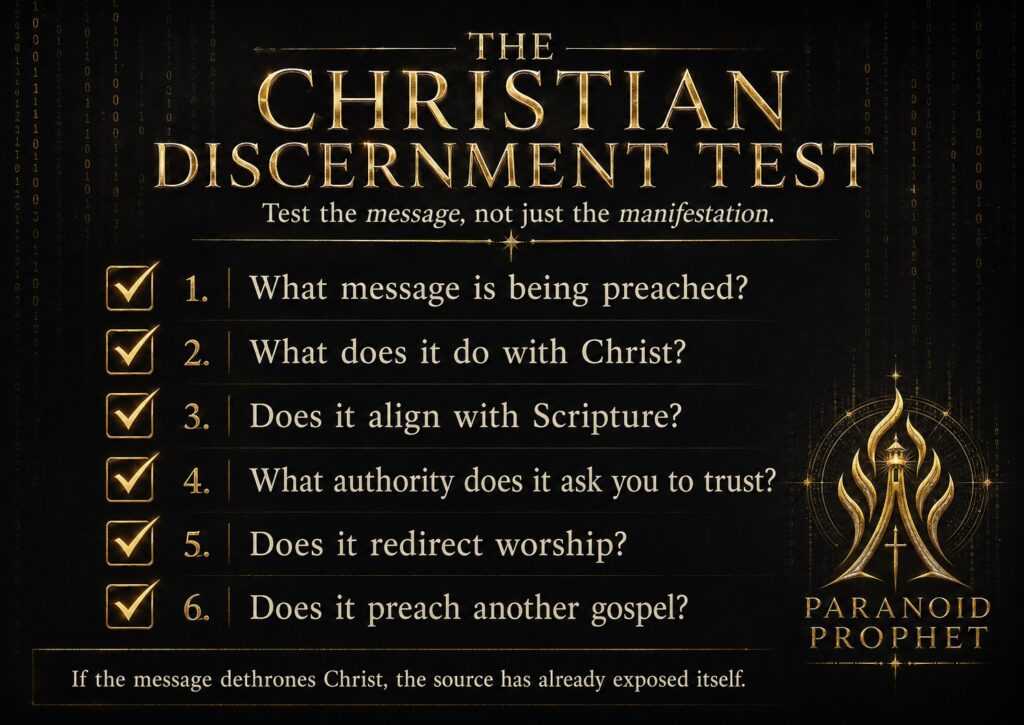
First John 4:1-6 tells believers not to believe every spirit but to test the spirits. Discernment asks what message is being given, what is confessed about Jesus Christ, whether the gospel is preserved, what fruit follows, what authority is claimed, and where worship is directed. A genuine work of God produces truth, holiness, humility, love, and obedience rather than pride, bondage, deception, or another gospel.
Testing is not the same as chasing manifestations. John’s immediate concern is false prophecy and false confession within the church. The test is centered on Jesus Christ come in the flesh and on the apostolic message. Experiences that advertise hidden status, demand unquestioning loyalty, displace Scripture, or draw worship toward a messenger fail before they become impressive.
Modern Labels Cannot Redefine Scripture
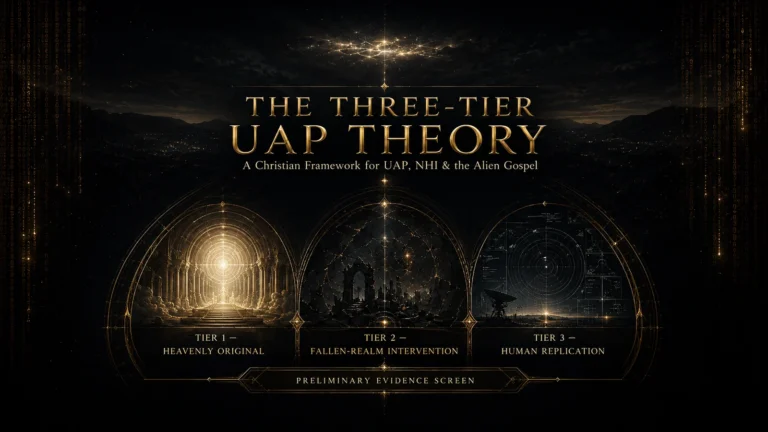
Modern labels such as alien, NHI, entity, or interdimensional intelligence cannot replace biblical categories. Strange modern claims may raise legitimate discernment questions, but this article does not identify every UAP report, haunting, anomalous experience, or alleged entity as demonic. The Pre-Flood Origin Theory and Christian View of UFOs: The Three-Tier UAP Theory handle those applications after the biblical categories are established.
Pastoral Responsibility
Christian care should neither deny spiritual evil nor exploit frightened people. Believers should not diagnose every problem as demonic, encourage obsessive investigation, substitute deliverance speculation for medical or pastoral care, or glorify supposed spiritual authority. Prayer, biblical truth, compassionate community, trained care, and humble dependence on Christ belong together. Discernment serves people best when it produces wisdom and steadiness rather than spectacle.
Frequently Asked Questions About Demons and Fallen Angels
Are demons and fallen angels the same?
They belong to the same wider rebellion, but Scripture does not explicitly make every demon identical with every fallen angel. Some sinning angels are restrained in Jude and 2 Peter, while Gospel demons remain active. “Fallen angels” can be useful as a broad umbrella if that distinction is preserved.
Are fallen angels in hell now?
Some angels who sinned are kept under gloomy restraint until judgment. Satan and other rebel powers remain active for a limited time. Saying all fallen angels are already in hell flattens passages that describe different present conditions.
What is Tartarus?
Second Peter 2:4 uses a Greek verb related to Tartarus to describe severe confinement for sinning angels. Peter uses the term to communicate custody under judgment, not to provide a full map of the underworld or another name for the lake of fire.
What is the Abyss?
The Abyss is a place or condition of confinement feared by demons in Luke 8. Revelation uses the image for the release and restraint of hostile powers. It should not be automatically equated with Tartarus or final punishment.
Are demons spirits of dead giants?
First Enoch 15-16 and related ancient traditions say that spirits from the dead giants became evil spirits on earth. The theory explains several ancient distinctions, but the canonical Scriptures do not directly identify demons this way. It is responsible ancient context, not settled doctrine.
Are the Watchers demons?
In Enochic tradition, the Watchers are heavenly rebels who are bound, while the spirits associated with their dead giant offspring remain active. Calling the Watchers themselves demons erases the distinction the tradition is trying to explain.
Can demons still affect people today?
Historic Christianity has affirmed continuing spiritual opposition, and the New Testament calls believers to vigilance and resistance. It does not authorize a demonic explanation for every struggle. Present concerns should be approached with prayer, Scripture, church support, pastoral wisdom, and appropriate clinical care.
Should Christians be afraid of demons?
No. Christians should remain alert without treating demons as equal to Christ. The Gospels repeatedly show unclean spirits recognizing Jesus and obeying his command. Their activity is real, limited, and headed toward judgment.
What is the safest Christian view?
Hold the biblical picture together: certain angels are bound, demons remain active, Satan and wider powers oppose God for a limited time, ancient traditions may clarify some distinctions, and every rebel being remains beneath Christ. Confidence should be firm where Scripture is clear and modest where origin theories remain debated.
Selected Sources and Further Reading
Scripture
Ancient Sources
- George W. E. Nickelsburg and James C. VanderKam, 1 Enoch: The Hermeneia Translation, Book of the Watchers excerpt, especially 1 Enoch 15-16.
- James C. VanderKam, Jubilees: A Commentary, especially Jubilees 10.
- Loren T. Stuckenbruck, The Book of Giants from Qumran: Texts, Translation, and Commentary.
- Justin Martyr, Second Apology; Athenagoras, A Plea for the Christians; and Tertullian, Apology, as selected witnesses to early Christian reception.
Scholarship
- Archie T. Wright, The Origin of Evil Spirits: The Reception of Genesis 6:1-4 in Early Jewish Literature.
- Annette Yoshiko Reed, Fallen Angels and the History of Judaism and Christianity.
- Loren T. Stuckenbruck, The Myth of Rebellious Angels.
- Gene L. Green, Jude and 2 Peter, Baker Exegetical Commentary on the New Testament.
- Graham H. Twelftree, In the Name of Jesus: Exorcism among Early Christians.
- Michael S. Heiser, Demons: What the Bible Really Says About the Powers of Darkness, an accessible Christian synthesis best used alongside the specialist works above.
Read Next
- The Unseen Rebellion Map is the principal next step for the wider taxonomy and relationships among rebel powers.
- Did the Nephilim Survive the Flood? separates bodily giant continuity from the ancient theory of spiritual aftermath.
- Lucifer vs. the Watchers distinguishes Satan’s rebellion from the Genesis 6 Watcher tradition.
- The Pre-Flood Origin Theory moves from biblical and ancient categories into a disciplined modern synthesis.
Every Rebel Power Is Under Christ
The final word over demons and fallen angels is not mystery. It is Christ. Every visible and invisible power was created through him and for him. Hostile rulers and authorities do not occupy an independent kingdom beyond his reach. At the cross, God canceled the record of debt against his people, disarmed the powers through Christ, and exposed their inability to overturn his saving purpose.
The Gospels make that supremacy concrete. Demons recognize Jesus, fall before him, and obey his command. Bound angels remain under a restraint they cannot break. Satan’s accusations cannot reverse the justification of those who belong to Christ, and his final judgment is already appointed. Evil remains active, but never sovereign.
Philippians 2:5-11 and Hebrews 2:14-15 show how that victory reaches believers. The name above every name belongs to the Son who humbled himself to the point of death and was exalted by the Father. By sharing our humanity and passing through death, he broke the devil’s enslaving use of death and frees those held by fear.
That freedom is more than emotional reassurance. Christ joins believers to his death and resurrection, gives them a new allegiance, and promises a future in which corruption, accusation, and hostile rule are removed. The Christian answer to unseen evil is not the discovery of an equally mysterious counterpower. It is communion with the risen Lord, whose kingdom has begun and whose return will bring every rival claim to an end.
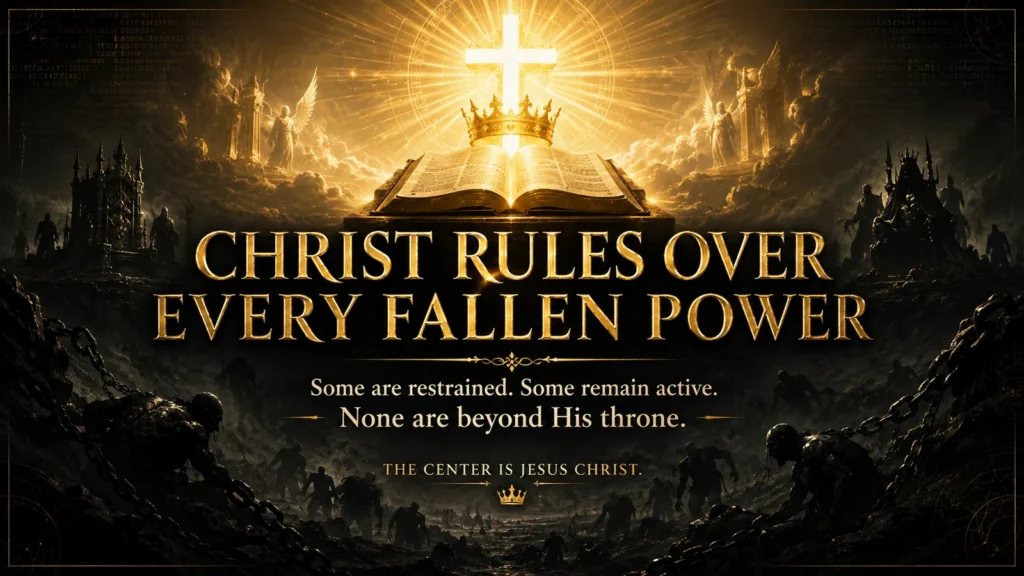
Christians are therefore called to vigilance without fear. We resist deception, test spiritual claims, pray, stand in the truth of the gospel, and care wisely for people who suffer. We do not need to deny the unseen realm or make it the center of Christian attention. The unseen realm may be real, but it is not supreme.
The point of this study is not to make darkness more interesting. It is to make Christ’s supremacy more clear. The cross and resurrection reveal the destination of every rebel claim to authority: defeat beneath the rightful King. The church’s hope rests neither in mastering secret categories nor in becoming experts in fear, but in belonging to the crucified and risen Lord.
Some rebel beings are bound. Some remain active. Some operate in the heavenly places. Demons and unclean spirits still appear as hostile powers in the biblical account. But none exists outside the authority, restraint, victory, or final judgment of Jesus Christ.
CONTINUE THE INVESTIGATION
Apply the framework
Christian View of UFOs: The Three-Tier UAP Theory
Apply the established category and evidence standards to modern UFO and UAP claims without reducing every report to one explanation.