
GUIDED ARTICLE EXPERIENCE
Prophecies of Jesus’ Resurrection Fulfilled
Read along as the narration moves through the article.
Private device narration · No hosted audio or tracking
CONTINUE GUIDED TOUR
Continue where you left off.
GUIDED TOUR COMPLETE
You have reached the end of this study.
Study record saved on this device.
GUIDED TOUR
Prophecies of Jesus’ Resurrection Fulfilled
Narrator: Paranoid Prophet Recommended Voice Native device narration
Prepare to follow the article as it is narrated.
VOICE & TOUR OPTIONS
Voice & Listening
NARRATOR
Finding a narrator…
Checking the best narrator available on this device.
Restores the best curated narrator available on this device.
Narrator choices are curated for clear, long-form listening on this device.
Screen-awake support will be checked when narration starts.
CHOOSE A NARRATOR
Curated for this device
Choose a verified narrator for this browser, or use System Narrator. Automatic mode uses the best reliable route exposed by this device; your chosen narrator is preserved even if this device needs a temporary fallback.
Preparing the guided article experience…
RESUME GUIDED TOUR?
Continue where you left off.
GUIDED TOUR COMPLETE
You have reached the end of this study.
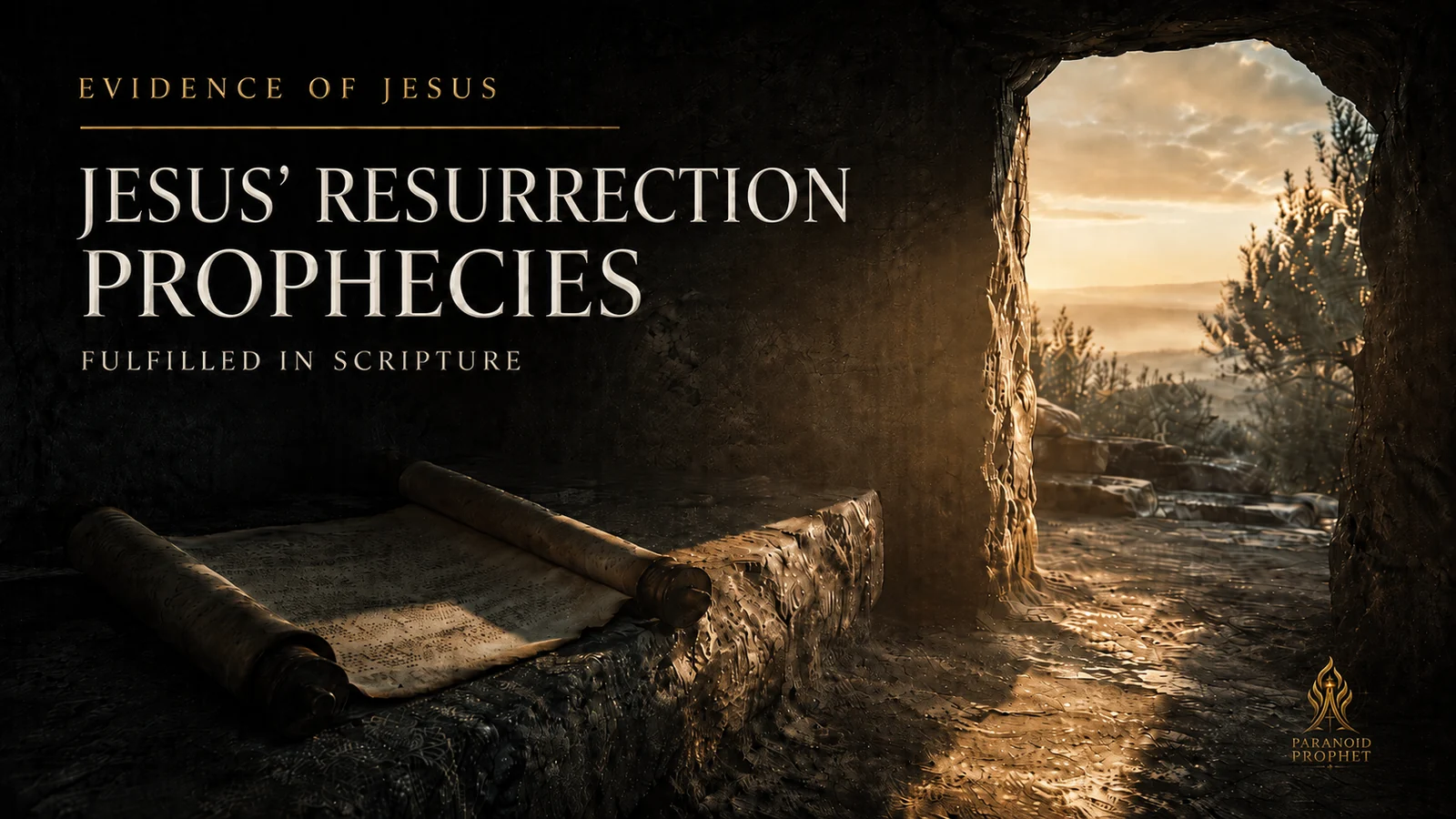
The resurrection of Jesus was not added to Christianity as a hopeful ending after a tragic execution. The New Testament presents the resurrection as the public vindication of Jesus, the defeat of death, the fulfillment of Scripture, and the proof that Jesus is the Son of God in power.
That does not mean every Old Testament resurrection text works the same way. Psalm 16 is directly applied to Jesus by Peter and Paul. Isaiah 53 gives a suffering servant who dies and yet lives to see the result of His work. Jonah is a typological sign because Jesus Himself uses Jonah that way. Hosea 6:2 is a corporate restoration text that may contribute to the third-day pattern, but it should not be treated as a simple one-line prediction of Jesus apart from the larger biblical story.
A stronger case does not need every passage to be the same kind of proof. Scripture is stronger when we read it with the grain of the text.
Core claim: Jesus rose from the dead according to the Scriptures. The Old Testament prepares for His resurrection through direct apostolic fulfillment, Davidic covenant promise, suffering-and-vindication logic, third-day patterns, typological signs, and the wider hope that God will swallow up death forever.
Source discipline: This article distinguishes apostolic fulfillment, resurrection-shaped promise, enthronement text, typological sign, third-day pattern, general resurrection hope, and theological consequence. Scripture is the final authority. Historical sources and scholarship can clarify context, but they do not replace the biblical witness. Evidence does not sit above Scripture; it serves the case that Scripture tells the truth about Jesus. For the wider site standard, see Sources and Verification.
Article Guide13 sections
Why This Article Belongs in the Jesus Evidence Web
The resurrection is not a side doctrine. It is the center of the Christian evidence web. If Jesus remained dead, His claims collapse, His death becomes only a martyrdom, and the apostolic message is false. If Jesus truly rose, then God publicly vindicated Him, the Scriptures are fulfilled, and Jesus is who He said He is.
This article answers one focused question: how did the Old Testament prepare for the resurrection of Jesus? It does not try to prove the empty tomb or the resurrection appearances from history alone. For that broader case, start with Is Jesus the Son of God?, Historical Evidence for Jesus, and Martyrdom of Jesus’ Disciples. This page is one lane in the larger case: Scripture itself expected the Messiah’s suffering, vindication, life, and reign.
The goal is not to make prophecy sound impressive by overstating weak arguments. The goal is to show how the Law, Prophets, and Psalms converge on the risen Christ.
How This Article Handles Resurrection Prophecy
Some resurrection prophecies are explicit in the New Testament. Others are patterns and promises that only become clear when Jesus opens the Scriptures after His resurrection. That distinction matters.
| Category | Meaning | Examples |
|---|---|---|
| Apostolic fulfillment | An Old Testament passage explicitly applied to Jesus’ resurrection by a New Testament author. | Psalm 16 in Acts 2 and Acts 13 |
| Resurrection-shaped promise | A passage where death, suffering, vindication, and continued life are present, even if the word resurrection is not used. | Isaiah 53:10-12 |
| Enthronement / exaltation text | A royal text fulfilled in Jesus’ resurrection, ascension, and reign. | Psalm 2; Psalm 110 |
| Typological sign | An Old Testament person, event, or pattern that Jesus or the apostles present as fulfilled in Him. | Jonah; Isaac; the temple |
| Third-day pattern | A recurring biblical pattern of restoration, deliverance, or decisive action on the third day. | Jonah; Hosea 6; Genesis 22 |
| General resurrection hope | Old Testament hope that God will raise the dead and defeat death, fulfilled first in Christ and finally in His people. | Isaiah 25; Isaiah 26; Daniel 12 |
| Theological consequence | What the resurrection proves or accomplishes. | Jesus’ sonship, justification, victory over death, future resurrection |
The Case at a Glance
The resurrection case is strongest when the passages are ranked honestly. Some texts are very strong because the apostles explicitly use them. Others are strong as patterns, but weaker if forced into direct prediction categories.
| # | Old Testament Anchor | New Testament Anchor | Category | Strength |
|---|---|---|---|---|
| 1 | Psalm 16:8-11 | Acts 2:24-32; Acts 13:35-37 | Apostolic fulfillment | Very strong |
| 2 | Isaiah 53:10-12 | Luke 24:26-27; Acts 8:32-35; 1 Peter 2:24-25 | Resurrection-shaped promise | Strong |
| 3 | Psalm 110:1 | Acts 2:33-36; Hebrews 1:3; Hebrews 10:12-13 | Resurrection / exaltation | Very strong |
| 4 | Psalm 2:7 | Acts 13:32-33; Romans 1:3-4 | Royal sonship / vindication | Strong |
| 5 | Isaiah 55:3 | Acts 13:34 | Davidic covenant promise | Strong but often missed |
| 6 | Jonah 1:17 | Matthew 12:39-40 | Typological sign | Strong as Jesus’ own typology |
| 7 | Hosea 6:2 | 1 Corinthians 15:4 as possible background | Third-day restoration pattern | Moderate / debated |
| 8 | Genesis 22 | Hebrews 11:17-19 | Typological resurrection pattern | Moderate to strong |
| 9 | Temple raised in three days | John 2:18-22 | Jesus’ typological sign | Strong |
| 10 | Isaiah 25:8 | 1 Corinthians 15:54 | Death defeated | Strong for final victory |
| 11 | Isaiah 26:19 | Matthew 27:52-53; 1 Corinthians 15 | General resurrection hope | Moderate to strong |
| 12 | Daniel 12:2-3 | John 5:28-29; 1 Corinthians 15 | General resurrection hope | Strong |
| 13 | Psalm 118:22-24 | Acts 4:10-12; 1 Peter 2:4-7 | Rejected stone vindicated | Strong |
| 14 | Psalm 22:22-31 | Hebrews 2:11-12; resurrection-shaped vindication | Suffering followed by praise and nations | Moderate to strong |
| 15 | 1 Corinthians 15:3-4 summary | Death, burial, resurrection “according to the Scriptures” | Apostolic interpretive center | Very strong |
The Interpretive Center: According to the Scriptures
1 Corinthians 15:3-4 Is the Starting Point
New Testament anchor: 1 Corinthians 15:3-8
Category: Apostolic summary
Paul says that Christ died for our sins according to the Scriptures, was buried, and was raised on the third day according to the Scriptures. That phrase does not point to only one verse. It points to the scriptural pattern and promise fulfilled in Jesus: suffering, death, vindication, resurrection, Davidic kingship, and final victory over death.
This matters because Paul is not presenting the resurrection as a private spiritual metaphor. He connects it to burial, appearances, named witnesses, and Scripture. The resurrection is both historical proclamation and biblical fulfillment.
The phrase “according to the Scriptures” also keeps the case from becoming a random proof-text hunt. Paul is saying that the resurrection belongs to the Bible’s story.
Luke 24 Shows How Jesus Taught the Resurrection from Scripture
New Testament anchor: Luke 24:25-27; 44-47
Category: Jesus’ own interpretive frame
After His resurrection, Jesus rebukes the disciples for being slow to believe what the prophets spoke. Then He explains that the Christ had to suffer and enter His glory. Later He says that everything written about Him in the Law of Moses, the Prophets, and the Psalms had to be fulfilled.
That is the interpretive framework for this article. Resurrection prophecy is not only about finding isolated lines that mention rising. It is about the whole Scripture testifying that the Messiah’s path runs through suffering into glory.
The Strongest Apostolic Fulfillment Texts
1. Psalm 16: The Holy One Will Not See Corruption
Old Testament anchor: Psalm 16:8-11
New Testament anchor: Acts 2:24-32; Acts 13:35-37
Category: Apostolic fulfillment
Psalm 16 is the clearest Old Testament resurrection text because the apostles explicitly apply it to Jesus. Peter argues that David died and was buried, so the promise that God’s Holy One would not see corruption ultimately points beyond David to the Messiah. Paul makes the same argument in Acts 13.
This is not a vague Christian association. It is apostolic interpretation. David speaks as a prophet, and the resurrection of Jesus reveals the deeper messianic meaning of the psalm. Jesus entered death, but death did not hold Him. His body did not decay in the grave. God raised Him up.
For the resurrection-prophecy case, Psalm 16 belongs in the strongest category.
2. Isaiah 53: The Servant Dies and Yet Lives
Old Testament anchor: Isaiah 53:8-12
New Testament anchor: Luke 24:26-27; Acts 8:32-35; 1 Peter 2:24-25
Category: Resurrection-shaped promise
Isaiah 53 does not use a modern systematic phrase like “the Messiah will rise from the dead on Sunday morning.” It gives something more layered: the servant is cut off, bears sin, dies, and yet afterward sees the result of His work, is vindicated, and receives a portion with the many.
That is resurrection-shaped logic. A servant who dies and yet lives to see the fruit of His suffering cannot be explained by death alone. The New Testament repeatedly sees Jesus in Isaiah’s suffering servant. The cross is not a contradiction of messiahship. It is part of the mission. The resurrection is the vindication of the servant after His sin-bearing death.
Isaiah 53 should be handled carefully. It is not a simple one-verse prediction in the way Psalm 16 is used in Acts. But as a suffering-and-vindication passage, it is one of the deepest Old Testament foundations for the death and resurrection of Christ.
3. Psalm 110: The Risen Messiah Enthroned at God’s Right Hand
Old Testament anchor: Psalm 110:1
New Testament anchor: Acts 2:33-36; Hebrews 1:3; 10:12-13
Category: Enthronement and exaltation
Psalm 110 is one of the most important messianic texts in the New Testament. It speaks of David’s Lord being seated at the right hand of the Lord until His enemies are made His footstool. Peter uses it at Pentecost to interpret Jesus’ resurrection and exaltation.
The point is not merely that Jesus came back to life. The risen Jesus is enthroned. He is Lord and Christ. The resurrection is inseparable from His exaltation, reign, and authority.
This connects resurrection prophecy directly to Jesus’ identity. The risen Christ is not only a rescued victim. He is the Lord seated at God’s right hand.
4. Psalm 2: The Son Publicly Vindicated
Old Testament anchor: Psalm 2:7-12
New Testament anchor: Acts 13:32-33; Romans 1:3-4
Category: Royal sonship and resurrection vindication
Psalm 2 is not about Jesus being created or becoming divine. It is royal sonship language. In Acts 13, Paul applies the psalm to the resurrection, showing that Jesus’ sonship is publicly declared and vindicated through being raised.
Romans 1 makes a similar point: Jesus is descended from David according to the flesh and declared Son of God in power by the resurrection from the dead. The resurrection does not turn Jesus into the Son. It reveals and vindicates Him as the Son in power.
This is central to the evidence web. The resurrection is God’s public answer to Jesus’ claims.
5. Isaiah 55 and the Sure Mercies of David
Old Testament anchor: Isaiah 55:3
New Testament anchor: Acts 13:34
Category: Davidic covenant promise
Acts 13 includes a passage many readers miss. Paul connects Jesus’ resurrection to the “holy and sure blessings of David.” The logic is covenantal: God’s promises to David cannot die in the grave. The Davidic Messiah must live to receive and administer the promised kingdom.
This is not as familiar as Psalm 16, but it matters. The resurrection is not an isolated miracle. It is the way God keeps His covenant promises. The Son of David is raised because the kingdom promise cannot end in corruption.
Third-Day Patterns and Typological Signs
When Paul says Jesus rose on the third day according to the Scriptures, he may not be pointing to one single Old Testament verse. Scripture contains a broader pattern of third-day deliverance, restoration, and decisive action. Some of these patterns are explicit because Jesus uses them. Others are background patterns that should be stated modestly.
6. Jonah: The Sign Jesus Himself Gives
Old Testament anchor: Jonah 1:17
New Testament anchor: Matthew 12:39-40
Category: Typological sign
Jesus directly compares His burial and resurrection to Jonah’s three days and nights in the fish. That makes Jonah a strong resurrection text, but the right category is typology. Jonah is not presented as a prophet who consciously predicted the details of Jesus’ tomb. His experience becomes a sign fulfilled in Christ.
The point is death-like descent and deliverance. Jonah goes down and is brought up. Jesus goes into the heart of the earth and rises. The sign of Jonah is therefore one of the clearest third-day patterns because Jesus Himself names it.
7. Hosea 6: Raised on the Third Day
Old Testament anchor: Hosea 6:1-3
New Testament connection: Possible background to 1 Corinthians 15:4
Category: Third-day restoration pattern; debated
Hosea 6 speaks of Israel’s restoration: after judgment, God will revive and raise His people. Because the passage includes third-day language, many Christians have connected it to Jesus’ resurrection.
That connection should be handled carefully. Hosea’s original context is corporate Israel, not a direct isolated prediction of Jesus. But Jesus is the true Israel and the faithful Son. His resurrection can be seen as the climactic fulfillment of Israel’s restoration hope. Hosea 6 is therefore best used as part of the broader third-day pattern, not as the strongest direct prophecy.
8. Abraham and Isaac: Resurrection in Figure
Old Testament anchor: Genesis 22:1-19
New Testament anchor: Hebrews 11:17-19
Category: Typological resurrection pattern
Genesis 22 is not a direct prediction that the Messiah will rise. It is a profound pattern of promised son, sacrificial obedience, and figurative resurrection. Hebrews says Abraham reasoned that God could raise the dead and received Isaac back in a figurative sense.
The connection to Jesus should be made with reverence and restraint. Isaac is not Jesus. Abraham is not the Father in a one-to-one allegory. But the pattern of promised son, sacrifice, substitution, and life from death prepares readers to understand the deeper work of Christ.
9. The Temple Destroyed and Raised in Three Days
Old Testament background: Temple presence, sacrifice, and meeting place with God
New Testament anchor: John 2:18-22
Category: Jesus’ typological sign
Jesus says that if the temple is destroyed, He will raise it up in three days. John explains that Jesus was speaking about His body. This means Jesus identifies Himself as the true temple: the place where God dwells with His people, where sacrifice is fulfilled, and where access to God is opened.
This is not a proof text from an Old Testament verse, but it is deeply scriptural. The temple theme reaches its fulfillment in Christ. The resurrection is the raising of the true temple.
Old Testament Hope That Death Would Be Defeated
The Old Testament does not only speak of one man’s resurrection. It also builds hope that God will finally defeat death itself. Jesus’ resurrection is the firstfruits of that final victory.
10. Isaiah 25: Death Swallowed Up Forever
Old Testament anchor: Isaiah 25:6-9
New Testament anchor: 1 Corinthians 15:54-57
Category: General resurrection hope and final victory
Isaiah promises that the Lord will swallow up death forever and wipe away tears. Paul draws on this victory language in 1 Corinthians 15 when explaining the final resurrection of believers.
Jesus’ resurrection is not the final visible completion of Isaiah 25 yet. Death still exists in this age. But His resurrection is the beginning and guarantee of that victory. Because Christ is raised, death’s final defeat is no longer a vague hope. It has already begun in Him.
11. Isaiah 26: Your Dead Shall Live
Old Testament anchor: Isaiah 26:19
New Testament connection: 1 Corinthians 15; Matthew 27:52-53
Category: General resurrection hope
Isaiah 26 looks toward the dead living and rising. Like Isaiah 25, this is not a narrow verse about the Messiah’s third-day resurrection. It is the broader resurrection hope of God’s people.
Jesus fulfills this hope as the firstfruits. His resurrection is the pledge that those who belong to Him will also be raised. The future resurrection of believers depends on the already-accomplished resurrection of Christ.
12. Daniel 12: Many Who Sleep Shall Awake
Old Testament anchor: Daniel 12:2-3
New Testament connection: John 5:28-29; 1 Corinthians 15:20-23
Category: General resurrection hope
Daniel 12 is one of the clearest Old Testament passages about a future resurrection of the dead. It speaks of many who sleep in the dust awakening, some to everlasting life and some to judgment.
Jesus’ resurrection is not identical to the final resurrection in Daniel 12, but it inaugurates the resurrection hope. Paul calls Christ the firstfruits. The final harvest comes later, but the firstfruits have already appeared.
Rejected, Raised, and Vindicated
13. Psalm 118: The Rejected Stone Becomes the Cornerstone
Old Testament anchor: Psalm 118:22-24
New Testament anchor: Acts 4:10-12; 1 Peter 2:4-7
Category: Rejection followed by vindication
Psalm 118 speaks of the rejected stone becoming the cornerstone. Peter applies this to Jesus after the resurrection. The rulers rejected Him, but God made Him the foundation of salvation.
This is resurrection logic, even though the psalm is not a narrow prediction of an empty tomb. The rejected one is vindicated by God and becomes the decisive cornerstone. In Acts 4, Peter explicitly connects that vindication to the Jesus whom God raised from the dead.
14. Psalm 22: Suffering Followed by Praise Among the Brothers
Old Testament anchor: Psalm 22
New Testament anchor: Hebrews 2:11-12; Gospel passion narratives
Category: Suffering followed by vindication
Psalm 22 is rightly central to the crucifixion prophecy discussion, but it also has resurrection-shaped movement. The sufferer is brought through anguish into praise, declares God’s name to the congregation, and the nations are drawn into worship.
Hebrews quotes Psalm 22 in relation to Jesus identifying with His brothers. The psalm’s movement from suffering to public praise fits the pattern Jesus fulfills: suffering is not the end. Vindication, worship, and worldwide proclamation follow.
What the Resurrection Proves and Accomplishes
The resurrection is not merely one miracle among many. It is God’s verdict on Jesus.
The Resurrection Confirms Jesus as the Son of God
Romans 1 says Jesus was declared Son of God in power by the resurrection. This does not mean Jesus became the Son at Easter. It means the resurrection publicly vindicated who He already was. The crucified Messiah is the divine Son.
This connects directly to Prophecies About Jesus’ Divine Identity, Who Is God?, and What Is the Trinity?. The resurrection is not isolated from doctrine. It reveals Jesus as Lord.
The Resurrection Vindicates the Cross
If Jesus died and stayed dead, His death could be misunderstood as failure. The resurrection declares that His death was not defeat but atonement, obedience, and victory. The servant who bore sin lives. The rejected stone becomes the cornerstone.
For the cross-prophecy lane, see Jesus’ Suffering and Crucifixion Prophecies.
The Resurrection Grounds Justification and Future Hope
Paul ties Jesus’ resurrection to justification and future resurrection hope. Christ was raised, and therefore believers are not left in their sins. Christ is raised, and therefore those who belong to Him will be raised.
The resurrection is not merely evidence that Christianity is true. It is the heart of salvation.
The Resurrection Shows Scripture Tells the Truth
The New Testament does not ask readers to choose between Scripture and resurrection evidence. It joins them. Jesus rises in history, and the apostles proclaim that this happened according to the Scriptures. The Bible’s promises, patterns, and prophecies converge on the risen Christ.
That is why resurrection prophecy belongs in the center of the Jesus Evidence Web. It teaches that God keeps His word and that Jesus is who He said He is.
- For the full evidence path, start with Is Jesus the Son of God?
- For the wider prophecy map, see Prophecies of Jesus Fulfilled in Scripture
- For public historical context, see Historical Evidence for Jesus
- For the identity question, see Was Jesus a Liar, Lunatic, Legend, or Lord?
- For apostolic witness, see Martyrdom of Jesus’ Disciples
- For the risen Christ in glory, see Jesus in Revelation 1
Objections and Cautions About Resurrection Prophecy
Did the Old Testament clearly predict a resurrected Messiah?
It depends what is meant by “clearly.” Psalm 16 becomes clear because the apostles interpret it directly. Isaiah 53 gives death followed by vindicated life. Psalm 110 gives enthronement after God’s decisive action. Jonah gives a sign because Jesus identifies it as one. But the Old Testament usually prepares the resurrection through promise, pattern, and prophecy together rather than through one isolated modern-style prediction.
Did early Christians twist the Old Testament?
The New Testament authors read the Old Testament as a unified story fulfilled in Christ. That is different from random verse-snatching. They read Davidic kingship, suffering, temple, sacrifice, exile, restoration, death, resurrection, and kingdom through the risen Jesus. Christians should follow the apostles, but also be honest about the type of fulfillment involved in each passage.
Is Hosea 6:2 really about Jesus?
Hosea 6:2 is first about Israel’s restoration. It should not be used as the strongest direct prediction of Jesus’ resurrection. But because Jesus embodies Israel’s story and rises on the third day, Hosea may belong to the broader third-day restoration pattern behind Paul’s phrase “according to the Scriptures.” Use it carefully.
Is Jonah a prophecy or a type?
Jonah is best described as a typological sign. Jesus Himself makes the connection. Jonah’s descent and deliverance become a sign of Jesus’ burial and resurrection. The strength of the connection comes from Jesus’ own teaching, not from pretending Jonah is written like a direct prediction.
Do resurrection prophecies prove Christianity by themselves?
No single article does that alone. Resurrection prophecy is one lane in a larger case that includes Jesus’ claims, public ministry, crucifixion, empty tomb, appearances, apostolic witness, changed disciples, and the coherence of Scripture. But this lane matters because it shows that the resurrection was not disconnected from the Bible’s promises. It was the event toward which the Scriptures were moving.
Frequently Asked Questions About Jesus’ Resurrection Prophecies
What is the clearest Old Testament prophecy of Jesus’ resurrection?
Psalm 16 is the clearest because Peter and Paul explicitly apply it to Jesus in Acts 2 and Acts 13. They argue that David died and saw corruption, but Jesus did not. Therefore the psalm finds its ultimate fulfillment in the risen Messiah.
What does “raised on the third day according to the Scriptures” mean?
It means Jesus’ third-day resurrection fulfills the scriptural pattern and promise of death-to-life restoration. Jonah is the clearest sign because Jesus names it. Hosea 6, Genesis 22, and other third-day patterns may contribute to the background, but the phrase points to Scripture’s whole witness, not only one verse.
How does Isaiah 53 point to resurrection?
Isaiah 53 describes the servant as cut off and bearing sin, yet afterward seeing the result of His work and being vindicated. That creates death-and-life logic. The New Testament identifies Jesus as the suffering servant whose death is followed by resurrection and exaltation.
Why does Psalm 110 matter for the resurrection?
Psalm 110 shows the Messiah enthroned at God’s right hand. Peter uses it in Acts 2 to proclaim that the risen Jesus has been exalted as Lord and Christ. Resurrection and enthronement belong together.
Did Jewish people in Jesus’ day believe in resurrection?
Many Jews believed in a future resurrection of the dead, though not all groups agreed. The shocking Christian claim was not merely that resurrection would happen someday, but that it had already begun in the middle of history with Jesus the Messiah as firstfruits.
How does the resurrection show Jesus is the Son of God?
The resurrection is God’s public vindication of Jesus. Romans 1 says Jesus was declared Son of God in power by the resurrection. He is not merely a teacher whose ideas survived. He is the risen Lord.
Sources and Further Reading
Scripture is the foundation. The sources below help with context, New Testament use of the Old Testament, resurrection theology, and the larger evidence case.
Primary Biblical Texts
- Psalm 2; Psalm 16; Psalm 22; Psalm 110; Psalm 118
- Isaiah 25; Isaiah 26; Isaiah 53; Isaiah 55
- Daniel 12; Hosea 6; Jonah 1-2; Genesis 22
- Matthew 12; Luke 24; John 2; Acts 2; Acts 4; Acts 13
- Romans 1; 1 Corinthians 15; Hebrews 1-2; Hebrews 10-11; 1 Peter 2; Revelation 1
Study Helps on Resurrection and New Testament Use of the Old Testament
- BibleProject: Messiah – helpful overview of messianic expectation and fulfillment.
- BibleProject: Luke 24 – useful for seeing how Jesus opens the Scriptures after His resurrection.
- G. K. Beale, Handbook on the New Testament Use of the Old Testament – helpful for quotation, allusion, typology, and fulfillment categories.
- G. K. Beale and D. A. Carson, eds., Commentary on the New Testament Use of the Old Testament – detailed reference work on apostolic use of Old Testament texts.
- N. T. Wright, The Resurrection of the Son of God – major scholarly work on resurrection belief and the early Christian claim.
Paranoid Prophet Related Studies
- Is Jesus the Son of God? Evidence from History, Prophecy, Resurrection, and Scripture
- Prophecies of Jesus Fulfilled in Scripture
- Historical Evidence for Jesus
- Jesus’ Suffering and Crucifixion Prophecies
- Prophecies About Jesus’ Divine Identity
- Messianic Prophecies of Jesus the Redeemer
- Jesus in Revelation 1
- Sources and Verification
The Resurrection Prophecies Lead to the Risen Christ
The point of resurrection prophecy is not to collect impressive-sounding verses. The point is Jesus Christ.
Psalm 16 says God’s Holy One would not see corruption. Isaiah 53 shows the servant suffering, dying, and yet living to see the fruit of His work. Psalm 110 places the Messiah at God’s right hand. Jonah gives the sign of descent and return. Isaiah, Daniel, and Paul declare that death will finally be swallowed up in victory.
Jesus fulfills the Scriptures not only by dying, but by rising. The tomb is empty, the Son is vindicated, the King is enthroned, and the Bible’s promises are not broken.
This is where the evidence should lead: Scripture is true, God keeps His word, and Jesus Christ is the risen Son of God, the Lord, the Savior, and the King who will come again.
CONTINUE THE INVESTIGATION
Recommended continuation
What Did the First Witnesses Claim About the Risen Jesus?
Follow scriptural resurrection expectation into the historical content of the earliest witness claims.