
GUIDED ARTICLE EXPERIENCE
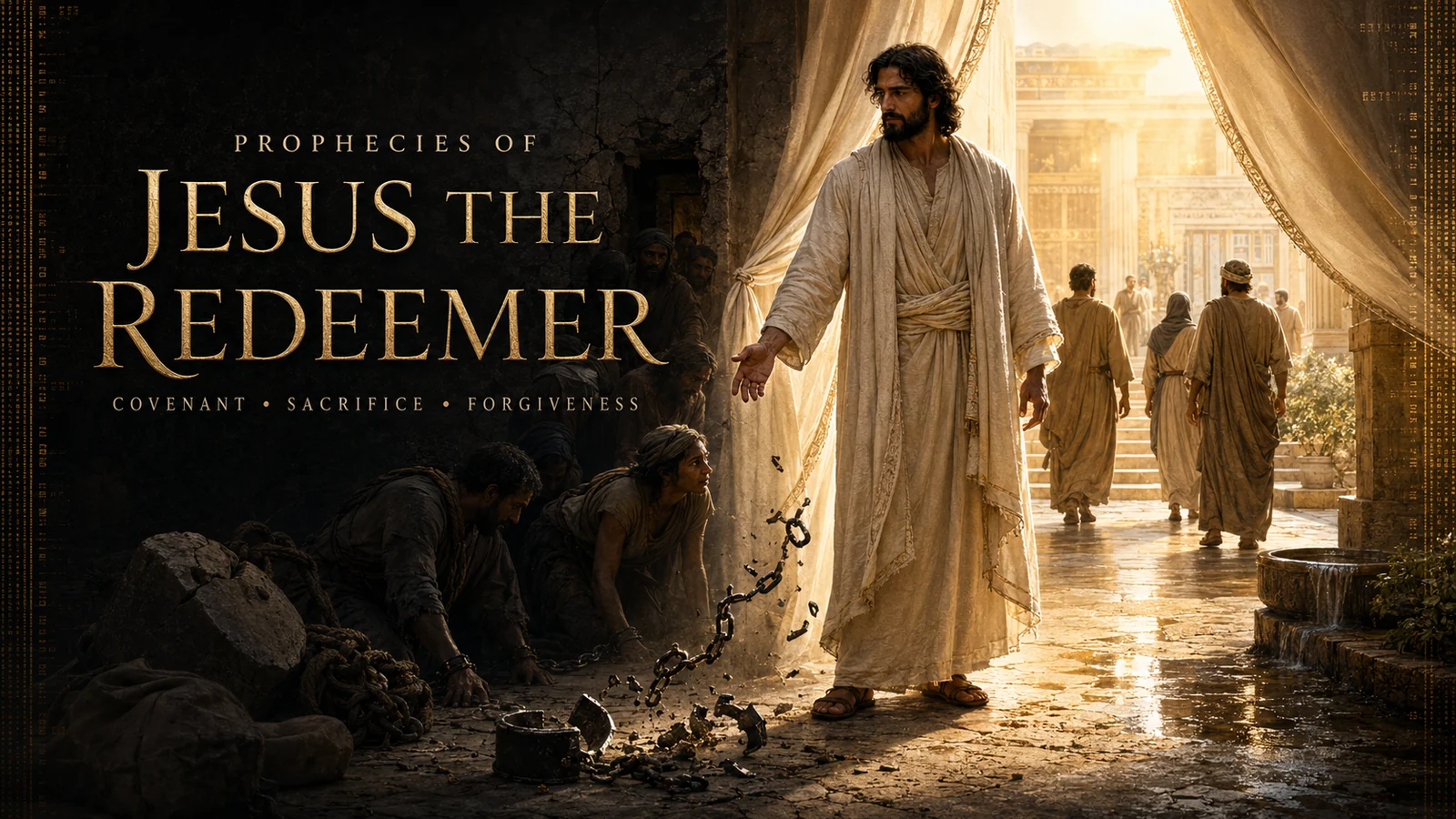
Prophecies of Jesus the Redeemer: Covenant, Sacrifice, and Forgiveness in Christ
Read along as the narration moves through the article.
Private device narration · No hosted audio or tracking
CONTINUE GUIDED TOUR
Continue where you left off.
GUIDED TOUR COMPLETE
You have reached the end of this study.
Study record saved on this device.
GUIDED TOUR
Prophecies of Jesus the Redeemer: Covenant, Sacrifice, and Forgiveness in Christ
Narrator: Paranoid Prophet Recommended Voice Native device narration
Prepare to follow the article as it is narrated.
VOICE & TOUR OPTIONS
Voice & Listening
NARRATOR
Finding a narrator…
Checking the best narrator available on this device.
Restores the best curated narrator available on this device.
Narrator choices are curated for clear, long-form listening on this device.
Screen-awake support will be checked when narration starts.
CHOOSE A NARRATOR
Curated for this device
Choose a verified narrator for this browser, or use System Narrator. Automatic mode uses the best reliable route exposed by this device; your chosen narrator is preserved even if this device needs a temporary fallback.
Preparing the guided article experience…
RESUME GUIDED TOUR?
Continue where you left off.
GUIDED TOUR COMPLETE
You have reached the end of this study.
Prophecies of Jesus the Redeemer are not limited to isolated predictions about one future event. Scripture’s redemptive story moves through God’s deliverance of the enslaved, His provision for guilt and cleansing, His covenant mercy toward the unfaithful, and His promise to bring blessing beyond Israel to the nations.
The New Testament presents Jesus as the fulfillment of that redemptive pattern. He is the Savior through whom God delivers His people, the sacrifice through whom forgiveness and access to God are secured, and the mediator through whom God’s covenant promises reach their appointed goal.
That claim requires careful reading. Not every Old Testament text about redemption is a direct prediction of Jesus. Some are covenant promises. Some are sacrificial patterns. Some are narratives of restoration that Christians read in the light of Christ. The strongest case does not flatten those categories. It shows how the New Testament itself brings them together in its proclamation of Jesus’ saving work.
For the wider framework of direct application, typology, covenant promise, and debated texts, see Prophecies of Jesus Fulfilled in Scripture.
Article Guide12 sections
What Do Prophecies of Jesus the Redeemer Say?
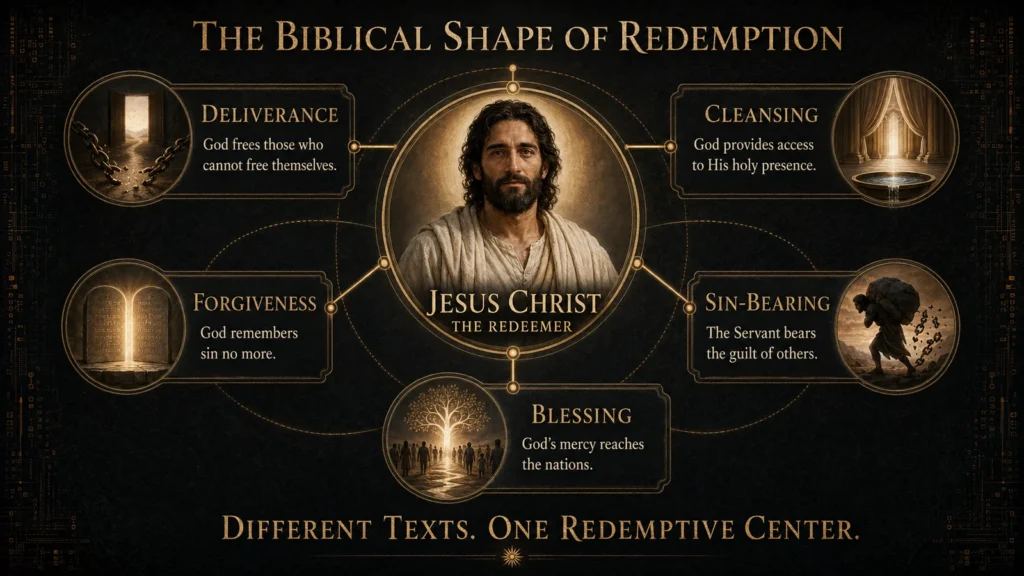
In Scripture, redemption is not merely an idea about what happens after death. God redeems by acting to deliver people from bondage, guilt, alienation, and ruin so that they may belong to Him and live in restored covenant fellowship.
Exodus gives the foundational picture. God tells Israel that He will bring them out from slavery and redeem them with an outstretched arm and acts of judgment. Exodus 6:6–8 presents redemption as God’s faithful action: He frees a people who cannot free themselves, brings them near, and makes them His own.
That redemptive story develops across the Old Testament. Passover remembers deliverance through the sacrifice God provides. The Day of Atonement addresses cleansing and continued access to a holy God. Jeremiah promises covenant forgiveness and transformed hearts. Isaiah speaks of a Servant who bears sin for others. God’s covenant with Abraham looks beyond one family toward blessing for all the families of the earth.
Christians believe these themes converge in Jesus Christ. The New Testament does not portray His death as an isolated tragedy or a merely inspiring example of sacrifice. It presents His saving work as the fulfillment of God’s long redemptive purpose: deliverance from sin, forgiveness before God, covenant restoration, and hope that reaches the nations.
This article focuses on that redemptive logic. It will not repeat the full historical case for Jesus’ crucifixion or the detailed fulfillment discussion surrounding Psalm 22 and Isaiah 53. Those questions belong in their own specialist article. Here, the focus is narrower: how do Scripture’s patterns of deliverance, cleansing, covenant forgiveness, and restoration help readers understand Jesus as Redeemer?
How This Article Uses Redemption, Pattern, and Fulfillment
Redemption texts do not all work in the same way. Some are directly applied to Jesus by the New Testament. Others provide the covenant and sacrificial world through which the New Testament explains His death and saving mission. A careful Christian reading should name that difference rather than treating every lamb, ritual, or family story as a coded prediction.
- Explicit New Testament Christological use: The New Testament directly identifies a redemptive text or image with Christ, as Paul does when he calls Christ “our Passover lamb.”
- Sacrificial and covenant pattern: Israel’s worship establishes categories such as sacrifice, cleansing, forgiveness, and access to God that Hebrews applies to Jesus’ saving work.
- Central Christian canonical fulfillment: A text such as Isaiah 53 becomes foundational for how the New Testament explains Christ’s suffering for others.
- Covenant promise with apostolic application: A promise such as Abraham’s blessing to the nations is read by the apostles as reaching its focal fulfillment in Christ.
- Restrained pattern of restoration: A narrative may illuminate the shape of redemption without becoming a direct prediction or a one-to-one allegory.
These distinctions protect the article from weak claims. Passover is first the historical story of Israel’s deliverance from Egypt. Leviticus 16 belongs to Israel’s covenant worship and its concern for holiness, cleansing, and God’s dwelling among His people. Neither passage originally gives a complete Christian explanation of the atonement in advance.
Yet the New Testament deliberately reads Jesus through this redemptive world. It presents His death as the decisive saving work toward which deliverance, sacrifice, covenant forgiveness, and restored access to God have been pointing. The question is not whether every Old Testament detail maps mechanically onto Christ. The question is whether the Scriptures’ central redemptive pattern reaches its fulfillment in Him.
Passover: Deliverance Through the Lamb
Fulfillment category: Redemptive pattern with explicit New Testament Christological use
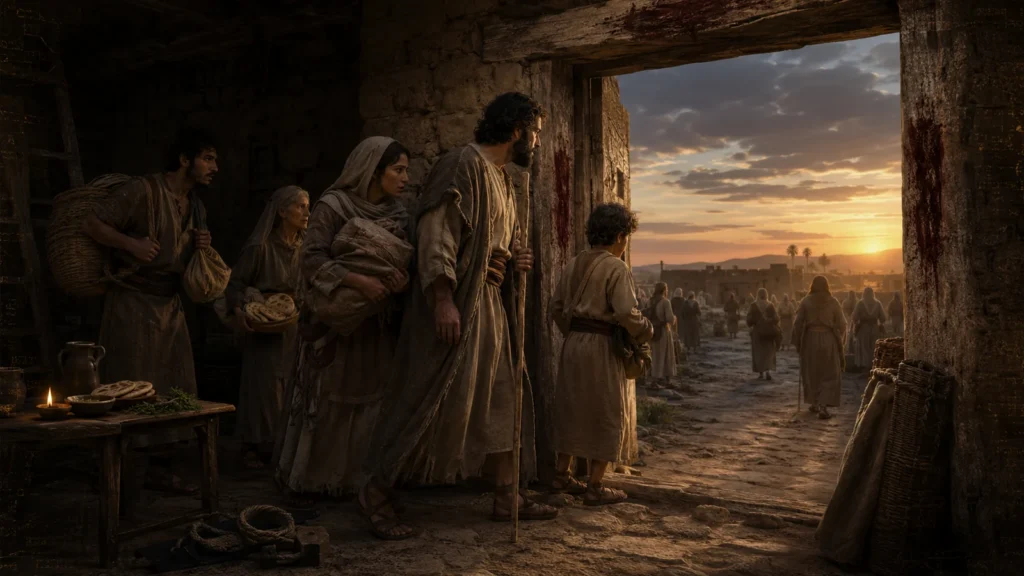
Passover begins with the exodus. Israel is enslaved in Egypt, unable to secure its own release, and facing the final plague God brings upon the land. In Exodus 12, God provides a means by which Israelite households are marked out for deliverance: a lamb is sacrificed, its blood marks the doorposts, and the people eat in readiness to leave slavery behind.
“The blood shall be a sign for you, on the houses where you are. And when I see the blood, I will pass over you.”
The original setting matters. Passover is not an abstract symbol detached from Israel’s history. It remembers God’s judgment upon Egypt, His mercy toward His covenant people, and His power to bring them out of bondage. The feast becomes a continuing memorial because redemption is central to Israel’s identity before God.
The New Testament explicitly applies Passover language to Christ. Paul writes, “Christ, our Passover lamb, has been sacrificed,” and then calls the church to live in the sincerity and truth that fit a redeemed people. 1 Corinthians 5:6–8
That is the article’s clearest warrant for reading Passover Christologically. Christians do not need to force every ritual feature of Exodus 12 into a prediction chart. Paul’s own language establishes the central connection: Jesus’ saving death is understood through the pattern of Passover deliverance.
John’s Gospel also uses Passover-shaped imagery around Jesus’ death. John the Baptist calls Jesus “the Lamb of God,” and John later notes that Jesus’ bones were not broken, echoing Passover instructions concerning the lamb. John 1:29 and 19:31–37 reinforce the Gospel’s presentation of Jesus’ death within Israel’s sacrificial and redemptive world.
Still, careful reading matters. “Lamb of God” may draw together more than one Old Testament stream, including sacrifice and the Servant’s suffering. John 19 should not be made to prove a precise chronology for the crucifixion, nor should the article claim that every Passover detail finds a separate direct fulfillment in Jesus.
The stronger conclusion is also the simpler one: Passover is a historical exodus deliverance that the New Testament explicitly applies to Christ. Christians therefore see Jesus’ saving death as the climactic fulfillment of God’s pattern of deliverance through the sacrifice He provides.
In the exodus, God redeems His people from slavery and brings them into covenant life. In Christ, the New Testament announces a deeper deliverance from sin and death, leading not merely to an earthly homeland but to forgiveness, reconciliation, and life with God.
The Day of Atonement: Cleansing and Access to God
Fulfillment category: Sacrificial and cleansing pattern interpreted through Hebrews
Leviticus 16 addresses a different but related problem. Passover emphasizes deliverance from bondage; the Day of Atonement addresses how a holy God can continue to dwell among a sinful and defiled people. The annual rite includes the high priest, sacrificial blood, the cleansing of the sanctuary, and the removal of Israel’s sins from the camp.
The central concern is not merely private relief from guilt. Israel’s covenant life depends upon God’s holy presence in their midst. Sin and impurity threaten that communion. The Day of Atonement therefore expresses the need for cleansing, forgiveness, and restored access to God.
“For on this day shall atonement be made for you to cleanse you. You shall be clean before the Lord from all your sins.”
The New Testament letter to the Hebrews reads Christ’s saving work through these categories. Hebrews presents Jesus as the one who enters God’s presence and secures eternal redemption through His own blood. It contrasts repeated offerings, which could not bring final completion, with Christ’s once-for-all sacrifice that cleanses the conscience and opens the way to God. Hebrews 9:11–14, 23–28; 10:1–18
Hebrews does not mock Israel’s sacrifices as meaningless. They belonged to God’s covenant instruction and taught Israel that sin is serious, God is holy, and reconciliation requires God’s gracious provision. But their repetition also pointed beyond themselves. They could not finally accomplish the full, lasting cleansing and access to God that Christ’s offering brings.
This is why Leviticus 16 should not be reduced to a scapegoat slogan. The chapter’s two-goat ritual and the meaning of Azazel have generated serious interpretive discussion. The article does not need to settle those debates or identify one goat as Jesus and the other as a separate stage of His atonement.
The central Christian claim is more secure: Hebrews interprets Jesus’ saving work through the Day of Atonement’s categories of sacrifice, cleansing, access to God, and decisive redemption. Christ’s work fulfills the redemptive purpose toward which Israel’s sacrificial worship pointed, bringing believers near to God with a cleansed conscience and enduring hope.
Passover shows redemption as God’s deliverance from bondage. The Day of Atonement shows redemption as cleansing and restored access to a holy God. Jeremiah’s New Covenant promise will now bring those themes together in the language of forgiveness, renewed hearts, and God’s covenant faithfulness.

Jeremiah 31: The New Covenant and Forgiveness
Fulfillment category: Explicit New Covenant fulfillment
Jeremiah 31 speaks into a moment of covenant collapse. Jerusalem faces judgment, exile, and the consequences of Israel’s persistent unfaithfulness. Yet the prophet does not end with abandonment. He announces that God will make a new covenant marked by renewed relationship, inward transformation, and forgiveness.
“Behold, the days are coming, declares the Lord, when I will make a new covenant with the house of Israel and the house of Judah.”
The original setting must remain clear. Jeremiah’s promise is addressed to the house of Israel and the house of Judah. It speaks of a people whom God has disciplined but will not finally abandon. The promised covenant includes God’s law written on hearts, a restored knowledge of the Lord, and the decisive declaration: “I will forgive their iniquity, and I will remember their sin no more.”
This is not merely a promise of private religious feeling. Jeremiah envisions covenant restoration. God will renew His people from within so that obedience, knowledge of Him, and forgiveness belong together. The promise addresses both the reality of sin and the deeper need for a transformed people who live in fellowship with their God.
Jesus uses New Covenant language at the Last Supper. Taking the cup, He speaks of “the new covenant in my blood.” Luke 22:14–20 does not mechanically quote Jeremiah 31 word for word, but Christians rightly read Jesus’ covenant words in continuity with Jeremiah’s promise of forgiveness and restored relationship with God.
Hebrews gives the article’s fullest New Testament exposition. The author cites Jeremiah 31 at length and presents Jesus as the mediator of a better covenant established on better promises. Hebrews 8:6–13 then returns to Jeremiah’s promise of forgiven sins when explaining the finality of Christ’s offering: “Where there is forgiveness of these, there is no longer any offering for sin.” Hebrews 10:15–18
The Christian claim is therefore not that Jesus “became the covenant.” Scripture calls Him its mediator and identifies His death with its inauguration. Through Him, the forgiveness and heart-renewal promised in Jeremiah are brought into their decisive New Testament fulfillment.
That claim should not be turned into an argument that God discarded Israel or replaced Israel with an abstract church. Jeremiah speaks to Israel and Judah, and Jesus is Israel’s Messiah. The New Testament presents the covenant mercy promised through Israel’s Scriptures as inaugurated through Him and extending outward in His name to the nations.
Nor does the New Covenant make the Old Testament irrelevant. Hebrews reads Jeremiah and Israel’s sacrificial world as Scripture that reaches its appointed goal in Christ. The earlier covenantal forms reveal God’s holiness, humanity’s need for forgiveness, and the seriousness of reconciliation with God. In Christ, the promise moves from anticipation toward fulfillment.
Jeremiah therefore brings together the themes already established in Passover and the Day of Atonement. Redemption is deliverance from bondage. It is cleansing before a holy God. It is also covenant forgiveness: God graciously removes sin and restores His people to know Him from the heart.
Isaiah 53: The Servant Who Bears Sin
Fulfillment category: Central Christian canonical fulfillment
Isaiah 52:13–53:12 stands at the center of the Christian understanding of Jesus’ redemptive death. The passage presents a Servant who is rejected, suffers, bears the sins of others, and is ultimately exalted by God.
“He was pierced for our transgressions; he was crushed for our iniquities; upon him was the chastisement that brought us peace, and with his wounds we are healed.”
Isaiah’s Servant is not presented as a merely unfortunate victim. The chapter speaks of suffering that bears the burden of others, of guilt carried, of peace and healing brought, and of a righteous servant who “shall make many to be accounted righteous.” The text gives Christians a scriptural vocabulary for understanding Jesus’ death as redemptive rather than accidental.
Jewish and Christian interpretations of Isaiah 53 differ profoundly. Elsewhere in Isaiah, “servant” can refer to Israel corporately, and Jewish readers have long offered readings of the chapter that differ from Christian messianic interpretation. A serious Christian reading should acknowledge that disagreement rather than act as though the text has no contested interpretive history.
Christians nevertheless see Isaiah 53 as central to Jesus because the New Testament repeatedly identifies Him with the Servant’s language and mission. Jesus applies Isaiah 53:12 to Himself on the night before His death, saying that He must be “numbered with the transgressors.” Luke 22:35–38
Acts 8 makes the connection even more direct. When the Ethiopian official reads Isaiah 53 and asks whom the prophet is speaking about, Philip begins with that Scripture and tells him the good news about Jesus. Acts 8:26–35 does not preserve Philip’s full sermon, but Luke plainly presents Isaiah’s Servant passage as a central scriptural doorway into the proclamation of Christ.
First Peter likewise applies the Servant’s themes to Jesus’ suffering and saving work. Christ “committed no sin,” “bore our sins in his body on the tree,” and through His wounds His people are healed and brought back to the Shepherd of their souls. 1 Peter 2:21–25
These New Testament uses do not ask readers to treat Isaiah 53 as a cryptic code that predicts every later detail of Roman execution. The passage’s central contribution is theological: the Servant suffers for others, bears sin, and brings reconciliation and justification through God’s saving purpose.

That matters for the Redeemer article because sacrifice, forgiveness, and covenant restoration could otherwise remain abstract themes. Isaiah 53 explains why Christians say Jesus’ death addresses human sin at its deepest level. Redemption is not only escape from danger or relief from distress. It is God’s gracious action against guilt, alienation, and the ruin sin brings into His world.
Isaiah’s language also keeps redemption from becoming a sentimental slogan. Sin is real. God’s holiness is real. Yet the Servant’s suffering is not the final word. The passage begins with the Servant’s future exaltation and ends with His vindication, reward, and intercession for transgressors. The one who bears sin is also the one through whom God brings life and restoration.
This article does not need to repeat every detailed connection between Isaiah 53, Psalm 22, rejection, crucifixion, and the Gospel Passion narratives. That fuller case belongs in Jesus’ Crucifixion Prophecies: Isaiah 53, Psalm 22, and the Cross.
For the present argument, the conclusion is focused: the New Testament identifies Jesus with the Servant who bears sin and brings many into right standing before God. Passover shows deliverance. The Day of Atonement shows cleansing and access. Jeremiah promises covenant forgiveness. Isaiah 53 brings those redemptive themes into sharp focus through the suffering and vindicated Servant.
Abraham’s Blessing Reaches the Nations
Fulfillment category: Covenant promise with apostolic application
Redemption in Scripture was never meant to end with one family, one generation, or one nation. God’s covenant with Abraham gives the wider horizon: through Abraham, God promises blessing that will reach “all the families of the earth.”
“In you all the families of the earth shall be blessed.”
Genesis 12 is not only a future-Messiah prediction. It is the foundation of Israel’s covenant story: God promises Abraham descendants, land, a great name, and blessing that reaches beyond Abraham’s household to the nations. The promise establishes the biblical setting in which redemption is both particular and worldwide. God works through Abraham’s family, but His purpose reaches outward to all peoples.
The apostles read that promise Christologically. In Acts 3, Peter tells his hearers that they are heirs of the covenant God made with Abraham, then announces that God raised up His Servant and sent Him first “to bless you by turning every one of you from your wickedness.” Acts 3:17–26
Paul makes the same covenant horizon central in Galatians. He says that the Scripture foresaw God justifying the Gentiles by faith and preached the good news beforehand to Abraham: “In you shall all the nations be blessed.” Galatians 3:6–14
Christians should handle Paul’s argument carefully. Genesis speaks about Abraham’s descendants and the covenant people as well as the blessing of the nations. The singular language of “offspring” should not be used as though grammar alone settles every messianic question. Paul reads the Abrahamic promise canonically and Christologically: Jesus is the focal fulfillment through whom the promised blessing reaches the nations.
That blessing is more than material prosperity or general encouragement. In Acts and Galatians, it includes deliverance from sin, reconciliation with God, the gift of the Spirit, and the creation of a people drawn from every nation through faith in Christ.
This does not mean Israel is discarded from God’s purposes. Jesus is Israel’s Messiah, the covenant promises arise from Israel’s Scriptures, and the Gospel’s movement toward the nations is the expansion of God’s mercy through Israel’s promised Redeemer. In Christ, the blessing God pledged through Abraham reaches its intended worldwide scope.
Ruth and Boaz: A Careful Pattern of Restoration
Ruth offers a smaller, personal picture of restoration within Israel’s covenant life. Naomi’s family has suffered famine, bereavement, land loss, and the apparent end of a household line. Boaz acts as a faithful kinsman who helps secure redemption, inheritance, and a future for Naomi and Ruth. Ruth 4:1–17
The book concludes by connecting this restored family line to David. That ending gives Ruth a meaningful place in the larger biblical story, and Matthew includes Ruth and Boaz within Jesus’ genealogy. Ruth 4:18–22 and Matthew 1:1–6
Christians may therefore see a restrained pattern of costly, covenant-faithful restoration that reaches forward within the Davidic line toward Christ. But Ruth is not a direct prophecy of Jesus, and Boaz is not a complete allegory of Christ redeeming the church as His bride. The text itself concerns real people, family responsibility, land, inheritance, faithfulness, and God’s providence in preserving the line that leads to David.
Its proper contribution to this article is modest but meaningful: redemption in Scripture is not merely payment for guilt. It also involves restoration, preservation, belonging, and a future where loss does not have the final word.
What These Scriptures Establish—and What They Do Not
The Old Testament passages considered in this article do not all function in exactly the same way. Exodus and Leviticus establish the redemptive world of deliverance, sacrifice, cleansing, and access to God. Jeremiah promises a New Covenant of forgiveness and renewed hearts. Isaiah 53 presents the suffering Servant whose work addresses the sins of others. Genesis gives the covenant horizon in which blessing reaches the nations. Ruth offers a restrained narrative pattern of restoration within the Davidic line.
The New Testament brings these themes into focus around Jesus Christ. It calls Him the Passover sacrifice, identifies His saving work with the New Covenant, reads His death through sacrifice and cleansing, applies the Servant’s sin-bearing language to Him, and proclaims the blessing of Abraham reaching the nations through faith in Him.
Evidence Matrix: Scripture and Jesus the Redeemer
| Old Testament text | Fulfillment category | New Testament hinge | What Christians can responsibly claim |
|---|---|---|---|
| Exodus 12 | Redemptive pattern with explicit New Testament Christological use | 1 Corinthians 5:7; John 19:36 | Christ is explicitly identified in Passover-shaped terms; deliverance through the sacrifice God provides is central to the Christian reading of His saving death. |
| Leviticus 16 | Sacrificial and cleansing pattern | Hebrews 8–10 | Jesus’ saving work is interpreted through sacrifice, cleansing, access to God, and decisive redemption without requiring every ritual detail to map directly onto Him. |
| Jeremiah 31:31–34 | Explicit New Covenant fulfillment | Luke 22:20; Hebrews 8:6–13; 10:15–18 | Jesus inaugurates the covenant promise of forgiveness and inward renewal as its mediator. |
| Isaiah 52:13–53:12 | Central Christian canonical fulfillment | Luke 22:37; Acts 8:30–35; 1 Peter 2:21–25 | Christians identify Jesus with the Servant who bears sin, suffers for others, and brings many into right standing before God. |
| Genesis 12:1–3 | Covenant promise with apostolic application | Acts 3:25–26; Galatians 3:8–14 | God’s promised blessing reaches the nations through Abraham’s Messiah. |
| Ruth 4 | Restrained canonical pattern of restoration | Ruth 4:18–22; Matthew 1:1–6 | Boaz models costly, covenant-faithful restoration within the Davidic line; the narrative is not a direct prediction of Jesus. |
What Christians Can Say Confidently
- The New Testament explicitly identifies Christ with Passover-shaped redemption and presents His death as God’s decisive saving provision.
- Hebrews interprets Jesus’ work through sacrifice, cleansing, access to God, and the once-for-all character of His offering.
- Jesus identifies His death with the New Covenant, and Hebrews presents Jeremiah’s promise of forgiveness and heart renewal as fulfilled through His mediating work.
- The New Testament repeatedly identifies Jesus with Isaiah’s suffering Servant and explains His death as bearing sin for others.
- Acts and Paul present Christ as the focal fulfillment through whom Abraham’s promised blessing reaches the nations.
- Redemption in Christ includes forgiveness, reconciliation, covenant fellowship, restored access to God, and hope for final renewal.
What Christians Should Not Claim
- Christians should not claim that every detail of the Passover lamb directly predicts Jesus or proves a precise crucifixion chronology.
- Christians should not reduce the Day of Atonement to a simplistic scapegoat comparison or build a major claim on disputed questions about Azazel.
- Christians should not say that Old Testament sacrifices were meaningless; Hebrews presents them as God-given forms that could not finally accomplish the lasting completion Christ brings.
- Christians should not say that Jesus “became the covenant.” He is the mediator through whom the New Covenant is inaugurated.
- Christians should not claim that Jeremiah 31 discards Israel or requires a simplistic replacement of Israel with the church.
- Christians should not treat Ruth and Boaz as a direct prophecy or a complete bride-of-Christ allegory.
- Christians should not claim that redemption texts alone establish every dimension of Jesus’ divine identity, historical ministry, crucifixion, or resurrection.
These boundaries strengthen rather than weaken the Christian case. They allow the Scriptures to speak according to their own forms while showing how the New Testament gathers their central redemptive themes around Jesus Christ. For the distinct Old Testament and New Testament case concerning His divine identity, see Jesus’ Divine Identity in Prophecy.
How Jesus the Redeemer Fits the Larger Case for Christ
Jesus’ redeeming work belongs within the whole Christian proclamation. The Messiah who announces God’s kingdom is also the one who gives Himself for sinners. The Servant who bears sin is also the risen Lord proclaimed by the earliest Christian witnesses. The covenant forgiveness promised by Jeremiah and the Passover-shaped deliverance proclaimed by Paul find their center in the same Jesus Christ.
For the public mission that leads into this saving work, see Prophecies About Jesus’ Ministry: The Messiah’s Mission, Kingdom, and Signs. For the concentrated biblical case concerning Jesus’ suffering and death, see Jesus’ Crucifixion Prophecies: Isaiah 53, Psalm 22, and the Cross. For the historical foundation of Jesus’ life and execution, see Historical Evidence for Jesus.
Prophecy does not replace historical inquiry. It gives readers the scriptural framework through which the Gospel events are understood. The Christian claim is not merely that Jesus died. It is that His death, understood within Scripture’s redemptive story, brings forgiveness, reconciliation, and access to God—and that His resurrection vindicates the hope proclaimed in His name.
Frequently Asked Questions About Jesus the Redeemer
Did every detail of the Passover lamb predict Jesus?
No. Passover is first the historical account and memorial of God delivering Israel from Egypt. The New Testament explicitly applies Passover language to Christ, especially in 1 Corinthians 5:7. Christians can therefore see Passover as a major redemptive pattern fulfilled in Jesus without forcing every ritual feature into a separate prediction code.
Is Jesus simply the scapegoat in Leviticus 16?
No. The Day of Atonement includes sacrifice, cleansing, access to God, and a complex two-goat ritual. Hebrews interprets Jesus’ saving work through the chapter’s central redemptive categories, but the article should not reduce Him to one goat or treat disputed questions about Azazel as settled proof.
Did Jeremiah 31 replace Israel with the church?
No. Jeremiah addresses the house of Israel and the house of Judah. Christians confess that the New Covenant is inaugurated through Israel’s Messiah and that its forgiveness reaches the nations through Him. That does not require the claim that Israel has been discarded from God’s purposes.
Does Isaiah 53 directly identify Jesus?
Isaiah does not name Jesus, and Jewish and Christian interpretations of the Servant differ. Christians identify Jesus with Isaiah 53 because the New Testament repeatedly applies the passage’s language and themes to His suffering, sin-bearing work, and saving mission.
Is Boaz a direct prophecy of Jesus?
No. Ruth tells the story of real people and a family restored through covenant-faithful action. Christians may see a restrained pattern of restoration within the Davidic line, but Boaz is not presented in Scripture as a direct prediction of Jesus or a complete bride-of-Christ allegory.
Does redemption mean only forgiveness after death?
No. Biblical redemption includes deliverance from bondage, cleansing from sin, restored covenant fellowship, transformed hearts, reconciliation with God, and hope for the final renewal of all things. Its present blessings are real, while its full completion still lies ahead.
Continue the Evidence
- Explore the Prophecy Hub: Prophecies of Jesus Fulfilled in Scripture
- Examine the Earliest Resurrection Proclamation
- Continue in the Prophecy Lane: Prophecies of Jesus’ Resurrection Fulfilled
- See the Wider Case: Is Jesus the Son of God?
Sources and Further Reading
- Primary biblical texts: Genesis 12:1–3; Exodus 6:6–8 and 12; Leviticus 16; Ruth 4; Jeremiah 31:31–34; Isaiah 52:13–53:12; Matthew 1 and 26; Luke 22; John 1 and 19; Acts 3 and 8; Romans 4; Galatians 3; 1 Corinthians 5; Hebrews 8–10; 1 Peter 2.
- G. K. Beale and D. A. Carson, eds., Commentary on the New Testament Use of the Old Testament.
- Craig R. Koester, Hebrews: A New Translation with Introduction and Commentary.
- Gordon J. Wenham, The Book of Leviticus.
- John N. Oswalt, The Book of Isaiah, Chapters 40–66.
- J. A. Thompson, The Book of Jeremiah.
- Robert L. Hubbard Jr., The Book of Ruth.
These works represent relevant scholarly resources for the texts discussed. Their inclusion does not imply agreement with every conclusion in this article.
Unless otherwise indicated, Scripture quotations are from the ESV® Bible.
Jesus Christ, the Redeemer Who Brings Us to God
From the exodus onward, Scripture teaches that redemption is God’s work. He delivers the enslaved, provides cleansing for the guilty, remembers His covenant mercy, and makes a way for His people to live in His presence.
In Jesus Christ, Christians see that redemptive story reaching its appointed fullness. He is the Passover-shaped Savior who delivers. He is the mediator of the New Covenant who brings forgiveness. He is the Servant who bears sin and opens the way to God. Through Him, the blessing promised to Abraham reaches the nations.
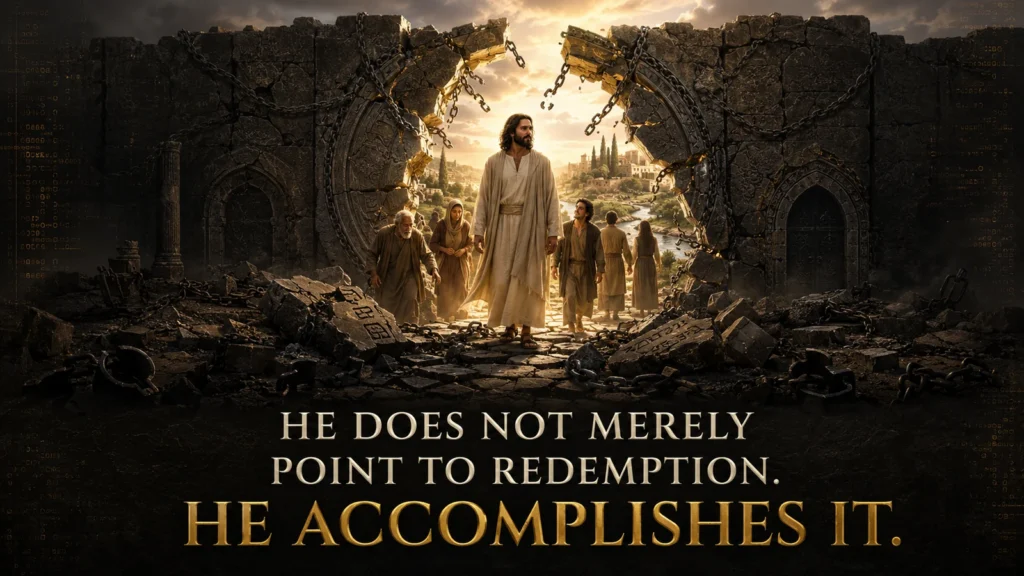
Jesus Christ does not merely point toward redemption. He accomplishes it. He calls sinners to come near through faith, receive the mercy of God, and live before the Father with the hope of final restoration.
CONTINUE THE INVESTIGATION
Recommended continuation
Why Did Jesus Die? What Scripture Says the Cross Accomplished
Follow the Redeemer theme into a focused study of what Scripture says Jesus accomplished through His death.