
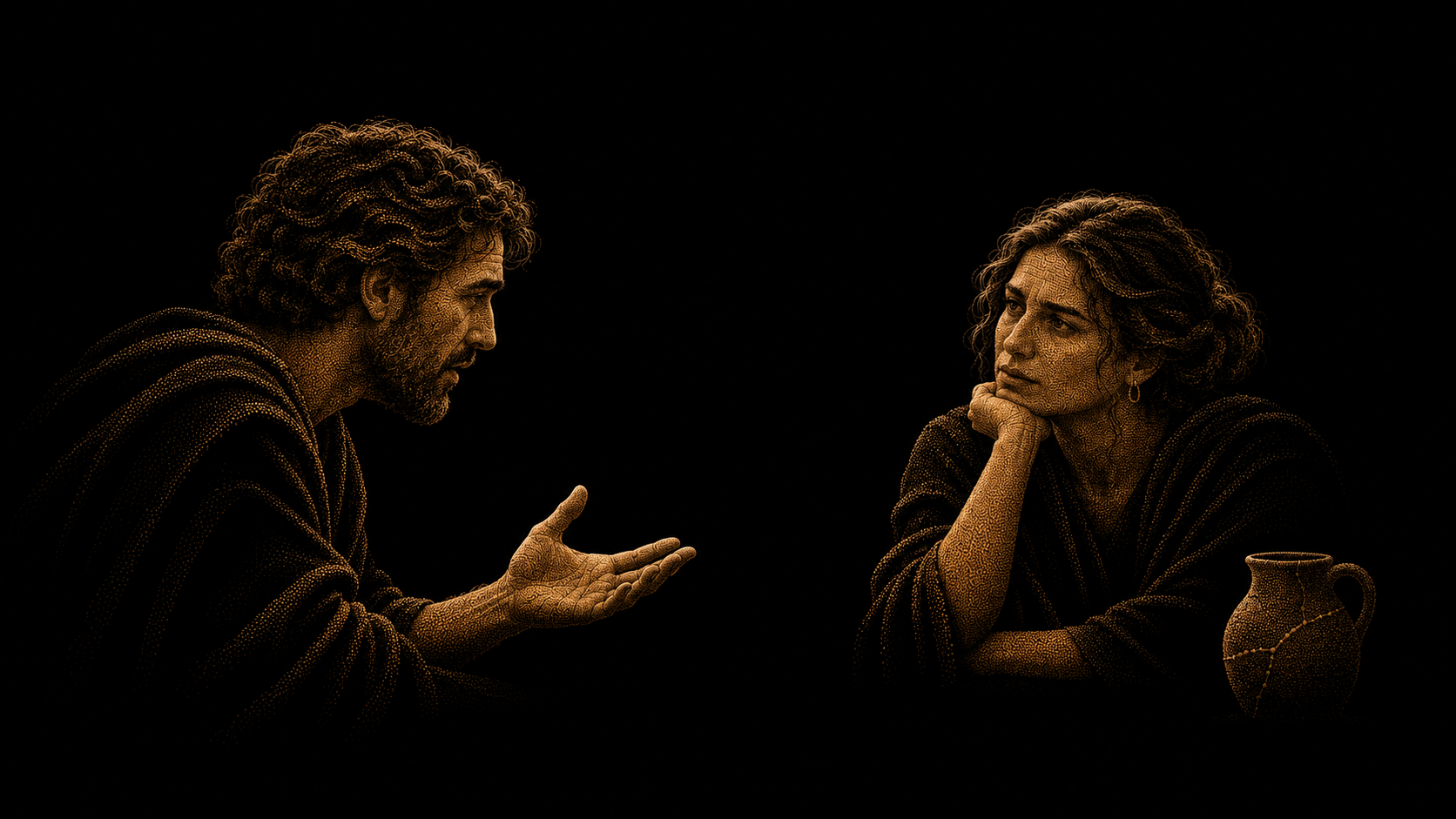

You cannot unsay a cruel sentence. Returning stolen money does not erase the fear it caused. A sincere apology matters, yet it cannot turn yesterday into a different day. That is why forgiveness raises a deeper question than whether someone feels sorry: how can a damaged relationship actually be restored?
Judaism and Christianity both take that question seriously. Both speak of God’s mercy, the need to turn from wrongdoing, and responsibility toward people we have harmed. Their central disagreement is not whether forgiveness exists. It is whether reconciliation with God finds its decisive fulfillment in Jesus Christ.
This comparison explains Jewish teaching on its own terms before presenting the Christian case. It does not treat every Jewish movement or Christian denomination as identical. For the broader background, start with our comparison of Judaism and Christianity.
GUIDED ARTICLE EXPERIENCE
Forgiveness, Repentance and Atonement in Judaism and Christianity
Read along as the narration moves through the article.
Browser narration · No stored audio or site tracking
CONTINUE GUIDED TOUR
Continue where you left off.
GUIDED TOUR COMPLETE
You have reached the end of this study.
Study record saved on this device.
GUIDED TOUR
Forgiveness, Repentance and Atonement in Judaism and Christianity
Narrator: Paranoid Prophet Recommended Voice Native device narration
Prepare to follow the article as it is narrated.
VOICE & TOUR OPTIONS
Voice & Listening
NARRATOR
Finding a narrator…
Checking the best narrator available on this device.
Restores the site recommendations available in this browser.
Our listening picks lead when available; other voices are ranked for narration. Known novelty voices are hidden. Browser-provided voices may use an online voice service.
Screen-awake support will be checked when narration starts.
Optional: improve your device voices
Listening works with the voices already available here. Your device may offer additional free voices through its own settings.
iPhone or iPad: Settings → Accessibility → Read & Speak (or Spoken Content) → Voices → English. Look for Premium or Enhanced choices, then return here.
If offered, preview Ava or Zoe for U.S. English, or Serena or Jamie for British English. An explicit Premium or Enhanced version can improve on its compact version.
Mac: System Settings → Accessibility → Read & Speak → System voice. Open the voice list to preview or download additional choices.
Windows: Settings → Accessibility → Narrator → Add natural voices. Browser availability varies; a Narrator voice may not appear on websites. Edge may also expose online Natural voices without a model download.
Android: Open Accessibility → Text-to-speech output (the location varies by device). In the preferred engine settings, look for voice data and English choices.
Download sizes vary; some enhanced voices exceed 100 MB. This website cannot install system voices, and an installed voice appears here only if your browser exposes it.
Apple voice guide · Windows voice guide · Android voice guide
CHOOSE A NARRATOR
Recommended on this device
Our listening picks: Aaron, Martha, then Daniel, when available here. Otherwise, automatic uses the highest-ranked suitable voice. Preview alternatives or save your own choice.
Preparing the guided article experience…
RESUME GUIDED TOUR?
Continue where you left off.
GUIDED TOUR COMPLETE
You have reached the end of this study.
Article Guide12 sections
Three words that should not be collapsed into one
Repentance concerns the wrongdoer’s turning: acknowledging evil, abandoning it, and seeking a different way of life. In Jewish usage, teshuvah carries the sense of return. In Christian teaching, repentance belongs with turning to God and receiving the gospel.
Forgiveness concerns pardon. Divine forgiveness addresses a person’s relationship with God; interpersonal forgiveness concerns wrongs between people. Those relationships overlap, but praying to God does not let someone bypass a neighbor they cheated.
Atonement concerns how sin and its consequences are dealt with so that relationship with God can be restored. The word gathers several biblical images, including cleansing, sacrifice, reconciliation and the removal of guilt. Its meaning must be read in context rather than forced into a single modern illustration.
These distinctions help us ask better questions. What must change in the person? How does God provide for restoration? Which obligations remain toward the injured person? An answer to one question does not automatically settle the others.
Repentance
What must change in me? Turning from wrongdoing.
Forgiveness
How is guilt pardoned?
Atonement
How is relationship with God restored?
Related questions, not interchangeable words. Read the fuller definitions and sources in the article.
The Hebrew Bible already speaks of mercy
Christians should never imply that forgiveness first appears in the New Testament. Israel’s Scriptures already describe the God to whom Christians pray as merciful.
Psalm 51 gives a vivid example. Its speaker asks for cleansing, inward renewal and restored fellowship with God. The prayer recognizes that a religious offering cannot substitute for a contrite heart. Yet the psalm’s ending also speaks positively about acceptable sacrifice. It is a mistake to turn its appeal for sincerity into a simple rejection of Israel’s worship. Read Psalm 51.
That matters for the comparison. Biblical repentance is more than an anxious effort to earn enough moral points. It includes an appeal to the character and compassion of God. Christians and Jews can both recognize the difference between self-excusing remorse and an honest return to God, even while disagreeing about Jesus.
What sacrifice meant in the Torah
The Torah gives sacrifice a genuine role. Leviticus 17:11 connects the life represented by blood with God’s provision of atonement at the altar. The text presents this as something God gives Israel, not a technique humans invent to manipulate him. Leviticus 17.
However, the sacrificial system should not be compressed into the claim that every act of forgiveness required the individual sinner to bring an animal. Leviticus 5:11–13 permits a person who cannot afford the specified birds to bring a flour offering in the cases described. The passage still speaks of atonement and forgiveness. That provision does not make blood unimportant; it does make sweeping slogans inaccurate. Leviticus 5.
Nor should we confuse ancient Israel’s altar with a contemporary synagogue. Temple worship and modern Jewish communal worship belong to different historical settings. A careful comparison asks how Jewish tradition understands life without the Temple rather than assuming that the absence of animal sacrifice leaves Judaism with no answer.
Teshuvah: returning involves responsibility
Rabbinic Judaism gives a substantial answer. Maimonides’ Mishneh Torah, a foundational medieval legal work, discusses repentance even when the Temple and its altar are absent. He explicitly affirms the availability of repentance. His account also distinguishes degrees of wrongdoing and the completion of atonement; it is more nuanced than a claim that a quick apology instantly settles everything. Maimonides, Laws of Repentance, chapter 1.
A contemporary Reform Jewish teaching resource summarizes the practical demands: confession, remorse, making amends and acting differently when the same temptation returns. This is an accessible explanation of classical teaching, not a claim that all Jewish people observe an identical checklist. Reform Judaism, “Repair and Apology”.
Consider someone who has spread a damaging falsehood. Feeling guilty is a beginning. A meaningful return would also involve stopping the repetition, correcting the falsehood where possible, acknowledging the injury and refusing the same behavior later. The point is moral repair, not a performance of distress designed to win sympathy.
Jewish traditions differ in theology, observance and the authority they give particular texts. The Orthodox-hosted Maimonides translation and the Reform educational resource are distinct witnesses, not interchangeable representatives of every Jew. Their convergence on serious repentance nevertheless makes one conclusion unavoidable: Judaism does not lack a developed understanding of forgiveness. Our guide to Jewish movements explains why those distinctions matter.
Yom Kippur does not erase obligations to other people
Mishnah Yoma 8:9 distinguishes sins against God from wrongs against another person. It teaches that the Day of Atonement does not settle the latter while the injured person has not been appeased. It also rejects the attitude that one can plan to sin and simply rely on repentance or Yom Kippur afterward. The passage closes with confidence in God as the one who purifies Israel. Mishnah Yoma 8:9.
That combination is important: divine mercy and human responsibility appear together. The holy day is not a moral reset button that allows someone to ignore victims.
For readers comparing religions, this corrects a familiar caricature. Jewish teaching is not merely a ledger of good deeds canceling bad ones. Nor is Christian teaching, properly understood, permission to leave injured people carrying the cost of our wrongdoing.
The Christian claim: forgiveness through Christ
Christianity agrees that sin requires an honest response. Its distinctive claim concerns what God has done through Jesus.
Romans 3:21–26 presents justification as a gift of grace through Christ’s redemption. Paul connects Jesus’ blood with God’s righteousness and the forgiveness of sins. The passage includes everyone under the problem of sin, leaving Christians no ground for moral superiority over Jewish people or anyone else. Romans 3.
Hebrews develops the sacrificial language in a different way. Chapter 10 contrasts repeated offerings with Christ’s once-for-all self-offering and relates his work to the new-covenant promise of sins remembered no more. This is the Christian author’s interpretation of Israel’s Scriptures through Jesus. We should present it as that Christian claim, not as an interpretation Judaism has secretly accepted. Hebrews 10.
The Christian message also includes resurrection. Luke 24 joins the Messiah’s suffering and rising with the proclamation of repentance and forgiveness in his name. The Christian proclamation does not offer Jesus merely as an inspiring example of someone who forgives. Instead, it announces him as the risen Lord through whom the nations receive the message of forgiveness. Luke 24:44–49.
Does Christianity make repentance unnecessary?
No. Receiving grace is not the same as pretending the wrong never happened.
In Luke 19, Zacchaeus responds to Jesus with a commitment to generosity and restitution for fraud. The story connects salvation with a transformed response to money and other people. Christians should resist using forgiveness as a spiritual excuse to retain the benefits of wrongdoing. Luke 19:1–10.
Christian traditions differ over the sacramental and theological explanation of repentance. Catholic teaching, for example, includes confession and explicitly says that harm to one’s neighbor calls for repair where possible. Its account of absolution does not treat restitution as irrelevant. Catechism of the Catholic Church, paragraphs 1451–1460.
This article is not attempting to resolve every disagreement about justification or confession among Christians. Its narrower point is that the New Testament’s Christ-centered promise and its demand for changed life belong together. The person seeking mercy cannot reasonably say, “God has forgiven me, so your losses no longer matter.”
What about “without the shedding of blood”?
Christians often bring Hebrews 9:22 into Jewish-Christian conversations. Read it within the chapter’s discussion of covenant, sanctuary and Christ’s offering. The same verse says that almost everything is purified by blood under the law. Hebrews 9.
Christians understand this passage as part of the case for Jesus’ death as the decisive answer to sin. It is not sound comparison to lift the sentence out of that argument and use it as proof that Jews themselves believe forgiveness is impossible today.
We are asking two different questions: “What does Hebrews teach about Christ?” and “What does rabbinic Judaism teach about repentance?” We should answer both honestly. Misreporting the second does not strengthen the first.
Rabbinic Judaism
Teshuvah, confession and repair; trust in God’s mercy. Does not accept Jesus as the required mediator of forgiveness.
Christianity
Christ’s death and resurrection; repentance and faith; a changed life that takes repair seriously.
An introductory comparison; movements and denominations differ. Neither tradition should be reduced to a legalism-versus-grace stereotype.
Where the disagreement really lies
The disagreement is substantial, but it is more precise than mercy versus law.
Rabbinic Jewish teaching locates repentance within Israel’s relationship with God without accepting Jesus as the required mediator of forgiveness. Christianity identifies Jesus’ death and resurrection as God’s decisive saving action. Both traditions discuss repentance and repair; they disagree about the identity and work of Christ.
Our Christian assessment: the strongest case for Christ begins with who he is and what happened to him. If Jesus truly rose from the dead, the Christian account of his authority and saving work deserves serious consideration. If that claim is false, a moving story about the cross cannot make it true.
That is why we point readers toward what the first witnesses claimed about the risen Jesus and a comparison of the resurrection accounts. Those questions take the disagreement seriously without pretending Jewish thought has nothing to say about grace.
A practical test for honest repentance
Ask what changes after the apology. Has the wrongdoing stopped? Has the truth been told? Is there a realistic effort to repair the damage? Does the person respect the injured party’s boundaries, or demand immediate trust as proof of forgiveness?
These are practical questions, not a formula for measuring another person’s soul. Forgiveness, restored trust and renewed access are not identical. No one should use this comparison to pressure an abused person into unsafe contact or to shield wrongdoing from appropriate accountability.
For the wrongdoer, repentance means facing what was done rather than managing appearances. For a Christian, that response rests in the hope that Christ can forgive and change a person whose past cannot be rewritten. Mercy gives reason to return; it does not make honesty optional.
Questions readers often ask
Do Jewish people believe God forgives sins?
Yes. The Hebrew Bible and rabbinic tradition contain extensive teaching on mercy, repentance and atonement. Jewish movements differ in interpretation and practice, but saying Judaism has no forgiveness is inaccurate.
Is Jewish repentance the same as Christian repentance?
They share important moral concerns, including confession and turning from wrongdoing. Christianity additionally places repentance within its proclamation of forgiveness through the crucified and risen Jesus. That difference should neither be exaggerated into caricature nor erased.
Does being forgiven remove the need to make amends?
An appeal to forgiveness should not become a way to avoid responsibility. This article’s Jewish and Christian examples both challenge that escape. What repair is possible depends on the harm, and reconciliation should not be confused with automatic trust.
The question worth carrying forward
The Christian invitation is to entrust yourself to Christ, not to win an argument against a distorted picture of Judaism. Understand your neighbor’s beliefs carefully. Acknowledge the depth of the Scriptures both traditions read. Then examine the claim at the center of the gospel: God has acted through Jesus’ death and resurrection to bring sinners into restored relationship with him.
Continue exploring in the World Religions library and our guide to comparing religions fairly.