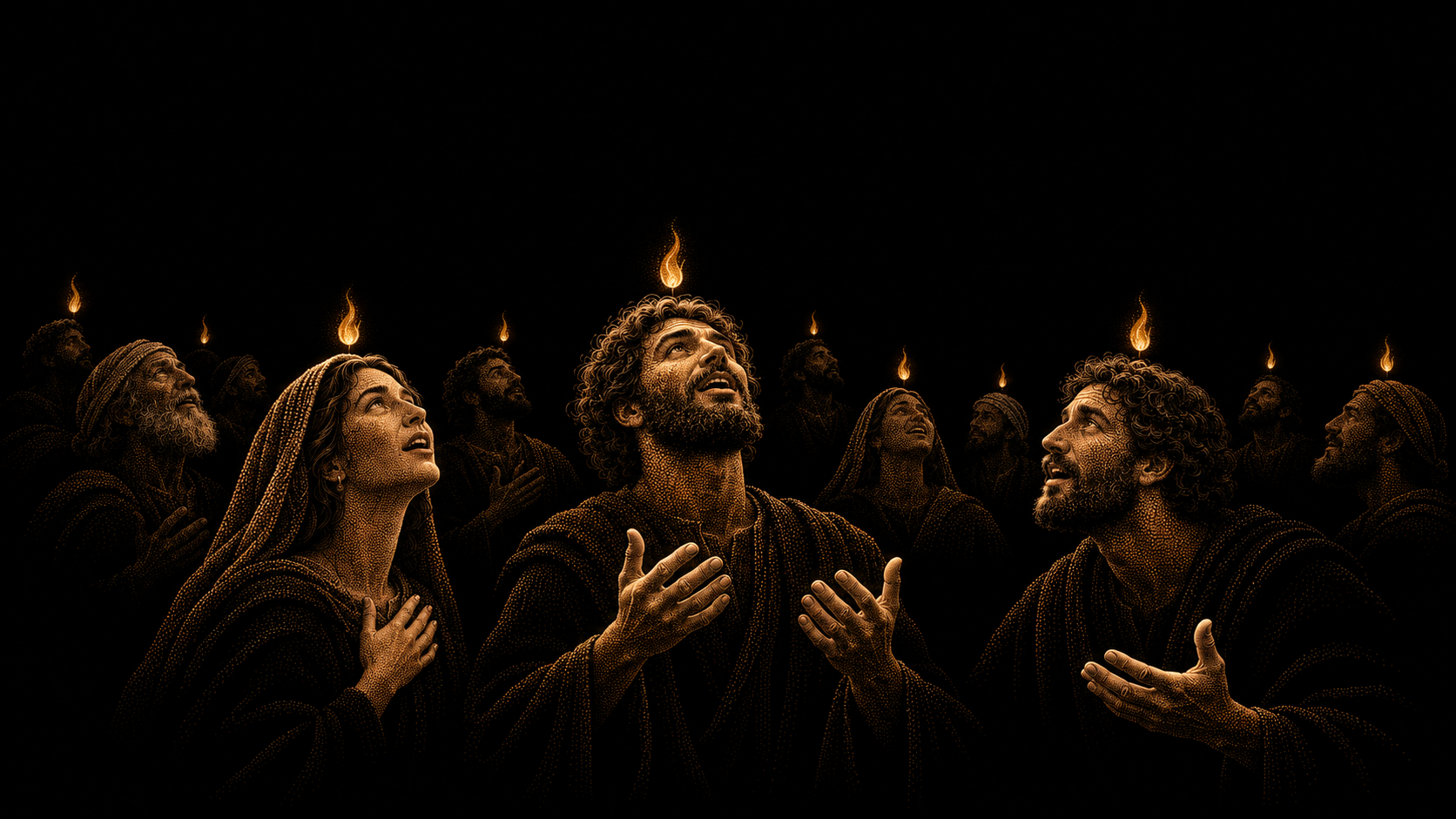

A Christian says the Holy Spirit lives within believers. A Muslim says the Holy Spirit brought revelation. Both statements can sound familiar. Yet the shared English phrase does not mean the two speakers are describing the same doctrine.
In historic Trinitarian Christianity, the Holy Spirit is divine, not a created messenger. In a widespread Muslim interpretation, the Quran’s rūḥ al-qudus, or Holy Spirit, refers to Gabriel. Other Islamic discussions of rūḥ, meaning spirit, are more varied. The disagreement becomes clearer when we ask what each passage says the Spirit does, and how each tradition understands God.
This is not a contest over who owns a word. It is a question about how God makes himself known, who Jesus is, and whether salvation includes God’s own indwelling presence.
GUIDED ARTICLE EXPERIENCE
The Holy Spirit in Christianity and Islam: Same Words, Different Claims
Read along as the narration moves through the article.
Browser narration · No stored audio or site tracking
CONTINUE GUIDED TOUR
Continue where you left off.
GUIDED TOUR COMPLETE
You have reached the end of this study.
Study record saved on this device.
GUIDED TOUR
The Holy Spirit in Christianity and Islam: Same Words, Different Claims
Narrator: Paranoid Prophet Recommended Voice Native device narration
Prepare to follow the article as it is narrated.
VOICE & TOUR OPTIONS
Voice & Listening
NARRATOR
Finding a narrator…
Checking the best narrator available on this device.
Restores the site recommendations available in this browser.
Our listening picks lead when available; other voices are ranked for narration. Known novelty voices are hidden. Browser-provided voices may use an online voice service.
Screen-awake support will be checked when narration starts.
Optional: improve your device voices
Listening works with the voices already available here. Your device may offer additional free voices through its own settings.
iPhone or iPad: Settings → Accessibility → Read & Speak (or Spoken Content) → Voices → English. Look for Premium or Enhanced choices, then return here.
If offered, preview Ava or Zoe for U.S. English, or Serena or Jamie for British English. An explicit Premium or Enhanced version can improve on its compact version.
Mac: System Settings → Accessibility → Read & Speak → System voice. Open the voice list to preview or download additional choices.
Windows: Settings → Accessibility → Narrator → Add natural voices. Browser availability varies; a Narrator voice may not appear on websites. Edge may also expose online Natural voices without a model download.
Android: Open Accessibility → Text-to-speech output (the location varies by device). In the preferred engine settings, look for voice data and English choices.
Download sizes vary; some enhanced voices exceed 100 MB. This website cannot install system voices, and an installed voice appears here only if your browser exposes it.
Apple voice guide · Windows voice guide · Android voice guide
CHOOSE A NARRATOR
Recommended on this device
Our listening picks: Aaron, Martha, then Daniel, when available here. Otherwise, automatic uses the highest-ranked suitable voice. Preview alternatives or save your own choice.
Preparing the guided article experience…
RESUME GUIDED TOUR?
Continue where you left off.
GUIDED TOUR COMPLETE
You have reached the end of this study.
Article Guide11 sections
The short answer
- Christianity: The Holy Spirit is distinct from the Father and the Son, yet shares the one divine being. The Spirit is worshipped, not treated as an angel.
- Islam: The Quran speaks of the Holy Spirit and uses rūḥ in several settings. Gabriel is a major interpretation of the Holy Spirit, but not a universal explanation of every occurrence of “spirit.”
- The central difference: Islamic interpretations discussed here do not make the Spirit a divine person within the Trinity. Christian teaching does.
This article compares historic Nicene Christianity with the Quran and selected Muslim interpretations. It does not assume that every Christian-identifying group or every Muslim theological school uses identical explanations. For the broader background, start with what Muslims believe.
What Christians mean by the Holy Spirit
Calling the Spirit a “person” does not mean a human body or a separate god. It means the Spirit is not merely a force Christians activate. The Nicene tradition confesses the Spirit as eternal and divine, alongside the Father and Son, within the one God. The Orthodox Church in America’s explanation of the creed explicitly distinguishes this confession from belief in a created being. This is an example of Christian self-description, not a definition imposed on Muslims. Read the Orthodox explanation of the Holy Spirit.
The New Testament supplies the substance behind that confession. In Acts 5:3–4, Peter describes Ananias’s deception as lying to the Holy Spirit and then as lying to God. The passage does not present the Spirit as a decorative metaphor. Read Acts 5.
In John’s account, Jesus identifies the promised Helper as the Holy Spirit. The Father sends the Spirit in Jesus’ name; the Spirit teaches and reminds the disciples of Jesus’ teaching. That relationship matters: Father, Son, and Spirit are distinguished without the Spirit becoming a replacement Jesus or a rival source of revelation. Read John 14:16–26.
Christians disagree about spiritual gifts, church authority, and aspects of how to describe the Spirit’s procession. Those questions deserve their own treatment. They should not obscure the basic Nicene claim being compared here: the Holy Spirit belongs on the divine side of the distinction between Creator and creation.
Nicene Christianity
The Holy Spirit is divine, not a created messenger. Read this claim within the Christian confession of the Trinity.
Islamic interpretation
Spirit-language must be read passage by passage. Gabriel is a common identification in particular contexts, not an explanation of every use of ruh.
Shared vocabulary does not establish identical doctrine. Preserve the article’s distinctions among passages, translations and interpretive traditions.
Why Gabriel is central to the Islamic comparison
The Quran describes revelation being brought by the Holy Spirit in 16:102. In 2:97, Gabriel is explicitly associated with bringing revelation to Muhammad’s heart by God’s permission. Reading these passages together helps explain why Muslim interpreters identify the Holy Spirit with Gabriel. Quran 16:102; Quran 2:97.
The classical commentary Tafsir al-Jalalayn identifies the Holy Spirit in 16:102 as Gabriel. This is not a Christian guess about Islam, but an interpretation within the Muslim commentary tradition. In this reading, Gabriel faithfully conveys what comes from God. The messenger’s authority depends on God; it does not make the messenger divine. Read al-Jalalayn on 16:102.
That establishes an important difference, but not permission to stop reading. “The Holy Spirit means Gabriel” can be a useful first answer to a specific verse. “Every use of spirit in Islam means Gabriel” is too broad.
A good comparison asks which Arabic expression appears, what surrounds it, and which interpreter is explaining it. English capitalization alone cannot settle the issue.
Four Quranic contexts worth keeping separate
1. Jesus is strengthened by the Holy Spirit
Quran 5:110 presents God reminding Jesus of the support he received through the Holy Spirit. The same verse repeatedly attributes Jesus’ extraordinary works to God’s permission. Its emphasis is divine empowerment, not an assertion that Jesus and the Spirit share God’s nature. Read Quran 5:110.
A Christian may recognize familiar themes: Jesus, divine help, and miraculous works. Familiarity is a starting point for conversation, not evidence that the two texts teach the same Christology. The question is what each source means by that support.
2. God’s Spirit appears to Mary
In Quran 19:17, God sends “Our Spirit” to Mary, appearing in human form. The Clear Quran translation identifies Gabriel in an explanatory insertion. Readers should notice the distinction between the wording of the verse and the translator’s interpretive clarification. Read Quran 19:17.
This is especially important in interfaith discussion. A translation may helpfully communicate a traditional interpretation, but it should not hide the fact that interpretation has occurred.
3. Revelation itself is described with spirit-language
Quran 42:52 uses rūḥ in a passage about revelation and guidance. The Clear Quran renders it as revelation by God’s command. In this translation, the emphasis falls on the life-giving message. The Twelver interpretation discussed below reads this passage differently, which is another reason not to assume that every occurrence carries one agreed meaning. Read Quran 42:52.
This provides a simple safeguard: do not build a comparison by collecting every English occurrence of “spirit” and assigning it one definition.
4. Human knowledge of the spirit is limited
Quran 17:85 responds to a question about the spirit by referring it to the Lord’s command and emphasizing the limits of human knowledge. The verse itself does not supply a full catalogue of everything rūḥ can mean. It should not be forced to do that work. Read Quran 17:85.
These passages belong together in a study of Quranic language, but they do not function as interchangeable definitions.
A Shi‘i distinction that short summaries often miss
Muslim interpretation is not exhausted by one Sunni commentary. In the Twelver Shi‘i work A Shi‘ite Creed, Shaykh al-Saduq describes the Holy Spirit among spirits associated with prophets, messengers, and Imams. This has a different explanatory framework from simply identifying every spiritual reference with Gabriel. Read al-Saduq’s discussion of souls and spirits.
A later Twelver exposition by Ruhollah Khomeini discusses traditions concerning a created Spirit greater than Gabriel and Michael, associated with prophetic and Imamic guidance. That is a particular theological tradition, not a statement of what every Muslim believes. Crucially, it still does not amount to the Christian doctrine of an uncreated divine person. Read the thirty-first discussion in Forty Hadith.
The lesson is not that all interpretations are equally common. It is that a fair introduction should describe a widespread view without erasing other documented views.
Does calling Jesus “a spirit from Him” establish the Trinity?
No. Quran 4:171 describes Jesus as God’s messenger, word conveyed to Mary, and a spirit from him. The surrounding verse also warns against saying “Three” and denies divine offspring. Whatever questions a Christian raises about those descriptions, the passage cannot honestly be presented as an uncomplicated Quranic affirmation of the Trinity. Read Quran 4:171.
The Clear Quran includes an explanatory phrase about creation by God’s command. A reader comparing translations should distinguish that explanation from the shorter Arabic expression. Yet removing the explanation does not remove the verse’s wider context.
Christians do not strengthen their case by making the Quran say what its Muslim readers and immediate context reject. A better question is whether the New Testament’s testimony to Jesus gives us reason to accept Christian claims about him. That is a substantive disagreement worth examining, not a clever shortcut based on a shared noun.
The Christian claim goes beyond receiving instructions
Romans 8 describes the Spirit’s work in terms of life, belonging to Christ, resistance to sin, adoption, and help in prayer. Christianity’s claim is not simply that God sends accurate information through an authorized messenger. It is that God brings believers into life with him through Christ and by the Spirit. Read Romans 8:1–17, 26–27.
This does not imply that Muslims lack prayer, moral transformation, or a serious understanding of divine guidance. The distinction is the theological explanation, not a claim that one community has all the sincere religious experience.
Nor does Christian indwelling mean believers become additional gods. Adoption is a gift of relationship, not an upgrade into the divine essence. That matters when explaining why Christian language about God’s presence is more than metaphor, while still preserving the difference between God and the person he saves.
Why the question ultimately returns to Jesus
In John 16:13–15, the Spirit’s work directs attention to Jesus and glorifies him. In Acts 2, the public outpouring of the Spirit belongs to the proclamation of Jesus’ resurrection and exaltation. The Christian narrative joins these claims together rather than treating spiritual experience as an independent test of truth. John 16; Acts 2.
Here is the Christian argument this site invites readers to consider: if the apostolic testimony to the crucified and risen Jesus is trustworthy, then his identity and promises should shape how we understand the Spirit. We should not reduce Jesus to fit a definition of God decided in advance, nor assume that every later religious claim overturns the earlier testimony merely by claiming revelation.
A Muslim reader may challenge the reliability or interpretation of that testimony. That challenge deserves an answer. Quoting a Christian text establishes what Christianity teaches; by itself it does not prove that teaching to someone who does not accept the text’s authority.
The productive next step is therefore to examine the grounds for trusting Jesus and the witnesses, while allowing each tradition to state its claims clearly. Shared vocabulary opens the conversation. Evidence, interpretation, and the identity of Christ determine where it leads.
Passage
What does this particular passage say in its context?
Translation
Which words translate the text, and which words are explanatory additions?
Interpretation
Which commentator or tradition supplies the identification, and what supports it?
An editorial close-reading framework, not a claim that every Christian or Muslim interprets each passage identically.
A better way to have this conversation
Try three questions before offering a rebuttal:
- Which passage are we discussing? Revelation brought by the Spirit is not automatically the same topic as believers indwelt by the Spirit.
- Which interpretation are you using? Ask your conversation partner rather than assigning them a position from a summary.
- What would help us evaluate the claim? Clarify whether the disagreement concerns a translation, a theological inference, or the authority of the underlying text.
For a practical framework, see how to compare religions fairly.
Frequently asked questions
Do Muslims believe in the Holy Spirit?
The Quran uses the expression translated “Holy Spirit.” Many Muslim interpretations identify it with Gabriel. That should not be confused with belief in the Holy Spirit as a person of the Trinity.
Is the Christian Holy Spirit Gabriel?
No. Historic Trinitarian Christianity understands the Holy Spirit as divine, not as a created angel. Identifying the Spirit with Gabriel would change the doctrine rather than explain it.
Do Christians and Muslims agree because both connect Jesus with the Spirit?
They share some vocabulary and narrative themes, but disagree about Jesus’ identity and the Spirit’s status. Agreement that a text mentions Jesus and the Spirit is not agreement about what that relationship means.
What should I read first?
Read John 14–16 and Romans 8 alongside Quran 2:97, 4:171, 5:110, and 16:102. Keep each passage in its own context before comparing conclusions. Write down what the text states, what a translator supplies, and what a commentator infers.
The bottom line
The strongest comparison neither pretends Christianity and Islam teach the same thing nor turns their differences into a caricature. Christians confess the Holy Spirit as divine and life-giving. Muslim accounts of spirit-language include Gabriel, revelation, and other interpretations within a non-Trinitarian understanding of God.
For Christian faith, the promise is inseparable from Jesus: not merely instruction from a distance, but reconciliation and new life through the Son, by the Spirit. That claim deserves to be understood clearly and examined honestly.