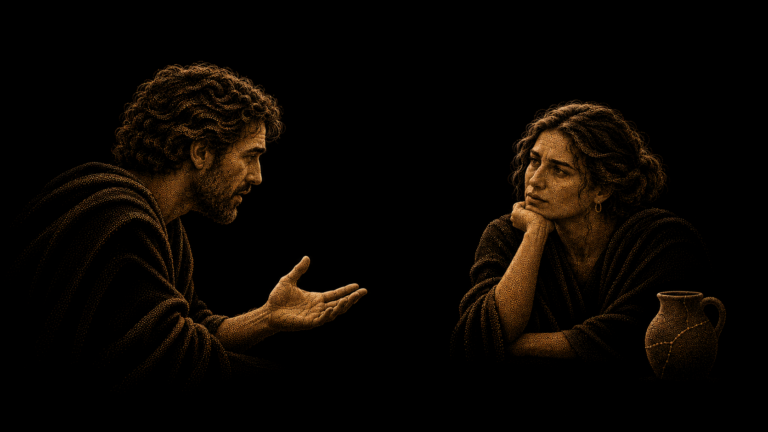

Two Muslims can share the Quran, honor Muhammad and face the same direction in prayer while disagreeing about who was entitled to lead their community. To an outsider, that may sound like an old political argument. For the traditions that developed around it, the question reaches further: who can reliably explain revelation, preserve religious teaching and guide believers?
Understanding Sunni and Shia Islam requires following that question without reducing either community to a government, a headline or a stereotype. It also helps Christians locate the real disagreement with Islam. The Christian case for Jesus does not depend on dismissing Muslim devotion or using Muslim divisions as an easy argument against their faith.
Our Islam and Christianity overview introduces the broader religion. This guide concentrates on succession, religious authority and the differences within Islam itself. It follows our method for comparing religions fairly: describe a position recognizably before evaluating it.
GUIDED ARTICLE EXPERIENCE
Sunni and Shia Islam Explained: History, Authority and Belief
Read along as the narration moves through the article.
Browser narration · No stored audio or site tracking
CONTINUE GUIDED TOUR
Continue where you left off.
GUIDED TOUR COMPLETE
You have reached the end of this study.
Study record saved on this device.
GUIDED TOUR
Sunni and Shia Islam Explained: History, Authority and Belief
Narrator: Paranoid Prophet Recommended Voice Native device narration
Prepare to follow the article as it is narrated.
VOICE & TOUR OPTIONS
Voice & Listening
NARRATOR
Finding a narrator…
Checking the best narrator available on this device.
Restores the site recommendations available in this browser.
Our listening picks lead when available; other voices are ranked for narration. Known novelty voices are hidden. Browser-provided voices may use an online voice service.
Screen-awake support will be checked when narration starts.
Optional: improve your device voices
Listening works with the voices already available here. Your device may offer additional free voices through its own settings.
iPhone or iPad: Settings → Accessibility → Read & Speak (or Spoken Content) → Voices → English. Look for Premium or Enhanced choices, then return here.
If offered, preview Ava or Zoe for U.S. English, or Serena or Jamie for British English. An explicit Premium or Enhanced version can improve on its compact version.
Mac: System Settings → Accessibility → Read & Speak → System voice. Open the voice list to preview or download additional choices.
Windows: Settings → Accessibility → Narrator → Add natural voices. Browser availability varies; a Narrator voice may not appear on websites. Edge may also expose online Natural voices without a model download.
Android: Open Accessibility → Text-to-speech output (the location varies by device). In the preferred engine settings, look for voice data and English choices.
Download sizes vary; some enhanced voices exceed 100 MB. This website cannot install system voices, and an installed voice appears here only if your browser exposes it.
Apple voice guide · Windows voice guide · Android voice guide
CHOOSE A NARRATOR
Recommended on this device
Our listening picks: Aaron, Martha, then Daniel, when available here. Otherwise, automatic uses the highest-ranked suitable voice. Preview alternatives or save your own choice.
Preparing the guided article experience…
RESUME GUIDED TOUR?
Continue where you left off.
GUIDED TOUR COMPLETE
You have reached the end of this study.
Article Guide11 sections
The short answer: How are Sunni and Shia Islam different?
The division centers on leadership after Muhammad and developed into different understandings of religious authority. Sunni tradition recognizes Abu Bakr as the first caliph. Shia traditions give Ali, Muhammad’s cousin and son-in-law, a foundational claim to leadership and place particular authority in his family line. Later communities developed different accounts of that succession. These traditions formed over time rather than emerging fully organized on a single day. Historical overview.
Many familiar comparisons actually describe Sunni and Twelver Shia Islam. Twelver is an important qualification. Ismaili and Zaydi communities also belong to the Shia world, and a statement about one branch should not silently become a statement about them all.
What do Sunni and Shia Muslims share?
The common ground includes belief in one God, the Quran as revelation, Muhammad’s prophethood, prayer, fasting, generosity and final accountability. Different authorities and practices operate within that shared religious world.
One significant example is the Amman Message, whose revised Three Points recognize several Sunni, Shia and Ibadi legal traditions and reject declaring their adherents outside Islam. It identifies substantial shared beliefs while acknowledging disagreements. This is evidence of a serious Muslim effort at mutual recognition, not a guarantee that every Muslim agrees with every statement in it. Amman Message, revised Three Points.
A useful comparison therefore asks two questions together: what unites these communities, and what makes their differences meaningful? Leaving out either produces a distorted picture.
How did the division develop?
Muhammad died in 632. The community then faced questions about leadership without his continuing presence. Abu Bakr became the first caliph, followed by Umar, Uthman and Ali. Sunni tradition honors these first four as the rightly guided caliphs. The early succession was not a modern national election with one fixed electoral procedure. Harvard’s Islam timeline; Sunni account of leadership and succession.
In Twelver and Nizari Ismaili teaching, Ali’s place is more than his position as the fourth caliph. These traditions hold that his rightful leadership had already been designated. A historical description must distinguish the fact that communities make competing claims from the theological judgment that one claim was divinely authorized.
Why Karbala matters
In 680, Muhammad’s grandson Husayn was killed at Karbala. His death became central to Shia remembrance, particularly during Muharram and Ashura. Mourning, sermons and commemorative practices express the significance of his suffering and faithfulness. Forms of observance vary. Shi’i remembrance of Husayn.
It would be wrong to infer that Sunni Muslims therefore dislike Husayn. Sunni teachers also honor him and condemn his killing. Yaqeen’s account of Husayn and Karbala makes that reverence visible.
Karbala belongs in the story, but the whole Sunni–Shia relationship cannot be reduced to one battle. Theology, scholarship, ritual and community memory developed across subsequent generations.
632 · Succession
Muhammad dies. The community faces competing claims about legitimate leadership.
680 · Karbala
Husayn is killed. His death becomes central to Shia remembrance; Sunni Muslims also honor him.
Later generations
Distinct traditions develop through theology, scholarship, worship and community memory.
These landmarks do not imply that fully formed Sunni and Shia traditions appeared in 632. Historical events and claims of divine authority must be distinguished.
Who has authority to interpret Islam?
This is the most useful question for moving beyond labels.
Sunni authority: transmitted teaching and scholarly interpretation
Sunni scholarship draws on the Quran and Muhammad’s Sunnah, with hadith reports playing a major role in transmitting his teaching and example. Evaluating transmitters, comparing reports and determining how evidence should be used are substantial scholarly activities. “Sunni” does not mean that every believer simply makes up an interpretation or that every Sunni scholar reaches the same conclusion. Jonathan Brown’s account of Sunni hadith criticism.
Political rule and religious expertise should also be distinguished. A ruler’s power does not automatically settle every scholarly question. Nor should the historical existence of caliphs be mistaken for one unbroken, universally accepted institution speaking for all Sunni Muslims today.
Twelver Shia authority: the imams
In Twelver or Imamiyyah teaching, the imams possess a divinely appointed authority to preserve and explain religion. The tradition attributes protection from error and sin to them. Its own theological sources distinguish this office from prophethood: the imam receives the religious law through the prophet rather than bringing a new prophetic revelation. Imamiyyah explanation of imamate.
That distinction prevents a common mistake. Saying that Twelver Muslims recognize authoritative imams is not the same as saying they believe Muhammad was followed by twelve new prophets.
Twelver belief recognizes twelve imams and holds that the last remains in occultation, or concealment. Its traditional chronology distinguishes a shorter occultation beginning in 874 from a greater occultation beginning in 941. These are claims within the Twelver religious account, not independently verified observations of a hidden person’s present life. Jassim M. Hussain’s historical study of the occultation.
The word imam therefore needs context. In ordinary usage it can name a prayer leader; in this discussion it can name a particular office with much greater theological significance.
Why not all Shia Muslims are Twelvers
Ismaili traditions trace succession differently. The Nizari Ismaili community represented by The Ismaili describes an ongoing hereditary imamate, with the living imam guiding interpretation and community life. That differs from the Twelver account of the concealed twelfth imam. The Ismaili’s account of imamate.
Zaydi Islam is another Shia tradition with its own account of leadership and legal scholarship. A short guide should identify its existence without pretending a paragraph can explain every distinction. Likewise, not all Ismaili communities should be collapsed into the specific Nizari account just described.
For a conversation with a particular person, “Which tradition do you follow?” is more useful than assuming that a summary of Twelver teaching answers every question about their beliefs.
What differences might a visitor notice?
Prayer practice
Some differences involve how prayers are performed or scheduled. A frequent misunderstanding is that Shia Muslims have only three daily obligatory prayers. The Twelver explanation is that there are five prayers, with certain pairs permitted to be offered consecutively within combined periods. Combining times does not turn five prayers into three prayers. Shia explanation of combining prayers.
This is a good example of why appearances need explanation. Observing fewer separate visits to a prayer space does not tell an outsider how the worshipper counts the prayers.
Sources and teachers
Someone researching a religious question may consult different collections, interpreters and scholarly traditions. The important difference is not merely which website a person prefers. It concerns whose transmission and interpretation they recognize as authoritative.
Commemoration and community life
Husayn’s remembrance has a particularly prominent place in Shia devotional life. However, practices vary among communities and individuals. Neither an especially dramatic public ceremony nor a quiet household observance should be made to represent every Shia Muslim.
These examples can help readers recognize differences without treating worship as a checklist for identifying strangers. Ask respectfully rather than inferring a person’s convictions from clothing, nationality or a single practice.
Branches, legal schools and spiritual traditions are different categories
A map becomes confusing when it puts every Islamic term on the same level.
Broad branch
Sunni, Shia and Ibadi name broad historical religious communities.
Shia tradition
Twelver, Ismaili and Zaydi identify more specific traditions of succession and teaching.
Legal school
Hanafi, Maliki, Shafi‘i, Hanbali, Ja‘fari and others concern legal interpretation.
Spiritual tradition
Sufi disciplines are not a simple third branch beside Sunni and Shia.
These are distinct dimensions, not equivalent boxes in one family tree. A person can carry more than one label. Nationality and political allegiance are different again.
The Amman Message itself distinguishes legal schools from theological and spiritual orientations. Its categories are useful here, even for readers who do not share its religious commitments. A person can be described by more than one kind of label without contradiction.
What does the Sunni–Shia difference change about Jesus?
The internal division does not ordinarily remove the central disagreement between mainstream Islam and historic Christianity. The Quran honors Jesus as Messiah and messenger while rejecting the Christian confession of divine sonship. Its passage on the crucifixion stands in sharp tension with the New Testament account. Quran 4:157–171.
Care is needed here too. The wording of the Quran, a commentator’s explanation and an individual Muslim’s interpretation are not interchangeable. Later stories explaining how someone else might have been crucified should not be quoted as though those details appear in the verse itself.
For the broader comparison, see what different religions believe about Jesus. Here the essential point is that changing the question from Sunni to Shia does not, by itself, turn Islamic teaching into the apostolic proclamation of the incarnate, crucified and risen Son.
The Christian response: Why return to Christ?
This section states our Christian evaluation rather than attributing it to the Muslim sources above.
Christians should not argue, “Muslims disagree, therefore Islam is false.” Christians disagree about religious authority, interpretation and church order too. A disagreement tells us that claims require examination; it does not tell us in advance which claim is true.
The more serious question is what God has revealed in Jesus. In John 1:1–18, the Word is identified with God and becomes flesh. In Hebrews 1:1–4, God’s speech through the Son is distinguished from his earlier speech through the prophets. The Christian confession concerns a unique divine Son, not simply another teacher in a succession.
Paul places the death, burial, resurrection and appearances of Jesus at the center of the gospel in 1 Corinthians 15:1–20. He even makes the faith vulnerable to the truth of that claim: if Christ has not been raised, Christian hope fails. That gives inquiry a concrete focus. What do the sources actually claim, how early are they, and what explains them?
Our resurrection accounts comparison examines the Gospel narratives without pretending they are identical. The Evidence of Jesus hub develops the wider case. These studies are invitations to examine evidence, not substitutes for it.
For Christians, the answer to the human need for forgiveness and reconciliation is found in Christ himself. A more accurate map of religious communities can improve understanding, but no map can settle that personal and historical question for the reader. Jesus must be considered on the strength of the claims about him.
The invitation is to read the Gospel accounts carefully, follow their references and bring honest objections into the investigation. Respect for Muslim neighbors and conviction about Christ can belong together. Neither requires misrepresenting the other person’s faith.
Questions readers often ask
Are Sunni and Shia two separate religions?
They are major traditions within Islam, sharing substantial foundations while differing over authority and other matters. There are also disagreements within each broad label.
Do Shia Muslims worship Ali?
That is not an accurate description of mainstream Twelver teaching. Its high claims about Ali’s imamate should be described in their own terms rather than converted into a claim that he is God.
Does Sunni mean someone rejects Muhammad’s family?
No. Sunni reverence for Ali and Husayn is compatible with rejecting distinctive Shia claims about their authority.
Is every Shia Muslim represented by Iran’s government?
No. A government’s policy cannot tell you everything about an individual believer’s theology, loyalties or practice. Apply that same restraint when discussing Sunni-majority countries.
Which question should I ask first in a conversation?
Ask what the person believes and which sources they trust. Then discuss specific claims. A clear conversation about Jesus is more valuable than an argument against assumptions the other person never held.
Sources and further study
This guide uses Muslim sources to describe Muslim beliefs, historical scholarship for orientation and Christian Scripture for the Christian response. A source’s presence here does not imply endorsement of all its conclusions.
- Amman Message, revised Three Points: shared foundations and recognition of legal traditions.
- Jonathan Brown, Authenticating Hadith and the History of Hadith Criticism: Sunni scholarly methodology.
- Imamate, Introduction to Kitab al-Irshad: an Imamiyyah explanation of religious authority.
- The Ismaili, Ismaili Imamat: Nizari Ismaili self-description.
- Harvard Pluralism Project, Sunni and Shi’i Interpretations: broad historical orientation, read alongside tradition-specific sources rather than as a complete account of every community.
- Harvard Pluralism Project, Shi’i Remembrance of Husayn: Karbala and commemoration.
- Quran 4:157–171; John 1; Hebrews 1; 1 Corinthians 15: the primary scriptural comparison.
Continue through the World Religions library or begin with how to evaluate a religious truth claim.