

GUIDED ARTICLE EXPERIENCE
What Do Taoists Believe? Daoism and Christianity Compared
Read along as the narration moves through the article.
Private device narration · No hosted audio or tracking
CONTINUE GUIDED TOUR
Continue where you left off.
GUIDED TOUR COMPLETE
You have reached the end of this study.
Study record saved on this device.
GUIDED TOUR
What Do Taoists Believe? Daoism and Christianity Compared
Narrator: Paranoid Prophet Recommended Voice Native device narration
Prepare to follow the article as it is narrated.
VOICE & TOUR OPTIONS
Voice & Listening
NARRATOR
Finding a narrator…
Checking the best narrator available on this device.
Restores the best curated narrator available on this device.
Narrator choices are curated for clear, long-form listening on this device.
Screen-awake support will be checked when narration starts.
CHOOSE A NARRATOR
Curated for this device
Choose a verified narrator for this browser, or use System Narrator. Automatic mode uses the best reliable route exposed by this device; your chosen narrator is preserved even if this device needs a temporary fallback.
Preparing the guided article experience…
RESUME GUIDED TOUR?
Continue where you left off.
GUIDED TOUR COMPLETE
You have reached the end of this study.
Sometimes the most revealing part of a conversation is the advice that sounds almost too simple: Stop forcing everything. Pay attention. Don’t fight the current when you don’t have to.
That sounds like the Taoism many Western readers know: a yin-yang symbol, a saying about water, a reminder to “go with the flow.” But a tradition that has shaped Chinese philosophy and religious life for centuries is more than stress-management advice.
Daoist texts ask harder questions. How do our desires and judgments distort our actions? Can wisdom grow when we relinquish control? And in religious Daoism, how do human beings relate to gods, rituals, and the sacred order?
Christians should understand these questions before answering them. When we do, we find real points of ethical contact—but also a more important disagreement about God, revelation, and Jesus Christ.
Article Guide18 sections
What do Taoists believe? The short answer
Daoism (also spelled Taoism) is a diverse Chinese tradition centered on the Dao, commonly translated “the Way.” Classical Daoist writings emphasize living in accord with the Dao through naturalness, humility, simplicity, and action that does not needlessly force or dominate. Historical religious Daoist traditions also include temples, deities, liturgies, ethical teachings, spiritual disciplines, and different approaches to transformation and longevity.
There is no single Daoist creed accepted by every Daoist. Ancient writings and contemporary temples offer different windows into an intertwined tradition. The Stanford Encyclopedia of Philosophy explains this diversity in its discussion of Laozi and its survey of religious Daoism.
At a glance:
- Central idea: The Dao—the Way, source, or order discussed in different ways across Daoist texts and traditions.
- Influential texts: The Daodejing (Tao Te Ching) and the Zhuangzi, alongside a much larger religious canon.
- Important concepts: Wu wei (non-forcing action), ziran (naturalness or spontaneity), and de (virtue, potency, or efficacy, depending on context).
- Religious life: Varies; may involve communal rites, offerings, priestly traditions, meditation, ethical discipline, and veneration of deities.
- Aims: May include harmony, sage-like conduct, spiritual cultivation, and—within particular religious schools—longevity or immortality.
- Christian difference: Christianity identifies ultimate reality with the personal Creator revealed through Jesus Christ, and salvation with God’s grace rather than alignment or cultivation alone.
A naming note: Daoism and Taoism name the same tradition, using different systems for rendering Chinese in the Roman alphabet. This guide uses Daoism and Dao; Taoism, Tao, and Tao Te Ching are common alternatives.
Is Daoism a religion or a philosophy?
People often hear a tidy distinction: “Philosophical Taoism is wisdom about life; religious Taoism is temples and gods.” It can be a useful starting point for recognizing different emphases, but it becomes misleading if treated as two unrelated movements—one supposedly authentic and the other a later corruption.
Religious communities reinterpreted classical works and developed ideas about the cosmos, ritual, and the body. People may also take part in Daoist-influenced practices without claiming an exclusive religious identity.
Even the labels commonly rendered as daojia (“school” or “lineage of the Dao”) and daojiao (“teachings of the Dao”) do not fit neatly into modern Western boxes marked religion and philosophy. Scholars debate how best to use that division. The Stanford article on religious Daoism argues that separating them too sharply can distort the historical tradition.
Daoism encompasses intertwined philosophical writings and religious traditions. Neither side tells the whole story alone.
Where did Daoism come from?
Daoism has no uncontested founding moment. Its classical writings emerged amid ancient Chinese debates over governance, judgment, and human flourishing. Thinkers later grouped under the Daoist label questioned the urge to impose rigid categories and preferred orders on life.
The Daodejing, traditionally associated with Laozi, and the Zhuangzi, associated with Zhuang Zhou and other contributors, became especially influential. Modern manuscript discoveries complicate the idea that the Daodejing was written all at once in precisely the form we know today. Scholars debate its formation, transmission, and the identity of Laozi; they do not all agree that he was wholly fictional or that one identifiable individual wrote the complete received book.
Organized religious forms arose and diversified over later centuries. The Celestial Masters tradition traces a foundational revelation to Zhang Daoling in 142 CE according to traditional Daoist chronology. That dates a tradition’s remembered origins; it does not independently verify its supernatural account. Other lineages and scriptural communities followed, including Shangqing and Lingbao traditions.
Two especially important later branches are Zhengyi, associated with communal ritual and the Celestial Masters legacy, and Quanzhen, often associated with monastic discipline and internal cultivation. Neither name exhausts the diversity of Daoism. Historical survey: Religious Daoism, Stanford Encyclopedia of Philosophy.
Who was Laozi, and what does the Daodejing teach?
Laozi means something like “Old Master.” Chinese tradition remembers him as an ancient sage, and some later Daoist religious traditions revere him as a divine figure. Historians, however, disagree over whether the stories describe one historical teacher, a remembered figure shaped by legend, or several layers of tradition.
The Daodejing, often translated Classic of the Way and Virtue, is short but demanding. Its familiar received edition has 81 chapters, though early manuscript witnesses show differences in its transmission. It speaks in compressed images and paradoxes rather than laying out a systematic creed.
In chapter 1, the opening contrasts the enduring Dao with a Dao that can be fully named or stated. The point is not that readers must abandon all thinking. It raises a challenge: language and fixed descriptions may fail to capture the ultimate subject completely.
In chapter 8, water becomes an image of beneficial action that does not compete for status. In chapter 25, the Dao is described in source-language as preceding heaven and earth. In chapter 37, non-forcing action becomes central to describing the Dao’s operation; chapter 42 presents a sequence from Dao to the many things of the world. In chapter 67, the text prizes what are often rendered gentleness or compassion, frugality, and a refusal to seek first place.
These chapter-level paraphrases draw on James Legge’s 1891 translation and modern scholarship. Translation choices vary; Legge’s nineteenth-century wording should not decide a theological comparison.
Its wise person need not advertise strength, dominate others, or confuse activity with wisdom. Yet its political and social counsel can challenge modern readers; it is not simply a book of motivational sayings.
What does the Zhuangzi teach?
If the Daodejing is compressed and poetic, the Zhuangzi often teaches through vivid stories, strange conversations, and humor. The received work is a compilation; scholars do not assume every chapter came from the historical Zhuang Zhou.
One famous passage is the butterfly dream in chapter 2. Zhuangzi dreams he is a butterfly and wakes uncertain how to understand the boundary between dream and waking perspective. The story probes confidence in our standpoint and the transformations through which experience is interpreted. It does not prove that every Daoist thinks the world is literally unreal.
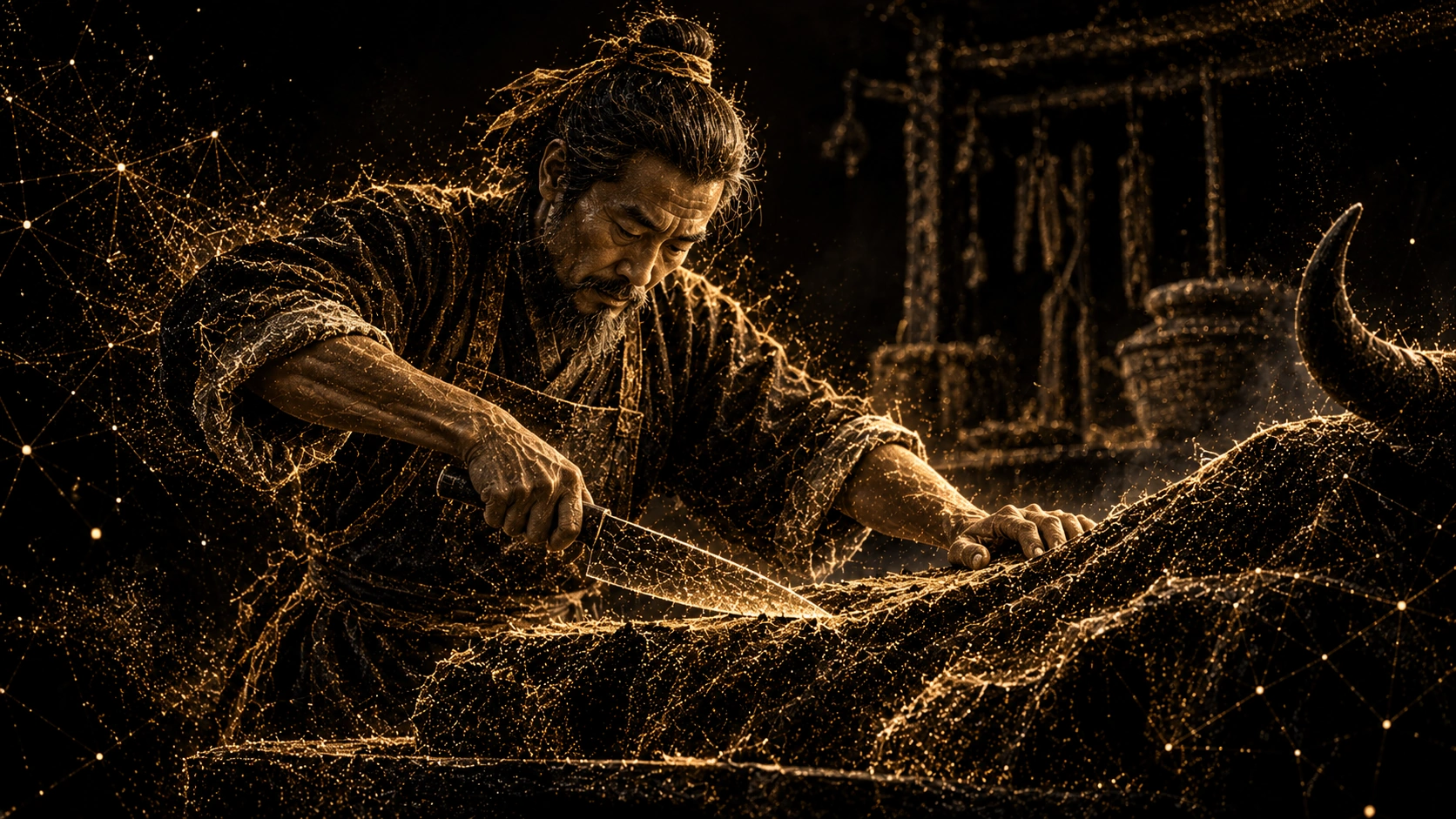
Another famous episode, Cook Ding in chapter 3, describes extraordinary skill developed through a kind of responsive understanding. The cook is not praised for doing nothing. His practiced action moves without the strain of forcing the wrong cut. It is one of the clearest stories for explaining why wu wei need not mean passivity.
The text describes “fasting of the mind” (chapter 4) and “sitting in forgetfulness” (chapter 6), influential images of cultivation rather than mandatory routines for all Daoists. The Stanford Encyclopedia of Philosophy survey of the Zhuangzi is a useful guide to the work’s philosophical complexity and disputed interpretations.
These stories expose a human weakness worth noticing: we can be so certain that our habits are natural, and our judgments obvious, that we no longer ask whether our approach is wise.
What is the Dao?
Dao can mean a way, path, course, or guiding pattern. It had meanings in Chinese thought before and beyond the traditions we now call Daoist. In Daoist writing it can take on a more comprehensive significance: the Way through which things arise, change, and find their proper course.
Some influential readings of the classical texts understand the Dao in largely nonpersonal or naturalistic terms. Some religious Daoist traditions describe divine manifestations, deities, and sacred processes in relation to the Dao. Neither “the Dao is simply an impersonal force” nor “the Dao is the same personal Creator Christians worship” captures the entire tradition.
Its elusiveness matters: the Daodejing warns against confusing our descriptions of the Way with the enduring Way itself.
The Dao is not merely “nature” in the modern sense—trees, rivers, or outdoor tranquility—but a subject of questions about ultimate reality, action, politics, and the cosmos.
What do wu wei, ziran, and de mean?
Three concepts make the ethical and practical side of Daoism easier to understand.
Wu wei (無為) is often translated “nonaction,” “effortless action,” or “non-forcing.” It does not mean that a good person should never intervene, work, or resist injustice. Depending on the text, it suggests action not distorted by excessive assertion, artificial striving, or attempts to impose a rigid private scheme on everything. Think of a skilled musician who listens rather than overpowering the song, or a wise leader who knows when restraint serves people better than control. These are modern illustrations, not direct quotations from Laozi.
Ziran (自然) is often translated “naturalness,” “spontaneity,” or “self-so.” It concerns the way things are of themselves and the possibility of living without excessive artificiality. It is not a command to follow every impulse; what counts as natural requires interpretation.
De (德) is commonly rendered “virtue,” but in Daoist contexts the word can also evoke power, potency, or effectiveness. It should not automatically be equated with the Christian doctrine of sanctification, even where moral qualities overlap.
What do yin, yang, and qi mean in Daoist thought?
The familiar yin-yang symbol is often treated as a logo for Daoism, but yin and yang belong to broader Chinese intellectual and cultural traditions. They describe complementary, dynamically related aspects of reality, often illustrated by contrasts such as dark and light, receptive and active, or alternating phases.
Yin is not simply evil and yang simply good. That would impose a moral dualism foreign to the ordinary concept. Nor should we assume that every Daoist group explains yin and yang in exactly the same theological way.
Qi is often translated “vital breath” or “vital energy” within traditional Chinese cosmological and cultivation frameworks. It should not be casually identified with electrical energy measured by modern instruments, and spiritual claims about qi should not be presented as experimental discoveries.
In some religious Daoist settings these concepts help frame understandings of the body, ritual, cosmos, and cultivation. In other settings, a person may recognize the vocabulary through traditional Chinese culture without identifying as religiously Daoist. The China Daoist Association’s faith statement, published in a 2003 volume, provides one identifiable religious treatment of their relationship.
Do Taoists believe in God or worship other gods?
The answer depends on which Daoist text, community, and period we mean.
The Daodejing does not unfold the biblical doctrine of one personal God who freely creates and enters a covenant with humanity. But it would be equally misleading to conclude that Daoists have no gods or that religion involving deities is a deviation from “real” Daoism.
Religious Daoist communities may venerate divine figures, maintain temples, invoke celestial powers in ritual, and honor Laojun (Lord Lao), a divine manifestation associated with Laozi in significant traditions. These practices belong to a complex religious world and differ across lineages and locations.
Terms translated “divine” or “heaven” do not settle what those sources mean. Shared vocabulary is not proof of shared doctrine.
How do practicing Daoists worship and live?
For some Daoists, religious life involves temple visits, incense or other offerings, liturgies, festivals, priestly rites, and devotional relationships with deities. Other adherents emphasize study, meditation, ethical discipline, or approaches to cultivating the body and spirit. Some participate in communal traditions alongside other forms of Chinese religious life.
Zhengyi lineages have often emphasized communal ritual with priests who may marry and live with families. Quanzhen has significant monastic expressions featuring celibate discipline, meditation, and internal alchemy, although not everyone affiliated with it fits one institutional pattern. Such practices have long histories; they are not a uniform checklist of what every Taoist must do.
Daoist traditions developed extensive religious canons beyond the two familiar classical books: scriptures, ritual manuals, commentaries, and practices that shaped communities. Historical overview.
It is also important not to label a person Daoist merely because they practice tai chi, receive acupuncture, enjoy nature, or use a yin-yang design. A cultural practice, medical treatment, or personal interest does not by itself establish religious identity.
What do Daoists believe about ethics, death, and immortality?
Classical Daoist writing often commends humility, simplicity, yielding, and caution about dominance or aggression. This is not proof that Daoists have no moral rules. Some religious Daoist movements emphasize commandments, moral accountability, ritual repentance, charitable conduct, and the responsibilities of community life.
Accounts of spiritual transformation, longevity, transcendence, or immortality occur in important Daoist religious sources, but their meanings are varied. The China Daoist Association’s statement, for example, speaks openly about immortality, valuing life, and cultivation of virtue. That accurately describes its published religious teaching. It does not demonstrate that any meditation, exercise, or alchemical practice medically produces immortality or extends human lifespan. Read the organization’s statement at Yale.
There is no single Daoist afterlife doctrine equivalent to the Christian confession of bodily resurrection and new creation. Different texts and communities speak of death, divine realms, transcendence, and continued spiritual existence in different ways.
How does Daoism relate to Confucianism and Buddhism?
Daoism developed alongside Confucian approaches to social order. Some Daoist texts criticize rigid distinctions and ritual formalism; Confucian traditions often emphasize learning, relationships, and ritual cultivation. Both are more complex than that contrast.
Buddhism reached China from India and interacted deeply with Daoist concepts, institutions, and vocabulary. Some later forms of Chinese Buddhism and Daoism influenced one another without becoming identical. In real communities, a person might participate in practices shaped by multiple traditions.
Readers looking for the Buddhist side of this discussion can explore our separate guide to Buddhist beliefs and their relationship to Christianity. Future guides to Confucianism and Shinto will examine other connections without treating East Asian religions as interchangeable.
Why does Daoism appeal to people today?
A serious Christian comparison should recognize what someone might genuinely admire here.
Daoist wisdom can expose the folly of trying to control every outcome. It challenges arrogance. It asks whether our social performances conceal insecurity, whether aggressive striving turns us against people we should love, and whether practiced attention may sometimes accomplish more than sheer force.
Those observations are not trivial. They can prompt honest self-examination. Christians, too, have reasons to reject pride, value humility, care for creation, practice restraint, and recognize that people are not machines to be manipulated.
Yet an attractive ethical insight is not a complete account of ultimate reality. We can appreciate a parable and still test the religious claims associated with it.
Daoism and Christianity compared
This table describes broad frameworks, not a uniform creed for every Daoist school.
Swipe sideways on a phone to see all comparison columns. Keyboard users can focus the table and scroll.
| Question | Daoist traditions | Historic Nicene Christianity |
|---|---|---|
| Ultimate reality | Dao as Way, source, or cosmic order; interpretations vary, including religious divine expressions | One personal, triune Creator distinct from creation |
| Sources of authority | Classical writings, wider scriptures, teachers, lineages, and rituals with varied authority | The biblical Scriptures and apostolic testimony, interpreted differently across Christian communions |
| Human problem | Depending on the school, misalignment, harmful striving, ignorance, moral failure, or the limits of ordinary existence | Sin, alienation from God, death, and a broken creation |
| Human response | Non-forcing, cultivation, ethical practice, ritual, or tradition-specific disciplines | God’s grace received through faith in Christ, producing a transformed life |
| Jesus | No universal ancient Daoist teaching about Jesus; modern responses differ | Eternal Son incarnate, crucified and bodily raised |
| Ultimate hope | Forms of harmony, transformation, longevity, transcendence, or immortality in certain schools | Reconciliation with God, resurrection, and new creation |
Is the Dao the same as the God of the Bible?
The shared word Way cannot answer this on its own.
The Christian Bible begins with God creating heaven and earth (Genesis 1:1). John’s Gospel presents the eternal Word as with God and as God, and says that creation came through him (John 1:1–3). Colossians 1:15–20 identifies Christ’s authority over creation and connects him to reconciliation through the cross. Those are specific claims about a personal Creator and the identity of Jesus.
Classical Daoist passages can describe the Dao as prior to heaven and earth and as the source through which the world unfolds. Some interpreters read them in naturalistic terms; later traditions may describe a divine Dao and sacred manifestations. Either way, the idea of an ultimate source does not by itself establish the Christian doctrine of creation, personhood, covenant, or incarnation.
A Christian can affirm that created order is real and intelligible while still distinguishing the Creator from creation. This matters because salvation in Christianity is not simply learning the correct rhythm of the cosmos. It is being reconciled to God through Christ.
The substantive question is what each tradition claims about ultimate reality, and what evidence supports it.
Did Jesus say he was the Dao when he called himself “the Way”?
In John 14:6, Jesus identifies himself as the way in a conversation about going to the Father. The Christian claim is personal and particular: access to the Father is through Jesus, whose identity, life, death, and resurrection are central to the Gospel.
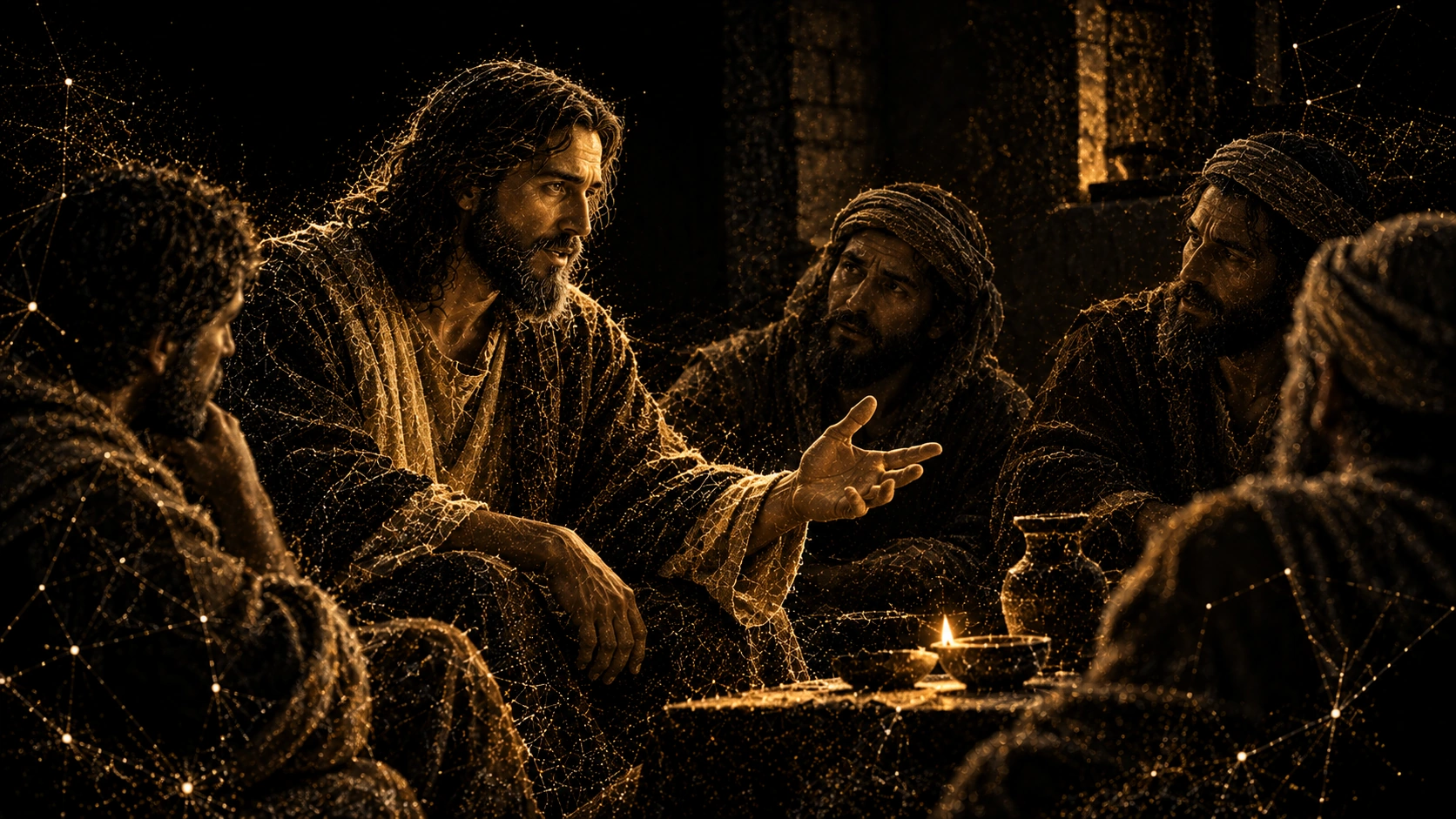
The English word way also translates the Chinese dao in Daoist texts. That is an interesting translation overlap, not linguistic evidence that Jesus was teaching Daoism. John’s Gospel was written in Greek, while the Daodejing belongs to an ancient Chinese textual world. Their statements need to be understood in their own contexts.
Someone may draw a comparative analogy: both traditions care about the right Way. But an analogy cannot settle whether Jesus is the eternal Son of God, whether God created the world, or whether Jesus rose bodily from death. Christianity rests those claims on its own Scriptures and the witness concerning Christ—not on accidental agreement between English translations.
What is the human problem—and how is it answered?
Some Daoist texts expose the trouble caused by needless forcing, ego-driven competition, and distrust of the natural order. In religious contexts, the problems and proposed remedies can also include moral faults, ritual obligations, and the need for cultivation or transformation.
Christianity also condemns pride and the misuse of power. But the Bible goes deeper than saying humans have lost their equilibrium. The Christian account is that people sin against a good and personal God, cannot repair that alienation through their own achievement, and live within a creation wounded by death and corruption (Romans 3:23; Romans 8:19–23).
For that reason the Christian gospel does not begin with a technique for becoming spiritually effortless. It begins with God’s action. Ephesians 2:8–10 describes salvation by grace through faith, followed by the life of good works for which believers are created. Christian humility is not just an efficient way to live; it is a response to a God who has shown mercy.
Why do the cross and resurrection matter to this comparison?
A comparison can easily get stuck at the level of shared virtues. Humility appears in Daoist literature and Christian teaching. Compassion matters in both. Restraint is admirable in both. But these resonances do not answer what Christianity says happened in history.
In 1 Corinthians 15:3–8, Paul rehearses a tradition concerning Jesus’ death, burial, resurrection, and appearances. That is early Christian testimony, not an experiment demonstrating a miracle to every reader’s satisfaction. A thoughtful person may dispute its interpretation or the credibility of resurrection claims. Still, Christianity is making a public, historical claim that must be examined on its own terms.
If Jesus was not raised, Paul’s own argument says Christian faith loses its foundation (1 Corinthians 15:14–19). If he was raised, the question is much larger than whether his moral teaching resembles other wisdom traditions. Christianity claims that in Jesus, God acted decisively to overcome sin and death. The cross and resurrection are therefore not optional decorations on a shared spiritual ethic.
For a focused comparison of the different ways religions understand Christ, see What Do Religions Believe About Jesus?.
The strongest objections a Daoist reader could raise
“Why should ancient Chinese wisdom be judged by categories developed in Christian theology?”
It shouldn’t be distorted by those categories. We first need to understand Daoist texts as Daoists and serious scholars have understood them. But once someone asks whether two accounts of ultimate reality are compatible, real comparisons are legitimate. A Christian comparison should openly announce its standpoint rather than pretending to be a neutral definition of Daoism itself.
“Don’t Christians also practice contemplation, humility, and respect for creation?”
Yes. That is genuine overlap. Christians can learn from an accurate description of Daoist criticisms of arrogance or restless control without accepting that all underlying metaphysical and religious claims are the same. Similar ethical counsel can arise within different understandings of God, humanity, and salvation.
“You describe Daoism as less personal, yet Daoists venerate gods and maintain temples.”
That’s a fair challenge to simplistic summaries, and the reason this article distinguishes classical interpretations from religious traditions. The correct Christian claim is not “Daoists have no deities.” It is that Daoism does not uniformly teach the specific Christian confession of the triune Creator revealed in the incarnation, cross, and resurrection of Jesus.
“Why should early Christian testimony count for more than Daoist religious experience?”
It should not receive an automatic exemption from scrutiny. Different claims call for different kinds of evaluation. An experience may be personally transformative without establishing every metaphysical explanation attached to it. A historical claim about Jesus’ crucifixion or resurrection calls for analysis of sources, dating, testimony, and alternative explanations. Such historical inquiry can assess the evidence and its limits, but it cannot turn the miraculous into a laboratory result. A Christian case should say why it finds the testimony persuasive, not demand that skeptics pretend the debate is already settled.
How should Christians respond to Daoism?
Start by asking the person what they mean by Daoism. Are they reading the Daodejing? Participating in a temple tradition? Interested in meditation? Or simply drawn to an ethic of humility and non-forcing? The answers shape the conversation.
Read the texts honestly. Don’t call Daoists nature-worshippers simply because water and forests appear in their imagery. Don’t insist they all deny gods, and don’t label every Chinese cultural custom a Daoist religious practice. Avoid portraying people who disagree with Christian doctrine as unintelligent or dishonest.
Then ask questions that matter: Is ultimate reality personal? Can it speak and act? What accounts for both beauty and moral evil? Is the human problem just misalignment, or do we need forgiveness? What do we make of Jesus’ claims and the earliest Christian testimony about him?
Christians are called to give reasons for their hope with gentleness and respect (1 Peter 3:15). Neither conviction nor kindness requires erasing real differences.
Frequently asked questions about Taoism
Are Taoism and Daoism the same thing?
Yes. They are alternative English romanizations of the same Chinese term. Daoism is common in modern academic pinyin; Taoism remains widely used in popular English.
Do Taoists believe in one God?
Not as one universal creed in the sense of historic Christianity. Daoist interpretations of the Dao vary, and many religious traditions include deities and divine manifestations. Ask which Daoist school or community is in view before generalizing.
Is Taoism atheistic or pantheistic?
Those labels are sometimes used in philosophical comparisons, but neither accurately describes all Daoist traditions. Some classical readings are nonpersonal or naturalistic; organized religious Daoism includes richly developed sacred beings, rituals, and divine concepts.
What does wu wei actually mean?
It refers broadly to action without needless forcing or coercive overreach, though translations and interpretations vary. It is not an instruction to avoid every responsibility or never act.
Does Taoism teach yin is evil and yang is good?
No. Yin and yang generally refer to complementary, interrelated aspects or processes. They are not simply a Daoist version of moral good and evil, and the framework appears across broader Chinese thought.
Is Laozi a real person?
Laozi is a central traditional figure, but scholars debate the historical person or persons behind the name and the formation of the Daodejing. Later religious communities may also venerate Laozi as a divine manifestation.
Is Daoism the same as Buddhism?
No. Their histories, texts, and ultimate concerns differ, even though Buddhist and Daoist traditions influenced one another in China. Read our guide to Buddhist beliefs for the differences.
Can a Christian appreciate Daoist writings?
A Christian can study Daoist texts, recognize truthful or perceptive observations, and engage people respectfully. Whether participation in a particular devotional or ritual practice conflicts with Christian worship depends on what that practice means and entails; reading a wisdom text is not the same act as invoking a deity. The biblical call to worship God alone and test spiritual claims still applies (Exodus 20:3; 1 John 4:1).
The deeper question is not just how to live, but whom to trust
Daoist writers can remind us how easily pride disguises itself as wisdom, how fear makes us grasp for control, and how much harm can come from constant striving. Christians need not deny the force of those insights.
But a quieter life cannot answer on its own whether God is personal, sin can be forgiven, or death will have the final word.
Christianity makes a distinct claim: the God who made the world has not left humanity only to discover a hidden Way. According to the Gospel, he has made himself known through Jesus Christ, who lived among us, was crucified, and rose from the dead. That claim deserves to be investigated on its own evidence and its own terms.
If you’re comparing Daoism with Christianity, begin by understanding Daoism fairly. Then read John’s Gospel, especially chapters 1 and 14, and examine 1 Corinthians 15. Ask not simply which teaching feels calmer, but which account of reality is true—and what follows if Jesus really is who he claimed to be.
Continue exploring
- What Do Buddhists Believe? Buddhism and Christianity Compared
- What Do Religions Believe About Jesus?
- World Religions — Explore the Complete Library
- How Paranoid Prophet Verifies Sources and Claims
Sources and research notes
Daoist texts and academic background
- Daodejing, received chapter numbers 1, 8, 25, 37, 42, and 67, in James Legge’s historical (1891) English translation, available through Mouseia. Chapter descriptions here are paraphrases rather than unattributed modernized quotations. Translations and manuscript arrangements differ.
- Zhuangzi, chapters 2, 3, 4, and 6; narrative and interpretive cross-check with the Stanford Encyclopedia of Philosophy’s Zhuangzi entry. We have paraphrased the episodes, not reproduced an unverified modern translation.
- Stanford Encyclopedia of Philosophy, Daoism (2025). Focuses primarily on classical philosophical context.
- Stanford Encyclopedia of Philosophy, Laozi (revised 2025). On disputed authorship, concepts, and interpretation.
- Stanford Encyclopedia of Philosophy, Religious Daoism (archived Fall 2023 edition; revision 2020). On ritual, scriptures, lineages, cosmology, and cultivation.
- Internet Encyclopedia of Philosophy, Daoist Philosophy. Supplemental survey.
- China Daoist Association, Daoist Faith Statement, hosted by Yale’s Forum on Religion and Ecology; originally published in a 2003 volume. This is the self-description of an identifiable organization, not a worldwide Daoist creed or independent medical validation.
Biblical texts used in the Christian comparison
Genesis 1:1–3; Exodus 20:3; John 1:1–18; John 14:6; Romans 3:23; Romans 8:19–23; 1 Corinthians 15:3–19; Ephesians 2:8–10; Colossians 1:15–20; 1 Peter 3:15; 1 John 4:1. Biblical passages are referenced, not extensively reproduced; Paranoid Prophet’s standard English translation is the NIV.
Editorial transparency: A religious source can show what believers or organizations teach; it does not by itself prove that teaching true. Academic scholarship can help establish history, texts, and interpretive options; it does not independently adjudicate Christian supernatural claims. The article openly argues from historic Christian convictions while aiming to represent Daoist perspectives in their own terms.