


GUIDED ARTICLE EXPERIENCE
What Is New Age Spirituality? Beliefs, Practices and a Christian Response
Read along as the narration moves through the article.
Private device narration · No hosted audio or tracking
CONTINUE GUIDED TOUR
Continue where you left off.
GUIDED TOUR COMPLETE
You have reached the end of this study.
Study record saved on this device.
GUIDED TOUR
What Is New Age Spirituality? Beliefs, Practices and a Christian Response
Narrator: Paranoid Prophet Recommended Voice Native device narration
Prepare to follow the article as it is narrated.
VOICE & TOUR OPTIONS
Voice & Listening
NARRATOR
Finding a narrator…
Checking the best narrator available on this device.
Restores the best curated narrator available on this device.
Narrator choices are curated for clear, long-form listening on this device.
Screen-awake support will be checked when narration starts.
CHOOSE A NARRATOR
Curated for this device
Choose a verified narrator for this browser, or use System Narrator. Automatic mode uses the best reliable route exposed by this device; your chosen narrator is preserved even if this device needs a temporary fallback.
Preparing the guided article experience…
RESUME GUIDED TOUR?
Continue where you left off.
GUIDED TOUR COMPLETE
You have reached the end of this study.
You have probably heard someone talk about manifesting a better future, raising their vibration, protecting their energy, or learning to trust the universe. Maybe they meditate, use crystals, consult tarot cards, or speak of a divine reality within themselves. Perhaps they admire Jesus, but understand Him as an enlightened teacher rather than the Savior proclaimed in the New Testament.
Some of these ideas are associated with New Age spirituality. But what does New Age actually mean? Is it a religion? Do all of those practices belong to one movement? And how should Christians respond to people who find meaning in them?
The answers require more care than labeling everything unfamiliar as dangerous. People often approach alternative spirituality while looking for peace, healing, a deeper sense of purpose, or answers that religious institutions did not seem willing to discuss. Others simply enjoy a physical or reflective practice without accepting any accompanying supernatural claim. These are not identical situations.
An experience can be meaningful without every interpretation of it being true. Feeling connected to something greater does not settle what that something is. And a message that promises personal transformation still needs to explain how its claims can be tested.
Christianity offers a different starting point. It proclaims that the personal Creator has revealed Himself in Jesus Christ, who entered public history, died under Roman authority, and was proclaimed risen by His earliest followers. That is more specific than a general invitation to discover spiritual potential.
Are we discovering spiritual truth, or deciding what we want spiritual truth to be? To answer responsibly, we will explain New Age teachings through identifiable sources, assess practical and supernatural claims separately, and then consider the positive Christian case.
Article Guide17 sections
What Is New Age Spirituality? The Short Answer
New Age spirituality is a broad family of modern religious, philosophical, and personal-development ideas concerned with spiritual experience, transformation, and alternative understandings of reality. It has no universal founder, membership roll, creed, or binding scripture.
Depending on the teacher or community, New Age-associated ideas may involve divine consciousness, subtle energy, reincarnation, spiritual awakening, or the possibility of affecting circumstances through thought and intention. Frequently mentioned practices include manifestation, astrology, forms of divination, crystal spirituality, energy healing, meditation, and the interpretation of Jesus through metaphysical teachings.
Those are examples, not membership requirements. Someone who practices yoga is not automatically a New Age follower. A person who appreciates nature, wears a crystal necklace, or meditates may not hold a supernatural worldview at all. Conversely, someone may accept a particular law-of-attraction teaching without identifying as part of any movement.
The relevant question is what a person or teacher actually claims, not whether an activity sounds spiritual.
Is New Age Spirituality a Religion?
If by religion we mean a centralized institution with prescribed clergy, doctrine, and formal membership, New Age spirituality generally does not fit that pattern. If we mean ideas about ultimate reality, human identity, spiritual authority, life after death, and how people should live, many of its teachings certainly address religious questions.
Religious historian Wouter J. Hanegraaff has situated New Age spirituality within modern Western religious culture, including the individual construction of spiritual meaning beyond conventional institutions. His scholarship provides a historical framework, not a warrant to assume everyone interested in spiritual wellness belongs to one religion.
The absence of official clergy does not eliminate authority. A best-selling author, online personality, workshop leader, or claimed source of revelation may exert powerful influence. Someone might reject an organized church while accepting a teacher whose explanation of the universe cannot meaningfully be questioned.
That creates a fair question for every spiritual community, including Christian ones: Who gets to interpret the experience, and what evidence could show that interpretation is mistaken?
For the broader category of noninstitutional spirituality, see What Does Spiritual but Not Religious Mean?. Spiritual-but-not-religious identity is not synonymous with New Age teaching.
Where Did New Age Spirituality Come From?
The recognizable modern New Age movement became especially visible in the 1970s and 1980s, but it drew on older currents of Western esotericism, Spiritualism, Theosophy, New Thought, and later countercultural and human-potential movements. These influences overlapped; they did not all descend from one continuous institution.
Theosophy and the nineteenth century
The Theosophical Society was founded in 1875. Its stated objectives include human brotherhood, comparative study of religion, philosophy, and science, and investigation of unexplained laws and human capacities. Its official account says members need not subscribe to a prescribed creed. That is an organizational self-description, not proof of any supernatural claim.
Theosophy influenced later religious experimentation; 1875 was not the founding of a worldwide New Age religion. New Thought developed separately in America, emphasizing mind, belief, spiritual principles, and healing—ideas echoed in some later manifestation teaching.
The twentieth-century movement
In the 1960s through the 1980s, alternative spiritual communities, interest in Asian religions, psychological exploration, and the human-potential movement contributed to new combinations of practices and teachings. Some participants expected an approaching Age of Aquarius, which they imagined as an era of heightened spiritual consciousness. Other participants rejected that expectation or gave it little attention.
What the term means today
Today these ideas circulate through wellness businesses, self-help books, social media, spiritual coaching, and online courses. The same term can mean different things. A person who says they are manifesting a job might simply mean setting a goal and acting toward it. Another might mean that a supernatural law arranges opportunities in response to their emotional vibration. A fair evaluation has to distinguish those claims.
For scholarly context, see Hanegraaff’s New Age Religion and Western Culture. Only bibliographic information and accessible descriptions were consulted for this source; this article does not claim a full reading of the monograph.
What Do New Age Teachings Believe About God and Reality?
There is no single New Age doctrine of God. Some teachers speak of impersonal spiritual energy or universal consciousness. Others describe a personal deity, use the language of divine presence throughout the world, or combine ideas from several traditions.
Three distinctions help prevent confusion. Pantheism identifies God with the whole of reality in some sense. Panentheism understands reality as existing within God while affirming that God exceeds it. Theism affirms God in a way not reducible to the created universe, though theistic traditions differ significantly. None of these labels encompasses every New Age-associated position.
The longing behind such teachings is often understandable. The night sky, human consciousness, love, suffering, and mortality raise questions that cannot be dismissed as trivial. Yet a sense of mystery does not itself establish a particular answer. Feeling at one with nature does not demonstrate that nature is a self-aware being, or that the universe grants requests.
Historic Christianity distinguishes the Creator from creation. Genesis 1 presents the world as God’s good work, not as a self-sufficient divine force. God is active in the world, but He is not merely identical with it. Spirituality therefore concerns our relationship to a personal Creator rather than the mastery of an impersonal power.
Which Practices Are Associated With New Age Spirituality?
Manifestation and the law of attraction
Some manifestation systems claim thoughts, intentions, and emotions can attract corresponding circumstances through a spiritual principle. Abraham-Hicks, a prominent modern example, presents teachings attributed through Esther Hicks to a nonphysical source called Abraham. Its official About page calls Abraham a nonphysical group consciousness and gives prominent place to emotions, thought, and the law of attraction. Those are the organization’s claims, not independently demonstrated facts.
The distinction between practical optimism and a claimed cosmic mechanism is essential. Setting goals, practicing gratitude, preparing for interviews, and persisting through setbacks can change behavior. They do not establish that a universal intelligence rearranges external events to match our thoughts.
Astrology, tarot, and divination
Astrology interprets celestial arrangements in relation to personality, experience, or events. Tarot may be used for personal reflection or as a claimed means of receiving guidance. A pendulum may be treated as a reflective symbol or as a supposed channel for answers from an unseen source. These intentions are different and should not be automatically collapsed.
A biblical Christian evaluation must first identify the actual claim, then distinguish ordinary symbolic reflection from a claimed act of spiritual divination. The biblical prohibition of divination in Deuteronomy 18:9–14 concerns specific practices; it should not be stretched to every peaceful or reflective activity someone labels spiritual.
Crystals and alleged spiritual energies
Crystals are genuine minerals with physical properties. They can be beautiful or meaningful personal objects. The further claim that they remove harmful spiritual energy, guarantee healing, or alter outside circumstances requires evidence beyond someone’s appreciation of them.
Reiki, meditation, and yoga
Reiki is a complementary practice in which practitioners place hands lightly on or above a person with the aim of influencing an alleged healing energy. The U.S. National Center for Complementary and Integrative Health (NCCIH) states that Reiki has not been clearly shown effective for any health-related purpose and that scientific evidence does not support its proposed energy field. This is a judgment about the research and claimed mechanism, not a scientific disproof of every religious belief about unseen realities. NCCIH: Reiki.
Meditation and yoga have diverse histories, including religious contexts predating the modern New Age movement. Today they also appear in secular exercise and health settings. NCCIH describes research on particular mind-body practices; benefits in some settings do not verify accompanying supernatural doctrines. Nor does practicing a posture establish a person’s religion. Context, intent, and specific teaching matter.

How Is New Age Different From Other Religious Labels?
On a narrow screen, swipe sideways to read the full table.
| Term | What it usually describes |
|---|---|
| New Age spirituality | Diverse modern teachings about spiritual experience, transformation, and alternative reality claims |
| New Thought | A historically distinct current emphasizing mind, belief, and spiritual principles in human experience |
| Spiritual but not religious | A broad identity, not necessarily involving New Age doctrines |
| Wicca | A modern Pagan religious tradition with its own diverse history, beliefs, and practices |
| Hindu traditions | Older and diverse South Asian religious and philosophical traditions, not a subset of New Age |
| Buddhist traditions | Older and diverse religious/philosophical traditions centered on the Buddha’s teachings, not a subset of New Age |
These categories can overlap in a person’s life, but they are not synonyms. Borrowing a practice does not make someone the representative of the tradition from which it originated.
A 2018 Pew Research Center analysis found that about six in ten U.S. adults affirmed at least one of four survey-selected beliefs associated with New Age spirituality. It did not find that six in ten Americans identified as New Age followers. The study tested belief in psychics, spiritual energy in physical objects, reincarnation, and astrology. It was not a census of movement membership.
What Do Influential New Age-Associated Sources Actually Teach?
Three identifiable sources illustrate distinct New Age-associated influences. None speaks for everyone using the label.
Theosophy: comparative inquiry
The Theosophical Society emphasizes comparative study and its three organizational objects. Its lack of a required doctrinal creed is one reason its membership cannot be used as a single rulebook for New Age spirituality. Appreciating intellectual openness does not settle whether the spiritual realities some associated writers describe actually exist.
Abraham-Hicks: alignment and desire
Abraham-Hicks presents emotional guidance and a spiritual account of human desires, drawing on communications attributed to a nonphysical consciousness. Its message can sound hopeful to people facing uncertainty. But we still need to ask whether perceived guidance is reliable and whether external events respond to emotions by the claimed mechanism. A source’s testimony about itself establishes the claim being made, not its supernatural truth.
A Course in Miracles: familiar Christian words, different teaching
A Course in Miracles (ACIM) uses words such as Jesus, forgiveness, resurrection, God, and salvation, yet gives some of them meanings different from historic creedal Christianity. Its publisher, the Foundation for Inner Peace, reports that Helen Schucman transcribed material she attributed to inner dictation from Jesus in the twentieth century. That is a claim of revelatory origin, not independent verification of authorship by Jesus. Foundation for Inner Peace: About ACIM.
The contrast is particularly clear in the Course’s own “Jesus – Christ” clarification. It portrays Jesus as a man who recognized Christ in others, and it describes His apparent bodily separateness within an illusion framework. That is not the same account as the eternal Son taking human nature in John 1, or the transformed bodily resurrection in 1 Corinthians 15.
It is important to state the disagreement accurately. ACIM plainly values forgiveness and uses the name of Jesus. The difference is not that it never discusses Him. The difference lies in who Jesus is, what sin means, and what redemption accomplishes.
What Does New Age Spirituality Teach About Jesus?
There is no universal New Age confession about Jesus. Some modern teachers admire Him as a compassionate moral example, others as an awakened spiritual master or figure expressing a universal Christ consciousness. Some give Him little attention.
A Course in Miracles is a revealing case because it uses Christian vocabulary while interpreting Jesus differently. Historic Nicene Christianity confesses the eternal Son incarnate, crucified, and bodily risen; ACIM frames bodily separateness through its metaphysics of illusion.
A later interpretation is not automatically wrong because it is later. But it carries an evidentiary burden when it claims to correct or replace earlier testimony about a first-century person. Paul’s letters come from Christianity’s first generation. ACIM arose through a claimed modern dictation. The latter’s spiritual significance to its readers does not make it historically equivalent to the former.
If a modern revelation substantially redefines Jesus, what reason is there to trust that reinterpretation over the earliest recoverable witness to Him? That question is not hostile; it is exactly the kind of source test we should apply to religious claims.
For a broader survey, see What Do Major Religions Believe About Jesus?.
Do Energy Healing and Manifestation Actually Work?
It helps to separate three levels: a person’s experience, a measured effect, and an explanation of the effect. They should not be treated as interchangeable.
Someone may feel peaceful during a session. That report matters, but does not show what caused the feeling. A controlled study might identify a practical benefit. That would still not demonstrate a specific invisible energy field unless the evidence tested and supported the proposed mechanism.
NCCIH’s description of Reiki gives a clear example: the proposed energy field lacks scientific support, and effectiveness for health purposes has not been clearly demonstrated. Claims of medical benefit should therefore not replace appropriate medical care.
Manifestation deserves similar care. Strong beliefs and aspirations can change behavior; people may practice more, persist longer, and notice opportunities. But those understandable effects do not establish that thought itself causes the cosmos to deliver an outcome.
A published investigation by Lucas J. Dixon, Matthew J. Hornsey, and Nicole Hartley examined manifestation belief across three studies involving 1,023 participants. Stronger manifestation belief was associated with greater perceived success, heightened aspirations, and some riskier financial expectations and reported experiences. The authors also identified potential negative consequences of unrealistic expectations. Read the full study.
These findings were associational, not proof that manifestation belief caused an individual bankruptcy or that every practitioner behaves recklessly. The study appeared online in July 2023 and in a January 2025 journal issue. We should not misuse the dates to imply two different studies.
There is also a moral concern. Some accounts of manifestation imply that people attract every hardship through defective thoughts or insufficient spiritual alignment. Suffering, injustice, sickness, and loss should not automatically be blamed on the victim. Christian teachers ought to apply the same standard to manipulative promises of guaranteed health or wealth made in the name of faith.
New Age Spirituality vs. Historic Christianity
On a phone, swipe sideways to compare the columns.
| Question | Selected New Age-associated teachings (diverse) | Historic Nicene Christianity |
|---|---|---|
| Ultimate reality | May be impersonal consciousness, energy, a personal deity, or other metaphysical reality | One personal Creator, distinct from creation; Father, Son, and Holy Spirit |
| Spiritual authority | May emphasize subjective experience, teachers, contemporary texts, or claimed revelations | Scripture and apostolic testimony, with differing interpretation among Christian traditions |
| Who is Jesus? | Sometimes teacher, awakened exemplar, or universal Christ symbol; no shared binding doctrine | Eternal Son made flesh, crucified, and bodily risen |
| Human problem | Varies: ignorance, disharmony, disconnection, limiting beliefs, and other diagnoses | Sin, alienation from God, and death, alongside suffering and brokenness |
| Spiritual hope | Varies: awakening, healing, harmony, liberation, and other goals | Grace, reconciliation, resurrection, and new creation |
| Testing claims | Some emphasize experience; others offer arguments, traditions, or evidence | Christian claims examined through Scripture, historical testimony, reason, and faith |
This is a comparison of selected themes, not the official statement of a single New Age denomination. Christianity likewise has meaningful internal diversity, although historic Catholic, Orthodox, and most Protestant traditions share the ancient confession of the triune God, incarnation, death, and resurrection of Christ.
Shared interests in forgiveness, transformation, and moral life can provide common ground. They do not settle incompatible claims about God, Jesus, or salvation.
Why New Age Spirituality Appeals to People
A fair article should understand the questions people hope a teaching will answer. Some want freedom to explore without institutional pressure. Others seek relief from grief, a sense of control during uncertainty, or belonging after being mistreated by a religious community. Still others are attracted to the idea that wisdom can be gathered across traditions.
Those motives are not necessarily selfish or foolish. Religious hypocrisy and manipulation are real problems. Christians should acknowledge wrongdoing within their own communities and refuse to defend abuse simply because it occurred under a Christian label.
At the same time, leaving an institution does not guarantee freedom from authority. A spiritual influencer who promises guaranteed outcomes or claims to possess privileged knowledge can become just as difficult to question as an irresponsible religious leader.
The fair test is consistent: Can someone challenge the claims? Are mistakes acknowledged? Do followers have room to reconsider? What happens when predictions fail? Does the teacher preserve dignity when someone remains ill or experiences disappointment?
The issue is not which teacher makes us feel most affirmed. It is whether the explanation is trustworthy and the community is accountable.
The Strongest Arguments for Personalized Spirituality
A thoughtful reader may object that religious institutions have claimed authority they have not earned. Direct experience can feel more immediate than ancient texts interpreted across centuries. Traditions share ethical commitments such as compassion and forgiveness, so why not draw from several of them? And why should one church’s doctrine limit an individual’s spiritual exploration?
These deserve serious replies. Christians need not deny the value of experience, the possibility of wisdom outside their own community, or the failures of religious institutions. But those observations do not establish that contradictory accounts of ultimate reality are equally true.
A personal Creator and an impersonal universe are not simply different labels for the same proposition. A bodily resurrection and a purely spiritual reinterpretation of resurrection also differ substantially. The question is not whether each view inspires compassion. It is which account has the best reasons behind it.
Here Christianity should submit its own claims to examination rather than hiding behind a slogan. The Christian argument becomes more convincing when its historical evidence, philosophical implications, biblical interpretation, and unanswered questions are visible to readers.
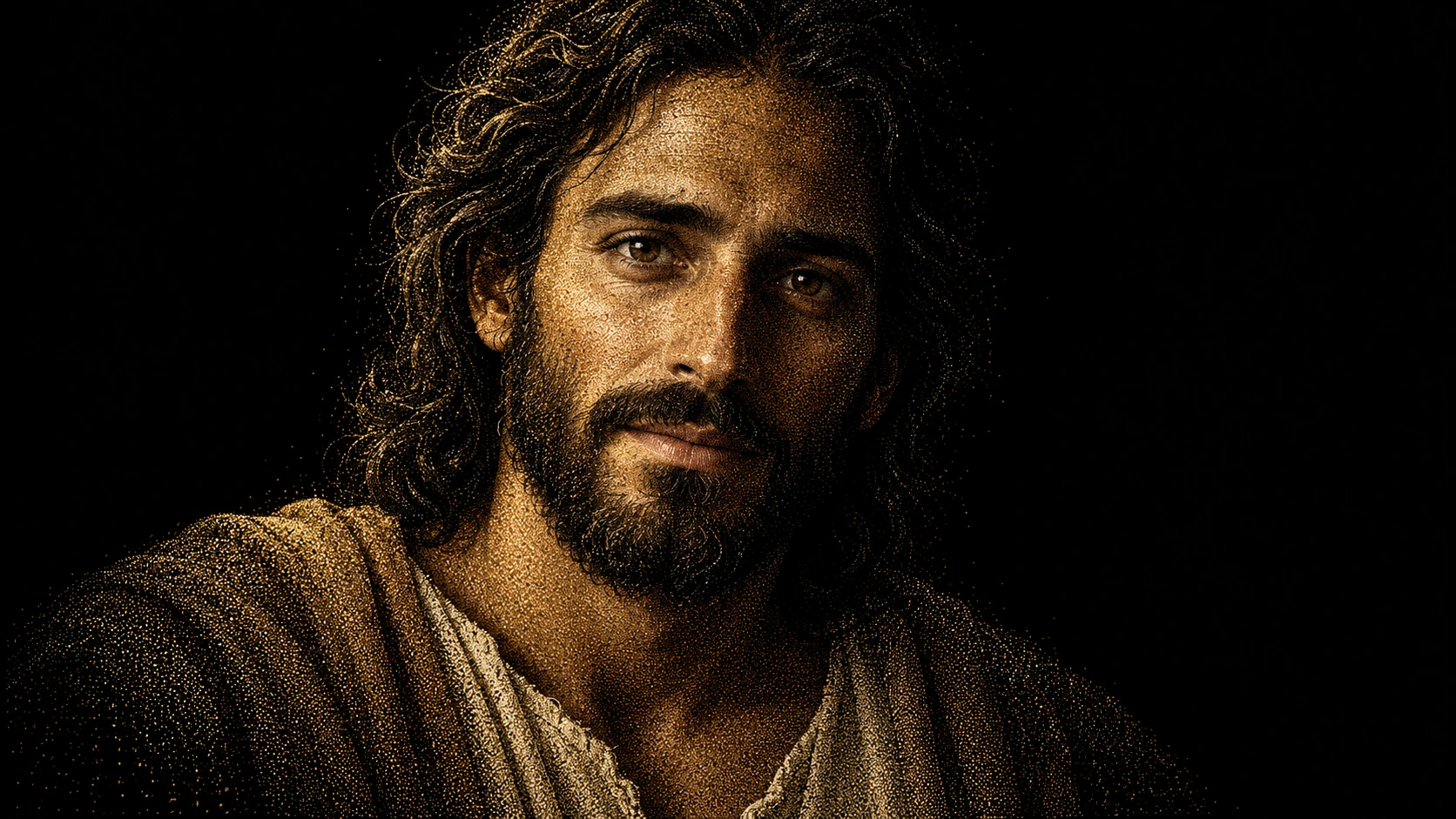
The Christian Case: Why Jesus Offers Something Different
1. Meaningful experience does not settle its cause
An unexpected sense of peace can be genuine. It does not by itself tell us whether the cause was emotional, physiological, social, or supernatural. A person may experience striking coincidences; interpreting them as messages from a particular being is a further claim.
Christians should not ridicule someone who reports an unusual experience. But what happened, what caused it, and what conclusion follows are separate questions. The same principle applies to an emotional experience in church. Feeling moved does not prove that everything a pastor says is true.
First John 4:1 urges the testing of spiritual claims. Acts 17 depicts Paul engaging his audience’s religious ideas in context while challenging them to reconsider their understanding of God. Christianity’s response should combine attention, empathy, and a willingness to test the interpretation.
2. The Creator is not a force under human control
The biblical picture of God is not an impersonal energy field that humans can master. Genesis presents the Lord as the Creator. In Acts 17, Paul speaks of the God who made the world and is not dependent on human-made shrines or services. God is present to His creation without being contained by it.
This makes prayer different from a technique for commanding the universe. Prayer is addressed to a personal God, whose wisdom and purposes are not reduced to our wishes. We ask, trust, repent, give thanks, and submit rather than attempt to manipulate an invisible mechanism.
Christians can value careful habits, optimistic perseverance, medical treatment, meditation on Scripture, and gratitude without accepting that thought has unlimited cosmic power. The difference is not between action and passivity. It is between responsible action under God and an unverified claim of spiritual control.
3. The earliest sources do not present Jesus as merely an enlightened exemplar
The New Testament does not primarily describe Jesus as a man who learned to recognize a universal consciousness. John 1:1–18 presents the Word as existing before creation and becoming flesh. Hebrews 1 describes the Son as the definitive revelation of God. Paul’s early letters give Jesus an extraordinary role in God’s work and in Christian worship.
This does not mean later Nicene terminology appears word-for-word in Paul’s writings. Historical development matters. But the exceptional status of Jesus is already visible in early texts, not an invention first appearing hundreds of years later.
In 1 Corinthians 8:6, Paul speaks of one God, the Father, and one Lord, Jesus Christ, in language associated with creation and divine identity. Philippians 2:5–11 describes Christ’s humiliation and exaltation using scriptural imagery of universal acknowledgment of the Lord. Historian Larry Hurtado’s research documents the emergence of devotion to Jesus within the first years of a Jewish monotheistic movement. Hurtado’s scholarly record.
The theological conclusion that Jesus is the eternal Son belongs to historic Christianity. The historical point is narrower but important: extraordinary devotion to Jesus is very early and demands explanation.
4. The resurrection is not merely a metaphor for inner change
Jesus’ execution under Pontius Pilate is widely accepted in historical scholarship. Paul, writing within the first Christian generation, preserves a received tradition concerning Christ’s death, burial, resurrection, and appearances in 1 Corinthians 15:3–8. In Galatians 1:18–19 he also reports personal contact with Cephas and James in Jerusalem.
These are historical data about early testimony. They are not video recordings of an event, and their existence does not independently establish that a miracle occurred. Scholars dispute how best to explain resurrection experiences, the empty-tomb narratives, and the emergence of the movement. Proposed accounts include visionary or bereavement experiences and the development of communal traditions. These deserve scrutiny, not dismissal.
The Christian case is cumulative. It weighs the crucifixion, early proclamation, named persons in the transmitted tradition, Paul’s contact with Jerusalem leaders, and the rapid emergence of resurrection-centered devotion. Christians conclude, in light of the full biblical witness, that God raised Jesus bodily, vindicating His identity and defeating death.
That differs substantially from an interpretation in which resurrection means only the correction of inner perception or the overcoming of the ego. For Christianity, Christ’s victory over death is the basis of a future bodily resurrection and new creation. Our longer historical and theological evidence study develops the case and major objections.
5. Grace is not spiritual self-mastery
Some New Age-associated teachings emphasize recognizing one’s deeper spiritual identity, overcoming limiting beliefs, or accessing inner power. Those ideas differ greatly by source, and many practitioners reject the idea that they are trying to save themselves. Their descriptions should be heard fairly.
Historic Christianity nevertheless offers a different account of humanity’s deepest need. Scripture describes sin, alienation from God, and death. It calls people to repentance, but does not teach that successful technique or sufficient positive thinking earns reconciliation.
Romans 5 connects reconciliation to Christ’s saving work. Ephesians 2:8–10 describes salvation by grace through faith, with good works flowing from new life. First Corinthians 15 anchors Christian hope in Christ’s resurrection and the promised resurrection of His people.
Self-examination, kindness, and disciplined practice can be valuable. None of those things is the ground of salvation. The Christian hope is not that we become powerful enough to save ourselves. It is that God has acted to save us through Christ.
Should Christians Be Afraid of Everything Called New Age?
Fear alone is not discernment. Some teachings invite people to seek alleged supernatural guidance or to treat an impersonal power as ultimate. Christian convictions may rightly conflict with those beliefs. But physical stretching, breathing exercises, counseling, responsible medical care, or quiet reflection should not be equated automatically with divination.
Deuteronomy 18:9–14 prohibits specific divinatory practices in ancient Israel’s covenant setting. The passage does not authorize Christians to treat any unfamiliar wellness practice as an invocation of spirits. Conversely, calling something wellness does not prove that every metaphysical claim attached to it is compatible with Christianity.
Ask what the practice claims, what the participant intends, whether it involves worship or submission to a spiritual authority, how its effects could be evaluated, and whether participation would require affirming beliefs contrary to the Gospel. Discernment should be precise enough to refuse what is wrong without manufacturing fear around what is ordinary.
How Should Christians Speak With Someone Exploring New Age Ideas?
Begin by asking what the person actually believes. Someone seeking stress relief from meditation is not in the same position as someone convinced that a nonphysical entity gives them revelation. A person hurt by a church may need to know that Christians can condemn abuse without abandoning their convictions about Jesus.
Listen for the hope behind the practice: peace, healing, meaning, control, forgiveness, or belonging. Discuss those hopes seriously. If someone says an experience changed their life, ask what changed and why they interpret it as they do. Do not mock the experience, but do not surrender the difference between experience and explanation.
Christians should also question unaccountable leaders in their own communities. A promise of guaranteed healing or wealth does not become sound merely because someone uses biblical phrases. Accountability should not depend on which group is making the promise.
The conversation should ultimately point beyond winning an argument about labels. It should invite thoughtful engagement with the Jesus of the earliest Christian sources: His life, death, resurrection proclamation, identity, and call to follow Him.
Frequently Asked Questions
Is New Age spirituality a religion?
It is a broad spiritual movement or milieu rather than one organized denomination. Some teachings are religious in substance, but there is no universally binding New Age creed.
Do New Age followers believe in God?
Some speak of a personal God; others emphasize energy, universal consciousness, or other metaphysical realities. No single doctrine covers everyone.
Is New Age the same as spiritual but not religious?
No. A person may identify as spiritual but not religious without accepting manifestation, spiritual energies, or any other New Age-associated ideas.
Is astrology or tarot required by New Age spirituality?
No. These are among practices sometimes associated with contemporary alternative spirituality, not universal requirements.
What do New Age teachings believe about Jesus?
There is no uniform teaching. A Course in Miracles offers one influential modern reinterpretation of Jesus, but it does not speak for every New Age-associated group or spiritual seeker.
Are crystals or Reiki scientifically proven to have healing energy?
Crystals possess real physical properties, but spiritual-energy claims need separate evidence. NCCIH reports that Reiki’s proposed energy field lacks scientific support and that effectiveness for health purposes has not clearly been shown.
Does the law of attraction mean the same thing as setting goals?
Not necessarily. Practical goal setting can change behavior, while some law-of-attraction teachings claim an additional cosmic causal mechanism. Those are different propositions.
Is manifestation the same as Christian prayer?
No, not when manifestation involves the claim that thoughts or spiritual alignment direct an impersonal law. Christian prayer addresses a personal God whose will is not controlled through technique.
Is yoga automatically a New Age religious practice?
No. Yoga has its own histories and contemporary uses, both religious and nonreligious. Its meaning depends on the specific practice and its spiritual commitments.
Can Christians meditate?
Christian traditions have long practiced prayerful reflection and meditation on Scripture. The word also applies to many other activities; content and purpose matter.
The Search for Something Greater
Wanting life to mean more than possessions, anxiety, and routine is not unreasonable. People search for peace because suffering is real. They seek healing because pain matters. They ask spiritual questions because they sense that ordinary explanations do not settle everything important.
Those longings deserve respect. But longing does not tell us which answer is true. A transformative experience still needs interpretation. A persuasive teacher still needs evidence. A promise of hidden power should not escape examination because it feels hopeful.
Christianity directs the search toward a specific person in history. It announces that the eternal Son entered the world, died for sinners, and rose from death, opening the way to reconciliation with God. If that proclamation is true, spiritual life is not finally about mastering the universe through perfect thoughts or discovering enough hidden knowledge to save ourselves.
It is about knowing the God who made us, receiving His grace through Jesus Christ, and learning to follow Him.
The deepest answer to our spiritual longing is not a power we learn to command. It is the Savior we are invited to trust.
Continue Exploring
- What Does Spiritual but Not Religious Mean?
- What Do Major Religions Believe About Jesus?
- Resurrection vs. Reincarnation
- How to Compare Religions Fairly
- Is Jesus the Son of God? The Evidence
- World Religions Library
Sources and Further Reading
Historical scholarship
- Wouter J. Hanegraaff, New Age Religion and Western Culture, bibliographic record and accessible description consulted, not the full book.
- Hanegraaff, “New Age Spiritualities as Secular Religion: A Historian’s Perspective”, Social Compass 46, no. 2 (1999), abstract consulted.
- Larry W. Hurtado, “Early Devotion to Jesus: A Report, Reflections and Implications”, The Expository Times 122, no. 4 (2011), scholarly record and accessible paper.
- James Ware, “The Resurrection of Jesus in the Pre-Pauline Formula of 1 Cor 15:3–5”, New Testament Studies 60, no. 4 (2014), publisher abstract consulted.
Primary descriptions of movements
- Theosophical Society in America, About Theosophy.
- Abraham-Hicks, About Abraham.
- Foundation for Inner Peace, About A Course in Miracles and ACIM, “Jesus – Christ”.
Surveys and research
- Pew Research Center, “New Age Beliefs Common Among Both Religious and Nonreligious Americans”, October 1, 2018. Four selected beliefs, not membership in a New Age movement.
- Lucas J. Dixon, Matthew J. Hornsey, and Nicole Hartley, “The Secret to Success? The Psychology of Belief in Manifestation”, Personality and Social Psychology Bulletin 51, no. 1 (2025), published online July 2023. Three studies with combined N=1,023, associational findings.
- NIH National Center for Complementary and Integrative Health, Reiki and Mind and Body Practices.
Biblical primary texts
Genesis 1; Deuteronomy 18:9–14; Acts 17:16–34; John 1:1–18; Romans 5; 1 Corinthians 8:6 and 15:3–20; Galatians 1:18–19; Philippians 2:5–11; Ephesians 2:8–10; Hebrews 1:1–4; 1 John 4:1. Scripture is interpreted from the standpoint of historic Nicene Christianity. Historical evidence, empirical science, movement self-descriptions, and theological conclusions are distinguished throughout.