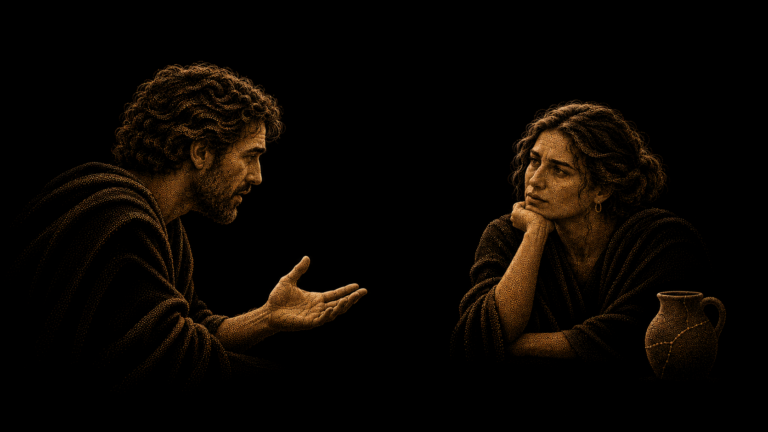

Two people can both identify as Hindu and give significantly different answers to the question, “Who is God, and how are we related to God?” That does not mean one of them has misunderstood Hinduism. It may mean they belong to different traditions.
The clearest starting point is to distinguish a community’s focus of worship from its philosophical account of reality. Vaishnava, Shaiva, Shakta and Smarta are useful names for broad worship traditions. Advaita, Vishishtadvaita and Dvaita describe important schools of Vedanta philosophy. Those are different kinds of labels, not seven competing boxes into which every Hindu must fit.
This guide explains that distinction before offering a Christian response. Understanding a belief accurately does not require accepting it. It makes disagreement more honest.
GUIDED ARTICLE EXPERIENCE
Hindu Traditions Explained: Vaishnava, Shaiva, Shakta, Smarta and Vedanta
Read along as the narration moves through the article.
Browser narration · No stored audio or site tracking
CONTINUE GUIDED TOUR
Continue where you left off.
GUIDED TOUR COMPLETE
You have reached the end of this study.
Study record saved on this device.
GUIDED TOUR
Hindu Traditions Explained: Vaishnava, Shaiva, Shakta, Smarta and Vedanta
Narrator: Paranoid Prophet Recommended Voice Native device narration
Prepare to follow the article as it is narrated.
VOICE & TOUR OPTIONS
Voice & Listening
NARRATOR
Finding a narrator…
Checking the best narrator available on this device.
Restores the site recommendations available in this browser.
Our listening picks lead when available; other voices are ranked for narration. Known novelty voices are hidden. Browser-provided voices may use an online voice service.
Screen-awake support will be checked when narration starts.
Optional: improve your device voices
Listening works with the voices already available here. Your device may offer additional free voices through its own settings.
iPhone or iPad: Settings → Accessibility → Read & Speak (or Spoken Content) → Voices → English. Look for Premium or Enhanced choices, then return here.
If offered, preview Ava or Zoe for U.S. English, or Serena or Jamie for British English. An explicit Premium or Enhanced version can improve on its compact version.
Mac: System Settings → Accessibility → Read & Speak → System voice. Open the voice list to preview or download additional choices.
Windows: Settings → Accessibility → Narrator → Add natural voices. Browser availability varies; a Narrator voice may not appear on websites. Edge may also expose online Natural voices without a model download.
Android: Open Accessibility → Text-to-speech output (the location varies by device). In the preferred engine settings, look for voice data and English choices.
Download sizes vary; some enhanced voices exceed 100 MB. This website cannot install system voices, and an installed voice appears here only if your browser exposes it.
Apple voice guide · Windows voice guide · Android voice guide
CHOOSE A NARRATOR
Recommended on this device
Our listening picks: Aaron, Martha, then Daniel, when available here. Otherwise, automatic uses the highest-ranked suitable voice. Preview alternatives or save your own choice.
Preparing the guided article experience…
RESUME GUIDED TOUR?
Continue where you left off.
GUIDED TOUR COMPLETE
You have reached the end of this study.
Article Guide9 sections
A useful map, not four sealed compartments
The four-tradition framework is used by Hindu educational organizations, including ISKCON Educational Services and Himalayan Academy. But a family’s religious life need not follow the boundaries of an introductory chart. Local customs, teachers, festivals and household practices also matter. Some people do not identify with one of these labels at all.
Even the term “denomination” can mislead if it makes readers imagine centrally administered churches with uniform membership requirements. Here, tradition means a broad religious family, not one worldwide organization. Heart of Hinduism: Movements and Leaders
Ask three questions rather than assigning a label too quickly:
- Worship: Which deity or divine form is central to this person’s devotion?
- Authority: Which scriptures, teachers and lineage guide their understanding?
- Philosophy: How do they understand ultimate reality, the individual self and liberation?
These questions are also a useful safeguard for Christians. Answering an Advaita claim about the self may not answer a Vaishnava claim about devotion to a personal Lord.
Worship focus
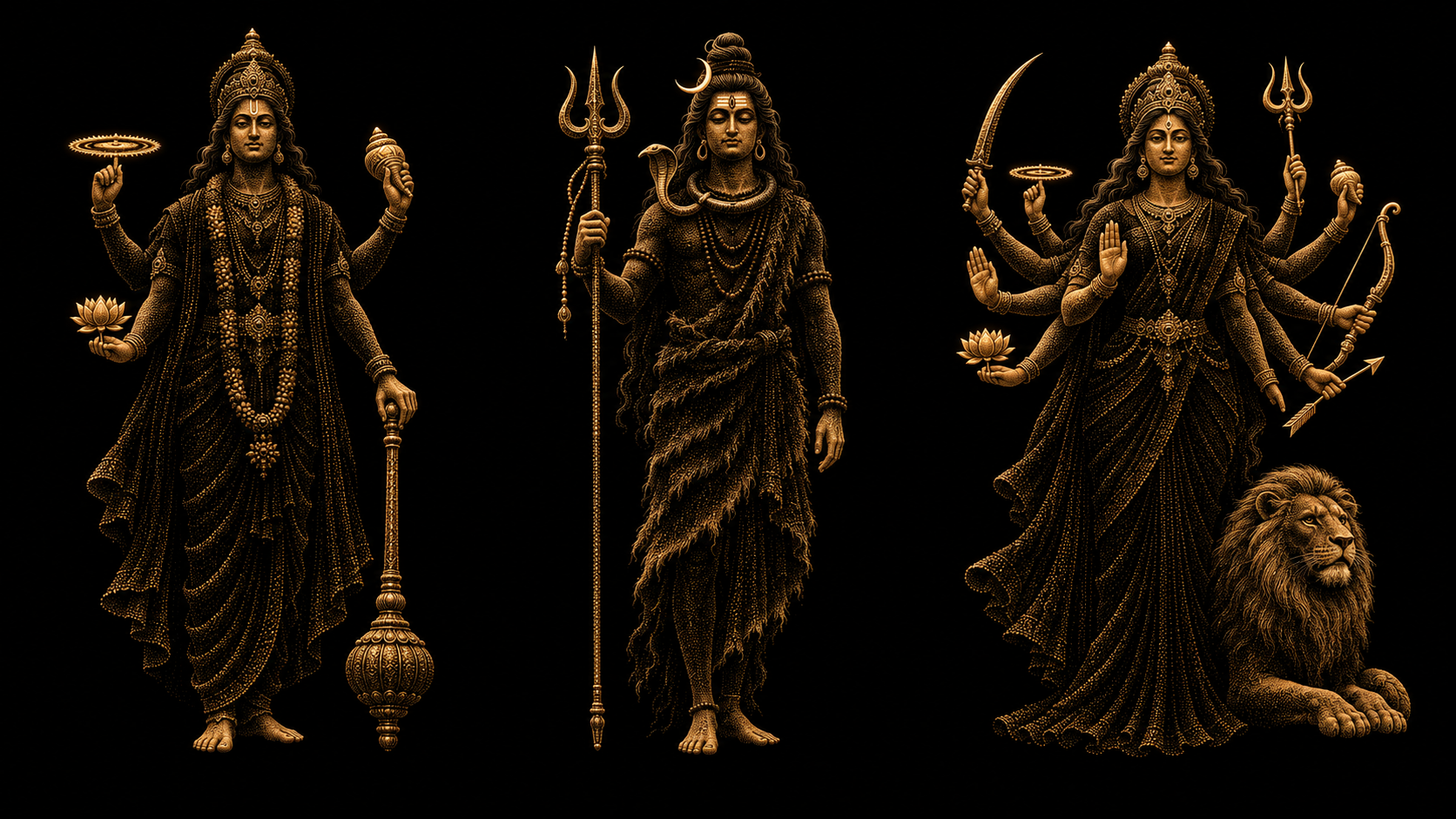
Vaishnava: Vishnu, Krishna or Rama. Shaiva: Shiva. Shakta: Devi. Smarta: multiple major deity forms.
Philosophical approach
Advaita, Vishishtadvaita and Dvaita describe different accounts of ultimate reality and the relation of self, world and Brahman.
These categories answer different questions. A devotional tradition and a philosophical school are not interchangeable labels. This is a simplified orientation, not an exhaustive map of Hindu life.
Vaishnava traditions: devotion to Vishnu, Krishna or Rama
Vaishnava traditions center worship on Vishnu and forms associated with him, especially Krishna and Rama. Devotion, or bhakti, is a major theme. But “Vaishnava” does not identify one philosophical system or one organization.
Sri Vaishnava tradition is associated with Ramanuja, while Gaudiya Vaishnava tradition includes the modern ISKCON movement. These should not be treated as interchangeable. A visitor familiar with one Krishna temple has encountered a particular community, not a complete sample of every Vaishnava tradition. Scriptures important in this religious family include the Bhagavad Gita, Ramayana and Bhagavata Purana, alongside texts and devotional poetry especially valued in particular lineages. Heart of Hinduism: Vaishnavism
For Christian comparison, the crucial lesson is that devotion and dependence on divine help are not absent from Hindu traditions. In Bhagavad Gita 18:66, Krishna calls Arjuna to surrender and promises deliverance. The linked translation and commentary represent the ISKCON tradition, not a neutral statement of how every Hindu interprets the verse. Bhagavad Gita 18:66, Bhaktivedanta Book Trust
Ask rather than assume: “What does surrender mean in your tradition, and what are you hoping to be delivered from?”
Shaiva traditions: Shiva as supreme
Shaiva traditions place Shiva at the center of worship. Calling Shiva merely “the destroyer,” as elementary summaries sometimes do, misses what it means for a devotee to recognize Shiva as the supreme Lord. Himalayan Academy, a Shaiva institution, describes Shiva as compassionate and emphasizes temple worship, discipline, teachers and spiritual realization. Himalayan Academy: Hinduism’s Four Denominations
There is diversity within this family too. Shaiva Siddhanta and nondual traditions associated with Kashmir do not give identical accounts of the relationship between Shiva and the individual. Shaiva scriptures and practices cannot be reduced to the better-known Vaishnava texts. Agamas and devotional compositions have important places alongside other sacred literature. Heart of Hinduism: Shaivism
For a Christian reader, the useful next step is not to collect dramatic images or unfamiliar rituals as evidence that a religion must be false. It is to understand the actual claim being made about God and the human person, then assess that claim.
Ask rather than assume: “Does liberation mean that the self remains distinct from Shiva, or is your understanding different?”
Shakta traditions: the divine as Devi or Shakti
Shakta traditions focus on the Goddess, often called Devi, and on Shakti, a term associated with divine power. Durga and Kali are prominent forms. In Shakta devotion, the divine feminine is not simply an optional ornament added to an otherwise male-centered picture of ultimate reality. The Supreme may be worshipped as the Divine Mother. Himalayan Academy’s practitioner overview; Oxford Bibliographies: Shaktism
Shakta and Shaiva traditions can overlap, especially around Shiva-Shakti theology. However, the presence of a goddess in someone’s worship does not automatically identify the person as Shakta. For example, devotion to Radha with Krishna belongs within Vaishnava settings. The larger context matters. Heart of Hinduism: Shaktism
This is a place where readers should resist sensationalism. An unfamiliar image is not a substitute for a tradition’s explanation of that image. Nor should one unusual practice become the definition of millions of people’s religious lives.
Ask rather than assume: “How do you understand the Goddess: as supreme reality, divine power, a particular divine form, or something else?”
Smarta tradition: several forms, a philosophical framework
Smarta tradition is often associated with Shankara and Advaita Vedanta. A characteristic practice is panchayatana worship, involving five major deities: Shiva, Vishnu, Devi, Ganesha and Surya. Some broader descriptions include a sixth form, Skanda. The difference between a five-deity practice and a six-form summary should not be mistaken for an error in arithmetic or an entirely separate religion. Heart of Hinduism: The Smarta Tradition; Himalayan Academy
The important point is that devotion to more than one divine form can operate within a coherent philosophical understanding. It does not necessarily mean the worshipper has casually mixed unrelated beliefs.
At the same time, not every Hindu who honors several deities should be called Smarta. Let people explain their own affiliation. A photograph of a household shrine cannot settle a person’s theology.
Ask rather than assume: “How do these different forms relate to the ultimate reality you believe in?”
Vedanta is a different axis
Vedanta is a philosophical tradition concerned with interpreting foundational texts, especially the Upanishads and Brahma Sutra. Its schools disagree over how to understand Brahman, ultimate reality, and the relation of selves and the world to Brahman. Liberation, often called moksha, means release from the cycle of rebirth, although schools differ over what that liberated existence is like. Vedanta does not mean only Advaita. Internet Encyclopedia of Philosophy: Ramanuja
Three influential schools provide a useful first orientation:
Advaita
Ultimate nonduality: the true self, atman, is not ultimately separate from Brahman.
Vishishtadvaita
Real selves and the world are inseparably dependent on Brahman.
Dvaita
God and souls remain distinct.
Simplified introductions, not exhaustive Hindu beliefs. Read the article’s fuller explanations and sources before drawing conclusions about a particular community.
Advaita: ultimate nonduality
Advaita is closely associated with Shankara. It teaches that the true self, atman, is not ultimately separate from Brahman. Liberation involves knowledge that overcomes the ignorance underlying the experience of separation.
The shortcut “Advaita says nothing exists” is misleading. Its discussion distinguishes levels of reality; ordinary experience is not treated as equivalent to sheer nonexistence. Nor does the claim about the true self mean that an individual’s everyday ego is an all-powerful god. These distinctions matter before a Christian critique begins. Internet Encyclopedia of Philosophy: Advaita Vedanta
Vishishtadvaita: unity that includes real distinctions
Ramanuja’s Vishishtadvaita is commonly translated as qualified nondualism. It affirms real individual selves and a real world while understanding them as inseparably dependent on Brahman. Ramanuja’s thought is theistic: devotion to a personal God is central.
This is not simply Advaita with devotional language added. The status of individuality and the world is a substantive point of disagreement. Sri Vaishnava affiliation and Vishishtadvaita philosophy illustrate how a worship tradition and a philosophical school can describe different dimensions of the same religious identity. Internet Encyclopedia of Philosophy: Ramanuja
Dvaita: God and souls remain distinct
Madhva’s Dvaita maintains a fundamental distinction between God and individual souls. Vishnu alone is independent; souls and the world depend on him. Liberation does not erase that distinction, and divine grace is essential.
A Christian may recognize a familiar-sounding distinction between God and humanity here. That resemblance is a starting point for conversation, not proof that Dvaita and Christianity teach the same religion. They still differ over God’s identity, rebirth, liberation and the person of Jesus. Internet Encyclopedia of Philosophy: Madhva
These three schools are an introduction, not an exhaustive list. Most importantly, do not use “Advaita” as shorthand for everything Hindus believe.
A Christian response: compare the actual claims
Christians need not choose between dismissing Hindu traditions and declaring them all alternative expressions of the gospel. There is a more serious approach: describe each claim accurately and explain where the Christian claim differs.
Who is God, and who are we?
Historic Christianity distinguishes the Creator from creation. Communion with God does not mean discovering that the human self is ultimately identical with God. That creates a direct disagreement with Advaita’s account of ultimate identity, while the conversation with Dvaita begins at a different point.
The Christian case is not strengthened by pretending that every Hindu denies personal reality or worships an impersonal absolute. Before arguing about whether a belief is true, make sure it is the belief the other person actually holds.
Is Jesus another avatar?
The Christian claim about Jesus is more specific than the general idea that the divine becomes accessible to human beings. John presents the eternal Word entering human life. Paul presents Jesus’ death and resurrection as decisive saving events. Christians therefore do not understand Jesus as one among a succession of divine descents. John 1; 1 Corinthians 15
An avatar is a divine descent or manifestation, understood differently across Hindu traditions. The term can be a conversational bridge, but it is not an automatic translation of the Christian doctrine of incarnation. Ask what the speaker means before agreeing that the terms describe the same thing. Our guide to what religions believe about Jesus follows that question across traditions.
What problem does salvation solve?
It is inaccurate to say that Hindu traditions know only self-effort while Christianity alone has any concept of divine help. Vaishnava texts and teachers provide clear counterexamples.
The Christian invitation remains distinctive without that caricature: forgiveness and reconciliation through Christ, received by grace, with bodily resurrection as the final hope. The question is not merely whether a tradition uses words such as “grace” or “liberation.” It is who saves, from what, by what means, and toward what final life. Ephesians 2
Why Christ? Our Christian answer rests on who Jesus is and whether his resurrection claim is true, not on the assumption that Hindu people lack devotion, intelligence or moral seriousness. That is why the next step is to examine the resurrection accounts, rather than treating a classification chart as proof of Christianity.
Questions readers often ask
Are these Hindu denominations like Christian denominations?
The comparison helps only to a point. These names describe broad traditions of worship and thought, not a matching set of church structures. Use them as orientation, then ask about the particular community.
Do all Hindus believe all gods are the same?
No single answer represents everyone. Some frameworks understand multiple divine forms through an underlying unity; others emphasize the supremacy of a particular Lord. Do not turn one explanation into a universal creed.
Is Vedanta another name for Hinduism?
No. Vedanta is a major philosophical tradition within a much larger religious landscape. Neither Vedanta generally nor Advaita specifically should replace the word Hinduism.
Where should a beginner start?
Start with the worship/philosophy distinction in this guide. Then read one tradition’s own introduction alongside a scholarly account. For a different comparison, see Hinduism and Buddhism. Our guide to comparing religions fairly explains the method behind this series.
The takeaway
Do not ask a single label to do the work of a whole conversation. Find out whom someone worships, which authorities they trust, and how they understand the self and its ultimate hope. Then compare those answers with Christianity’s claims about Jesus.
Precision is not a concession of Christian conviction. It is part of treating both truth and our neighbors seriously.