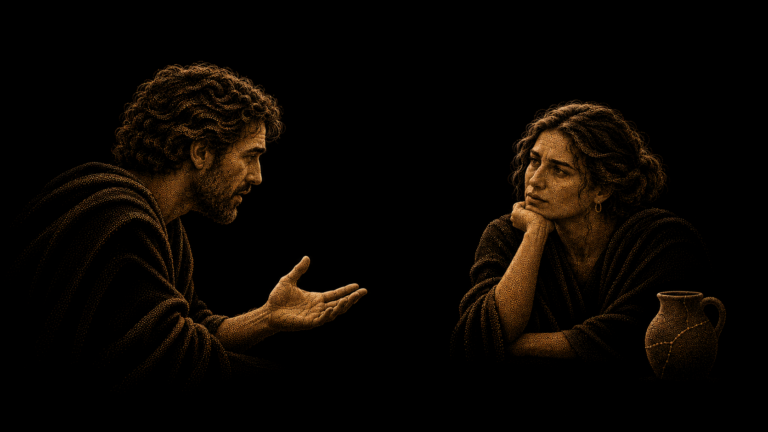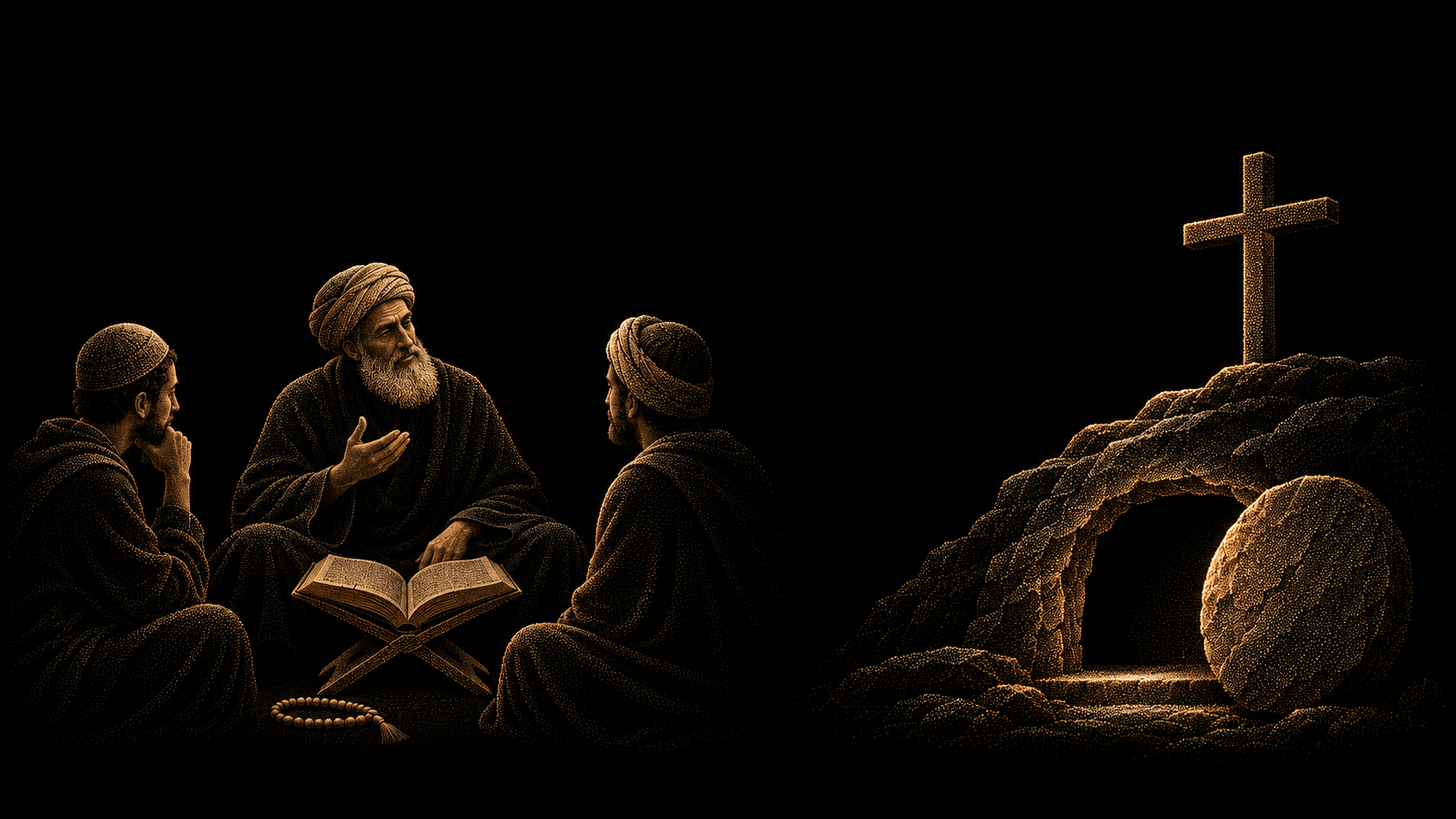

Someone encounters a poem attributed to Rumi, hears a recording of devotional chanting, or watches a ceremony of whirling dervishes. The language feels familiar: love, surrender, remembrance, the heart’s longing for God. Does that mean Sufism is Christianity expressed in another cultural vocabulary? Or a religion separate from Islam?
Both shortcuts miss something important. Sufism is historically an Islamic spiritual current concerned with devotion, spiritual formation, and knowledge of God. Its resemblance to Christian contemplative language does not erase the disagreement over Jesus. Understanding that distinction makes a fair conversation possible.
This article explains Sufism on its own terms before offering a Christian evaluation. It does not assume that every Sufi community teaches or practices the same things.
GUIDED ARTICLE EXPERIENCE
Sufism and Christianity: Seeking God, Purifying the Heart, and the Question of Jesus
Read along as the narration moves through the article.
Browser narration · No stored audio or site tracking
CONTINUE GUIDED TOUR
Continue where you left off.
GUIDED TOUR COMPLETE
You have reached the end of this study.
Study record saved on this device.
GUIDED TOUR
Sufism and Christianity: Seeking God, Purifying the Heart, and the Question of Jesus
Narrator: Paranoid Prophet Recommended Voice Native device narration
Prepare to follow the article as it is narrated.
VOICE & TOUR OPTIONS
Voice & Listening
NARRATOR
Finding a narrator…
Checking the best narrator available on this device.
Restores the site recommendations available in this browser.
Our listening picks lead when available; other voices are ranked for narration. Known novelty voices are hidden. Browser-provided voices may use an online voice service.
Screen-awake support will be checked when narration starts.
Optional: improve your device voices
Listening works with the voices already available here. Your device may offer additional free voices through its own settings.
iPhone or iPad: Settings → Accessibility → Read & Speak (or Spoken Content) → Voices → English. Look for Premium or Enhanced choices, then return here.
If offered, preview Ava or Zoe for U.S. English, or Serena or Jamie for British English. An explicit Premium or Enhanced version can improve on its compact version.
Mac: System Settings → Accessibility → Read & Speak → System voice. Open the voice list to preview or download additional choices.
Windows: Settings → Accessibility → Narrator → Add natural voices. Browser availability varies; a Narrator voice may not appear on websites. Edge may also expose online Natural voices without a model download.
Android: Open Accessibility → Text-to-speech output (the location varies by device). In the preferred engine settings, look for voice data and English choices.
Download sizes vary; some enhanced voices exceed 100 MB. This website cannot install system voices, and an installed voice appears here only if your browser exposes it.
Apple voice guide · Windows voice guide · Android voice guide
CHOOSE A NARRATOR
Recommended on this device
Our listening picks: Aaron, Martha, then Daniel, when available here. Otherwise, automatic uses the highest-ranked suitable voice. Preview alternatives or save your own choice.
Preparing the guided article experience…
RESUME GUIDED TOUR?
Continue where you left off.
GUIDED TOUR COMPLETE
You have reached the end of this study.
Article Guide9 sections
Where Sufism fits within Islam
Sufism, often called tasawwuf, should not appear as a third mutually exclusive branch beside Sunni and Shia Islam. It cuts across that map. A person’s Islamic communal identity and their connection to a Sufi path answer different questions. Harvard’s Pluralism Project describes Sufism as a current emphasizing inner devotion, love, and knowledge of God, rather than a separate sect. It also documents multiple orders, including the Qadiri, Chishti, Naqshbandi, and Mevlevi. Harvard Pluralism Project: Sufism
Think of two questions: Which religious tradition and authorities shape this person’s beliefs? Which teachers and disciplines shape their spiritual life? One label may not answer both.
If the wider framework is unfamiliar, start with What Do Muslims Believe? This article concentrates on spiritual formation and the Christian comparison, rather than repeating an introduction to Islam.
Within Islam
Sunni and Shia are examples of communal traditions, not an exhaustive list. Sufi paths can cross these boundaries rather than form a third equivalent branch.
Not every Muslim
Do not assume every Sunni or Shia Muslim belongs to a Sufi order.
Modern universalist movements
Some organizations use Sufi language beyond an exclusively Islamic framework. Describe each movement on its own terms.
A cross-cutting spiritual current is not the same category as a religious branch. This orientation is not an exhaustive family tree.
Does Sufism leave Islamic scripture behind?
Historically, that is a poor assumption. Scholar Hamid Algar explains that Qur’anic passages and hadith permeate Sufi literature, including poetry. Muhammad’s example is a central reference point, and early Sufi writers included scholars of hadith. A poem may sound like free-floating spirituality when translated in isolation while carrying scriptural allusions its first readers recognized. Encyclopaedia Iranica: Hadith in Sufism
For readers, the practical lesson is simple: ask who wrote a passage, which tradition shaped it, and what its surrounding text says. A memorable quotation is a starting point for understanding, not a complete theology.
What is the spiritual problem Sufism addresses?
The language of spiritual transformation includes the purification of the heart, the struggle against self-centeredness, and the cultivation of awareness of God. This concern should not be reduced to the pursuit of unusual sensations. The central question is how a person’s desires and conduct are changed. Harvard Pluralism Project: Sufism
A useful Islamic reference is ihsan, commonly translated as excellence or beautiful conduct. In the well-known hadith of Gabriel, worship is described in terms of profound awareness of God, including the recognition that God sees the worshipper. The report also discusses Islam and faith; inward attentiveness belongs within that larger religious setting. This hadith is an Islamic primary text, not a definition supplied by a Christian critic. Sahih Muslim 8a
For a Christian reader, this is an opportunity for honest self-examination. Do I confuse knowing religious vocabulary with loving God? Does my worship change how I treat people? Those questions matter even when we disagree about the answers a tradition offers.
What do Sufis actually do?
Dhikr: remembering God
Dhikr means remembrance. In Sufi practice it can involve the repetition of God’s names or devotional formulas. It is not uniformly loud or accompanied by movement. The Naqshbandi-Haqqani teaching site discusses both vocal and silent remembrance, grounding its explanation in Islamic scripture and traditions. Its presentation stresses the heart’s attention, not simply the production of sound. This is a practitioner’s account of one lineage, not a rulebook for every Sufi. Naqshbandi: Dhikr
The same lineage’s explanation of counted remembrance says that counting serves concentration rather than being an end in itself. That distinction helps outsiders avoid mistaking a visible method for the entire purpose of the practice. Naqshbandi: Awareness of Numbers
Teachers, communities, and a path of formation
A tariqa is a spiritual path or order; a shaykh or pir is a spiritual guide. Historically, a khanaqah could provide a place to live, study, meet, and pray under such guidance. The institution was more than a picturesque building. It organized a shared way of life. Other regional terms include zawiya and tekke, although local settings and functions vary. Encyclopaedia Iranica: Khanaqah
When learning about a particular community, ask how a teacher is recognized, what obligations disciples undertake, and what accountability exists. These questions are useful in any religious setting. Spiritual sincerity does not make scrutiny unnecessary.
Poetry, music, and movement
Some Sufi communities use music or movement; others favor quieter forms. The famous Mevlevi ceremony associated with Rumi is a particular tradition, not the universal definition of Sufism. Harvard’s account places that ceremony among a wider range of American Sufi communities and practices. Harvard Pluralism Project: The Sufi Circle
A responsible introduction should therefore show more than spinning robes. Study, ethical discipline, ordinary prayer, and community life deserve attention too.
Saints, shrines, and the danger of one-size-fits-all descriptions
Some Sufi centers developed around the tombs of revered teachers, with associated practices of visitation and saint veneration. That does not justify assuming that every Sufi participates in the same practices or gives them the same theological explanation. Harvard Pluralism Project: Sufism
Even within the literature, specific practices have required argument and defense. A Mevlevi account of Ismail Ankaravi’s work describes debates over sema (devotional listening, here associated with a ceremonial practice), movement, and vocal remembrance. This is evidence of internal discussion, not evidence that all Muslims accepted every practice. Threshold Society: Ankaravi’s Mevlevi Traditions
Ask what participants believe they are doing before applying a label. A Christian may still disagree after listening carefully. Accurate disagreement is stronger than an accusation built on a guessed meaning.
Are all Sufis religious universalists?
No. The modern Inayatiyya explicitly describes its own Sufism as universalist, welcoming people and paths while emphasizing prayer, meditation, and the cultivation of the heart. That self-description should be taken seriously. It should also remain attached to the organization making it. Inayatiyya: What Is Sufism?
There is a real difference between saying, “This modern Sufi movement has a universalist approach,” and saying, “Sufism teaches that all religious doctrines are equally true.” The second statement erases the explicitly Islamic framework of many orders.
Likewise, words such as union, annihilation, or oneness require context. Do not automatically read poetic language as a claim that a human being literally becomes God. Ask what the particular author means, how the community explains the term, and whether the passage describes experience, ethics, or a claim about reality. If that context is unavailable, uncertainty is preferable to an impressive-sounding accusation.
Sufism and Christianity: what overlaps, and what does not?
There can be recognizable points of contact: attention in prayer, resistance to pride, disciplined spiritual life, and love for God. These are good places to begin a conversation. They do not settle the truth of either tradition.
A helpful comparison separates practice, interpretation, and claim. Two people may both pray quietly. One may understand the prayer within Islamic devotion; the other may pray through Christ as the incarnate Son. The similar outward action does not establish identical beliefs.
Prayer and attention
Recognizable devotional similarities do not establish identical beliefs.
Jesus
Islamic Sufi traditions understand Jesus within an Islamic prophetic framework; Christianity confesses the incarnate Son.
Reconciliation
Ask how the specific community understands reconciliation. The Christian claim centers on Christ’s cross and resurrection.
This comparison concerns Islamic Sufi traditions, not all modern universalist movements. It does not reduce either tradition to an effort-versus-grace slogan.
Who is Jesus?
In the Qur’an, Jesus is honored as Messiah and messenger, while divine sonship is rejected. Qur’an 4:171 therefore supplies an important boundary for a Sufi community that remains within Islamic belief. Qur’an 4:171
John’s Gospel makes a different claim: the eternal Word became human, and Jesus reveals the Father in a unique way. Christianity’s confession of the incarnation is more than saying that Jesus was unusually aware of God. John 1:1–18
Affectionate language about Jesus cannot by itself reconcile these positions. A fair conversation asks what that affection means doctrinally.
What happened at the cross?
Qur’an 4:157 denies that Jesus’ opponents killed and crucified him as they claimed. Its interpretation has generated discussion, but its place in Islamic teaching cannot simply be bypassed when comparing the religions. Qur’an 4:157
Paul, by contrast, makes Jesus’ death for sins, burial, resurrection, and appearances central to the gospel. In the same passage he says that without the resurrection Christian faith fails. The Christian case is therefore exposed to questions about events and testimony, not protected by appealing only to inward experience. 1 Corinthians 15:1–19
This is where the deepest comparison belongs. Did God reconcile people through the crucified and risen Jesus? No amount of shared devotional vocabulary makes that question disappear.
Why Christians point to Christ
The Christian answer to spiritual longing begins with God’s initiative. Ephesians describes salvation as a gift of grace, and then describes the resulting life of good works. That order matters: moral transformation is real, but it is not a purchase price paid for acceptance. Ephesians 2:1–10
This is not permission to caricature Sufis as people who know nothing of divine generosity. Nor should Christians pretend their own tradition has no discipline, obedience, or struggle against sin. The sharper question is what grounds reconciliation with God.
From this site’s Christian perspective, Christ is the answer because the person seeking God needs more than a richer spiritual technique. We need forgiveness, reconciliation, and life that survives death. The gospel locates that hope in Jesus himself and what he accomplished. A spiritual experience may matter deeply to the person who has it; the Christian invitation is to investigate the identity and work of Christ rather than make experience the final authority.
Readers should test that claim, not accept it merely because it concludes a Christian article. Read the Gospel accounts, examine what the first witnesses claimed about the risen Jesus, and ask which explanation best accounts for their claims. Respect for Sufi devotion and serious evaluation of Christian truth can coexist.
Questions that lead to a better conversation
If a friend describes themselves as Sufi, start with their actual community:
- Which teacher, order, or writers have shaped your understanding?
- How does your practice relate to the Qur’an and Muhammad’s example?
- What do you mean by closeness to God or spiritual transformation?
- What do you believe about Jesus’ identity, death, and resurrection?
- How do you evaluate a spiritual experience when it seems to conflict with scripture?
Answer equivalent questions about your own faith. A conversation becomes more honest when both people can explain what would count as evidence and what they mean by their most important words.
Frequently asked questions
Is Sufism separate from Islam?
Historically, it is an Islamic spiritual current. Some modern organizations use Sufi language in a universalist framework. Identify the specific community rather than forcing all uses of the name into one description.
Do all Sufis whirl or use music?
No. Practices vary, and the Mevlevi ceremony is one distinctive example. Silent remembrance also has an important place in some lineages.
Can a Christian appreciate Sufi poetry?
Appreciation and agreement are different judgments. Read accurately, check the source and translation, and distinguish an affecting image from a theological claim you accept.
Is Sufism basically Christian mysticism?
No. Similar language about love and the heart does not remove disagreements about revelation and Jesus. Compare the underlying beliefs as carefully as the practices.
What should I investigate next?
For related traditions and shared questions, explore the World Religions library. Start with Jesus. Clarify the competing claims about him, then examine their textual and historical foundations. That keeps the discussion focused on the central disagreement instead of deciding which atmosphere feels more spiritual.