
Chickens and ducks can be kept on the same property, but sharing a coop and run is not the lower-risk arrangement for disease control. Current USDA guidance recommends keeping species separate, including their feed, litter and equipment. Plan appropriate housing, water and nutrition for each group instead of assuming a peaceful-looking mixed flock is a safe one.
Our household originally kept two ducks alongside approximately sixteen chickens. That firsthand context explains our interest in mixed-flock management; it does not establish that shared housing prevents disease or that every combination of birds will work.
GUIDED ARTICLE EXPERIENCE
Can Chickens and Ducks Live Together? Housing, Nutrition and Biosecurity
Read along as the narration moves through the article.
Private device narration · No hosted audio or tracking
CONTINUE GUIDED TOUR
Continue where you left off.
GUIDED TOUR COMPLETE
You have reached the end of this study.
Study record saved on this device.
GUIDED TOUR
Can Chickens and Ducks Live Together? Housing, Nutrition and Biosecurity
Narrator: Paranoid Prophet Recommended Voice Native device narration
Prepare to follow the article as it is narrated.
VOICE & TOUR OPTIONS
Voice & Listening
NARRATOR
Finding a narrator…
Checking the best narrator available on this device.
Restores the best curated narrator available on this device.
Narrator choices are curated for clear, long-form listening on this device.
Screen-awake support will be checked when narration starts.
CHOOSE A NARRATOR
Curated for this device
Choose a verified narrator for this browser, or use System Narrator. Automatic mode uses the best reliable route exposed by this device; your chosen narrator is preserved even if this device needs a temporary fallback.
Preparing the guided article experience…
RESUME GUIDED TOUR?
Continue where you left off.
GUIDED TOUR COMPLETE
You have reached the end of this study.
Updated October 5, 2026.
Article Guide10 sections
Same property and same enclosure are different decisions
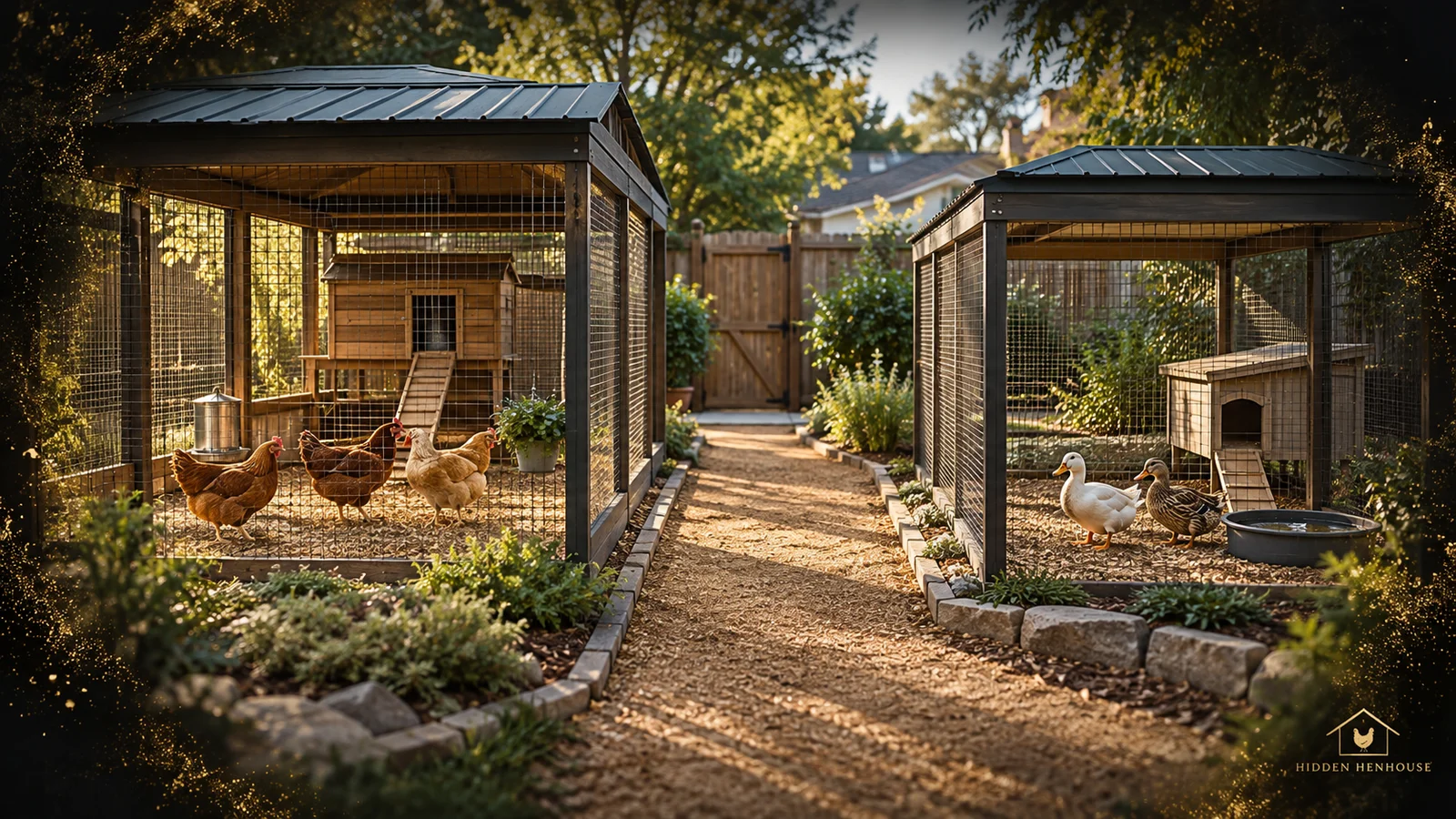
A property can support a chicken flock and a duck flock in separate accommodation. This provides more control over direct contact, water, feeding and species-specific care. A shared enclosure makes each of those jobs harder, even when the birds do not fight.
USDA APHIS’s Control What Comes In guidance, updated September 21, 2026, recommends separate species and their supplies to reduce cross-contamination. Its multi-species biosecurity webinar specifically advises housing waterfowl separately from chickens, turkeys and game birds.
The old article promised harmony if owners met a short checklist. Husbandry advice about accommodating two species is not evidence that commingling carries the same disease risk as separation. We recommend separate houses and runs as the starting plan. This reduces particular pathways of exposure; it does not make a property disease-proof.
Keep wild waterfowl and contaminated water out
Wild birds can bring pathogens to domestic poultry through contact and contaminated environments. USDA’s biosecurity advice from a poultry veterinarian emphasizes preventing commingling with wild birds, protecting feed and water, and not using untreated pond water for drinking or cleaning.
A backyard pond that attracts visiting ducks adds an exposure problem. A controlled water station supplied with clean water is easier to manage. Keep wild birds away from domestic feed and water, limit visitors to poultry areas and use dedicated footwear and tools. Remove dirt and manure before disinfection and follow the product’s directions.
Check current state and local animal-health guidance when disease restrictions apply. If birds show sudden deaths, respiratory illness or other concerning flock-wide signs, contact a veterinarian or state animal-health official. USDA also provides its reporting number, 1-866-536-7593, on the linked Defend the Flock page. Do not move or sell suspect birds while seeking instructions.
Address drake safety before arranging introductions
A male duck can attempt to mount a chicken hen. More female ducks, extra floor space or a rooster do not physically prevent that contact. Drake Safety: injury risks and separation explains the anatomy, evidence limits and action steps.
If a drake targets hens, stop direct access and keep them physically separated. Do not wait for visible blood. Even without a drake, competition or incompatible individuals can require separate groups. Nutrition and clean bedding cannot solve an interaction that repeatedly harms a bird.
Keep chicken bedding dry and duck water controlled
Both species need clean, dry resting accommodation. “Duck wet zone” means a deliberately managed water area, not permission for ducks to sleep in saturated bedding. Our practical layout recommendation is to keep splashing and runoff away from both sleeping spaces, particularly the chicken litter.
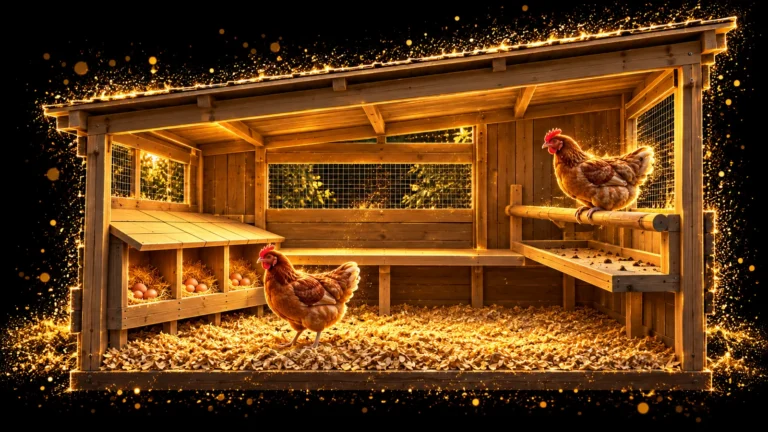
Chicken housing needs suitable perches and nests. Many common domestic ducks use ground-level resting and nesting areas with accessible entrances. Do not make this an absolute for every duck: Muscovies can perch, as Kentucky Extension’s duck-breed guide notes. Design for the actual species, size and mobility of your birds.
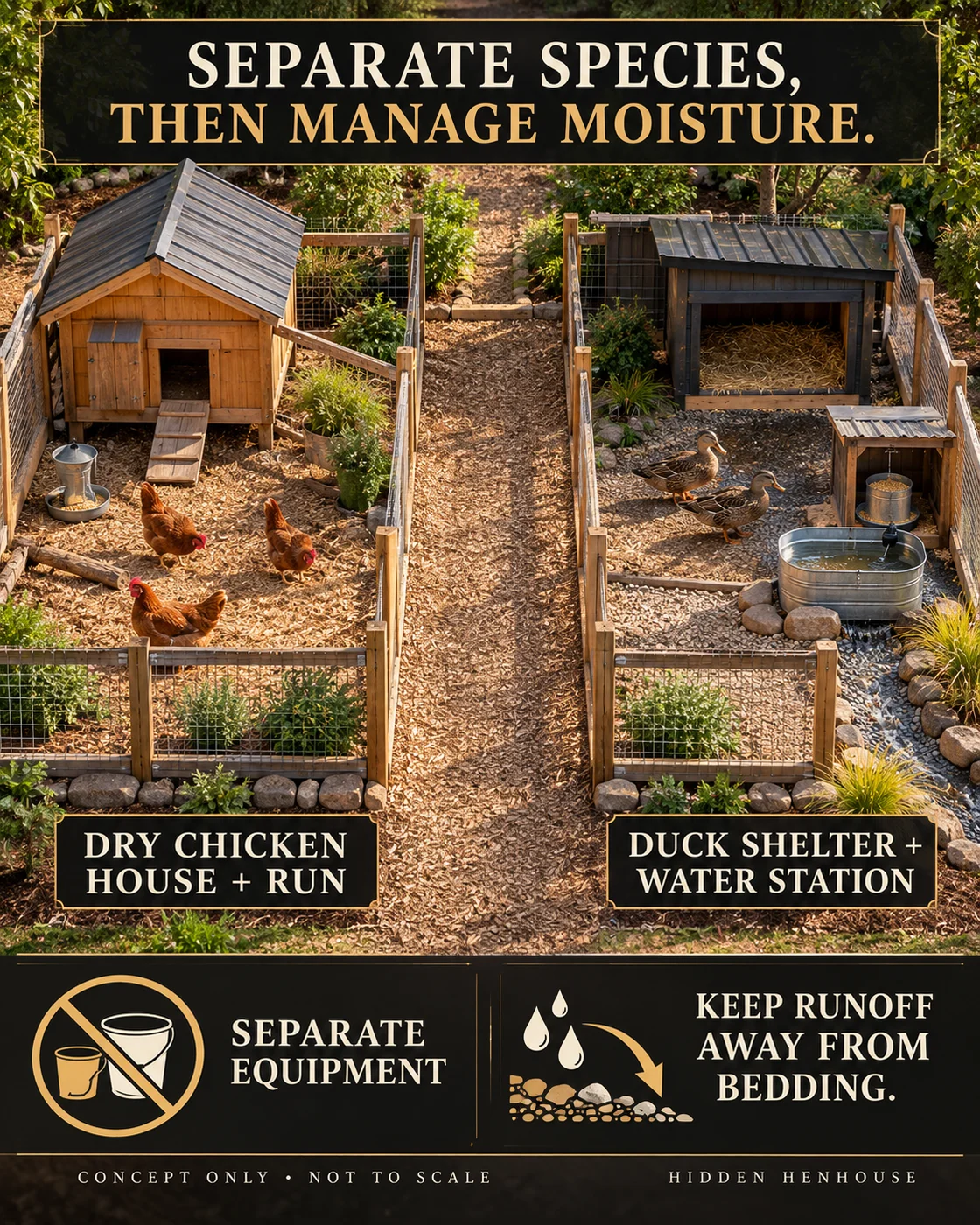
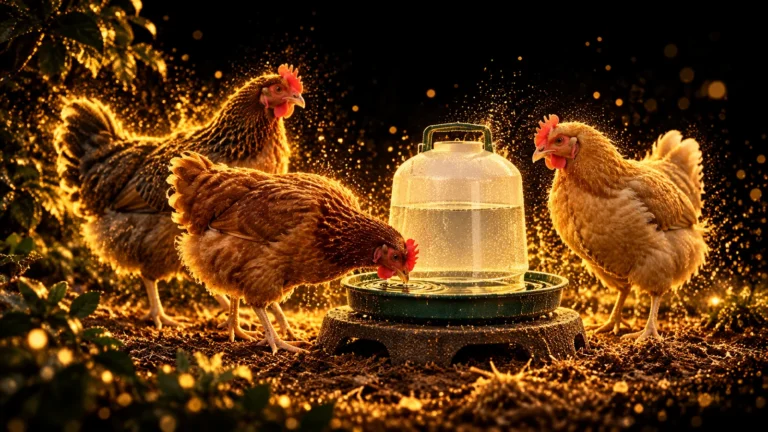
Locate the duck water station where spills can be contained and drained safely. Keep polluted runoff from entering the chicken run or flowing into another bird area. Gravel or another base may help a suitable site, but adding gravel over a persistent drainage failure is not a complete fix.
Ventilation, sheltered resting areas and replaceable dry litter remain important in either house. Check the bedding guide for material tradeoffs. Our old two-to-three-week deep-cleaning rule ignored differences in moisture and stocking pressure. Inspect regularly and remove wet or fouled material when needed rather than waiting for a date.
Provide usable duck water without exposing chicks to a pool
Ducks need drinking water they can use to clean their bills and nostrils. An Extension duck-care answer recommends enough depth to immerse the head and warns against attracting wild ducks with a pond. A large natural pond is not necessary.
Young birds need age-appropriate waterers that reduce drowning and chilling risks. Do not place chicks beside an open duck pool and assume they will stay out. Swimming water and drinking water are different provisions; unattended access to deep containers is not a brooder plan.
Water must remain available when ducks eat. Kentucky Extension’s duck-feeding guidance places water close to feed. The former article said duck feeders should be away from water; taken literally, that could undermine access. Keep drinking water readily reachable while arranging equipment so spills do not soak the ration. Clean contaminated containers and refresh the supply as needed.
Choose feed by species and life stage
Start with a complete ration labeled for the birds being fed. “All flock” on the bag is not enough information by itself: confirm which species and ages the product covers. Separate groups make it easier to prevent growing birds, laying females and adult males from eating an inappropriate ration.
Ducklings are not chicks with automatic yeast added
Merck’s vitamin-deficiency guidance, updated September 2024, describes ducks’ greater sensitivity to niacin deficiency and species differences in requirements. First verify that the complete feed meets the ducklings’ needs. If it does, an automatic brewer’s-yeast or pea supplement is not the next step.
If the feed’s suitability is unclear, ask the manufacturer, poultry nutritionist or veterinarian. Peas are food, not a measured corrective treatment. Leg weakness or abnormal growth also has causes beyond niacin; do not diagnose every lame duckling as a deficiency from an internet checklist.
Layer feed is not a universal mixed-age diet
Laying females need calcium for shells. Growing birds should not simply eat the adults’ high-calcium layer ration. Merck’s backyard poultry management guidance warns of kidney damage from feeding high-calcium layer diets to immature birds.
For adult groups with different requirements, select the base feed and any separately offered calcium with knowledgeable guidance. Do not assume that one bag suits ducklings, chicks, laying hens and drakes equally. A chicken feed is not automatically appropriate for ducks merely because they willingly eat it.
Check medication and access, not just the ingredient name
Kentucky Extension cautions that medicated chicken feed can be unsuitable for waterfowl. Follow species-specific labeling and veterinary advice instead of declaring every medicated product safe—or claiming every one necessarily poisons ducks. Keep feed dry and wholesome. Adjust feeder type and height so birds can actually eat without crowding or excessive waste.
Observe each group during feeding. A full hopper means little if one bird is driven away. Add appropriately placed access points or separate competing birds. The chicken feeder-placement guide explains chicken equipment choices; transfer principles carefully to duck bill shape and feeding behavior.
Winter, predators and new birds still need a plan
In freezing weather, maintain unfrozen drinking water, contain spills and preserve dry resting areas. If using electrical water equipment, choose an appropriate outdoor product and follow its installation and fire-safety instructions. Do not trade frozen water for an unsafe improvised heater.
Secure both species at night and inspect enclosure roofs, latches, mesh and digging access. Wild-bird netting and predator-resistant construction do different jobs. A water station or pond is not protection from predators.
Before adding birds, prepare separate accommodation. USDA’s biosecurity FAQ recommends at least thirty days apart for new adult birds and explains that quarantine cannot guarantee freedom from disease. A see-through fence immediately beside resident birds is useful for some behavioral introductions after health assessment; it is not necessarily disease isolation.
Even after quarantine, species separation remains our recommended arrangement. Introductions within compatible groups should be observed for resource exclusion and injury, with room to withdraw and a way to separate birds again. There is no universal three-day introduction schedule.
When separate housing is the better answer
- USDA-style disease-control separation is your priority.
- A drake pursues or mounts hens, or another bird repeatedly injures flockmates.
- Duck water keeps chicken bedding wet despite changes to the layout.
- You cannot control which ages and species eat each ration.
- Competition prevents some birds from feeding, drinking or resting.
Extra work is part of the decision to keep two species. If the property cannot provide suitable separate care, keeping fewer birds or one species may be the kinder and more manageable choice. Housing minimums are starting guidance, not proof of compatibility; our space guide explains that distinction.
Frequently asked questions
Can female ducks and chickens share a coop?
Removing the drake removes that specific mating risk, but moisture, feed and disease-control issues remain. Separate species housing is still the recommended starting arrangement.
Does a dry/wet split make a shared run biosecure?
No. It helps control moisture. Shared ground, birds, equipment and runoff can still connect the groups.
Do all ducks need extra niacin?
All need adequate niacin, but that does not mean all need a supplement. Confirm the species-appropriate complete ration first.
Sources and practical perspective
Sources checked October 5, 2026. USDA supplies the disease-control recommendations; Kentucky Extension and Merck inform species, water and nutrition distinctions. Our layout suggestions are editorial applications, not engineered designs or guarantees. The older duck-care answer is used for head-immersion guidance; current USDA guidance leads the biosecurity recommendation.
Explore Hidden Henhouse backyard chicken guides for neighboring topics. Responsible care does not require making every bird share the same room. It requires a setup in which each group can eat, drink and rest appropriately, and in which avoidable risks are addressed honestly.