

A full water reservoir can be surprisingly useless. A stuck valve, a tipped fountain or a dominant hen guarding the only station can leave a bird thirsty while the keeper sees plenty of water.
This chicken waterer guide focuses on everyday reliability: choose equipment the birds can use, keep it clean, and plan for heat, freezing and failures. The best system is the one you can inspect and maintain consistently.
GUIDED ARTICLE EXPERIENCE
Chicken Waterers: Types, Placement, Cleaning & Year-Round Care
Read along as the narration moves through the article.
Private device narration · No hosted audio or tracking
CONTINUE GUIDED TOUR
Continue where you left off.
GUIDED TOUR COMPLETE
You have reached the end of this study.
Study record saved on this device.
GUIDED TOUR
Chicken Waterers: Types, Placement, Cleaning & Year-Round Care
Narrator: Paranoid Prophet Recommended Voice Native device narration
Prepare to follow the article as it is narrated.
VOICE & TOUR OPTIONS
Voice & Listening
NARRATOR
Finding a narrator…
Checking the best narrator available on this device.
Restores the best curated narrator available on this device.
Narrator choices are curated for clear, long-form listening on this device.
Screen-awake support will be checked when narration starts.
CHOOSE A NARRATOR
Curated for this device
Choose a verified narrator for this browser, or use System Narrator. Automatic mode uses the best reliable route exposed by this device; your chosen narrator is preserved even if this device needs a temporary fallback.
Preparing the guided article experience…
RESUME GUIDED TOUR?
Continue where you left off.
GUIDED TOUR COMPLETE
You have reached the end of this study.
Article Guide14 sections
Quick Answer: Keep Clean Water Continuously Accessible
Provide clean drinking water whenever the flock needs it. Check the water at the drinking point, not just inside the container. Keep equipment stable and accessible, protect it from manure and litter, and maintain a ready backup. Observe timid birds drinking as well as the bold ones.
Utah State’s backyard-flock guidance emphasizes fresh, clean water and enough access for shy birds. Capacity, flow and access are three separate checks. Passing one does not establish the others.
How Much Water Does a Chicken Need?
There is no dependable universal daily amount for every backyard hen. Bird size, age, diet, laying activity and weather change demand. Hot weather is especially important, but a winter reservoir can become unavailable without losing any visible volume: it simply freezes.
Measure what your flock uses under the conditions you actually have. Note refills, spilled water and whether the supply remains usable between checks. Do not turn a consumption estimate into a ration. Water should not be restricted to make the numbers fit.
Georgia Extension’s drinking-water primer explains the effects of temperature, intake and equipment function. Much of its quantitative research concerns commercial broilers. Those gallons-per-thousand-birds tables are not a ready-made allowance for a mixed backyard laying flock.
Choose a Waterer You Can Inspect and Clean
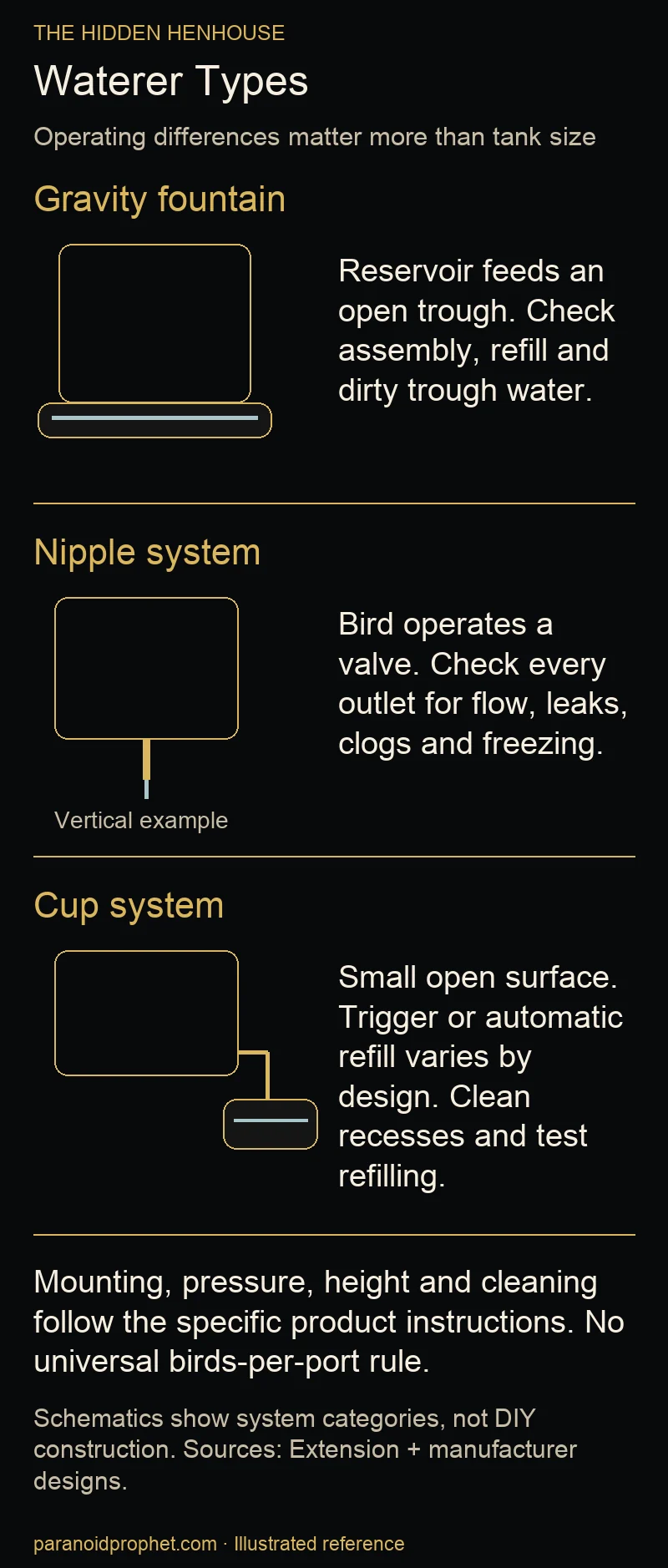
Gravity fountains
A reservoir feeds a shallow drinking trough as water is used. These fountains are straightforward to inspect, but exposed trough water can collect bedding, feed and manure. Seals, openings and assembly must work correctly to maintain the intended water level.
Choose a fountain that comes apart for cleaning and sits level on a stable base. A crooked or incorrectly assembled unit can spill or fail to supply water. Inspect the trough after refilling rather than assuming an upright reservoir is functioning.
Nipple systems
Birds operate a valve with the beak to release water. A closed reservoir can reduce open-water contamination, but valves can clog, leak or freeze. Birds must learn to operate the particular design; watch them obtain water before making it their only source.
Follow the manufacturer’s mounting direction, water-pressure requirements and height instructions. Horizontal and vertical nipples are not interchangeable installation patterns. A drip beneath a valve does not prove every bird is receiving enough water.
Cup systems
Cups provide a small drinking surface. Some refill through a bird-operated trigger; others use a float or another automatic mechanism. Read the actual product instructions. A cup that looks wet may have an obstructed refill mechanism or a dirty base.
Check every cup, clean the recesses and confirm refilling under normal use. Small cups are not maintenance-free simply because the supply tank is closed.
Open bowls and buckets
An appropriately sized, stable, shallow drinking vessel can serve as a backup for adult birds. An ordinary deep bucket is not automatically a poultry-safe waterer. Consider tipping, birds entering the container, contamination and whether the smallest bird can reach the water without climbing in.
Chicks need age-appropriate equipment with particular attention to drowning and chilling hazards. Do not copy an adult setup into a brooder; use the baby-chick guide for that separate stage.
Capacity and Drinking Access Are Different
A large tank behind one guarded cup can supply plenty of water but too little usable access. Evaluate the flock at busy times. If timid birds wait, retreat or cannot use the station, add access in a different location rather than merely buying a bigger reservoir.
Virginia’s housing guide gives linear drinking-space guidance for larger birds. That measurement applies to the accessible edge of an open trough. It cannot be converted directly into a guaranteed number of birds per proprietary nipple or cup.
Use the manufacturer’s capacity and access guidance as a starting point, then verify actual use. Our editorial preference is a second independently supplied station when practical, especially where a failure or bullying would otherwise leave no alternative. Two outlets on the same failed reservoir are not independent backup supplies.
Height, Placement and Clean Footing
Raise an open drinking edge enough to reduce litter kicked into it while keeping comfortable access for the smallest birds. Published height advice differs: Maryland describes a trough edge below the back, while Virginia uses roughly back height. Equipment shape, bird size and drinking posture matter more than copying one fixed height.
For nipples, follow the design’s specific instructions instead of applying open-trough height guidance. Recheck after growing birds change size or after an older hen loses mobility. The station must work for the flock present today.
Choose shade, a stable level surface and cleanable footing. Keep water away from droppings beneath roosts. Leave room to approach and retreat without being trapped against a wall. Avoid putting the only station where a shut door separates confined birds from it.
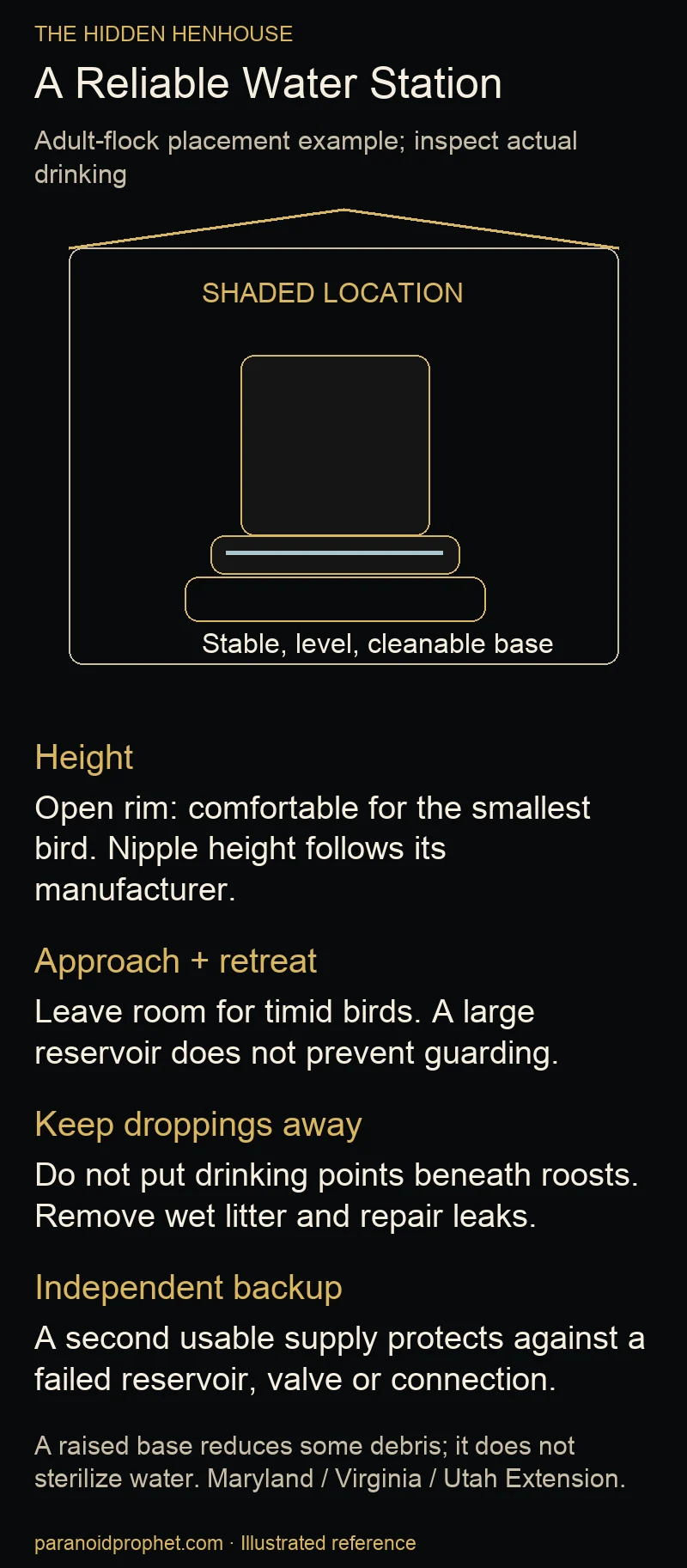
Elevation reduces some contamination; it does not sterilize the station or make it immune to rodents. Check for spills, wet litter and slippery footing. The feeder-placement guide addresses the neighboring feed station without treating the two systems as mechanically identical.
A Daily Water Check That Tests the System
- Look: confirm adequate supply, clean drinking surfaces and no obvious contamination.
- Test: inspect trough refill or activate each valve according to its instructions.
- Watch: see birds actually drink, including smaller and timid flockmates.
- Check below: identify leaks, soft footing or damp litter.
- Prepare: leave a clean, usable backup and refill before the supply becomes marginal.
Increase inspections when conditions warrant it. A calendar reminder cannot establish that a waterer survived today’s heat, freezing night or overturned stand. Someone caring for the flock while you are away needs to know how to check flow, not only where the hose is.
Cleaning, Biofilm and Water Quality
Empty contaminated water, disassemble accessible parts as directed, and physically remove slime and debris. Clean rims, cup recesses, seals and valve components. Refill with clean water and confirm operation after reassembly. Keeping a second unit available makes cleaning less likely to interrupt drinking access.
Visible slime deserves attention, but appearance alone does not establish microbiological quality. Georgia Extension describes biofilm and mineral deposits obstructing drinkers, along with contamination and leakage concerns. Its commercial water-line treatment protocols should not be copied casually into a household bucket.
If using a cleaning or sanitizing product, follow the label for the actual material, contact time and rinsing requirements. Keep birds supplied separately during maintenance. Do not add household bleach, vinegar, medication or an improvised disinfectant mixture to their drinking supply. Water treatment needs a defined problem and qualified, label-based guidance.
For an uncertain well or recurring quality problem, ask Extension or a qualified laboratory about testing before choosing treatment. A clear-looking water sample is not a complete test. Use the coop-cleaning guide for the wider cleaning routine.
Leaks and Wet Bedding
A persistent damp patch can mean an incorrect height, damaged seal, stuck valve, unsuitable pressure or a bird repeatedly spilling water. Repair the cause and remove wet material. Adding dry bedding over an ongoing leak hides the problem.
Georgia’s primer connects faulty drinkers with wet litter and ammonia problems. Move a station only when the new position preserves dependable access. Do not solve indoor dampness by putting all water outside a coop where the flock may remain confined.
Summer Water Care
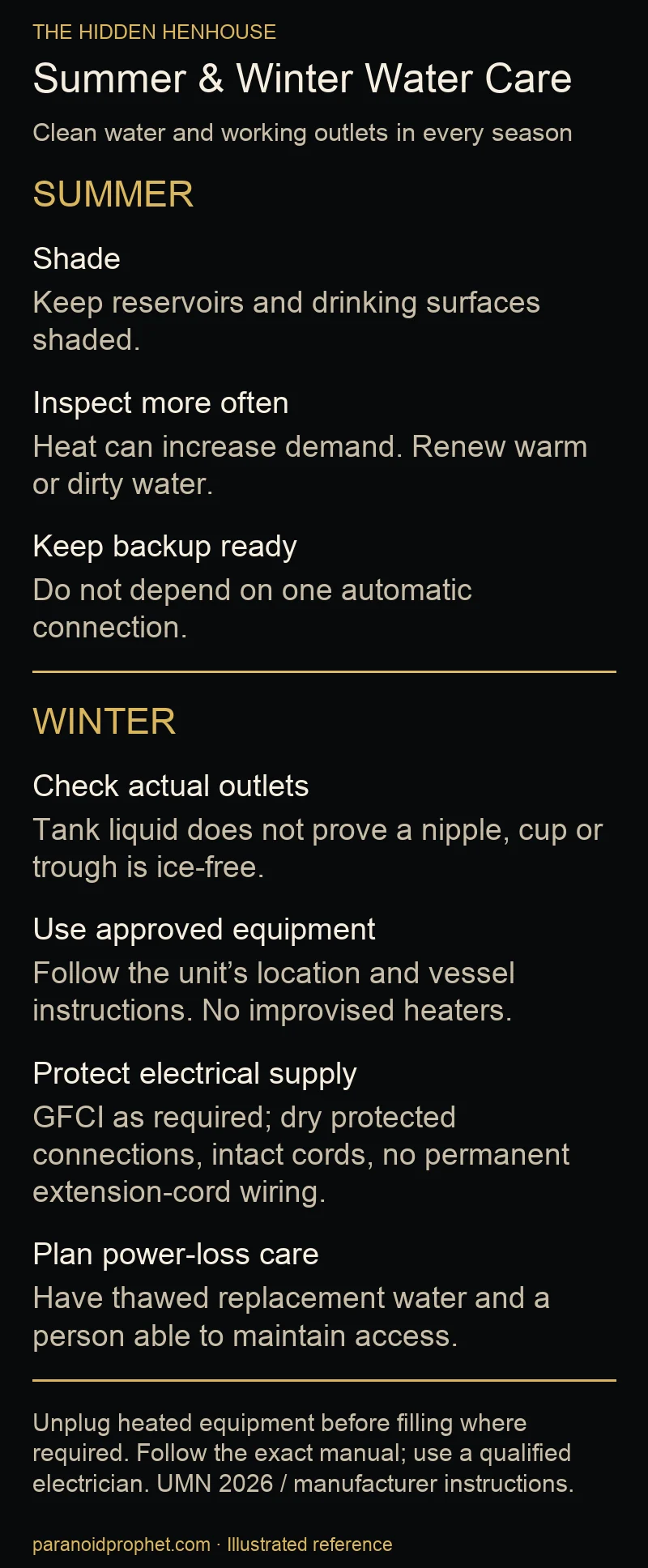
Shade reservoirs and drinking surfaces, renew warm or dirty water, and check supply more often as demand rises. Keep a backup available rather than relying on a single automated connection. A tank that lasts in mild weather may not last through a hot afternoon.
Complete feed and reliable water belong together. Water supports cooling, but it does not replace shade, ventilation or prompt action for a distressed bird. The heat-stress guide explains warning signs and escalation. This guide does not prescribe homemade electrolyte recipes or promise that an additive prevents heat injury.
Winter Water and Electrical Safety
Check the actual drinking edge, cup or valve for ice. Liquid water inside a tank is no help when the outlet is frozen. Without heated equipment, provide regular replacements often enough to maintain access, with a thawed spare ready.
Use purpose-built heated poultry equipment in the location and with the vessel specified by its manufacturer. An indoor-only unit should not be treated as an outdoor appliance. Do not improvise an exposed heater, alter a product or place electrical equipment against combustible litter.
Minnesota’s 2026-reviewed winter guidance emphasizes protecting cords from birds, water and bedding and obtaining professional electrical help. Extension cords are not permanent coop wiring.
For a concrete manufacturer example, the Miller HPW33 instructions linked on its product page require a properly installed GFCI outlet, an intact cord and disconnection before filling. They also specify an indoor, hard, level placement. Those instructions establish that model’s use, not a universal installation approval for every heated waterer.
Keep connections dry and protected, follow all product instructions, and have a qualified electrician address the permanent supply and applicable requirements. Do not operate damaged equipment. Plan for power loss: a clean nonheated backup and a person able to replace freezing water are still necessary.
The winterizing guide covers the rest of the enclosure. Electrical convenience should never outrank fire and shock safety.
When Chickens and Ducks Share a Yard
Our household began with chickens and two ducks, so mixed-flock equipment is relevant here. That history is not proof that one waterer serves both species equally well.
Duck water needs and mess management require a separate design decision. Do not assume a chicken nipple system satisfies all duck requirements, or expose small chicks to a deep duck vessel. Use the mixed-flock guide for the species-specific context, while retaining clean, accessible chicken drinking points.
Frequently Asked Questions
Is a nipple system always cleaner?
A closed reservoir limits some open-water contamination, but valves, fittings and supply still need inspection and cleaning. Leaks and clogs can create different problems.
Can I leave a large tank unchecked for several days?
No. Stored volume does not confirm flow, cleanliness or access. Arrange daily care and additional checks when weather or equipment calls for them.
Should I add a tonic to every refill?
No routine tonic is required by this guide. Begin with reliable clean water. Specific treatment should follow qualified guidance and the appropriate label.
What if one bird is not drinking?
Check access and equipment, but do not assume the cause is mechanical. A weak or unwell bird needs prompt veterinary assessment. Keep new arrivals’ equipment managed separately under the introduction and biosecurity guide.
Reliability Is a Form of Care
Water care is repetitive, rarely glamorous and impossible to postpone safely just because the reservoir looks impressive. Stewardship here means noticing the blocked cup, the excluded hen and the forecast before they become an emergency.
Sources and Equipment Scope
Sources checked October 8, 2026. Equipment-specific instructions take precedence for installation and cleaning. No universal daily water quantity or chemical-treatment recipe is prescribed.
- Utah State: Backyard Chicken Basics; fresh water, access and equipment selection.
- Maryland: Housing Requirements, updated 2022; trough height and access.
- Virginia: Small-Scale Poultry Housing, 2023; open-drinker guidance.
- Georgia: Poultry Drinking Water Primer, revised 2015; commercial context qualified above.
- Minnesota: Cold-Weather Chicken Care, reviewed 2026; water and electrical precautions.
- Miller: HPW33 Product and Instructions; model-specific electrical and placement requirements.