
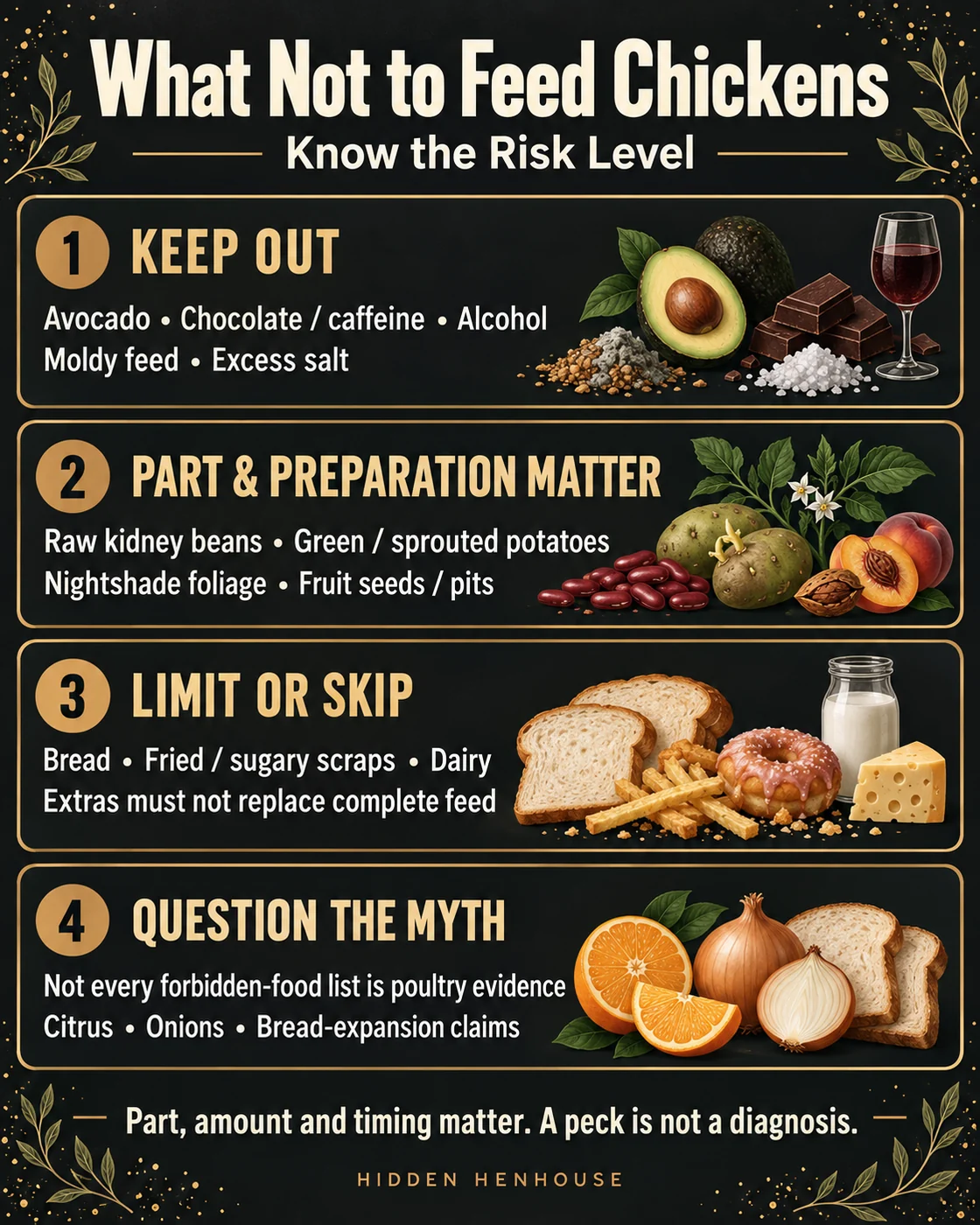
What not to feed chickens: keep avocado, chocolate and caffeine, alcohol, moldy feed, and excessively salty foods out of the flock’s diet. Avoid raw or undercooked kidney beans, green or sprouted potatoes, and nightshade plant foliage. Other foods on internet “toxic” lists need a closer look: the plant part, preparation, amount, and quality of poultry evidence matter.
A chicken’s enthusiasm for a scrap tells you very little about whether you should offer it. For a household flock, the useful habit is to sort food before it reaches the run. That protects the birds without turning every stray nibble into a poisoning diagnosis.
Already dealing with an exposure? Go straight to what to do if your chicken ate something risky. A known serious hazard or a sick bird warrants prompt veterinary help.
GUIDED ARTICLE EXPERIENCE
What Not to Feed Chickens: Toxic Foods, Risks & Common Myths
Read along as the narration moves through the article.
Private device narration · No hosted audio or tracking
CONTINUE GUIDED TOUR
Continue where you left off.
GUIDED TOUR COMPLETE
You have reached the end of this study.
Study record saved on this device.
GUIDED TOUR
What Not to Feed Chickens: Toxic Foods, Risks & Common Myths
Narrator: Paranoid Prophet Recommended Voice Native device narration
Prepare to follow the article as it is narrated.
VOICE & TOUR OPTIONS
Voice & Listening
NARRATOR
Finding a narrator…
Checking the best narrator available on this device.
Restores the best curated narrator available on this device.
Narrator choices are curated for clear, long-form listening on this device.
Screen-awake support will be checked when narration starts.
CHOOSE A NARRATOR
Curated for this device
Choose a verified narrator for this browser, or use System Narrator. Automatic mode uses the best reliable route exposed by this device; your chosen narrator is preserved even if this device needs a temporary fallback.
Preparing the guided article experience…
RESUME GUIDED TOUR?
Continue where you left off.
GUIDED TOUR COMPLETE
You have reached the end of this study.
Article Guide11 sections
What not to feed chickens: quick-reference guide
This table separates feeding decisions from emergency judgments. “Keep out” means do not intentionally offer it; it does not mean every accidental peck has the same outcome. The sections below explain the evidence and its limits.
| Food or material | Feeding decision | Important distinction |
|---|---|---|
| Avocado; chocolate or caffeine; alcohol | Keep out | Recognized hazards; exposure severity varies. |
| Moldy feed or spoiled scraps | Discard; prevent access | Some molds produce toxins. Scraping off mold is not a safety test. |
| Very salty snacks or brine | Do not offer | Excess salt can poison poultry; normal feed sodium is necessary. |
| Raw, dried or undercooked kidney beans | Do not offer | Proper cooking matters; soaking alone is insufficient. |
| Green/sprouted potatoes; nightshade foliage | Do not offer | Different from plain cooked, non-green potato or ripe tomato fruit. |
| Fruit seeds and stone-fruit pits | Remove before offering fruit | Seed type, damage and quantity matter; fruit flesh is a different exposure. |
| Bread, fried food and sugary scraps | Limit or skip | Mainly diet-quality concerns, unless moldy or containing hazardous ingredients. |
| Citrus, onions and dairy | No need to make them routine treats | Blanket poisoning claims outrun the poultry evidence. |
| Raw meat; unknown plants or mushrooms | Do not intentionally offer | Food hygiene or uncertain identity, rather than one universal toxin. |
Foods to keep out of the flock’s diet
Avocado: skip the whole fruit and the plant
Avocado contains persin. The Merck Veterinary Manual’s avocado guidance identifies fruit, seeds, stems and leaves as potential sources, with leaves the most toxic part. Chickens are susceptible, although they are more resistant than some caged birds.
That distinction does not make the flesh a sensible treat. Keep avocado waste and pruning debris inaccessible. After ingestion, record the part and likely amount for a veterinarian; do not use a dose reported for a parrot, goat or mouse as a chicken threshold.
Chocolate, caffeine and alcohol
Chocolate contains theobromine and often caffeine, compounds that can affect a bird’s heart and nervous system. Keep cocoa, chocolate desserts, coffee grounds, caffeinated drinks and energy products away from chickens. A 2025 review of avian toxicoses supports this warning, but much of the clinical evidence concerns birds other than chickens. It does not establish a universal “one crumb kills a hen” rule.
Do not offer beer, wine, spirits or alcohol-containing leftovers. Ethanol can depress the nervous system; substantial exposure can be serious. Neither alcohol nor caffeine has a useful role in backyard feeding.
Excess salt is a genuine hazard
Salt belongs in a properly formulated ration. The concern is an excessive exposure, such as concentrated brine, heavily salted scraps, or a feed-mixing error. Merck documents salt poisoning in poultry and greater vulnerability in young chicks. Skip salty snack food and keep clean water available. A suspected substantial exposure deserves a veterinary call rather than a guessed home correction.
When the plant part or preparation changes the risk
Raw and undercooked beans
Do not scatter dried kidney beans into the run or offer them raw, merely soaked, or undercooked. Kidney beans contain phytohaemagglutinin, a lectin. The FDA’s natural-toxin guidance distinguishes raw beans from properly cooked beans; soaking alone is not adequate preparation.
Poultry Extension explains the digestive effects of lectins and the importance of moist heat. A few plain, fully cooked beans can fit the limited-treat category. Canned beans should be plain and rinsed, without salty sauce or seasoning.
This warning does not mean every legume is interchangeable. Extension’s legume guidance describes different antinutritional factors in different species. Human kidney-bean poisoning counts should not be presented as a measured lethal dose for chickens.
Potatoes, tomatoes and eggplant
Discard green or sprouted potatoes from the treat pile, including green peelings. Choose only small portions of plain cooked, non-green potato if you offer potato at all. Cooking is not a dependable rescue for a suspect tuber.
Ripe tomato fruit differs from tomato leaves, stems and unripe fruit. Ripening generally lowers tomatine. Keep plant foliage out and choose ripe fruit for occasional scraps.
Ordinary culinary eggplant fruit also differs from its foliage. Waiting until an eggplant is physiologically overripe is not a safety improvement. There is no need to make eggplant a regular treat, and cooking does not guarantee removal of its glycoalkaloids.
EFSA’s glycoalkaloid assessment distinguishes potato, tomato and eggplant compounds and notes insufficient data for a poultry acute reference dose. Avoid precise backyard safety thresholds. UC Davis poultry veterinarians recommend avoiding nightshade leaves, including potato, tomato, pepper and eggplant foliage.
Apple seeds and stone-fruit pits
Remove seeds and pits before offering small pieces of fruit. Some contain cyanogenic glycosides, which can release cyanide when the seed material is damaged. Quantity and the particular seed matter.
Merck’s plant toxicology reference describes this mechanism and notes that severe poisoning from ordinary fruit consumption is uncommon in the animals it discusses. That is broader animal evidence, not a chicken-specific safe-dose study. Do not turn it into either “one apple seed is fatal” or permission to feed piles of crushed kernels.
Moldy feed and spoiled scraps: do not try to salvage them
Moldy bread, damp grain and spoiled leftovers do not belong in the feeder. Certain molds make mycotoxins; not every mold produces the same toxin, and not every spoiled food is a mycotoxin exposure. Poultry can nevertheless suffer significant harm from contaminated feed.
Merck’s poultry guidance describes effects ranging from impaired performance to clinical disease, depending on the toxin and exposure. Diagnosis requires testing, not appearance alone. Removing contaminated feed is part of management.
As a practical precaution, do not scrape the visible patch off a loaf or blend a suspect bag into fresh feed. Stop using it, prevent access, and ask your feed supplier or veterinarian about assessment if birds have eaten it. Save the bag label and lot information.
Inspect feed for dampness, clumping, mold or an unusual smell. Store it dry and protected from rodents; do not top up a bin over old wet residue. Check for leaks and splashed water around feeders. The related guide to chicken feeder placement covers the physical setup; food safety still depends on inspection and cleanup.
Limited treats and claims that need more care
Citrus does not automatically block calcium
The blanket claim that citrus acidity inevitably causes thin eggshells is not supported by the poultry evidence reviewed here. In a controlled laying-hen study of dried orange pulp, some supplemented diets improved shell thickness. A formulated diet containing dried pulp is different from tossing in fresh oranges or lemon peel.
That research corrects an overstatement; it does not establish an unlimited fresh-citrus allowance. Citrus is unnecessary. If you offer a little clean orange flesh, count it among the extras, remove leftovers, and do not replace water with juice.
Onions: do not copy dog and cat warnings onto chickens
Allium toxicity in dogs and cats is not, by itself, proof that an onion scrap causes hemolytic anemia in a hen. A controlled broiler study of onion powder found no significant change in red-cell count, hemoglobin or packed cell volume at the tested low feed inclusions.
This does not establish a safe dose for raw onion, onion-heavy leftovers or concentrated supplements. Our conservative feeding recommendation is to skip them as routine treats. It is also reason to stop claiming every onion exposure is proven poultry poisoning.
Dairy, bread and rich leftovers
Dairy products differ in lactose, salt and fat. In a broiler trial of dietary whey, lower inclusions and a higher inclusion had different performance outcomes. “All dairy is poison” misses that distinction. Milk is not a water replacement, and ice cream or salty cheese has no useful place as a routine flock treat.
Plain bread is mainly a limited-nutrition choice. Oklahoma State’s small-flock feeding advice includes bread among occasional scraps while warning about diet dilution. The automatic “bread expands and blocks the crop” claim was not established by the authoritative evidence reviewed. This is not a promise that crop problems cannot occur. A persistently enlarged crop or an unwell bird needs assessment.
Fried foods, sugary desserts and snack leftovers are easy to skip. They can crowd out a balanced ration, and mixed dishes may conceal chocolate, alcohol, heavy salt or other unsuitable ingredients. Read the ingredients rather than classifying a whole plate by its name.
Raw meat is a hygiene issue, not proof that chickens are herbivores
Chickens are omnivores. The reason to avoid intentionally offering raw or spoiled meat is food hygiene. An FDA study found harmful bacteria in raw dog and cat food. That supports caution around raw animal products and contaminated surfaces; it does not measure the likelihood that a chicken eating one raw scrap will become ill.
For a simple household rule, skip raw meat and leftovers of doubtful freshness. If offering meat scraps where permitted, use small pieces of plain, fully cooked, fresh food and remove what is left. Treat scraps as optional; complete poultry feed supplies the nutritional foundation.
Yard hazards: check more than the kitchen bowl
Keep nightshade foliage and rhubarb leaves out of garden scraps. Do not assume a bird will reliably avoid a harmful plant, especially when clippings are dumped into a confined run.
Foxglove and oleander are examples of plants with recognized toxic compounds in veterinary plant guidance. Much ornamental-plant evidence concerns other animals, so a generic plant list should not become a catalogue of precise chicken symptoms or lethal leaf counts. Identify the plant and keep suspect clippings inaccessible.
Do not intentionally offer unidentified wild mushrooms. Some species contain dangerous toxins; the warning is about uncertain identification, not a claim that every mushroom is poisonous. Photograph and save a sample safely for expert identification if an exposure occurs.
Also check for rodent bait, pesticide spills and treated seed. These are documented concerns in poultry toxicology guidance. Save the product label if birds may have accessed it. A bird pecking at grain-like material does not make that material feed.
My chicken already ate something risky — what now?
Breathing difficulty, collapse, seizures, tremors or marked weakness require urgent veterinary help. Call promptly after a known serious toxic exposure even if the bird looks normal. Do not wait for symptoms to prove that the exposure matters.
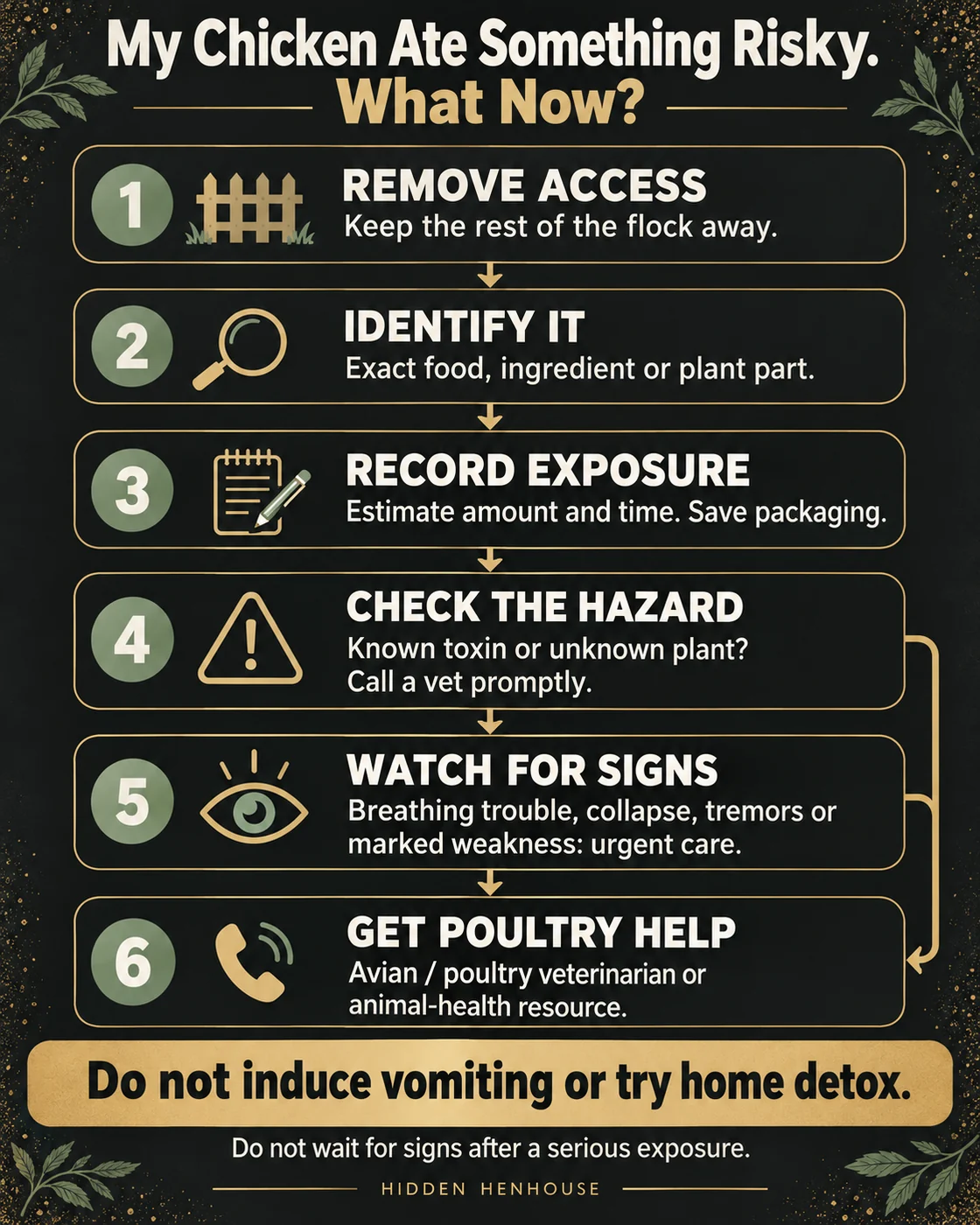
- Remove access. Keep the rest of the flock away from the food, plant, feed bag or spill.
- Identify exactly what was eaten. Include the ingredient, plant species and part, whether it was raw or cooked, and any mold, salt or chemical contamination.
- Record amount and timing. Estimate honestly; “unknown” is more useful than a made-up quantity. Note how many birds could have eaten it. Keep packaging, photographs and a sample when safe.
- Check the actual hazard. A bite of plain bread and access to rodent bait call for different responses. For a known toxin, an unidentified suspect plant, or a substantial/uncertain exposure, contact a poultry or avian veterinarian promptly.
- Observe and report. Note breathing, alertness, ability to stand, appetite and abnormal movements. These signs are not specific enough to diagnose poisoning at home. Tell the vet about other affected birds.
- Get appropriate help. Call an avian/poultry veterinarian or an animal emergency service that treats birds. If you cannot locate one, your Extension office or state animal-health office may help find poultry resources; they are not substitutes for urgent treatment.
Do not induce vomiting, turn the bird upside down, flush its crop, force fluids, or give charcoal, oil, salt or another home “detox” unless a veterinarian directs the specific treatment. Do not let internet remedies delay the call. This guide helps organize an exposure report; it cannot diagnose the bird or prescribe treatment.
Build the diet around complete feed
Use a complete ration intended for the birds’ age and production stage, with fresh water available. Scratch, scraps and treats are extras. Oklahoma State Extension recommends no more than 10 percent of the daily diet as scratch, grains and kitchen scraps. Treat that as a management ceiling, not a target or a guarantee that any food below it is safe.
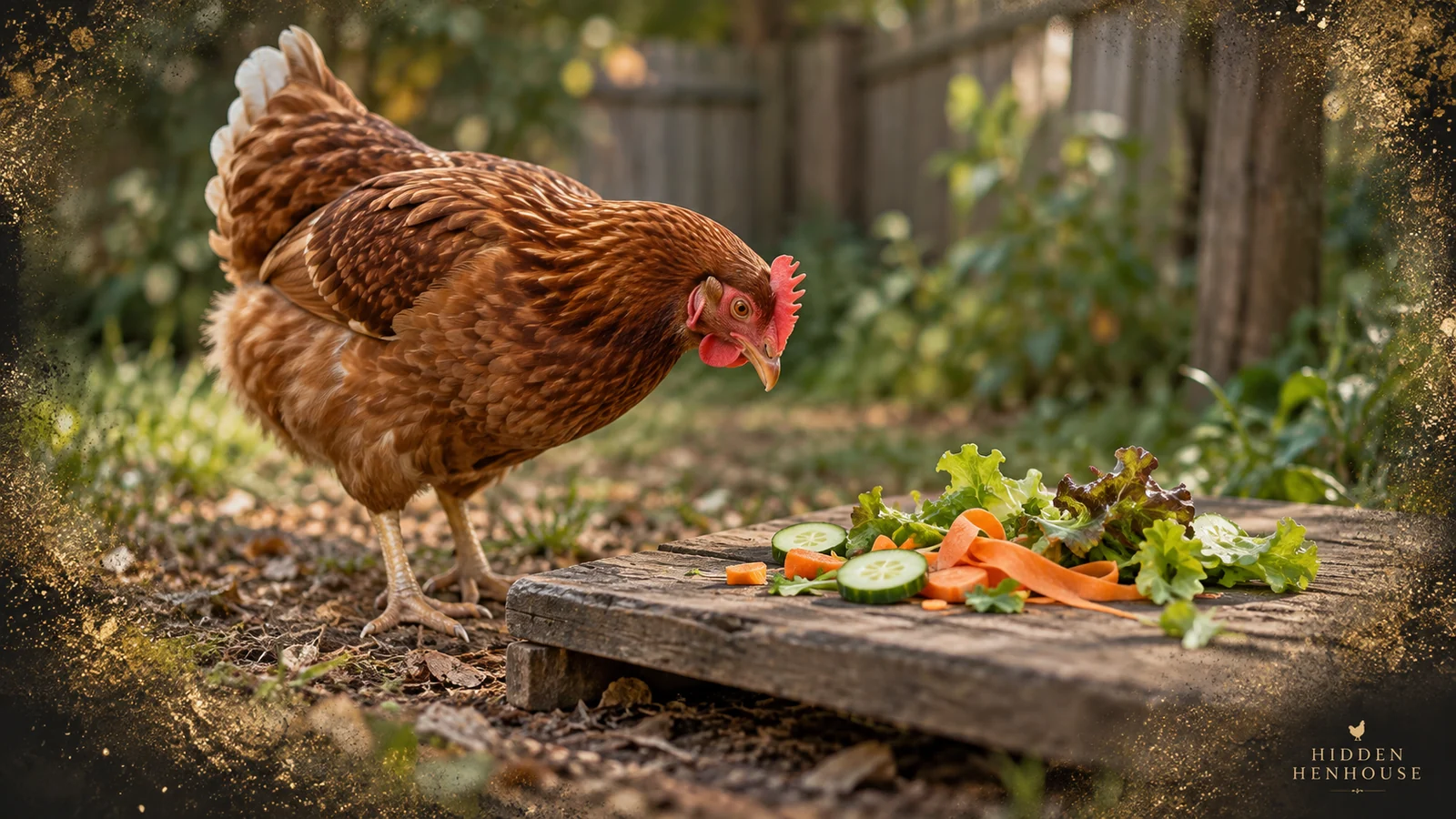
For day-to-day decisions, a small bowl of clean, familiar scraps is easier to manage than a bucket of mixed leftovers. Check ingredients, cut suitable food into manageable pieces, and remove uneaten food. If several household members offer treats, agree on one total allowance rather than several separate “small” portions.
Keep the regular feeder accessible to quieter birds as well as pushy ones. A flock is not well fed simply because food was put somewhere in the run. When planning a manageable flock, our guide to how many chickens to start with helps connect flock size to the care you can sustain.
FAQ: common chicken-feeding questions
Can chickens eat avocado or chocolate?
Do not intentionally offer either. After an exposure, the amount and substance matter; contact a poultry veterinarian for assessment rather than relying on a universal lethal-dose claim.
Can chickens eat tomatoes and potatoes?
Keep nightshade foliage and green/sprouted potatoes out. Small portions of ripe tomato fruit or plain cooked, non-green potato are different feeding choices. They remain extras, not a ration.
Are citrus, onions and dairy all toxic?
The evidence does not support treating them as one uniform poisoning category. Preparation and amount matter, and controlled feed trials are not unrestricted scrap-feeding instructions. None needs to be a routine treat.
Can chickens eat bread?
A little plain, mold-free bread can be an occasional extra. It does not replace complete feed. Moldy bread or bread containing hazardous ingredients is a different problem.
Should I give a home remedy after a risky meal?
No improvised detox. Remove access, identify the exposure, record the amount and time, and seek appropriate poultry help. Serious exposure or concerning signs should not wait.
Continue Caring for Your Flock
- Chicken feeder placement — review access, position and cleanup around the feeder.
- How many chickens to start with — plan a flock you can care for consistently.
Sources & Poultry Guidance
The links beside each claim show what supports it. Veterinary poultry guidance carries more weight here than an unsourced forbidden-food list. Trials of a processed ingredient in a formulated ration help correct sweeping claims; they do not establish safe household doses.
- UC Davis: Feeding Your Flock — veterinary backyard feeding guidance.
- Merck: Avocado toxicosis; poultry mycotoxicoses; poultry poisonings — hazards and clinical context.
- Avian toxicoses review, 2025 — broader bird evidence, with species limitations.
- Poultry Extension: Lectins and legumes in poultry feed; FDA: Natural toxins — preparation and ingredient distinctions.
- EFSA: Glycoalkaloids in food and feed, 2020 — plant chemistry and limits of animal risk assessment.
- Controlled poultry trials: dried orange pulp, 2023; onion powder, 2026; whey, 2020. These studied specific diets and birds.
- Merck: Houseplants and ornamentals — broader animal toxicology, not a chicken dose chart.
- FDA: Raw-food contamination study — dog/cat food testing supporting a hygiene precaution.
- Oklahoma State: Backyard Flock Production and small-flock feeding guidance — complete feed and limited scraps.
For us, Christian stewardship includes the ordinary work of checking a feed bag, sorting scraps and admitting when we need qualified help. The birds entrusted to our care deserve a dependable diet and attentive care. Saving a few leftovers is never more important than that responsibility.