
GUIDED ARTICLE EXPERIENCE
How Did Paul Die? Evidence for Paul’s Martyrdom in Rome
Read along as the narration moves through the article.
Private device narration · No hosted audio or tracking
CONTINUE GUIDED TOUR
Continue where you left off.
GUIDED TOUR COMPLETE
You have reached the end of this study.
Study record saved on this device.
GUIDED TOUR
How Did Paul Die? Evidence for Paul’s Martyrdom in Rome
Narrator: Paranoid Prophet Recommended Voice Native device narration
Prepare to follow the article as it is narrated.
VOICE & TOUR OPTIONS
Voice & Listening
NARRATOR
Finding a narrator…
Checking the best narrator available on this device.
Restores the best curated narrator available on this device.
Narrator choices are curated for clear, long-form listening on this device.
Screen-awake support will be checked when narration starts.
CHOOSE A NARRATOR
Curated for this device
Choose a verified narrator for this browser, or use System Narrator. Automatic mode uses the best reliable route exposed by this device; your chosen narrator is preserved even if this device needs a temporary fallback.
Preparing the guided article experience…
RESUME GUIDED TOUR?
Continue where you left off.
GUIDED TOUR COMPLETE
You have reached the end of this study.
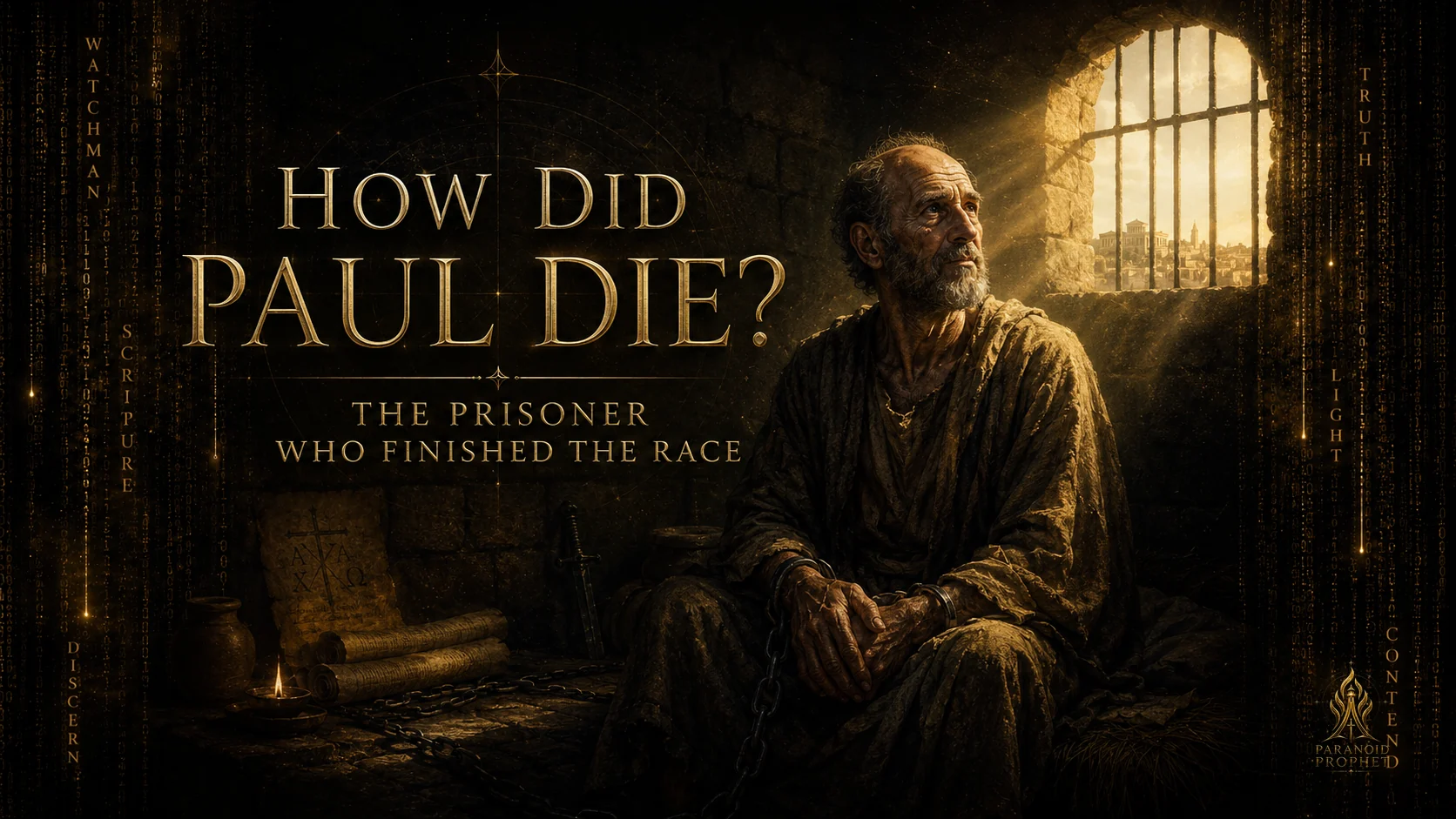
Paul is traditionally remembered as having been martyred in Rome under Nero, often described as beheaded. The Bible does not narrate Paul’s death scene, and a careful Christian article should not pretend that it does. But Scripture gives a powerful foundation for understanding why the later martyrdom tradition matters: Paul was a former persecutor, a preacher of the risen Christ, a repeated sufferer for the gospel, a prisoner taken to Rome, and a man ready to die for the name of the Lord Jesus.
So how did Paul die? The most responsible answer is this: Paul was remembered from an early period as a martyr, the dominant Christian tradition places that martyrdom in Rome under Nero, and the traditional mode of death is beheading. The broader martyrdom claim is earlier and stronger than the specific beheading detail, though the beheading tradition is early, plausible, and deeply rooted in Christian memory.
That distinction matters for the wider study of the martyrdom of Jesus’ disciples. A serious Christian case should not say, “The Bible says Paul was beheaded.” It does not. But it should also not dismiss early evidence outside the Bible as worthless simply because Acts stops before Paul’s execution. The better approach is to keep each source in its proper lane: Scripture first, earliest post-New Testament evidence second, later Roman tradition third, and apologetic synthesis last.
The strongest claim is careful and still substantial. The New Testament gives us Paul’s conversion, suffering, imprisonment, Roman custody, and final-witness posture. The earliest post-New Testament witness remembers Paul as a martyr. Later Roman church tradition identifies Rome under Nero as the dominant setting and beheading as the traditional mode of death.
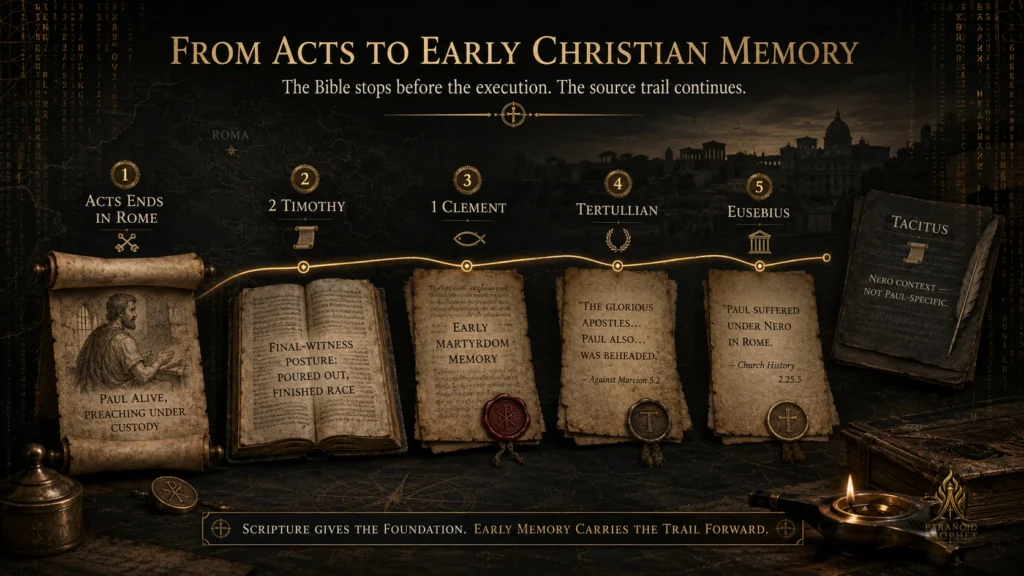
Source discipline: Scripture does not narrate Paul’s execution. Acts ends with Paul alive in Rome, still preaching Christ. Paul’s letters and Acts show his conversion, suffering, imprisonment, and willingness to die. 1 Clement gives early post-New Testament memory of Paul’s martyrdom. Tertullian gives early explicit witness to the beheading tradition. Eusebius preserves the Roman/Neronian tradition. Tacitus gives Nero persecution context, but he does not mention Paul’s death.
Article Guide16 sections
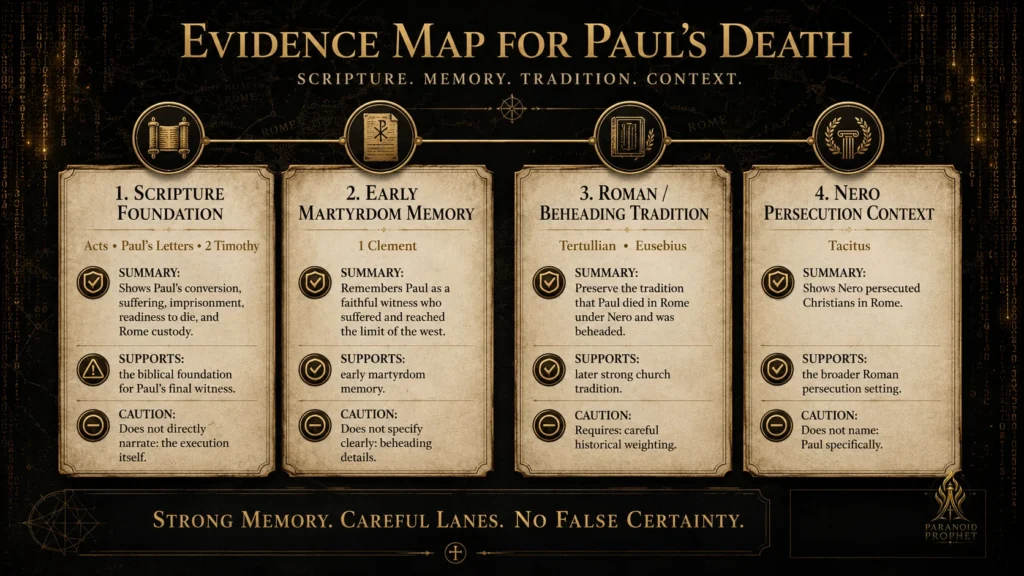
Evidence Map for Paul’s Death
Paul’s death is not one simple claim. It is a stack of claims with different levels of evidence. Some parts are directly grounded in Scripture. Some come from early Christian memory after the New Testament. Some are later but still historically important Roman tradition. A trustworthy article should not flatten those categories.
| Claim | Evidence strength | Source lane |
|---|---|---|
| Paul was a former persecutor turned preacher of Christ | Very strong | New Testament |
| Paul suffered repeatedly for Christ | Very strong | Paul’s letters and Acts |
| Paul reached Rome and preached there under custody | Very strong | Acts 28 |
| The Bible does not narrate Paul’s execution | Certain | Acts ends before his death |
| Paul was remembered early as a martyr | Strong | 1 Clement |
| Paul died in Rome under Nero | Strong later tradition | Tertullian, Eusebius, Roman church memory |
| Paul was beheaded | Early and plausible tradition | Tertullian and later tradition |
| The exact date, trial details, and execution scene | Less certain | Later reconstruction |
This evidence map keeps the article honest without making it weak. The Bible gives a strong foundation. The earliest Christian memory after the New Testament strengthens the martyrdom claim. Later Roman tradition gives more detail about Rome, Nero, and beheading. The goal is not to make every source say the same thing. The goal is to let each source speak clearly.
What the Bible Does and Does Not Say About Paul’s Death
The Bible does not record Paul’s execution. There is no verse that says, “Paul was beheaded in Rome.” There is no death scene in Acts. There is no biblical paragraph describing the final trial, the execution order, or the sword.
That silence should not be exaggerated. Acts does not give every later detail of every apostle’s life. The fact that Acts ends before Paul’s death does not mean the later martyrdom tradition is worthless. It means the article must distinguish between what Scripture teaches directly and what early Christian sources later remember.
Scripture still gives us a strong foundation. Paul was once a persecutor of the church. He became a preacher of the Christ he once opposed. He suffered repeatedly for that witness. He was ready to be imprisoned and even to die for the name of the Lord Jesus. He was eventually brought to Rome, where Acts leaves him preaching the kingdom of God and teaching about the Lord Jesus Christ with boldness.
That is not a thin biblical foundation. It is the foundation beneath the later martyrdom tradition.
Acts Ends with Paul Alive, Not Executed
Acts 28:30–31 ends with Paul living in Rome for two years at his own expense, welcoming all who came to him, proclaiming the kingdom of God, and teaching about the Lord Jesus Christ with all boldness and without hindrance.
That ending is remarkable. Paul is in Roman custody, but the word of God is not chained. The man who has been beaten, arrested, tried, shipwrecked, and transported to Rome is still preaching. Acts does not close with Paul’s blood. It closes with Paul’s witness.
This matters for source discipline. If someone asks, “Where does the Bible say Paul was beheaded?” the answer is simple: it does not. If someone asks, “Does the Bible prepare us for Paul’s martyrdom?” the answer is also clear: yes. Paul’s whole life after conversion is marked by suffering, witness, custody, and readiness to die for Christ.
Acts leaves Paul alive in Rome. The question of his death must therefore be answered from the earliest Christian memory after the New Testament, not from an execution scene inside Acts.
2 Timothy Gives Paul’s Final-Witness Posture
Within the canonical witness, 2 Timothy 4:6–8 gives Paul’s final-witness posture. Paul says he is already being poured out as a drink offering, that the time of his departure has come, and that he has fought the good fight, finished the race, and kept the faith.
This article receives 2 Timothy as canonical Scripture while recognizing that the historical reconstruction of Paul’s final days should not rest on this passage alone. The text does not narrate the execution itself. It does not say “beheaded.” But it does show Paul speaking as a man near the end, ready to meet the Lord after a life poured out in faithful service.
That is why 2 Timothy belongs in the article. It captures Paul’s biblical farewell posture. At the same time, it should not be forced to carry the whole historical argument for the exact manner of Paul’s death. The article can honor 2 Timothy as Scripture while still recognizing that 1 Clement, Tertullian, Eusebius, and Roman tradition answer different historical questions.
Paul’s final hope is not survival. His final hope is the Lord, the righteous Judge, who will award the crown of righteousness to all who have loved His appearing.
Paul the Persecutor Who Became a Resurrection Preacher
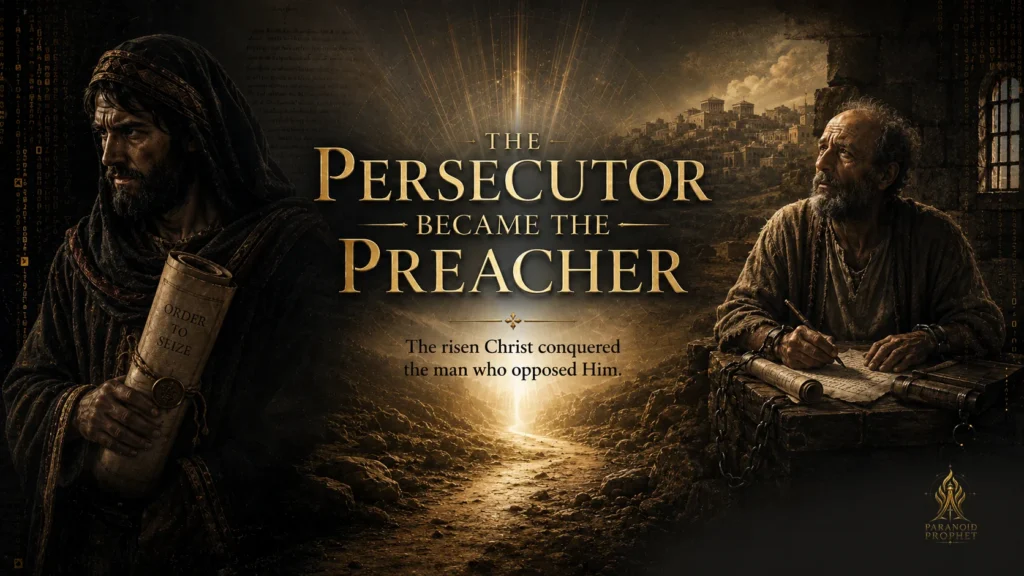
Paul’s martyrdom matters because Paul was not a convenient convert. He did not begin as a friendly religious seeker looking for a safer path. He began as an enemy of the church.
In Galatians 1:13–24, Paul reminds his readers that he once persecuted the church of God violently and tried to destroy it. He advanced in Judaism beyond many of his own age and was extremely zealous for the traditions of his fathers. Yet the same passage says the churches later heard that the man who once persecuted them was now preaching the faith he once tried to destroy.
That reversal is central. Paul did not merely change religious labels. The persecutor became a preacher. The man who tried to destroy the church became one of its most public witnesses. The one who resisted Christ’s people became a servant of Christ.
That reversal becomes even more striking when read beside Stephen’s death. Acts presents Saul as connected to the persecution that followed Stephen’s martyrdom, yet the same man later became one of the church’s boldest witnesses to the risen Christ.
Acts tells Paul’s conversion story more than once because his transformation matters for the spread of the gospel. In Acts 9:1–22, Saul is breathing threats and murder against the disciples of the Lord when the risen Jesus confronts him on the road to Damascus. The persecutor is stopped by the Lord he opposed.
Paul’s later suffering cannot be separated from that encounter. He did not suffer for an abstract religious idea. He suffered because the risen Christ claimed him, redirected him, and sent him to bear His name. The man who once brought pressure on Christians became a Christian under pressure.
That makes Paul’s later martyrdom memory apologetically important. Paul had every reason, humanly speaking, to avoid the path he took. Preaching Christ brought him conflict, beatings, imprisonment, danger, and eventually the tradition of death in Rome. His life is hard to reduce to comfort, status, or easy gain.
Paul Preached the Christ He Once Opposed
Paul’s own letters and Acts agree on this basic point: Paul’s life was radically redirected around Jesus. In 1 Corinthians 15:3–10, Paul includes himself among the witnesses to the risen Christ and says he was least of the apostles because he persecuted the church of God. Yet by the grace of God, he became what he was.
That is the center of the Paul story. Grace did not merely improve Paul’s personality. Grace conquered him. The risen Christ did not become a useful idea to Paul. Christ became his Lord.
Paul’s preaching was therefore not built on nostalgia for a dead teacher. It was built on the proclamation that Christ died for sins, was buried, was raised on the third day according to the Scriptures, and appeared to witnesses. Paul’s life was redirected by the resurrection proclamation he came to defend with his own suffering.
That is why Paul’s death, if rightly handled, belongs in the Jesus evidence cluster. The article is not about glorifying martyrdom for its own sake. It is about the former persecutor whose life and death were overtaken by the risen Christ.
Before later Christian sources remember Paul’s final death, Paul’s own letters already show a life repeatedly poured out under pressure. That testimony of suffering is where the next part of the case begins.
Paul’s Own Testimony of Suffering
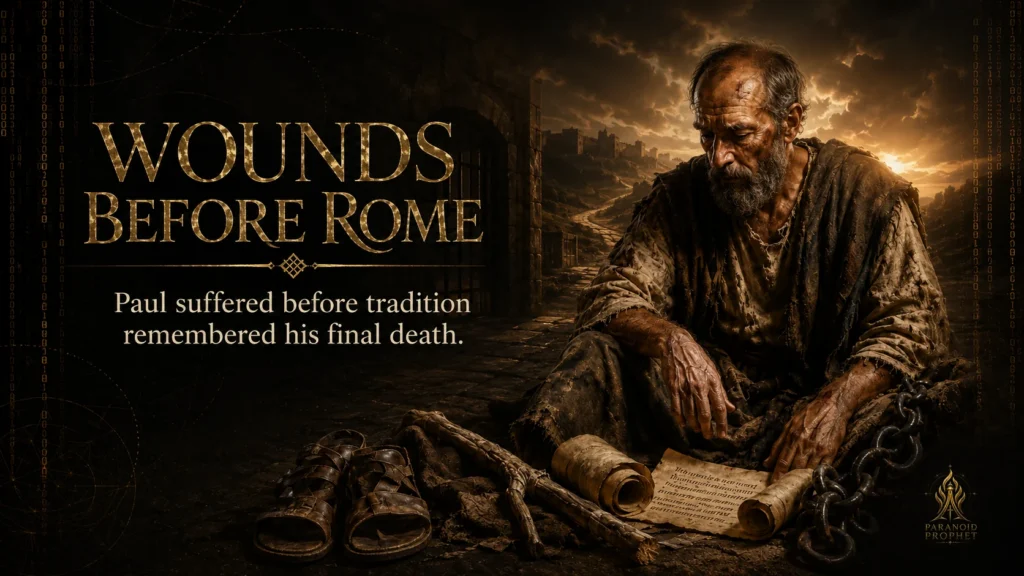
Before later Christian tradition remembers Paul’s final death, Paul’s own letters already show a life repeatedly poured out under pressure. This is one of the strongest parts of the case because it does not begin with later legend. It begins with Paul himself.
In 2 Corinthians 11:23–28, Paul describes far greater labors, far more imprisonments, countless beatings, and frequent brushes with death. He speaks of lashes, rods, stoning, shipwrecks, travel dangers, hunger, thirst, cold, exposure, and the daily pressure of concern for the churches.
That testimony matters. Paul’s suffering was not a heroic death scene invented after the fact to make him look impressive. Suffering was already part of his own public witness. He knew the cost of preaching Christ long before later Christian sources remembered his martyrdom in Rome.
This does not prove the exact details of his death. It does something more foundational. It shows that Paul’s ministry was not a path of comfort, status, or personal safety. The road from Damascus to Rome was marked by wounds, prisons, public opposition, danger, and endurance.
Paul’s suffering also shows that his witness was not shallow. He did not preach Christ only when it was safe. He did not continue only while it benefited him. He endured because the Lord Jesus was worth more than his own security.
Paul Was Ready to Die for the Name of Jesus
Acts also gives us Paul’s willingness to die. In Acts 21:13, when believers plead with him not to go to Jerusalem, Paul answers that he is ready not only to be imprisoned but even to die in Jerusalem for the name of the Lord Jesus.
That line is important because it shows Paul’s posture before the final Roman tradition ever enters the article. Paul was not surprised that witness to Christ could cost him his life. He had already settled the matter. The name of the Lord Jesus was worth chains. It was worth danger. It was worth death.
Again, this does not tell us how Paul died. It tells us what kind of man Paul had become. The former persecutor was now ready to suffer as one persecuted. The man who once opposed the church was now prepared to lose his life for the Lord of the church.
That posture matters when we later weigh the tradition of Paul’s martyrdom. The tradition does not fall onto a life that looks comfortable and unlikely to suffer. It fits the life Scripture already shows us: a servant of Christ repeatedly wounded, imprisoned, opposed, and ready to die.
Acts Leaves Paul Alive in Rome
Acts brings Paul to Rome, but it does not describe his death. That fact has already shaped the article’s source discipline, and it becomes especially important here because it marks the transition from biblical foundation to early Christian memory.
After trials, appeals, danger at sea, shipwreck, and eventual arrival in Rome, Paul is allowed to live under custody. Acts 28:16–31 shows him speaking with Jewish leaders, explaining his case, testifying about the kingdom of God, and trying to persuade them about Jesus from the Law of Moses and the Prophets.
The final image of Paul in Acts is not a sword. It is a witness. Paul is in Rome, but Rome has not silenced him. He is under restriction, but the message is not restricted. He is awaiting the next stage of his case, but he is still proclaiming Christ.
That ending creates the natural historical question: what happened after Acts?
Scripture does not answer that question with an execution scene. That does not mean the question cannot be studied. It means we now move carefully from the canonical foundation to the earliest Christian memory after the New Testament. Scripture has already given us Paul’s conversion, suffering, willingness to die, and Roman custody. The next major witness is 1 Clement.
The Earliest Post-New Testament Witness: 1 Clement
The first major witness after the New Testament is 1 Clement, a letter from the church of Rome to the church of Corinth. This source matters because it is early, Roman, and close enough to the apostolic generation to carry real historical weight.
1 Clement does not read like a sensational death legend. It is not trying to satisfy curiosity with a dramatic execution scene. It uses Peter and Paul as recent examples of endurance, jealousy, persecution, faithful witness, and suffering. That sober tone is part of its value.
This also makes 1 Clement important for the wider discussion of Peter’s martyrdom. The letter places Peter and Paul together as examples of faithful endurance, which helps explain why early Roman Christian memory became so important in later discussions of both apostles.
For Paul’s death, 1 Clement is one of the most important sources in the entire article. It does not answer every question. It does not say Paul was beheaded. But it gives strong early Christian memory that Paul suffered as a faithful witness and reached the end of his course as a martyr.
What 1 Clement Says About Paul
In chapter 5, 1 Clement points to Peter and Paul as examples from the writer’s own generation. Paul is described as a model of patient endurance. The letter remembers his imprisonments, forced flights, stoning, preaching in the east and west, instruction in righteousness, witness before rulers, and martyrdom.
That is a substantial witness. It remembers Paul not merely as a teacher, writer, or missionary, but as a suffering witness whose life ended in martyrdom. The source does not feel like a late medieval embellishment. It comes from early Roman Christian memory and treats Paul’s suffering as a known example for the churches.
1 Clement also says Paul reached “the extreme limit of the west.” Whether that phrase points specifically to Spain or more generally to the far western reach of Paul’s mission, the central point is clear: Paul’s witness extended widely and ended in martyrdom.
This is the strongest early post-New Testament evidence for Paul’s martyrdom. It fits the biblical portrait already established in the article. Paul the former persecutor became a preacher of Christ, suffered repeatedly, reached Rome under custody, and was ready to die for the name of the Lord Jesus.
The martyrdom tradition does not appear out of nowhere. Scripture gives us Paul’s life of costly witness. 1 Clement gives early Christian memory that this suffering witness reached its final end in martyrdom.
What 1 Clement Does Not Say
Just as important, 1 Clement does not say everything later tradition says. It does not say, “Paul was beheaded.” It does not name Nero in this section. It does not describe a final Roman trial, give an exact date, identify the execution location, or narrate the death scene.
That does not make 1 Clement weak. It makes it specific. It is strong evidence for an early memory of Paul’s martyrdom. It is not the source for the traditional beheading detail.
This distinction is crucial. If we use 1 Clement to support Paul’s martyrdom, we are on solid ground. If we use 1 Clement to prove Paul was beheaded, we are overclaiming. The beheading tradition has to be traced through later sources.
So the article can now say this carefully: Paul’s martyrdom is strongly supported by early Christian memory. The specific tradition that he was beheaded requires another step in the source trail. That step takes us into the Roman/Neronian tradition preserved by Tertullian, Eusebius, and later Christian memory.
Did Paul Die in Rome Under Nero?
Once 1 Clement establishes early martyrdom memory, the next question becomes more specific: where did Paul die, under whom, and by what means?
The New Testament brings Paul to Rome, but it does not narrate his death there. 1 Clement gives strong early memory that Paul’s witness ended in martyrdom, but it does not provide the full Roman execution account. Later Christian sources fill in the tradition more explicitly: Paul’s final witness was remembered as taking place in Rome under Nero.
That tradition should not be treated as equal to a biblical death scene. But it should also not be brushed aside. The Rome/Nero tradition is early enough, widespread enough, and consistent enough to carry real historical weight when used carefully.
The exact date is not certain, but if the Roman/Neronian tradition is correct, Paul’s death is usually placed in the mid-to-late AD 60s, before Nero’s death in AD 68. That date range should be stated cautiously. The sources give us a strong tradition, not a modern execution file with a timestamp.
Tertullian and the Roman Memory of Paul’s Death
Tertullian is a major source for the more specific tradition. Writing after 1 Clement, he speaks of the sufferings of the apostles and says plainly that Paul was beheaded. He also connects Nero with the first bloody persecution of the rising faith at Rome.
This is important because Tertullian gives us something 1 Clement does not: explicit witness to the beheading tradition. He is not our earliest witness to Paul’s martyrdom, but he is one of the key early church fathers for the traditional mode of death.
At the same time, Tertullian should be read in his proper lane. He is a Christian theologian and apologist, not a neutral Roman court clerk. He writes later than the events. His purpose is not to produce a modern forensic report. Still, his testimony matters because it shows that by his time the tradition of Paul’s Roman martyrdom and beheading was explicit and accepted in Christian memory.
So Tertullian strengthens the case in two ways. First, he supports the Roman martyrdom memory. Second, he gives early explicit witness to the beheading tradition. But because he is later than 1 Clement, we should not pretend the beheading detail has the same early profile as the broader martyrdom memory.
Eusebius and the Rome-Under-Nero Tradition
Eusebius, writing in the early fourth century, preserves the tradition that Paul was beheaded in Rome and that Peter was crucified under Nero. Eusebius is not an eyewitness to Paul’s death. He is writing centuries later. But he is valuable as a church historian preserving an established Christian memory about Peter and Paul in Rome.
This is exactly how Eusebius should be used: not as the first foundation, but as a later witness to an already established tradition. Scripture gives Paul’s suffering and Roman custody. 1 Clement gives early martyrdom memory. Tertullian makes the beheading tradition explicit. Eusebius preserves the Roman/Neronian framework and places Paul’s death in the wider memory of apostolic witness in Rome.
That creates a coherent source chain without flattening the evidence. The broad claim that Paul was remembered as a martyr appears early. The Roman/Neronian and beheading details become clearer in later Christian tradition. Eusebius helps preserve that tradition, but he should not be made to function as a first-century witness.
This distinction matters because serious historical writing does not ask one source to do every job. Eusebius is useful precisely when he is used for what he is: a later historian gathering and preserving earlier Christian memory, not a direct reporter standing at Paul’s execution.
Tacitus and the Neronian Persecution Context
Tacitus is useful, but only if we use him carefully. In Annals 15.44, Tacitus says Nero punished Christians in Rome after the great fire. He also says Christus, the source of the Christian name, had suffered the death penalty under Pontius Pilate during the reign of Tiberius. This is an important non-Christian Roman source for Christians in Rome, Nero’s persecution, and the execution of Jesus under Roman authority.
But Tacitus does not mention Paul. He does not say Paul was executed. He does not say Paul was beheaded. He does not describe Paul’s trial, imprisonment, or death.
That distinction is not a weakness. It is honesty. Tacitus is a context witness, not a Paul witness. He shows that Christians were present in Rome and suffered under Nero. That makes the Christian tradition of Paul’s death in Rome under Nero historically plausible within the broader setting. But Tacitus is not a direct source for Paul’s martyrdom.
A weak article would say, “Tacitus confirms Paul’s execution.” A careful article says, “Tacitus confirms the Neronian persecution context, but he does not name Paul.” That kind of precision builds trust.
Was Paul Beheaded?
Paul is traditionally remembered as having been beheaded in Rome. That is the familiar answer, and it should not be dismissed. But it should be framed correctly: beheading is a strong early tradition, not a Bible-narrated event.
Acts ends with Paul alive in Rome. 1 Clement remembers Paul’s martyrdom but does not specify the mode. The explicit beheading tradition becomes clear in later sources, especially Tertullian and the wider Roman church memory preserved by later writers such as Eusebius.
Early Explicit Witness to the Beheading Tradition
In the source stack for this article, Tertullian is the key early church father giving explicit witness to Paul’s beheading. He says Paul was beheaded and connects Paul’s martyrdom with Rome. That makes Tertullian central for the traditional mode of death.
Some later early-Christian narrative tradition in the Acts of Paul stream gives additional story-shaped detail about Paul’s death. That material can show how the tradition developed, but because it is later and contains legendary elements, it should not become the foundation of the historical case. The foundation remains stronger when the sources are kept in order: Scripture, 1 Clement, Tertullian, Eusebius, Tacitus as context, and later narrative tradition last.
This does not mean Tertullian carries the entire case for Paul’s martyrdom. He does not. The broader martyrdom memory is already present in 1 Clement. Tertullian adds specificity. He helps answer not only, “Was Paul remembered as a martyr?” but also, “How did later early Christian tradition say Paul died?”
The answer is that Paul was traditionally remembered as beheaded. That wording is strong enough. We do not need to say more than the sources allow.
Why Beheading Fits the Tradition
Beheading also fits the broader Roman tradition surrounding Paul. Acts presents Paul as a Roman citizen who appeals to Caesar. Later Christian memory remembers his final witness in Rome. Tertullian connects Paul’s death with Rome and gives explicit witness to the beheading tradition. Eusebius later preserves the same basic Roman/Neronian framework.
In that context, beheading is plausible as a Roman form of execution associated with citizenship status. But this should not be overstated. Roman citizenship helps explain why beheading makes sense within the tradition. It does not independently prove the death scene.
The article should not say, “Paul must have been beheaded because he was a Roman citizen.” The better language is: “Beheading fits the tradition and is explicitly attested early by Tertullian, but Scripture does not narrate it.”
This balance lets the tradition carry its proper weight. We do not treat it as a disposable legend. We also do not pretend it is written in Acts. The tradition is early, plausible, and important, but it remains tradition rather than direct biblical narration.
What We Should and Should Not Claim
We can say confidently that Paul was remembered very early as a martyr. We can say that later early Christian tradition strongly places his death in Rome under Nero. We can say that Tertullian explicitly remembers Paul as beheaded. We can say that Eusebius preserves the Rome-under-Nero and beheading tradition. We can say that Tacitus confirms a broader context of Christians suffering under Nero in Rome.
We should not say the Bible narrates Paul’s death. We should not say 1 Clement proves beheading. We should not say Tacitus mentions Paul. We should not pretend Eusebius is a first-century eyewitness. We should not claim to know the exact date, trial details, execution location, or final words unless we are clearly discussing later tradition.
The best summary is this: Paul was remembered from an early period as a martyr, the dominant Christian tradition places that martyrdom in Rome under Nero, and the traditional mode of death is beheading. That is a strong claim when each piece is assigned to the right source lane.
What Each Source Actually Proves
The source trail becomes much clearer when each witness is allowed to prove what it can prove and no more. This is the difference between serious historical writing and quote-stacking.
| Source | What it supports | What it does not prove |
|---|---|---|
| Acts | Paul’s conversion, suffering, appeal, custody, and presence in Rome | Paul’s execution or beheading |
| 2 Timothy | Paul’s canonical final-witness posture and readiness to depart | The mode of death |
| 1 Clement | Early post-New Testament memory of Paul’s martyrdom | Beheading, exact date, or execution scene |
| Tertullian | Early explicit witness to the beheading tradition and Roman martyrdom memory | First-century eyewitness detail |
| Eusebius | Later preservation of the Rome-under-Nero and beheading tradition | Direct eyewitness testimony |
| Tacitus | Nero’s persecution of Christians in Rome and the broader Roman context | Paul’s death, beheading, or trial |
| Acts of Paul / later martyrdom traditions | Later narrative development around Paul’s death | The primary historical foundation for the claim |
That evidence trail gives us a strong but disciplined conclusion. The Bible gives Paul’s suffering and Roman custody. 1 Clement gives early martyrdom memory. Tertullian gives explicit witness to the beheading tradition. Eusebius preserves the Rome/Nero framework. Tacitus gives Roman persecution context. Later traditions fill in narrative detail, but they should not be treated as the foundation.
Now the question becomes why Paul’s martyrdom matters for the larger case for Christ. Paul’s death is not important merely because of how he died, but because of who he had become: a former persecutor conquered by the risen Jesus, a preacher who suffered for the gospel, and a witness remembered as finishing his race in Rome.
Why Paul’s Martyrdom Matters for the Case for Christ
Paul’s death matters for the case for Christ, but not because martyrdom automatically proves truth. People can die sincerely for false beliefs. A careful Christian argument should not pretend otherwise.
Paul’s martyrdom matters because of the whole shape of his life. He began as a persecutor of the church. He became a preacher of the risen Christ. He suffered repeatedly for that proclamation. Acts brings him to Rome under custody, still preaching boldly. Then early Christian memory remembers him as finishing his course in martyrdom.
That is a serious cumulative case. Paul’s final witness is not floating alone. It stands at the end of a life already marked by conversion, mission, wounds, prison, and costly devotion to Jesus Christ.
It Shows the Costly Sincerity of a Former Persecutor
Paul’s martyrdom matters because the man remembered as dying for Christ was once trying to destroy Christ’s church. He was not born into a comfortable Christian identity. He did not gain an easy social advantage by becoming a Christian leader. His public allegiance to Jesus cost him dearly.
That does not prove every later detail about his death. It does show that Paul’s life cannot be reduced to convenience. He moved from power against the church to suffering with the church. He moved from persecuting believers to being persecuted as one of them.
The transformation matters. A former enemy of the church became one of the church’s boldest witnesses. That reversal is already powerful in Scripture. The later martyrdom memory gives that reversal a fitting final shape: Paul did not merely preach Christ when it was costly. He was remembered as dying for the Christ he once opposed.
Paul’s martyrdom is not the foundation of Christianity. The risen Christ is. Paul’s death matters because Paul’s life had already been conquered by that Christ.
It Shows Resurrection Proclamation Under Pressure
Paul did not suffer for vague spirituality. He did not build his mission around generic moral improvement or a private religious feeling. His preaching centered on the crucified and risen Jesus.
In 1 Corinthians 15:3–10, Paul summarizes the gospel he received and preached: Christ died for our sins according to the Scriptures, was buried, was raised on the third day according to the Scriptures, and appeared to witnesses. Paul includes himself as one who saw the risen Christ, while also confessing that he had persecuted the church of God.
That matters for Paul’s martyrdom. The later tradition does not remember Paul dying for a vague religious philosophy. It remembers him as a witness to the risen Jesus. His suffering, imprisonment, and final martyrdom memory are tied to resurrection proclamation.
Paul’s martyrdom does not replace the broader resurrection evidence for Jesus. It supports that wider case by showing that one of Christianity’s most important early witnesses proclaimed the risen Christ under real cost.
It Shows Paul Did Not Gain Earthly Comfort From His Message
Paul’s own testimony makes it difficult to imagine his ministry as a path of earthly comfort. Before later sources remember his final death, Paul’s own letters already show a life marked by beatings, imprisonments, dangers, hunger, exposure, and pressure for the churches.
That does not make Paul heroic in himself. It magnifies the worth of Christ. Paul endured because Christ was worth more than safety. He kept preaching because the gospel was worth more than comfort. He continued toward Rome because witness to Jesus mattered more than preserving his own ease.
In that sense, the martyrdom tradition fits the life Scripture already shows. It is not a random heroic ending attached to a comfortable career. It is the remembered final witness of a man whose whole ministry had already been poured out under pressure.
Paul did not gain the world by preaching Christ. He lost safety, status, freedom, and finally, according to early Christian memory, his life. That does not prove every claim automatically true, but it does expose the seriousness of Paul’s witness.
It Strengthens the Cumulative Case, But Does Not Prove Everything Alone
Paul’s martyrdom should be used carefully. The argument is not, “Paul died, therefore Christianity is proven.” That is too thin. The better argument is cumulative.
Paul was a persecutor who became a preacher. He claimed to have encountered the risen Christ. He proclaimed Christ’s death and resurrection. He suffered repeatedly for that witness. Acts brings him to Rome under custody, still preaching boldly. 1 Clement gives early post-New Testament memory of his martyrdom. Later tradition places that final witness in Rome under Nero and remembers the mode as beheading.
Paul’s witness also belongs beside other early figures, including James the brother of Jesus, whose death rests on a different source trail and must be weighed in its own lane. These articles are strongest when they do not flatten every tradition into the same level of certainty, but let each witness contribute what it can.
Put together, Paul’s story is not weak. It does not answer every historical question. It does not give us a modern execution file. But it strongly resists the idea that Paul’s message was invented for convenience, comfort, or power.
Paul’s death matters because Paul’s life had already been taken captive by the risen Christ.
Objections and Cautions
A strong article does not need to blur the evidence. Paul’s martyrdom tradition is serious, early, and important. But the details should still be handled in the right order. Scripture gives the foundation. 1 Clement gives early martyrdom memory. Tertullian gives explicit witness to the beheading tradition. Eusebius preserves the Rome-under-Nero and beheading tradition. Tacitus gives Nero persecution context, but does not name Paul.
Does the Bible Say Paul Was Beheaded?
No. The Bible does not say Paul was beheaded. Acts ends with Paul alive in Rome, preaching the kingdom of God and teaching about the Lord Jesus Christ with boldness. Scripture gives Paul’s conversion, suffering, imprisonment, readiness to die, and final-witness posture, but it does not narrate his execution.
That should be stated plainly. The article does not need to smuggle later tradition into the biblical text. Paul’s beheading is traditional, not Bible-narrated. That does not make the tradition worthless. It simply means the beheading claim belongs to the later source lane, especially Tertullian and later Roman Christian memory, not to Acts.
Does 1 Clement Prove Paul Was Beheaded?
No. 1 Clement is strong evidence for early memory of Paul’s martyrdom, but it does not specify beheading. It describes Paul’s endurance, wide preaching, suffering, and martyrdom, but it does not give the execution method.
That makes 1 Clement extremely valuable for the broader martyrdom claim, not for the specific sword tradition. The article should use 1 Clement to say Paul was remembered early as a martyr. It should not use 1 Clement to say Paul was beheaded.
Does Tacitus Mention Paul’s Death?
No. Tacitus does not mention Paul’s death. In Annals 15.44, Tacitus gives important Roman context for Nero punishing Christians in Rome after the great fire. He also connects the Christian movement to Christus, who had been executed under Pontius Pilate.
That is valuable background. It shows Christians were present in Rome and suffered under Nero. It helps explain why the Roman/Neronian setting for Paul’s death is historically plausible. But Tacitus does not name Paul, does not describe Paul’s trial, and does not report Paul’s beheading.
Tacitus is a context witness, not a Paul witness. A careful article should never say Tacitus confirms Paul’s execution. He confirms the persecution context, not the individual death of Paul.
Is the Beheading Tradition Too Late?
The beheading tradition is later than 1 Clement’s broad martyrdom memory, but that does not make it worthless. Tertullian is early and explicit that Paul was beheaded. Eusebius later preserves the wider memory that Paul was beheaded in Rome under Nero.
The safest way to say it is this: Paul’s martyrdom is supported by early post-New Testament memory, while the specific mode of beheading is an early and plausible tradition that becomes explicit later.
That is not a dismissal. It is a careful ranking of the evidence. The beheading tradition is not as early as 1 Clement’s martyrdom memory, but it is too early and too consistent to dismiss casually.
Does Paul’s Martyrdom Prove the Resurrection?
No, not by itself. Martyrdom shows sincerity, conviction, and cost. It does not automatically prove truth. People can die sincerely for false beliefs.
Paul’s case is stronger than generic martyrdom because of who Paul was and what he preached. He was a former persecutor who became a preacher of the risen Christ. He claimed to have encountered the risen Lord. He suffered repeatedly for the gospel. He reached Rome under custody. The early church remembered him as a martyr.
That strengthens the cumulative case. It does not replace the resurrection evidence. It supports it by showing that one of Christianity’s most important early witnesses proclaimed the risen Christ under real cost.
Conclusion: Paul Finished the Race
Paul’s death should not be handled as a detached curiosity about ancient execution. The deeper story is not the sword. The deeper story is Christ.
Paul once persecuted the church of God. He tried to destroy the faith he would later preach. Then the risen Jesus confronted him, claimed him, and sent him as a witness. Paul’s life was never the same.
Scripture shows Paul preaching Christ, suffering for Christ, enduring wounds and prisons, and moving toward Rome under custody. Acts ends with Paul still proclaiming the kingdom of God and teaching about the Lord Jesus Christ with boldness. 2 Timothy gives the canonical farewell posture of a man being poured out, finishing the race, and waiting for the crown of righteousness.
Then early Christian memory takes up the story. 1 Clement remembers Paul as a martyr. Tertullian makes the beheading tradition explicit. Eusebius preserves the memory of Paul’s beheading in Rome under Nero. Tacitus gives the Roman persecution context, though he does not name Paul.
The evidence should be weighed carefully. Scripture does not give an execution scene. 1 Clement does not specify beheading. Tacitus does not mention Paul. Later tradition adds detail. But the central memory is strong: Paul, the former persecutor, was remembered as giving his final witness in martyrdom.
The sword may explain the traditional manner of death. It does not explain the life. Only Christ does.
Paul’s death matters because Paul’s life had already been taken captive by the risen Christ.
Seal the Witness File: Paul Knowledge Check
Frequently Asked Questions About Paul’s Death
How did Paul die?
Paul is traditionally believed to have been martyred in Rome under Nero, often described as beheaded. The Bible does not narrate his death, but early Christian sources remember Paul as a martyr, and later tradition identifies beheading as the mode of death.
When did Paul die?
The exact date is not certain. If the Roman/Neronian tradition is correct, Paul’s death is usually placed in the mid-to-late AD 60s, before Nero’s death in AD 68.
Does the Bible say Paul was beheaded?
No. The Bible does not say Paul was beheaded. Acts ends with Paul alive in Rome, preaching Christ under custody. The beheading tradition comes from later Christian sources, especially Tertullian and later Roman church memory.
Where did Paul die?
The dominant Christian tradition places Paul’s death in Rome. Acts brings Paul to Rome but does not narrate his death there. Later sources such as Tertullian and Eusebius preserve the Roman martyrdom tradition.
Was Paul killed under Nero?
Later Christian tradition places Paul’s martyrdom under Nero. Eusebius preserves this Rome-under-Nero tradition, and Tacitus confirms the broader context of Nero punishing Christians in Rome, though Tacitus does not mention Paul.
What is the earliest source for Paul’s martyrdom?
The most important early post-New Testament source is 1 Clement. It remembers Paul as a suffering witness who reached the end of his course in martyrdom. It is strong evidence for early Christian memory of Paul’s martyrdom, though it does not specify beheading.
What is the earliest source for Paul being beheaded?
In this article’s core source stack, Tertullian is the key early church father giving explicit witness to Paul’s beheading. The Acts of Paul stream also preserves later early-Christian narrative tradition about Paul’s death, but because that material contains legendary development, it should not become the foundation of the historical case.
Does Tacitus mention Paul?
No. Tacitus does not mention Paul. He does mention Nero punishing Christians in Rome after the great fire, which gives important background for the Roman persecution context. But Tacitus is not a direct source for Paul’s death.
Why does Paul’s martyrdom matter?
Paul’s martyrdom matters because Paul was a former persecutor who became a preacher of the risen Christ, suffered repeatedly for that proclamation, reached Rome under custody, and was remembered from an early period as a martyr. His death strengthens the cumulative case for costly early resurrection witness, but it does not prove the resurrection by itself.
Does Paul’s martyrdom prove the resurrection?
No. Paul’s martyrdom does not prove the resurrection by itself. It shows costly sincerity and witness. Its value is strongest when placed beside Paul’s conversion, his resurrection proclamation, his suffering, his contact with the early church, and the wider historical case for Jesus’ resurrection.
Read Next
- The Martyrdom of Jesus’ Disciples: What History Actually Says
- How Did Stephen Die?
- How Did James the Brother of Jesus Die?
- Peter’s Martyrdom: Evidence, Tradition, and the Cost of Witness
- Resurrection Evidence: The Case for the Risen Jesus
Sources and Further Reading
This article uses Scripture as the foundation, early Christian sources as historical witness, Roman history as context, and later tradition with caution.
Biblical Passages
- Acts 9:1–22 — Paul’s conversion on the road to Damascus.
- Galatians 1:13–24 — Paul’s own testimony that he once persecuted the church and later preached the faith he tried to destroy.
- 1 Corinthians 15:3–10 — Paul’s summary of the gospel and resurrection witness.
- 2 Corinthians 11:23–28 — Paul’s testimony of repeated suffering, imprisonments, beatings, dangers, and pressure for the churches.
- Acts 21:13 — Paul says he is ready to be imprisoned and to die for the name of the Lord Jesus.
- Acts 28:16–31 — Paul in Rome, testifying about the kingdom of God and teaching about Jesus.
- Acts 28:30–31 — Acts ends with Paul alive in Rome, preaching with boldness and without hindrance.
- 2 Timothy 4:6–8 — Paul’s canonical final-witness posture: poured out, finished the race, kept the faith.
Early Christian and Roman Sources
- 1 Clement, chapter 5 — Early post-New Testament witness to Paul’s suffering, wide mission, and martyrdom.
- Tertullian, Scorpiace — Early church father giving explicit witness to the tradition that Paul was beheaded.
- Eusebius, Church History, Book II — Later church historian preserving the tradition that Paul was beheaded in Rome under Nero.
- Tacitus, Annals 15.44 — Roman source for Nero’s persecution of Christians in Rome; useful context but not Paul-specific evidence.
- Acts of Paul — Later early-Christian narrative tradition around Paul’s death; useful for tracing development, not as the foundation of the historical case.
Reference and Scholarship
- Britannica, “How did St. Paul the Apostle die?” — Mainstream reference summary noting that exact details are unknown while tradition holds Paul died as a martyr in Rome.
- Bible Odyssey, “Paul” — Reference discussion of Paul, later tradition, and the noncanonical Acts of Paul stream.
- Sean McDowell, “Was Paul Beheaded in Rome?” — Modern martyrdom-evidence synthesis weighing the tradition of Paul’s death.
- University of Iowa Bible & Archaeology, “Peter and Paul Martyrdoms” — Helpful overview of later martyrdom traditions and source categories.
CONTINUE THE INVESTIGATION
Evidence standard continuation
Did the Apostles Die for the Resurrection? What We Can Honestly Say
Return from this individual witness tradition to the comparative source review that separates strong evidence, plausible tradition, and uncertainty.