
GUIDED ARTICLE EXPERIENCE
Prophecies About Jesus’ Divine Identity: The Messiah, the Lord, and the Son of God
Read along as the narration moves through the article.
Private device narration · No hosted audio or tracking
CONTINUE GUIDED TOUR
Continue where you left off.
GUIDED TOUR COMPLETE
You have reached the end of this study.
Study record saved on this device.
GUIDED TOUR
Prophecies About Jesus’ Divine Identity: The Messiah, the Lord, and the Son of God
Narrator: Paranoid Prophet Recommended Voice Native device narration
Prepare to follow the article as it is narrated.
VOICE & TOUR OPTIONS
Voice & Listening
NARRATOR
Finding a narrator…
Checking the best narrator available on this device.
Restores the best curated narrator available on this device.
Narrator choices are curated for clear, long-form listening on this device.
Screen-awake support will be checked when narration starts.
CHOOSE A NARRATOR
Curated for this device
Choose a verified narrator for this browser, or use System Narrator. Automatic mode uses the best reliable route exposed by this device; your chosen narrator is preserved even if this device needs a temporary fallback.
Preparing the guided article experience…
RESUME GUIDED TOUR?
Continue where you left off.
GUIDED TOUR COMPLETE
You have reached the end of this study.
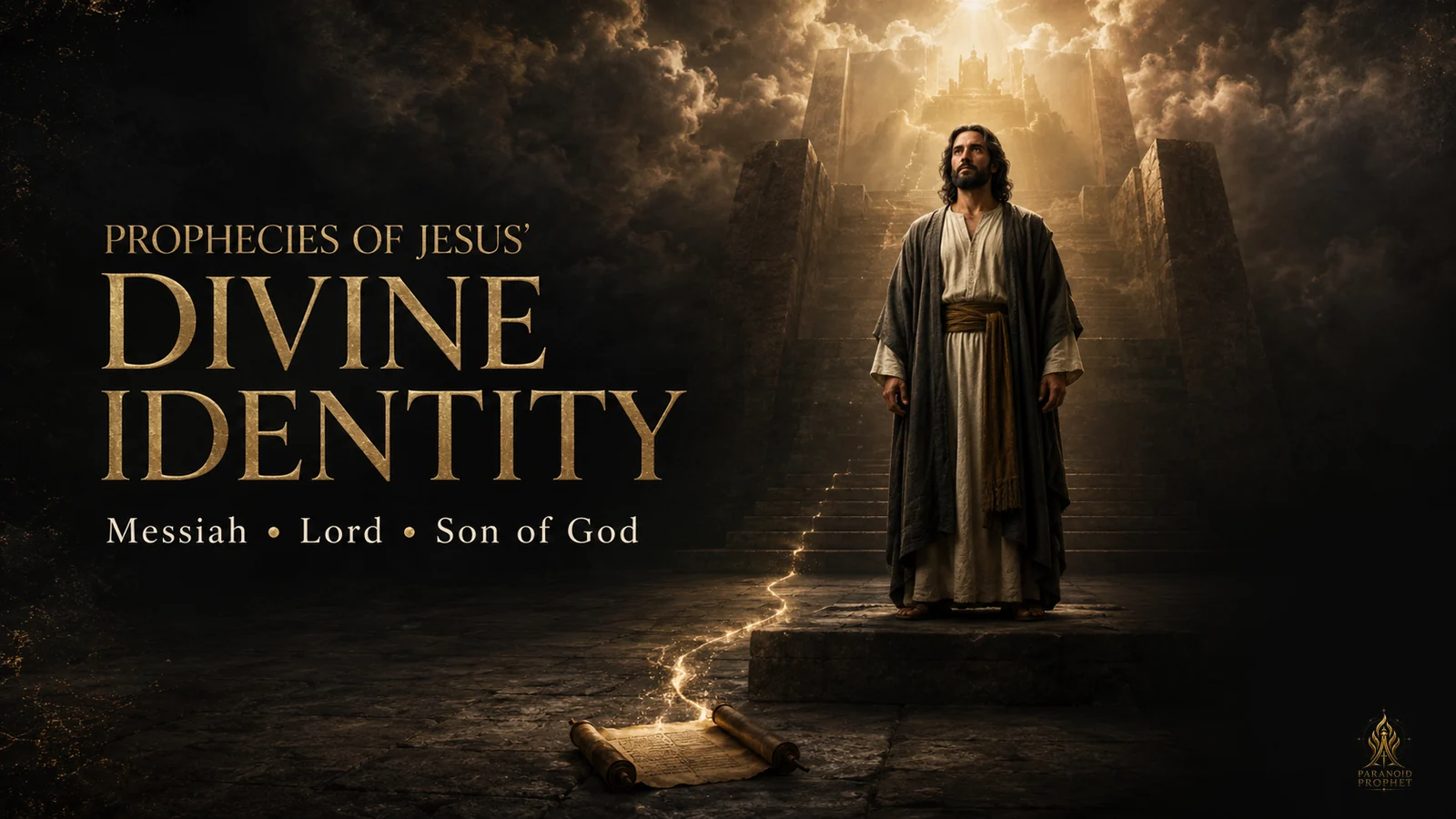
Prophecies about Jesus’ divine identity do not give readers a later creed in advance, nor do they reduce the Messiah to an ordinary political ruler. Across Israel’s Scriptures, God’s promised King is associated with enthronement beside God, everlasting dominion, extraordinary royal titles, priestly rule, and the Lord’s saving arrival among His people. The New Testament identifies Jesus with that scriptural pattern and presents Him as Messiah, Lord, and Son of God.
Some of these connections are explicit New Testament applications. Others are central canonical patterns that come into sharper focus through Jesus’ life, death, resurrection, exaltation, and worship. Christians do not need to pretend every passage speaks in the same way to see that the Old Testament prepares readers for a Messiah whose authority and honor reach beyond an ordinary Davidic king.
This article examines that biblical case. For the wider framework of direct application, typology, fulfillment, and debated texts, see Prophecies of Jesus Fulfilled in Scripture.
Article Guide13 sections
What Do Prophecies About Jesus’ Divine Identity Say?
In brief: Christians believe the Old Testament prepares readers for Jesus’ divine identity through a converging pattern: the Messiah is enthroned at God’s right hand, receives everlasting dominion, bears titles of extraordinary weight, is addressed with God-language, and comes within the scriptural pattern of the Lord’s own saving presence.
The central claim is not that one isolated phrase settles every theological question. Psalm 110, Daniel 7, Isaiah 9, Psalm 45, Isaiah 40, and Malachi 3 each have their own historical setting, literary form, and interpretive questions. Their force emerges as the New Testament repeatedly applies them to Jesus and places them together within its proclamation of the crucified and risen Lord.
That distinction matters. The Old Testament does not lay out a fourth-century doctrinal formula in advance. Yet it does provide the categories through which the New Testament identifies Jesus: God’s throne, everlasting rule, the Son of Man’s authority, the Lord’s coming, royal sonship, priestly mediation, and worship that belongs within the life of God’s people.
This article therefore addresses the scriptural pattern. The wider historical case for Jesus’ identity—including His public ministry, resurrection proclamation, and earliest Christian worship—belongs in Is Jesus the Son of God? Evidence from History, Scripture, and Resurrection. Here, the focus is narrower: how do Israel’s Scriptures frame the Messiah’s authority, presence, and identity?
How This Article Uses “Divine Identity” and “Fulfillment”
Christians confess one God—Father, Son, and Holy Spirit. This article does not attempt to establish the whole doctrine of the Trinity from a list of Old Testament verses. Its purpose is more specific: to show how the Old Testament’s language about God’s rule, authority, name, coming presence, and honor becomes central to the New Testament’s presentation of Jesus.
- Explicit New Testament application: A Gospel writer or apostle directly applies an Old Testament passage to Jesus.
- Central Christian canonical fulfillment: An Old Testament text becomes foundational for understanding Jesus’ identity and mission across the New Testament.
- Royal-messianic pattern: A promise about David’s king points beyond an ordinary ruler when read in light of Christ’s exaltation and reign.
- Divine-identity pattern: The New Testament places Jesus within categories that Israel’s Scriptures reserve for God’s authority, saving presence, and honor.
- Text requiring care: A serious Christian reading may remain persuasive while questions of original context, syntax, or interpretive development require humility.
These distinctions are not hedges against faith. They protect the article from claims Scripture does not make. Psalm 110 is not a one-word proof of the Trinity merely because David calls the Messiah “my Lord.” Daniel 7 does not use a later creed’s vocabulary. Isaiah 9 does not collapse the Son into the Person of the Father. Psalm 45 begins as royal poetry before Hebrews applies its highest language to the Son.
At the same time, careful reading should not become evasion. The New Testament’s use of these texts is not casual. Jesus, the apostles, and the earliest Christian writers repeatedly place Him in relation to God’s throne, God’s kingdom, God’s coming presence, and God’s unique saving rule. The Christian claim is cumulative: the Scriptures give the categories, and the New Testament identifies Jesus as the one in whom those categories reach their appointed fullness.
Psalm 110: The Messiah at God’s Right Hand
Fulfillment category: Central messianic enthronement and priesthood text
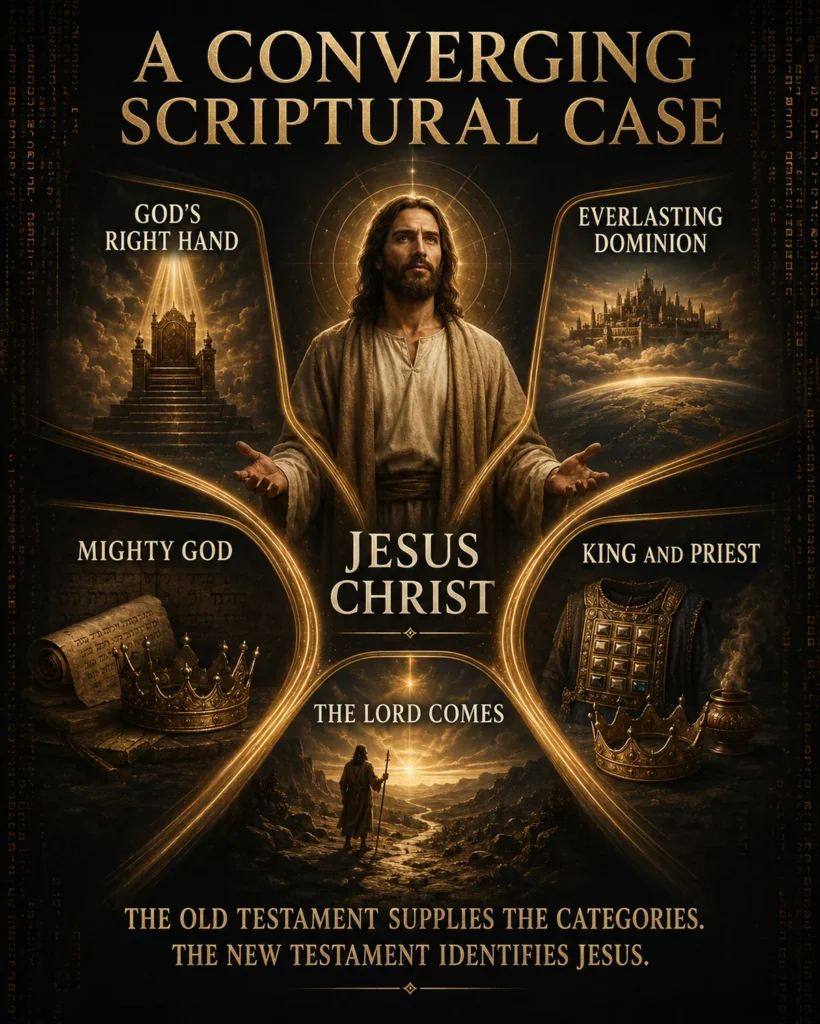
Psalm 110 is one of the most important Old Testament passages for understanding the New Testament’s presentation of Jesus. It is also one of the most frequently used Old Testament texts in the New Testament. The psalm portrays a figure whom David calls “my Lord,” invited to sit at the right hand of the LORD until His enemies are placed beneath His feet.
“The Lord says to my Lord: ‘Sit at my right hand, until I make your enemies your footstool.’”
The psalm first belongs within Israel’s royal and worshiping life. It speaks of a king’s victory, rule, and priestly significance. Christians should not pretend that David’s use of “my Lord” automatically settles every question about the Messiah’s deity. The psalm clearly distinguishes the LORD from the enthroned figure.
Yet Psalm 110 gives that figure an extraordinary place. He is seated at God’s right hand, the place of highest honor and authority. He rules amid enemies. He is also declared “a priest forever after the order of Melchizedek.” Psalm 110:1–4 joins kingship and priesthood in a way that reaches beyond the normal pattern of David’s royal line.
Jesus Himself draws attention to this tension when He asks how the Messiah can be David’s son if David calls Him Lord. Matthew 22:41–46 does not deny that the Messiah is David’s descendant. It presses readers beyond a merely reduced understanding of what that descent means. The promised King is David’s son, but He is also David’s Lord.
After the resurrection, Peter uses Psalm 110 to proclaim Jesus’ exaltation. In Acts 2, Peter argues that David did not ascend into the heavens, then cites the psalm to explain Jesus’ enthronement at God’s right hand. Acts 2:32–36 does not teach that Jesus became divine at His exaltation. It declares that the crucified and risen Jesus has been publicly installed and revealed as the Lord and Messiah God promised.
Hebrews develops the psalm’s significance further. The author applies Psalm 110:1 to the Son’s superiority over angels and Psalm 110:4 to Christ’s enduring priesthood. Hebrews 1:13; 5:5–6; 7:20–28 presents Jesus as the enthroned King and the permanent High Priest who brings His people into the presence of God.
Psalm 110 therefore does not function as a self-contained proof of every element of Christian doctrine. Its force lies in the Messiah’s unique enthronement, David’s recognition of Him as greater than a merely ordinary descendant, His everlasting priesthood, and the New Testament’s repeated application of the psalm to Jesus.
Daniel 7: The Son of Man with Everlasting Dominion
Fulfillment category: Central divine-authority and Son of Man text
Daniel 7 presents one of Scripture’s most striking heavenly visions. After the violent kingdoms represented by beastly powers are judged, Daniel sees “one like a son of man” coming with the clouds of heaven and approaching the Ancient of Days.
“And to him was given dominion and glory and a kingdom, that all peoples, nations, and languages should serve him.”
The figure is humanlike in contrast to the beasts that symbolize oppressive earthly kingdoms. Yet he receives an everlasting dominion in the heavenly court, and his kingdom will not pass away. This is not the ordinary language of a temporary ruler whose authority ends at death or defeat.
Daniel 7 also requires care. Later in the chapter, the holy people of the Most High receive the kingdom. Many interpreters therefore see a corporate dimension in the humanlike figure: he may represent the saints, stand for them, or be an individual representative of God’s people. Christians should acknowledge that question rather than pretend the vision contains no interpretive complexity.
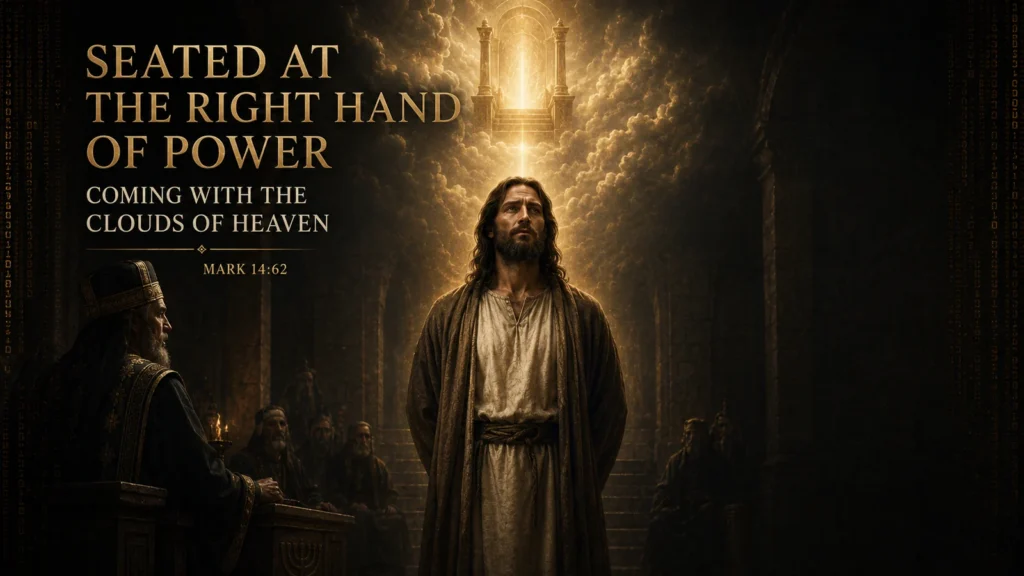
The corporate dimension does not erase Jesus’ personal use of the passage. At His trial, when asked about His identity, Jesus responds by joining Daniel’s Son of Man vision with Psalm 110’s enthronement language. He declares that those present will see the Son of Man seated at the right hand of Power and coming with the clouds of heaven. Mark 14:61–64
Jesus is not merely predicting that He will become a more successful earthly king. He identifies Himself with the heavenly figure who receives God-given dominion after suffering and vindication. The response of the high priest shows that the claim was understood as carrying extraordinary weight. The scene concerns Jesus’ authority before God, His future vindication, and the ultimate judgment of human kingdoms—not a small political promotion.
Daniel 7 does not explicitly call the Son of Man “God,” and Christians should not force it to say more than it says. Yet the vision gives the Son of Man a kingdom, glory, and enduring authority within the heavenly court that transcend the limits of ordinary earthly rule. When Jesus applies that vision to Himself and joins it to Psalm 110, the Christian claim becomes clearer: the Messiah stands in a unique relation to God’s throne and receives an everlasting dominion that belongs within God’s own reign.
Psalm 110 and Daniel 7 establish the article’s first foundation. The Messiah is David’s Lord, enthroned at God’s right hand, priest forever, and the Son of Man who receives everlasting dominion. Isaiah and Psalm 45 will now bring divine titles, royal language, and direct New Testament address to the Son into sharper focus.
Isaiah 9: The Child Called Mighty God
Fulfillment category: Central Christian canonical fulfillment
Isaiah 9:6–7 stands among the most significant royal promises in the Old Testament. The passage announces the birth of a child who will rule on David’s throne, establish justice and righteousness, and reign without end.
“For to us a child is born, to us a son is given; and the government shall be upon his shoulder, and his name shall be called Wonderful Counselor, Mighty God, Everlasting Father, Prince of Peace.”
The prophecy belongs within Isaiah’s royal and Davidic setting. It addresses a people living under threat and looks toward God’s promised rule bringing light, justice, and peace. Readers should not pull the verse away from that setting or pretend that Isaiah gives a later Christian creed in one sentence.
Yet the language is extraordinary. The coming ruler is associated with an unending throne, enduring peace, and titles of immense theological weight. The title “Mighty God” deserves special attention because Isaiah uses the same phrase again in Isaiah 10:20–21 for the God of Israel. Christians therefore see more here than flattering royal language for an ordinary Davidic king.
Isaiah 9 does not explicitly quote Jesus’ name, and the New Testament does not present the verse as a simple fulfillment citation in the way John applies Psalm 22:18 or Zechariah 12:10 to the Passion. The Christian claim is canonical: the promised Davidic ruler, whose reign will have no end and whose titles reach beyond ordinary kingship, finds His fullest fulfillment in Jesus Christ.
Luke’s announcement of Jesus’ birth reflects the same Davidic horizon. The angel tells Mary that Jesus will receive “the throne of his father David” and that “of his kingdom there will be no end.” Luke 1:32–33 does not quote Isaiah 9 directly, but it presents Jesus as the promised Son whose reign fulfills God’s covenant purpose for David’s house.
“Everlasting Father” requires particular care. The title does not identify Jesus with the Person of the Father. Christians confess one God—Father, Son, and Holy Spirit—without confusing the persons. In Isaiah’s royal setting, the language points to the ruler’s enduring, fatherly care, protection, and authority over His people. The title speaks of the character and permanence of His rule.
Christians therefore do not use Isaiah 9 to erase the distinction between Father and Son. They see the passage as part of the Old Testament groundwork for the New Testament’s confession that Jesus is the eternal Son whose kingdom, peace, and rule will never end.
The force of Isaiah 9 comes from the whole portrait. The child is given. The government rests upon Him. His reign is righteous and everlasting. He bears a title elsewhere used of Israel’s God. In the light of Christ’s resurrection and exaltation, Christians understand this royal promise as reaching its climactic fulfillment in Jesus.
Psalm 45: The Son Addressed as God
Fulfillment category: Explicit New Testament application
Psalm 45 is first a royal wedding psalm. It celebrates Israel’s king, his beauty, justice, victory, and marriage. The poem belongs to the world of Davidic kingship and royal worship, not to a later systematic outline of Christian doctrine.
That original setting matters. The psalm uses elevated poetic language for a human king. It also includes a difficult and much-discussed line:
“Your throne, O God, is forever and ever. The scepter of your kingdom is a scepter of uprightness; you have loved righteousness and hated wickedness. Therefore God, your God, has anointed you.”
The language preserves a distinction. The king is addressed with God-language, yet the next line says, “God, your God, has anointed you.” Christians should not flatten that distinction or use Psalm 45 as though it eliminates the difference between Father and Son.
The New Testament, however, gives the passage an explicit Christological application. Hebrews 1 contrasts the Son with angels and cites Psalm 45:6–7 as words addressed to the Son:
“But of the Son he says, ‘Your throne, O God, is forever and ever.’”
That use matters because Hebrews is not merely drawing a loose parallel between Jesus and a royal wedding. The author is arguing that the Son stands above angels, reigns forever, and receives language of honor that belongs within the biblical identity of God.
The argument of Hebrews 1 builds cumulatively. The Son is called God’s Son. He is the one through whom God made the world. He is the radiance of God’s glory and the exact imprint of His nature. He sits at God’s right hand. Then Psalm 45 is applied to Him with the words, “Your throne, O God, is forever and ever.” Hebrews 1:1–13
Psalm 45 therefore should not be handled as a detachable proof text. Its original royal setting remains important. But Hebrews’ direct application means Christians have solid grounds for saying that the New Testament places the Son within the psalm’s God-language and eternal-throne imagery.
The point is not that the Old Testament contains a completed fourth-century doctrinal formula. The point is that the earliest Christian Scriptures identify Jesus with texts that speak of an everlasting throne, divine honor, and God’s own rule. Hebrews presents the Son not as a slightly elevated king, but as the reigning Lord who stands above every created messenger.
Isaiah 40 and Malachi 3: The Lord Comes to His People
Fulfillment category: Explicit Gospel application and supporting Lord-coming pattern
Isaiah 40 opens with comfort for God’s people and the announcement of a new exodus-like restoration. In the wilderness, a voice calls for the way of the LORD to be prepared and for a highway to be made for Israel’s God.
“In the wilderness prepare the way of the Lord; make straight in the desert a highway for our God.”
In its original setting, Isaiah speaks of the God of Israel coming to restore His people, reveal His glory, and lead them home. The text should not be treated as an isolated line written only to anticipate John the Baptist.
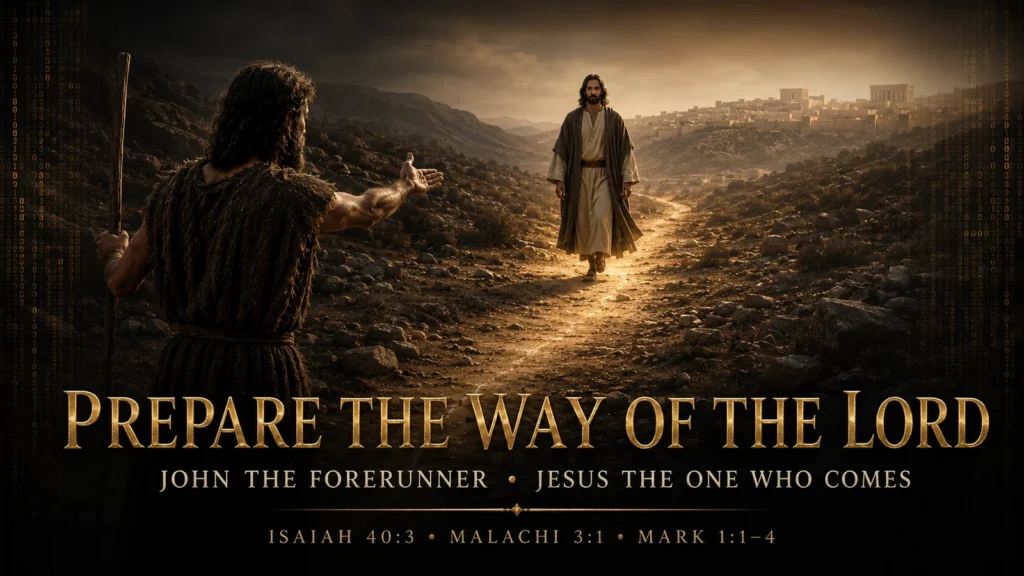
Yet the Gospels deliberately identify John as the voice in the wilderness preparing the way before Jesus. Matthew applies Isaiah 40:3 directly to John’s ministry, and Luke expands the citation to show John as the herald of God’s saving arrival. Matthew 3:1–3 and Luke 3:3–6
That Gospel framing is deeply significant. Isaiah announces preparation for the LORD and “our God.” The Gospel writers identify John as preparing the way before Jesus. Christians therefore see Jesus placed within the scriptural pattern of the Lord’s own coming to save, restore, and reveal God’s glory among His people.
Malachi 3 strengthens that pattern. The prophet speaks of God sending a messenger to prepare the way before Him, followed by the coming of the Lord to His temple.
“Behold, I send my messenger, and he will prepare the way before me. And the Lord whom you seek will suddenly come to his temple.”
Malachi’s original setting concerns covenant faithfulness, purification, judgment, and the Lord’s coming presence. It does not provide a simplistic formula that identifies Jesus with the Father or exhausts its full prophetic horizon in one moment of the Gospel story.
Still, Jesus applies the messenger language to John the Baptist. In Matthew 11:7–10, He identifies John as the messenger sent ahead to prepare the way. The Gospel tradition repeatedly places John’s preparatory ministry immediately before Jesus’ public arrival.
Mark’s opening provides an especially important example, though it must be described carefully. Mark 1:2–3 is a composite scriptural citation, combining messenger language associated with Malachi 3:1 and Exodus 23:20 with Isaiah 40:3. Mark 1:1–4 should not be described as though it quotes Isaiah 40 alone, word for word. Its significance is that Mark gathers these Scriptures to introduce John as the forerunner and Jesus as the one whose way is being prepared.
Isaiah 40 and Malachi 3 therefore do not carry the divine-identity case by themselves. Their force comes through the Gospel writers’ coordinated use of them. Israel’s Scriptures announce the coming of the LORD to restore, purify, and save. The Gospels identify John as the forerunner and Jesus as the one before whom that way is prepared.
This prepares the article’s final movement. Psalm 2 and Psalm 110 develop royal sonship and priestly rule; the Branch pattern joins kingship and priesthood; and the evidence must then be weighed carefully as part of the larger Christian case for Jesus Christ.
Royal Sonship and the King-Priest Pattern
Fulfillment category: Royal-messianic pattern with explicit New Testament application
Israel’s Scriptures often describe the Davidic king as God’s “son.” That language must first be understood within its royal covenant setting. It speaks of the king’s appointed relationship to God, his representative role over God’s people, and his calling to rule under God’s authority.
“You are my Son; today I have begotten you.”
Psalm 2 is a royal enthronement psalm. It portrays the nations resisting the LORD and His anointed king, while God establishes His King on Zion and gives Him authority over the nations. Christians should not use the phrase “today I have begotten you” as though it teaches that the eternal Son began to exist at a particular moment.
The New Testament applies Psalm 2 to Jesus in more than one way. Acts connects it with God’s fulfillment of His promise through the resurrection and exaltation of Christ. Hebrews applies it to Jesus’ unique Sonship and priestly appointment. Acts 13:32–33; Hebrews 1:5; 5:5 do not present Jesus as becoming the Son only at Easter or at His ascension. They proclaim that the eternal Son is publicly installed, vindicated, and revealed as the promised King.
Psalm 2 therefore contributes royal sonship, enthronement, and worldwide authority to the article’s larger argument. It does not stand alone as a complete proof of Christ’s deity. Its significance grows when it is read alongside Psalm 110, Daniel 7, Isaiah 9, and the New Testament’s presentation of Jesus as the Son who shares in God’s rule and receives the honor due to God’s appointed King.
Psalm 110 adds a further dimension: the Messiah is not only a king. He is also a priest forever after the order of Melchizedek. Psalm 110:4 joins royal authority with an enduring priesthood outside the ordinary Levitical line.
Hebrews returns repeatedly to this promise. Jesus is the High Priest who has passed through the heavens, intercedes for His people, and serves permanently because He continues forever. Hebrews 5:5–10 and 7:20–28 uses Psalm 110 not merely to call Jesus a religious leader, but to show that His priesthood is lasting, heavenly, and inseparable from His exalted reign.
Zechariah’s Branch imagery supports this king-priest pattern. Zechariah speaks of a coming Branch who will build the temple of the LORD, sit and rule on His throne, and serve as a priest. Zechariah 6:12–13 should not be treated as a stand-alone prediction that directly proves Jesus’ deity. It does, however, deepen the Old Testament expectation that God’s promised ruler would unite royal authority and priestly mediation in a way Israel’s ordinary kings did not.
In Jesus, Christians see that pattern brought to its fullness. He is the Son whom God enthrones, the King who receives everlasting dominion, and the Priest who brings His people into God’s presence. The article’s larger claim is not that kingship and priesthood automatically equal deity. It is that the New Testament identifies Jesus with these extraordinary scriptural categories while also giving Him divine titles, divine honor, and a place within the LORD’s own saving arrival.
What These Scriptures Establish—and What They Do Not
The strongest Christian case for Jesus’ divine identity does not treat every passage as a separate, identical proof. The Old Testament texts considered here have different literary settings and different levels of directness. Some are explicitly applied to Jesus by the New Testament. Others establish royal, priestly, and divine-authority patterns that reach their fullest coherence in Him.
Evidence Matrix: Scripture and Jesus’ Divine Identity
| Old Testament text | Fulfillment category | New Testament connection | What Christians can responsibly claim |
|---|---|---|---|
| Psalm 110:1, 4 | Central messianic enthronement and priesthood text | Matthew 22:41–46; Acts 2:32–36; Hebrews 1:13; 5:5–6; 7:20–28 | Jesus is presented as David’s greater Lord, enthroned at God’s right hand and serving as the everlasting High Priest. |
| Daniel 7:13–14 | Central divine-authority and Son of Man text | Mark 14:61–64 | Jesus applies the heavenly Son of Man vision to Himself and claims the vindication and everlasting dominion God has appointed. |
| Isaiah 9:6–7 | Central Christian canonical fulfillment | Luke 1:32–33 | The promised Davidic ruler bears extraordinary titles, including “Mighty God,” and reigns without end; Christians see this fulfilled in Jesus. |
| Psalm 45:6–7 | Explicit New Testament application | Hebrews 1:8–9 | Hebrews applies the psalm’s God-language and everlasting-throne language directly to the Son. |
| Isaiah 40:3 | Explicit Gospel application | Matthew 3:1–3; Luke 3:3–6 | The Gospels identify John as preparing the way before Jesus using Isaiah’s language of the LORD’s coming to restore His people. |
| Malachi 3:1 | Supporting Lord-coming pattern | Matthew 11:7–10; Mark 1:1–4 | The Gospel tradition places John’s messenger ministry before Jesus within Malachi’s larger pattern of the Lord coming to His people. |
| Psalm 2:7; Zechariah 6:12–13 | Royal sonship and king-priest pattern | Acts 13:32–33; Hebrews 1:5; 5:5–6 | These texts strengthen the case for Jesus as God’s enthroned Son and enduring King-Priest without functioning as isolated deity proofs. |
What Christians Can Say Confidently
- The New Testament repeatedly interprets Jesus through Old Testament texts about God’s throne, David’s greater Lord, everlasting dominion, royal sonship, priestly mediation, and the LORD’s coming presence.
- Psalm 110 is central to the New Testament proclamation of Jesus’ exaltation, lordship, and lasting priesthood.
- Jesus’ use of Daniel 7 at His trial identifies Him with the heavenly Son of Man who receives everlasting dominion from the Ancient of Days.
- Hebrews explicitly applies Psalm 45’s God-language and eternal-throne language to the Son.
- The Gospels place John the Baptist’s ministry within Isaiah and Malachi’s pattern of preparing the way for the Lord’s saving arrival.
- The Christian case is cumulative: the Old Testament supplies the categories, and the New Testament identifies Jesus as the Messiah who shares in God’s rule, honor, authority, and saving presence.
What Christians Should Not Claim
- Christians should not claim that the Old Testament states a complete later doctrinal formula of the Trinity in advance.
- Christians should not claim that Psalm 110 proves Jesus’ deity merely because David calls Him “Lord.”
- Christians should not claim that Daniel 7 explicitly calls the Son of Man “God” or removes every question about the relationship between the Son of Man and the saints.
- Christians should not claim that “Everlasting Father” in Isaiah 9 identifies Jesus with the Person of the Father.
- Christians should not claim that every Jewish reader expected a divine Messiah in the same way, or that Jewish messianic expectation was simple and uniform.
- Christians should not claim that prophecy alone proves Christianity apart from the historical claims concerning Jesus’ life, crucifixion, resurrection, and earliest worship.
These cautions do not diminish the Christian confession. They keep the article anchored in what Scripture actually says. The strongest conclusion is not that one verse contains every answer. It is that the New Testament repeatedly identifies Jesus with the scriptural realities of God’s enthroned rule, eternal kingdom, saving arrival, and unique honor.
How Divine-Identity Prophecy Fits the Larger Case for Jesus
Prophecy is one part of a larger Christian case. It does not replace the historical question of whether Jesus existed, whether He was crucified, what His earliest followers proclaimed, or why the resurrection became the center of their message.
The historical foundation belongs in Historical Evidence for Jesus. The scriptural pattern of Jesus’ suffering and death is developed in Jesus’ Crucifixion Prophecies: Isaiah 53, Psalm 22, and the Cross. The earliest resurrection proclamation is examined in How Early Is the Resurrection Claim?.
Those lanes belong together. The Gospels do not portray Jesus merely as a teacher with elevated language around Him. They present the crucified and risen Messiah as David’s Lord, the Son of Man who receives everlasting dominion, the Son addressed with God-language, and the one whose coming is framed through Scripture’s language of the LORD drawing near to save.
The earliest Christian proclamation therefore joins Jesus’ identity to His death and resurrection. The One enthroned at God’s right hand is the One who was crucified. The Son of Man who will come in glory is the One who gave Himself for sinners. The Lord who comes to His people is the Savior who bears their grief and brings them back to God.
For the full cumulative case, continue with Is Jesus the Son of God? Evidence from History, Scripture, and Resurrection.
Continue the Evidence
- Explore the Prophecy Hub: Prophecies of Jesus Fulfilled in Scripture
- Continue in the Prophecy Lane: Prophecies of Jesus’ Resurrection Fulfilled
- Examine the Historical Foundation: Was Jesus Crucified?
- Examine the Earliest Witness: What Did the First Witnesses Claim About the Risen Jesus?
Frequently Asked Questions About Jesus’ Divine Identity in Prophecy
Does Psalm 110 prove Jesus is God simply because David calls Him “Lord”?
No. The word translated “lord” in Psalm 110:1 does not, by itself, settle the entire deity question. The Christian case is cumulative: Psalm 110 presents the Messiah as David’s greater Lord, enthroned at God’s right hand, ruling over enemies, and serving as an everlasting priest. Jesus, Peter, and Hebrews repeatedly apply that psalm to Christ.
Does Daniel 7 explicitly identify the Son of Man as God?
Daniel 7 does not directly call the Son of Man “God.” It does present a humanlike figure receiving everlasting dominion, glory, and a kingdom in the heavenly court. Jesus applies that vision to Himself at His trial, joining it with Psalm 110’s enthronement language. The vision must still be read carefully because Daniel also speaks of the saints receiving the kingdom.
Does “Everlasting Father” mean Jesus is God the Father?
No. Christians distinguish the Father from the Son. In Isaiah 9’s royal setting, “Everlasting Father” speaks of the coming ruler’s enduring, fatherly care and authority over His people. It does not erase the personal distinction between Father and Son.
Why does Hebrews call the Son “God” in Psalm 45?
Psalm 45 is first a royal wedding psalm, yet Hebrews 1 explicitly applies its highest God-language to the Son while arguing that He stands above angels and reigns forever. Christians therefore see Hebrews as placing Jesus within the divine honor and eternal-throne imagery of the psalm, while still preserving the distinction between the Son and “God, your God.”
How do Isaiah 40 and Malachi 3 connect John the Baptist and Jesus?
Isaiah 40 announces a voice preparing the way of the LORD, while Malachi 3 describes God sending a messenger before the Lord’s coming. The Gospels identify John as that forerunner before Jesus. Christians therefore see the Gospel writers placing Jesus within Scripture’s pattern of the Lord’s saving arrival among His people.
Did all Jewish people expect a divine Messiah?
No. Jewish messianic expectations in the periods before and around Jesus were diverse. Christians should not make sweeping claims about what every Jewish reader expected. The Christian claim rests on the New Testament’s identification of Jesus with Israel’s Scriptures and on the cumulative pattern those texts create.
Sources and Further Reading
- Primary biblical texts: Psalms 2, 45, and 110; Isaiah 9 and 40; Daniel 7; Malachi 3; Zechariah 6:12–13; Matthew 3, 11, and 22; Mark 1 and 14; Luke 1 and 3; Acts 2 and 13; Hebrews 1, 5, and 7; Philippians 2:6–11; 1 Corinthians 8:6; Revelation 5:9–14.
- Richard Bauckham, Jesus and the God of Israel: God Crucified and Other Studies on the New Testament’s Christology of Divine Identity.
- Larry W. Hurtado, Lord Jesus Christ: Devotion to Jesus in Earliest Christianity.
- G. K. Beale and D. A. Carson, eds., Commentary on the New Testament Use of the Old Testament.
- John J. Collins, Daniel: A Commentary on the Book of Daniel.
- John N. Oswalt, The Book of Isaiah, Chapters 1–39.
- R. T. France, The Gospel of Mark.
These works represent a range of scholarly approaches. Their inclusion identifies resources relevant to the biblical texts discussed; it does not imply agreement with every conclusion in this article.
Unless otherwise indicated, Scripture quotations are from the ESV® Bible.
Jesus Christ, the Lord Who Came to Save
The Old Testament does not hand readers a completed later creed in a single verse. It gives them a world of expectation: a King greater than David, a Son who reigns, a heavenly figure with everlasting dominion, a ruler called Mighty God, a priest forever, and the Lord who comes to restore His people.
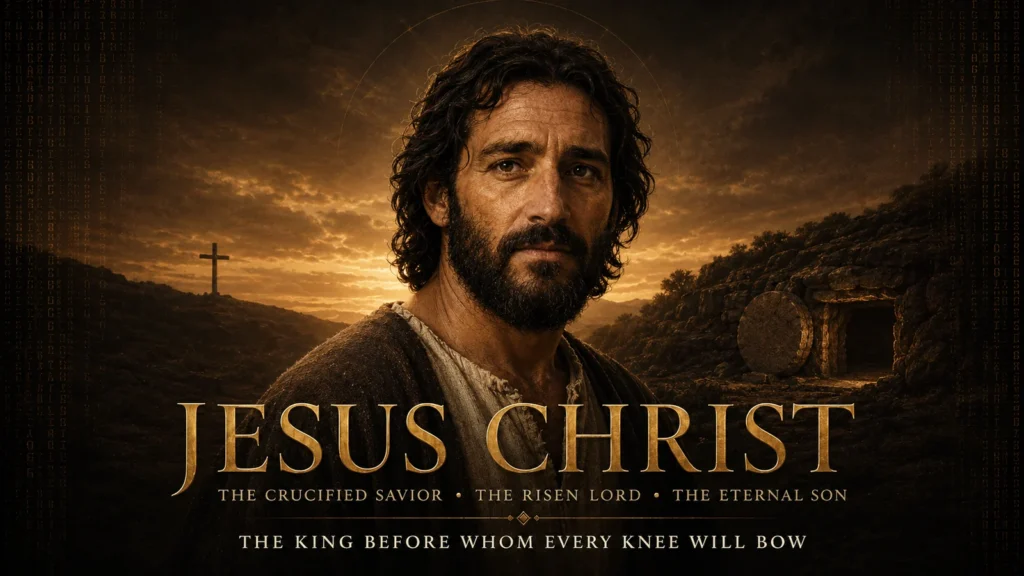
The New Testament identifies Jesus with that world. He is enthroned at God’s right hand. He is the Son of Man who receives everlasting dominion. He is the Son addressed with God-language and given an eternal throne. He is the one whose coming is prepared in the language of the LORD’s own saving arrival.
This is not a case built on one slogan or one isolated proof text. It is the united witness of Scripture moving toward Jesus Christ: the crucified Savior, the risen Lord, the eternal Son, and the King before whom every knee will bow.
CONTINUE THE INVESTIGATION
Recommended continuation
Was Jesus a Liar, Lunatic, Legend, or Lord? The Identity of Christ
Bring the scriptural divine-identity claims into the broader comparison of explanations for who Jesus is.