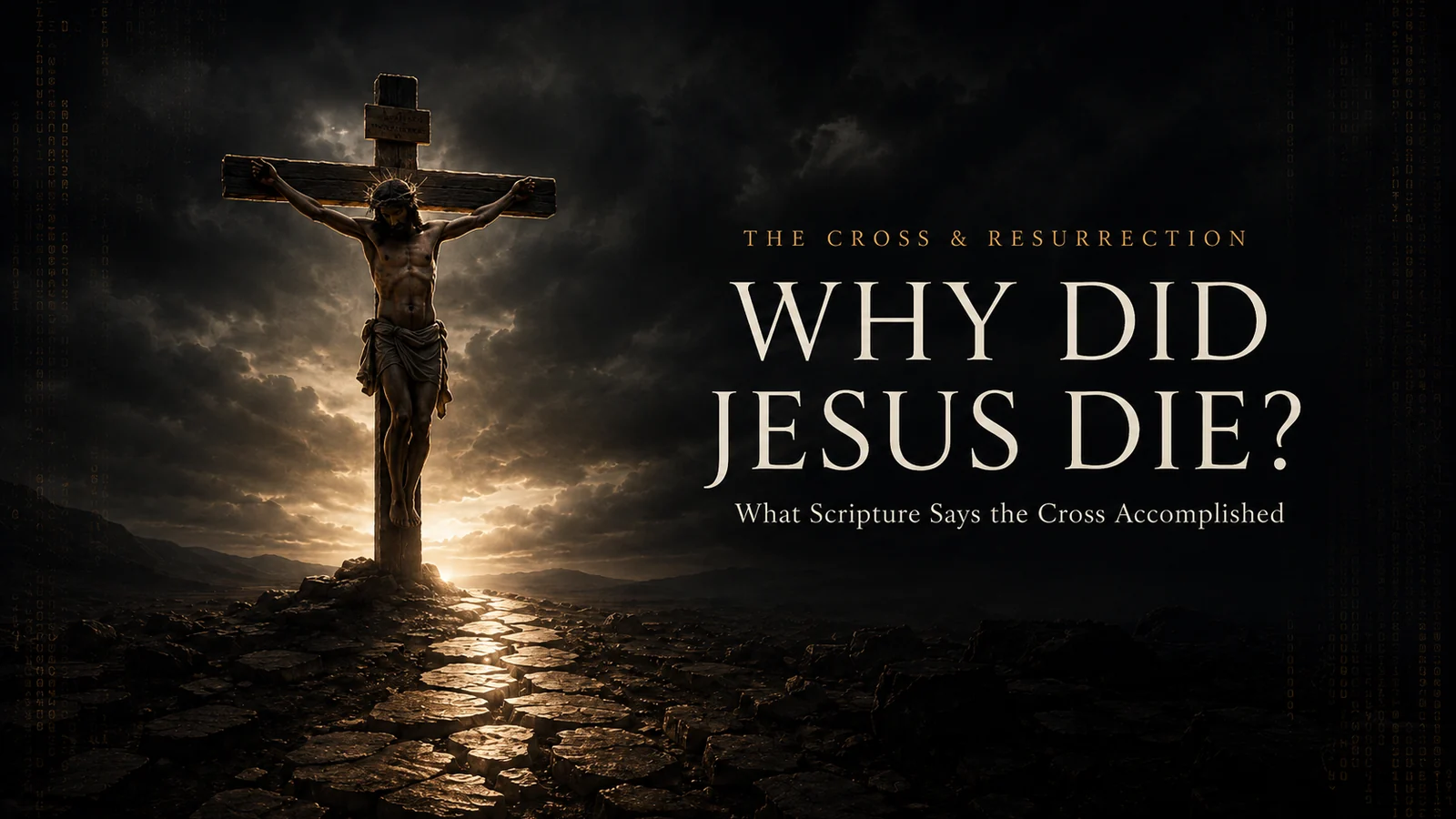

Why did Jesus die? Scripture’s answer is larger than “to show love,” though the cross is love beyond measure. Jesus gave Himself willingly for sinners. He died to deal truthfully with sin, bear its judgment, reconcile enemies to God, redeem people from slavery and curse, defeat the powers of darkness, establish the new covenant, and create a holy people who belong to Him.
The cross was not a tragic accident that God later turned into something meaningful. Nor was Jesus merely a noble teacher caught in political violence. The New Testament presents His death as the saving center of God’s purpose. The Father gave the Son in love, and the Son willingly gave Himself, so that guilty people could be forgiven without God treating evil as though it did not matter.
That is why the question cannot stop at whether Jesus was crucified. The historical reality of His death matters deeply, but Scripture presses further: What did the crucified Christ accomplish?
GUIDED ARTICLE EXPERIENCE
Why Did Jesus Die? What Scripture Says the Cross Accomplished
Read along as the narration moves through the article.
Private device narration · No hosted audio or tracking
CONTINUE GUIDED TOUR
Continue where you left off.
GUIDED TOUR COMPLETE
You have reached the end of this study.
Study record saved on this device.
GUIDED TOUR
Why Did Jesus Die? What Scripture Says the Cross Accomplished
Narrator: Paranoid Prophet Recommended Voice Native device narration
Prepare to follow the article as it is narrated.
VOICE & TOUR OPTIONS
Voice & Listening
NARRATOR
Finding a narrator…
Checking the best narrator available on this device.
Restores the best curated narrator available on this device.
Narrator choices are curated for clear, long-form listening on this device.
Screen-awake support will be checked when narration starts.
CHOOSE A NARRATOR
Curated for this device
Choose a verified narrator for this browser, or use System Narrator. Automatic mode uses the best reliable route exposed by this device; your chosen narrator is preserved even if this device needs a temporary fallback.
Preparing the guided article experience…
RESUME GUIDED TOUR?
Continue where you left off.
GUIDED TOUR COMPLETE
You have reached the end of this study.
Article Guide9 sections
Why Did Jesus Die? The Short Answer
Jesus died because humanity is alienated from God by sin and cannot repair that separation through moral effort, religious activity, education, reform, or self-improvement. In love, the eternal Son took on flesh, lived in perfect obedience, and gave His life for sinners.
Through His death, Christ bore sin, provided the sacrifice of atonement, opened the way for justification, reconciled enemies to God, redeemed captives, defeated death and the powers of darkness, established the new covenant, cleansed His people, and made them His own. He was then raised from the dead as the living and victorious Lord.
Scripture describes this one saving work through several connected images because the human problem has several dimensions. Guilty people need justification. Enemies need reconciliation. Slaves need redemption. The defiled need cleansing. Those under the curse need deliverance. Those held by death need resurrection life.
These are not competing explanations that force Christians to choose one and discard the others. Together, they reveal the many-sided glory of what Jesus accomplished. The cross answers the seriousness of sin, displays the justice and mercy of God, and opens salvation to everyone who turns to the crucified and risen Christ in repentance and faith.
Source discipline: This article is primarily theological. Historical study can investigate whether Jesus was crucified under Roman authority. Scripture is the final authority for why His death saves and what He accomplished through it. For the historical investigation, see Was Jesus Crucified? Historical Evidence for the Cross.
The Cross Was God’s Saving Plan, Not an Accident
Jesus was truly betrayed, falsely accused, condemned through corrupt human judgment, and crucified under Roman authority. The Gospels do not soften the evil committed against Him. Yet they also refuse to portray Him as a helpless victim trapped by events beyond God’s control.
Jesus said that the Son of Man came “to give his life as a ransom for many” in Mark 10:45. In John 10:11–18, He identifies Himself as the good shepherd who lays down His life for the sheep. No one takes His life from Him against His will. He lays it down of His own accord.
The Son did not merely agree to someone else’s rescue plan. The Father, Son, and Spirit act in one saving purpose, even as Scripture preserves the real distinction between the Father who sends and the incarnate Son who obeys and offers Himself. The Father gives in love. The Son gives Himself in love. The cross reveals the united saving purpose of God.
That does not remove human responsibility. Judas remained responsible for betrayal. The leaders who pursued false testimony remained responsible for injustice. Pilate remained responsible for surrendering an innocent man to execution. The soldiers remained responsible for cruelty and mockery.
Acts 2:22–24 holds these truths together. Jesus was handed over according to God’s deliberate plan, and wicked people were still guilty for putting Him to death. Human rebellion did not become righteous because God overruled it. God’s purpose was not defeated because human beings acted wickedly.
The cross was evil committed against the sinless Son, but it was also the willing self-offering through which God acted to save. Jesus did not merely endure death. He gave Himself.
Why Sin Needed More Than Advice, Reform, or Self-Improvement
Sin Is Guilt, Rebellion, Corruption, and Death
The cross only makes sense when the human problem is understood as Scripture describes it. The Bible does not reduce sin to a lack of information, an unfortunate habit, or a collection of mistakes that can be overcome by trying harder.
Sin is rebellion against God’s holy character and good rule. It produces real guilt before Him. It distorts desire, damages love of neighbor, corrupts human communities, and leads to death. Paul’s argument in Romans 3:9–23 is not that some people need small spiritual improvements while others need rescue. Every person stands under sin, and no one can establish righteousness before God through personal merit.
Advice can correct a misunderstanding, but it cannot erase guilt. Education can expose ignorance, but it cannot reconcile rebels to God. Social reform can restrain injustice, but it cannot cleanse the heart that produces it. Personal discipline can change habits, but it cannot raise those who are spiritually dead.
This does not make education, justice, healing, or moral growth unimportant. It means none of them reaches the deepest root of the problem. We need forgiveness, cleansing, reconciliation, freedom, and new life. We need God to save.
The Cross Displays God’s Justice and Mercy
This leads to one of the hardest questions about Christianity: Could God not simply forgive without the cross?
Scripture does not portray the cross as a rule outside God that forced Him to obtain suffering before He could become merciful. God is the One who initiates salvation. “God demonstrates his own love for us in this: While we were still sinners, Christ died for us,” Paul writes in Romans 5:6–11.
Yet God’s mercy is not moral indifference. A righteous God does not call cruelty harmless, treat oppression as imaginary, or pretend rebellion has caused no ruin. Forgiveness does not mean that God’s judgment of evil was mistaken. It means that God Himself has acted to overcome the guilt, estrangement, and death sin produced.
In Romans 3:21–26, Paul says that righteousness from God is given through faith in Jesus Christ. God presented Christ as the sacrifice of atonement, demonstrating His righteousness so that He remains just while justifying those who have faith in Jesus.
The cross therefore does not persuade an unwilling Father to love sinners. It reveals the love through which God acts without denying His holiness. In the incarnate Son, God provides the atonement, bears the saving cost, and opens mercy to the guilty.
God does not forgive because sin was never serious. He forgives because, in Christ, He has dealt decisively with sin while opening reconciliation to sinners.
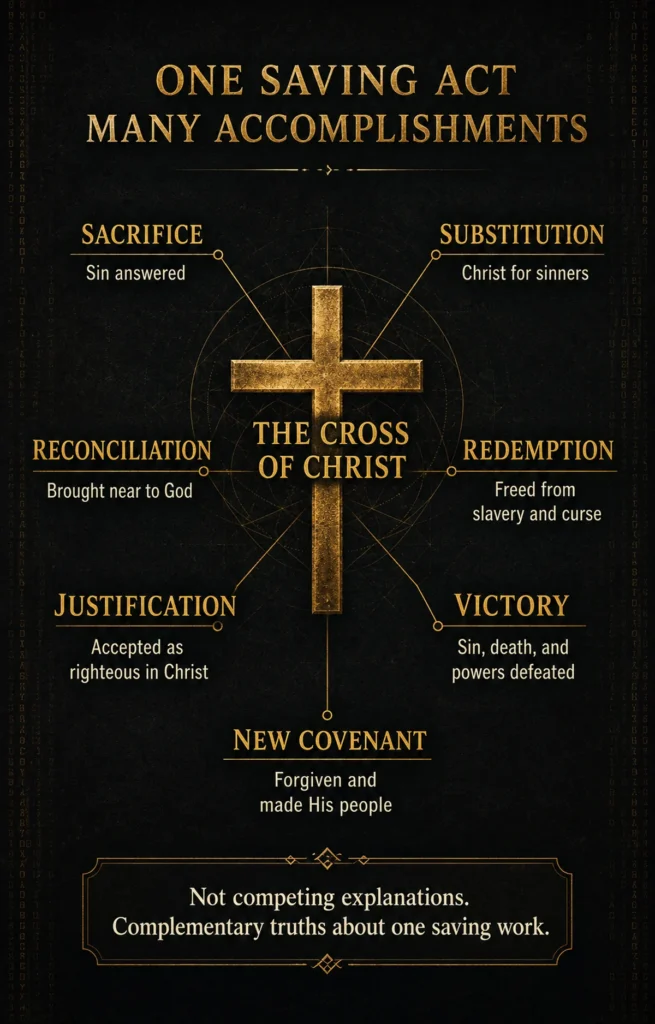
Because sin affects guilt, fellowship, freedom, purity, covenant belonging, and life itself, Scripture describes the cross through several inseparable accomplishments. Each reveals another dimension of the salvation Jesus secured.
What Jesus Accomplished on the Cross
Jesus is the sacrifice for sin, the substitute who dies for others, the redeemer who liberates captives, the reconciler who brings enemies near, the victorious King who defeats the powers, and the mediator who establishes the new covenant.
None of these descriptions should be isolated from the others. The same cross that deals with guilt also defeats accusation. The sacrifice that cleanses also opens access to God. The ransom that liberates also brings people under the gracious lordship of Christ. Together, these truths reveal the depth of His saving work.
Jesus Became the Willing Sacrifice That Cleanses From Sin
The sacrificial language of Scripture does not mean that God delights in suffering or considers blood valuable for its own sake. Israel’s sacrifices belonged to a covenantal system God gave to teach the seriousness of sin, the need for cleansing, and the necessity of His provision if sinful people were to approach His holy presence.
Those sacrifices were real acts of worship and atonement within Israel’s covenant life, but they were not the final answer to sin. They had to be repeated, and the animals offered could not bring the work of redemption to completion. Hebrews describes them as shadows pointing toward the sufficient self-offering of Christ.
Jesus fulfills this saving pattern in a way no animal offering ever could. John the Baptist identifies Him as “the Lamb of God, who takes away the sin of the world” in John 1:29. Isaiah had spoken of the suffering servant who would bear iniquity, be led like a lamb to slaughter, and give His life as an offering for sin. The New Testament presents Jesus as that righteous servant and saving Lamb.
In Hebrews 9:11–14, Christ enters through His own blood and obtains eternal redemption. He is not a passive object placed on an altar by someone more powerful. He is both the faithful high priest and the willing offering who gives Himself through the eternal Spirit.
When the New Testament speaks of salvation through Christ’s blood, it is not treating blood as a magical substance. The language points to His life poured out in sacrificial death. His blood signifies the cost of redemption, the cleansing of sin, the establishment of covenant, and the access to God opened through His self-offering.
The saving power belongs to Jesus Christ Himself. He did not merely repeat the sacrifices that came before Him. He fulfilled their purpose through an offering sufficient to cleanse the conscience and bring sinners near to God.
This sacrificial foundation also illuminates the prophetic background of the cross. For a fuller investigation, see Messianic Prophecies of Jesus’ Suffering and Crucifixion.
Jesus Died for Us and in Our Place
At the center of the New Testament’s explanation of the cross is the repeated language of Christ dying “for us,” “for our sins,” and “for the ungodly.” Jesus did not die merely in the presence of sinners or as another victim of the violence sin produces. He gave Himself on behalf of sinners.
Isaiah 53:4–12 describes the servant as pierced for transgressions, crushed for iniquities, and punished in a way that brings peace to others. He bears the sins of many and makes intercession for transgressors. The passage joins substitution, sacrifice, justification, and vindication in one saving mission.
Paul uses the same pattern. In Romans 5:6–10, Christ dies for the ungodly while they are still sinners and enemies. In Galatians 3:10–14, He redeems people from the curse of the law by becoming a curse for them.
This is not a story in which the Father punishes an unrelated innocent person so that the guilty can escape. Jesus is the eternal Son who willingly entered the humanity He came to redeem. He stands as the faithful representative of His people, bears their sin, and brings those united to Him into righteousness and life.
In 2 Corinthians 5:14–21, Paul says that the sinless Christ was made to be sin for us so that in Him we might become the righteousness of God. Paul does not say that Jesus became personally sinful. He presents Christ as bearing the burden and consequence of sin so that those who belong to Him may stand accepted before God.
Substitution therefore cannot be separated from Christ’s identity or from union with Him. The substitute is also the incarnate Savior, the covenant representative, the priest who offers the sacrifice, and the Lord who joins His people to Himself.
Jesus Reconciled Enemies and Brought Them Near
Sin produces more than a record of guilt. It creates estrangement and hostility between humanity and God. People were made for communion with their Creator, yet rebellion turns them away from the One in whom life, goodness, and peace are found.
That is why the New Testament speaks so often of reconciliation. Paul says that while we were God’s enemies, we were reconciled to Him through the death of His Son. Peter writes that Christ suffered once for sins, the righteous for the unrighteous, “to bring you to God” in 1 Peter 3:18.
Reconciliation means that forgiven sinners are not left at a safe distance from God. Through Christ, those who were far away receive peace and access to the Father. They are welcomed into God’s household and restored to the fellowship for which they were created.
The cross therefore leads beyond a legal declaration, though that declaration matters. God justifies sinners so that they may live in peace with Him. The goal is restored communion with the God they had resisted.

Jesus Redeemed Us From Slavery and Curse
Scripture also describes salvation as redemption. To redeem is to liberate at a cost. Jesus said that He came “to give his life as a ransom for many” in Mark 10:45. His life is the costly gift through which captives are set free.
The ransom saying tells us most clearly what Jesus gave and whom He came to free. It does not require the conclusion that Satan received a literal payment. The New Testament emphasizes Christ’s self-giving, the liberation of sinners, and the new belonging created through redemption.
Christ redeems people from condemnation, lawlessness, and sin’s dominion. He also bears the curse associated with covenant disobedience so that the blessing promised through Abraham may come through Him. Those He frees are no longer defined by the accusation that stood against them.
This freedom is not independence from God. Redemption releases sinners from cruel masters so that they may belong to Christ. He does not purchase people so they can return unchanged to the rebellion from which He rescued them. He brings them into the freedom of serving the true and gracious King.
Jesus Defeated Sin, Death, and the Powers
The cross is also the place of Christ’s victory. What appeared to be the public humiliation of a defeated Messiah became God’s decisive triumph over the forces that enslave humanity.
Colossians 2:13–15 holds forgiveness and victory together. God forgives sins, cancels the charge of legal indebtedness, and disarms the rulers and authorities through the cross. The powers lose their accusing claim because Christ has dealt with the guilt on which accusation feeds.
Hebrews adds that the Son shared in human flesh and blood so that through death He might break the power of the one who holds the power of death and free those enslaved by fear. Jesus enters the realm of human mortality and defeats death from within it.
Christ’s victory does not compete with sacrifice, substitution, or forgiveness. He defeats the powers by dealing with sin, enduring death, and rising beyond its reach. The cross is therefore not the failure that occurred before the victory. It is the battlefield on which the King’s triumph was accomplished, later revealed openly through His resurrection.
Jesus Established the New Covenant and Formed a Holy People
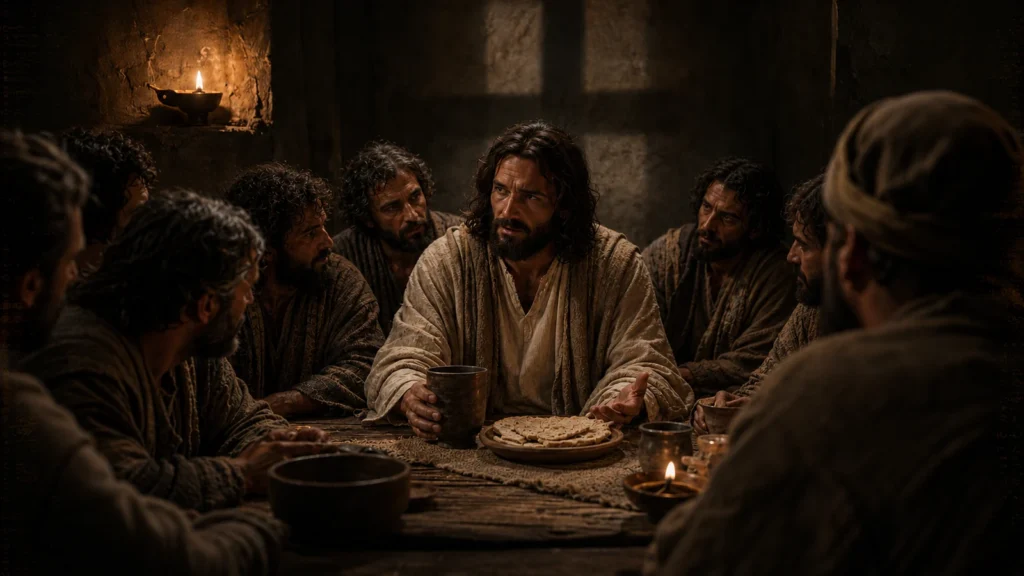
On the night before His crucifixion, Jesus took the cup and identified it with the new covenant in His blood. His death would establish the covenant promised through the prophets, marked by forgiveness, transformed hearts, knowledge of God, and renewed belonging to Him.
Hebrews explains that Christ mediates this better covenant through His once-for-all self-offering. His people do not approach God through an endless succession of sacrifices or through personal achievement. They come through the faithful high priest who has opened the way into God’s presence.
The new covenant does more than cancel a past record. God forgives sin, writes His law upon the heart, cleanses the conscience, and draws His people near. Salvation restores relationship with God and begins the renewal of the people He has claimed as His own.
This is why Scripture connects the cross with holiness. Titus 2:11–14 says that Jesus gave Himself to redeem people from wickedness and to purify for Himself a people who are His very own, eager to do what is good.
Jesus did not die merely to reduce the guilt felt by isolated individuals. He gave Himself to redeem, purify, and claim a people whose lives increasingly display His holiness and grace. Good works do not purchase forgiveness. They grow from the grace that saves, trains, and transforms.
The cross therefore creates both peace with God and a new way of life before Him. Christ forgives His people, brings them near, makes them His own, and begins forming them into the holy community they could never create through their own strength.
These accomplishments reveal the breadth of Christ’s saving work. They also help expose several distortions that arise when one part of the biblical picture is separated from the whole.
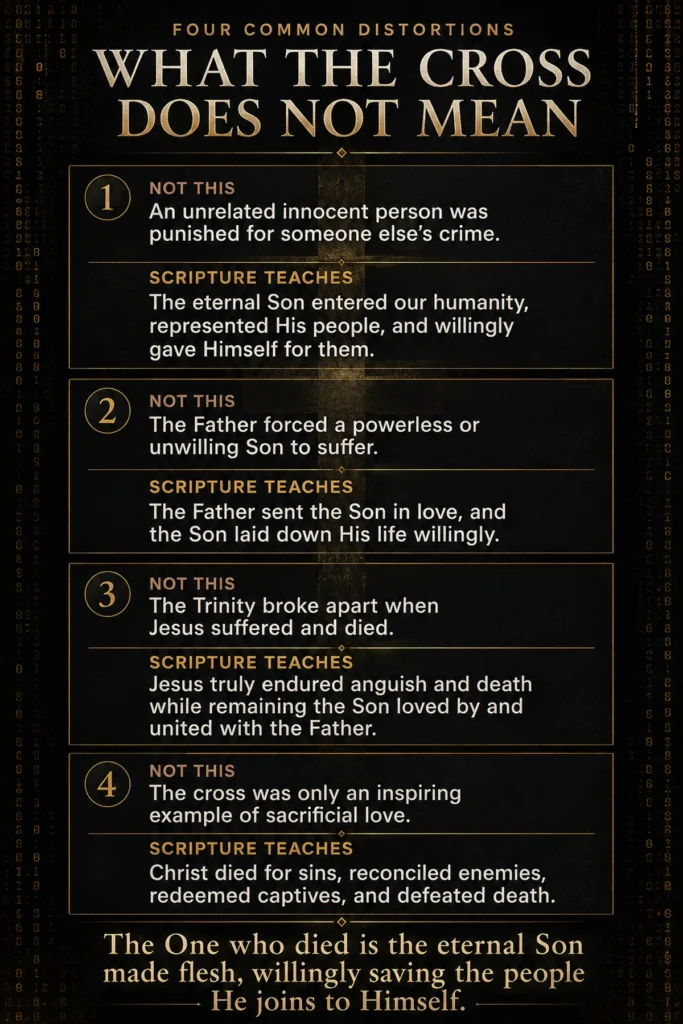
What the Cross Does Not Mean
The cross can be distorted when biblical truths are separated from Christ’s identity and the wider story of redemption. Substitution can be described as though Jesus were an unrelated victim. Judgment can be presented as conflict between the Father and the Son. Christ’s suffering can be minimized into an illustration, or exaggerated into a rupture within God Himself.
Scripture gives a fuller and more coherent picture. The One who died is the eternal Son made flesh. He offers Himself willingly, acts in unity with the Father, bears sin for His people, and remains the living Lord who rises in victory.
Is It Unjust for Jesus to Die in the Place of Sinners?
One of the strongest objections to substitution begins with a legitimate moral concern. Ordinarily, it would be unjust for a court to punish one innocent person for a crime committed by an unrelated guilty person. Consent alone would not make that exchange righteous. A willing friend could not simply volunteer to become guilty of someone else’s murder.
The Christian claim, however, is not that God selected a disconnected individual and transferred punishment to Him. Jesus is the eternal Son who willingly entered the humanity He came to redeem. He stands as the faithful representative of His people, the righteous servant who bears the sins of many, the high priest who offers the sacrifice, and the sacrifice He offers.
Paul’s description in 2 Corinthians 5:14–21 connects Christ’s death with representation and union. One died for all, and those who are in Christ become part of a new creation. The sinless One bears sin so that in Him His people may receive righteousness.
Jesus is therefore not an unwilling stranger punished instead of everyone else. He is the incarnate Savior who takes responsibility for the people He joins to Himself. Substitution remains costly and solemn, but it cannot be understood apart from who Christ is and the new humanity He creates through His death and resurrection.
Did the Father Punish an Unwilling Son?
The cross is sometimes described as though an angry Father inflicted suffering upon a powerless Son who wanted to escape. That picture does not match the New Testament.
The Son is not a created child or a lesser being forced to submit to a stronger deity. He is the eternal Son who shares the divine identity and willingly assumes human nature. Jesus says in John 10:17–18 that He lays down His life of His own accord.
The Father and the Son are distinct persons, but they are not rival gods with opposing purposes. The Father sends the Son in love, and the Son gives Himself in love. God does not begin loving sinners after Jesus dies. The cross is the saving action of the God who already loved the world and gave His Son.
The horror of the crucifixion comes from the reality of sin, judgment, cruelty, and death. It does not come from conflict within the heart of God. At Calvary, the Father does not cease to love the Son, and the Son does not cease to trust the Father. The cross reveals the costliness of the united saving purpose of God.
Did the Father Abandon Jesus on the Cross?
From the cross, Jesus cried, “My God, my God, why have you forsaken me?” as recorded in Mark 15:33–39. Christians should neither weaken the anguish of those words nor use them to claim that the Trinity broke apart.
Jesus truly entered the darkness of human suffering. He endured rejection, shame, violence, death, and the judgment associated with bearing sin. His cry was not theatrical. The incarnate Son experienced the terrible depth of the suffering He had embraced.
At the same time, Jesus’ words are the opening line of Psalm 22. The psalm begins with the anguish of a righteous sufferer surrounded by mockery and violence. It then moves toward confidence that God has heard, followed by vindication, worship, and the proclamation of God’s righteousness to future generations.
Recognizing the psalm does not erase Jesus’ suffering. It places His suffering within the biblical movement from apparent abandonment to divine vindication. Even in His cry, Jesus continues to address “my God.” Later He entrusts His spirit to the Father in Luke 23:44–49.
Scripture does not teach that Father, Son, and Spirit ceased to be the one God or that the divine nature fractured at Calvary. The eternal Son truly suffered and died according to the human nature He had assumed, while remaining the Son loved by and united with the Father.
Jesus’ cry should not be reduced to a quotation that shields Him from real anguish. Neither should it be turned into the destruction of the Trinity. The resurrection reveals that the suffering Son was heard, vindicated, and raised in victory.
Was the Cross Only an Example of Love?
Jesus’ death is the supreme example of self-giving love. Christians are called to imitate His humility, forgive as they have been forgiven, serve rather than dominate, and love even when love is costly.
But an example can only show us how to live. It cannot erase guilt, reconcile enemies to God, break the curse, cleanse the conscience, or conquer death. The cross changes Christian conduct because Christ first accomplished what sinners could never accomplish for themselves.
Jesus did not die merely to inspire better behavior. He died for sins, for the ungodly, and to bring people to God. His love becomes the pattern of Christian life because it is first the love that saves.
The Resurrection Vindicates the Crucified Christ
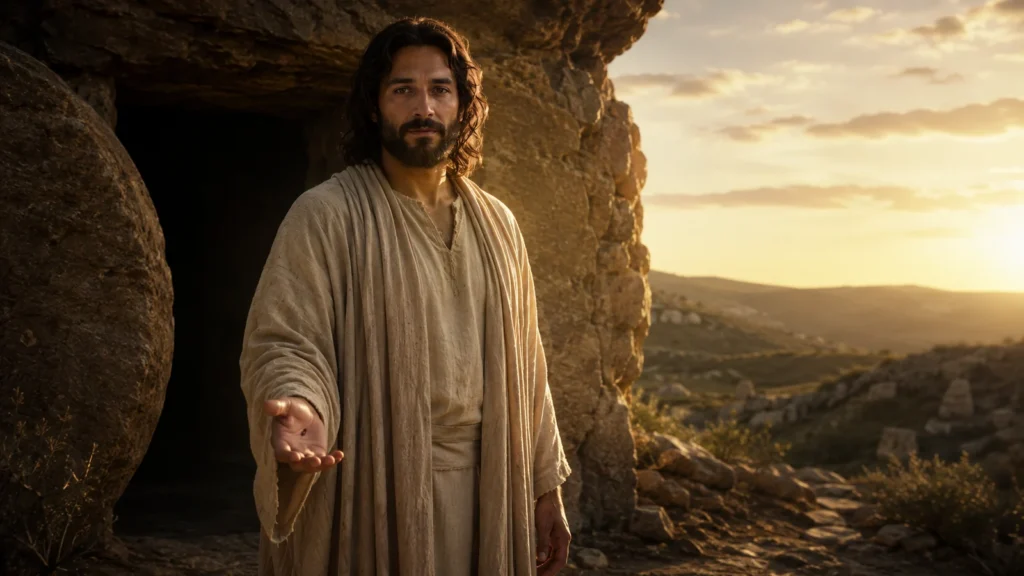
The cross and resurrection must be distinguished, but they must never be separated. The cross is Christ’s willing self-offering for sin. The resurrection is God’s public vindication of the crucified Son and the declaration that death did not defeat Him.
Easter does not repair a failed cross. Nor does the resurrection make a previously meaningless death valuable. Jesus accomplished the work the Father gave Him to do. By raising Him from the dead, God revealed that the One condemned by human authorities is the righteous Messiah, that His saving mission succeeded, and that death has no final claim upon Him.
Paul holds the two events together in 1 Corinthians 15:1–8: Christ died for sins, was buried, was raised, and appeared to witnesses. The gospel is not merely that Jesus died nobly or that His teachings survived. The crucified Jesus is alive.
The resurrection also means that salvation is more than receiving the benefit of an event completed in the past. Those who trust Christ belong to a living Lord. He intercedes for His people, gives them resurrection life, rules over His enemies, and will raise those who are united to Him.
Without the cross, resurrection preaching would lose the biblical explanation of how Christ dealt with sin. Without the resurrection, the cross would leave Christians with a dead teacher rather than the victorious Savior. Together, they proclaim that Jesus bore sin, conquered death, and now reigns as Lord.
For the earliest resurrection proclamation, see How Early Is the Resurrection Claim?. For the named people who claimed that Jesus appeared alive, see What Did the First Witnesses Claim About the Risen Jesus?. For the larger case concerning His identity, see Is Jesus the Son of God?.
The biblical case is therefore not that God overlooked sin or that Jesus became a tragic symbol of human cruelty. The Father sent the Son in love, the Son gave Himself for sinners, and God raised Him from the dead. The crucified Christ is the living Savior.
Frequently Asked Questions
Why did Jesus have to die on the cross?
Jesus died because humanity’s problem is deeper than ignorance, poor behavior, or lack of effort. Sin brings guilt, estrangement, bondage, corruption, and death. Christ gave Himself as the sacrifice for sin, died in the place of sinners, reconciled enemies to God, redeemed captives, defeated the powers, established the new covenant, and purified a people who belong to Him.
Could God forgive without Jesus dying?
Scripture presents the cross as God’s own saving provision, not as an external rule forcing Him to become merciful. God already loved sinners and acted to save them. Yet His mercy does not treat evil as harmless. Through Christ, God demonstrates His righteousness while justifying those who trust in Jesus. The cross reveals justice and mercy working together in God’s saving love.
Why does the Bible speak about the blood of Jesus?
The blood of Jesus is not presented as a magical substance. It points to His life willingly poured out in sacrificial death. Scripture connects Christ’s blood with atonement, cleansing, redemption, covenant, forgiveness, and access to God. The saving power belongs to Jesus Christ Himself, who gave His life and was raised from the dead.
Did the Father abandon Jesus on the cross?
Jesus truly entered the anguish, shame, judgment, and death expressed in His cry from Psalm 22. His suffering was real. Yet Scripture does not teach that the Trinity broke apart or that the Father ceased to love the Son. Psalm 22 moves from suffering toward vindication, and the resurrection declares that the crucified Son was heard and raised in victory.
Does Jesus’ death mean everyone is automatically saved?
Jesus Christ is the only sufficient ground of salvation, but the New Testament calls people to repent, believe, receive Christ, and follow Him. The cross is not permission to remain in rebellion. It is God’s gracious summons to forgiveness, reconciliation, and new life in the crucified and risen Lord.
Why does the resurrection matter if Jesus died for sin?
The resurrection vindicates the crucified Christ and declares that death did not defeat Him. The cross reveals how Jesus dealt with sin; the resurrection reveals Him as the living and victorious Lord. Christians are not merely beneficiaries of a past event. They belong to the risen Savior who intercedes for His people and gives them resurrection life.
Sources and Further Reading
- Primary biblical texts: Isaiah 52:13–53:12; Psalm 22; Mark 10:45; John 10:11–18; Romans 3:21–26; Romans 5:6–11; 2 Corinthians 5:14–21; Galatians 3:10–14; Colossians 2:13–15; Hebrews 8–10; Titus 2:11–14; 1 Peter 2:21–25; and 1 Peter 3:18.
- John Stott: The Cross of Christ.
- Fleming Rutledge: The Crucifixion: Understanding the Death of Jesus Christ.
- Leon Morris: The Apostolic Preaching of the Cross.
- Thomas R. Schreiner: Paul, Apostle of God’s Glory in Christ and his work on Pauline theology and substitution.
- N. T. Wright: The Day the Revolution Began.
- Simon Gathercole: Defending Substitution: An Essay on Atonement in Paul.
Related Paranoid Prophet Investigations
- Was Jesus Crucified? Historical Evidence for the Cross
- Messianic Prophecies of Jesus’ Suffering and Crucifixion
- How Early Is the Resurrection Claim?
- What Did the First Witnesses Claim About the Risen Jesus?
- Is Jesus the Son of God? Evidence from History, Prophecy, Resurrection, and Scripture
The Crucified Christ Is the Savior We Need
The cross reveals the depth of humanity’s need and the greater depth of God’s saving love. Sin could not be repaired through better intentions, religious performance, political reform, or moral effort. Humanity needed forgiveness, cleansing, liberation, reconciliation, and life.
Jesus Christ accomplished what sinners could not. The eternal Son entered our humanity, lived in perfect obedience, carried sin, endured the cross, and gave Himself to bring enemies home to God. He redeemed captives, disarmed the powers, established the new covenant, and purified a people who belong to Him.
He is not merely a dead example of sacrifice. God raised Him from the grave. The One who bore sin is alive, the One condemned by human rulers now reigns, and the One who entered death gives eternal life to those who trust Him.
The cross therefore calls for more than admiration. It calls us to repent of the rebellion that made redemption necessary, trust the Savior who gave Himself for sinners, and follow the risen Lord who has claimed His people as His own.
The final question is not only why Jesus died. It is whether we will come to the crucified and risen Christ in repentance, faith, worship, and trust. He is the Lamb who was slain, the Lord who lives, and the Savior who brings sinners to God.
CONTINUE THE INVESTIGATION
Recommended continuation
How Early Is the Resurrection Claim? 1 Corinthians 15 and the First Witnesses
Continue from the meaning of Jesus’ death to the chronology of the earliest resurrection proclamation.