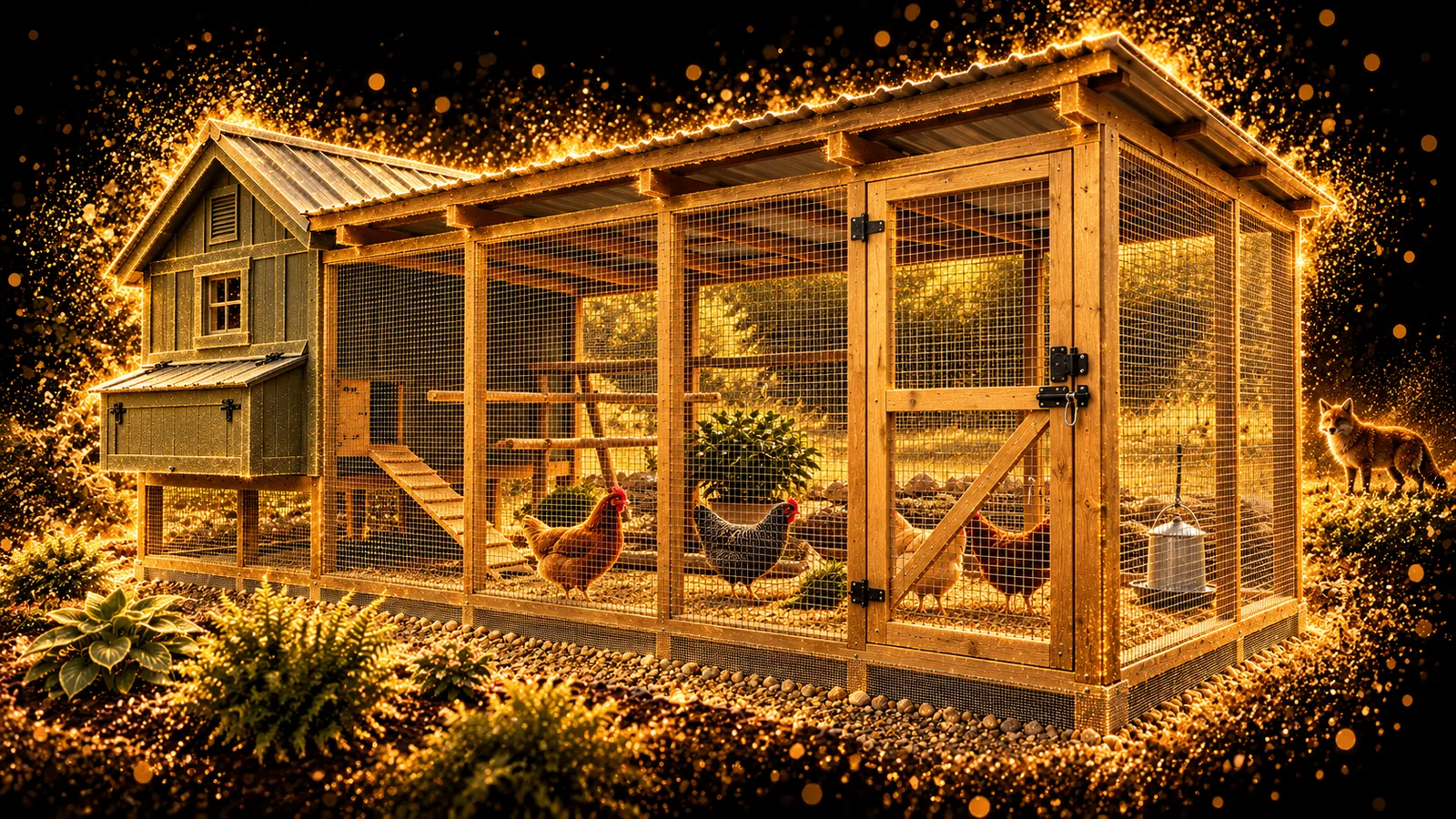

A coop can look safe all afternoon. The fence stands, the door closes, and the chickens wander around like they own the place.
A predator does not care whether the coop looks finished. It only needs one workable opening: weak wire, a gap below the fence, a climbing route, an unsecured lid or a hen left out after dark.
A chicken coop is only as secure as its weakest entry point.
GUIDED ARTICLE EXPERIENCE
How to Predator-Proof a Chicken Coop & Run: A Practical Security Checklist
Read along as the narration moves through the article.
Private device narration · No hosted audio or tracking
CONTINUE GUIDED TOUR
Continue where you left off.
GUIDED TOUR COMPLETE
You have reached the end of this study.
Study record saved on this device.
GUIDED TOUR
How to Predator-Proof a Chicken Coop & Run: A Practical Security Checklist
Narrator: Paranoid Prophet Recommended Voice Native device narration
Prepare to follow the article as it is narrated.
VOICE & TOUR OPTIONS
Voice & Listening
NARRATOR
Finding a narrator…
Checking the best narrator available on this device.
Restores the best curated narrator available on this device.
Narrator choices are curated for clear, long-form listening on this device.
Screen-awake support will be checked when narration starts.
CHOOSE A NARRATOR
Curated for this device
Choose a verified narrator for this browser, or use System Narrator. Automatic mode uses the best reliable route exposed by this device; your chosen narrator is preserved even if this device needs a temporary fallback.
Preparing the guided article experience…
RESUME GUIDED TOUR?
Continue where you left off.
GUIDED TOUR COMPLETE
You have reached the end of this study.
Article Guide18 sections
Quick Answer: How Do You Predator-Proof a Chicken Coop?
Secure birds in a strong, properly latched coop every night; reinforce vulnerable openings with suitable small-opening welded mesh; protect the run against digging; cover it appropriately against aerial or climbing threats; and check every door, window, vent and seam. Remove spilled feed and protect water to reduce wildlife visits.
University of Maryland Extension’s poultry predator guidance recommends locking poultry inside at night and, for fixed runs, burying protective fencing at least 12 inches with an outward 8–10-inch turn. These are practical prevention measures, not a promise that any structure is universally predator-proof.
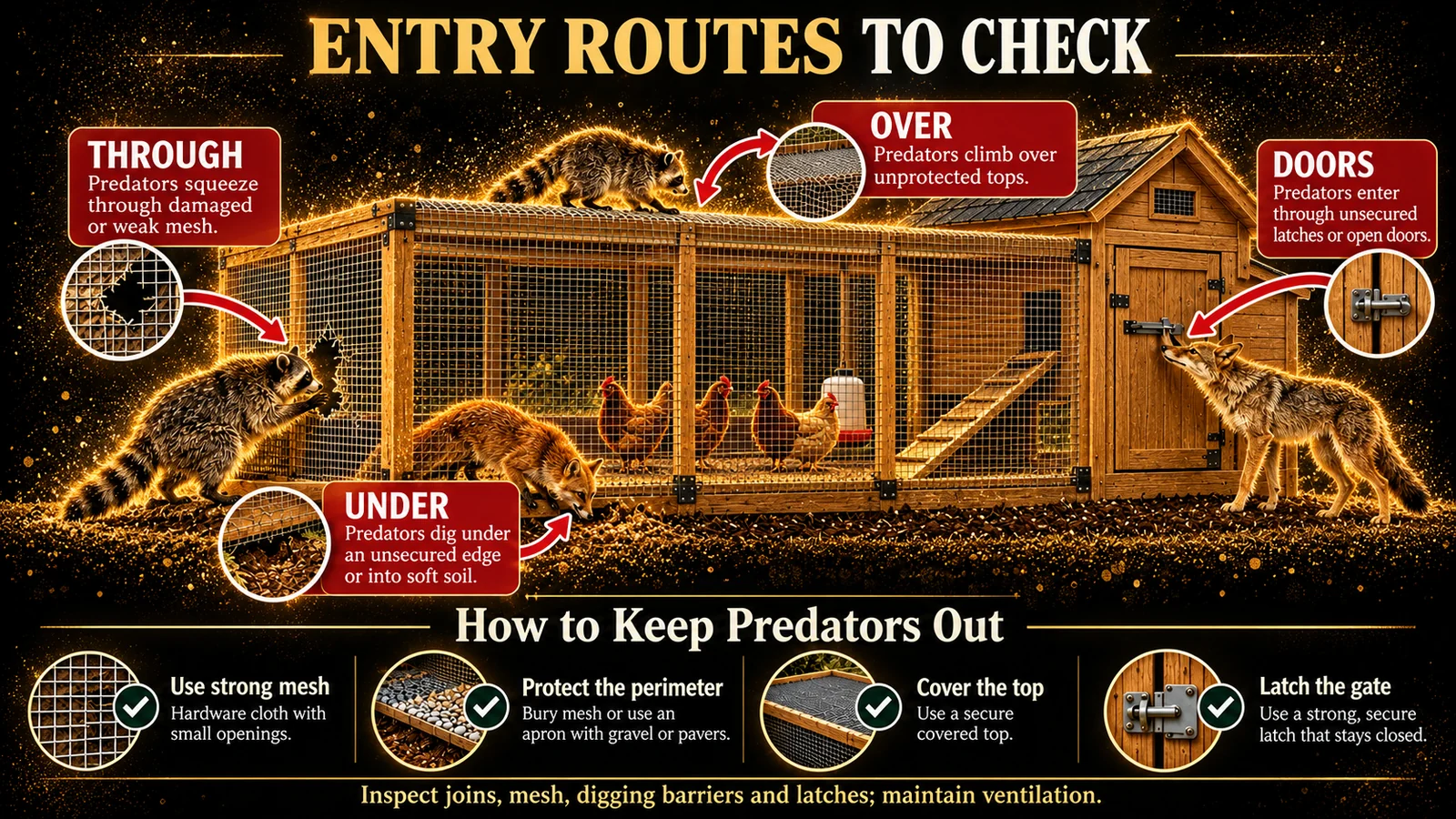
Think Like a Predator: Four Ways Into the Coop
Through: weak wire, rotten boards, torn screens, loose vent covers or damaged corners.
Under: digging at the base of the run, exposed foundation edges, erosion or a gap beneath a door.
Over: an uncovered run, a poorly attached roof, or climbing along walls and frames.
Through the door: unsecured pop doors, gates, nest-box lids or cleaning hatches.
Each entry route requires its own solution. A deep fence will not stop a hawk from entering an uncovered run. A strong roof will not help if the gate is unlatched. And a secure gate will not save a chicken that sleeps against a wide mesh opening through which a predator can reach.
Know Your Local Predators
Depending on location, chickens may be threatened by dogs, foxes, raccoons, coyotes, hawks, owls, snakes, rats and other wildlife. A domestic dog can injure poultry without hunting for food. A snake or small mammal may take eggs and chicks even if it cannot kill a mature hen.
Threat patterns differ by species and time. Do not assume daylight means safety or that predators only hunt in remote rural areas. A neighborhood yard can still attract wildlife.
Maryland Extension cautions that predator identification clues are useful but imperfect. Focus first on closing access rather than declaring exactly which animal was responsible from a single feather pile.
Chicken Wire Versus Hardware Cloth
Traditional chicken wire is designed primarily to contain chickens. Its twisted, hexagonal openings and light construction make it a poor sole defense against some determined predators or animals reaching into the enclosure.
For high-risk sidewalls, ventilation openings, windows and other vulnerable areas, use suitable corrosion-resistant welded hardware cloth, securely fastened to strong framing. Half-inch openings are a useful conservative starting point for many backyard installations. Wire gauge, fastening strength and actual predator pressure still matter.
An animal may not need to enter the pen to injure a bird sleeping against the side. Strong, properly attached small-opening mesh reduces that opportunity.
Mesh is only as good as its fasteners
Use appropriate corrosion-resistant fasteners, washers or continuous wooden battens into sound structural framing. Pay attention to edges, overlaps, corners and the spaces around door frames. Do not assume a few light staples in deteriorating wood make an opening secure.
A well-built barrier has three parts: strong material, sound support and reliable attachment.
Stop Digging Beneath the Run
A fixed run may look strong above ground yet have an open route underneath.
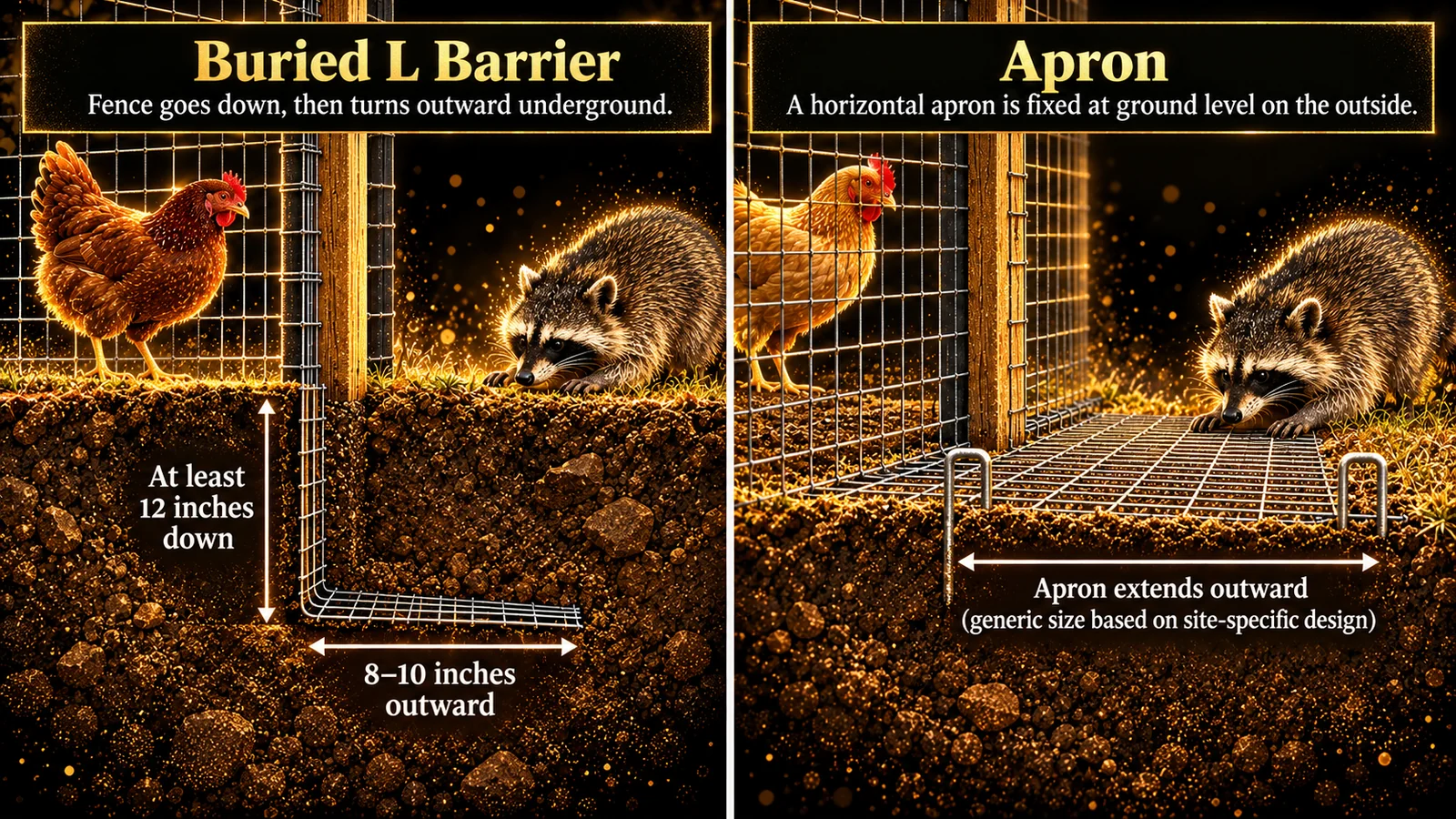
University of Maryland Extension recommends extending fence protection at least 12 inches down and turning it outward at a right angle for at least 8–10 inches. Predators digging beside the fence encounter a barrier at the corner.
Another practical construction approach is a properly anchored horizontal outward predator apron along the ground outside the run, recessed or covered to prevent tripping or injury. This is a distinct design from a buried vertical section and requires sound attachment to the base, continuous coverage at corners, suitable width for local risks and periodic inspection.
Do not mix dimensions from the two approaches in a diagram as if they describe the same system. The construction illustration must label its specific design and supporting reference.
Inspect after rain and erosion
Water runoff, burrowing and soil settling can create new openings. Check the perimeter after storms and repair gaps before birds use the area again. Do not leave sharp wire exposed where poultry, children or other animals can be cut.
Protect the Roof and Overhead Openings
A high fence does not automatically stop a hawk. Raccoons and other climbing mammals may also find an open top.
A covered run helps reduce aerial predation. Choose materials appropriate to the threat: lightweight bird netting may discourage some birds, but it is not a dependable climbing-mammal barrier. A run meant to withstand those animals requires a stronger roof or properly supported secure mesh, with durable connections at the edges.
Do not install loose netting that creates an entanglement hazard. Maintain ventilation, drainage and enough shade without trapping heat beneath the covering.
Doors, Gates and Lids Are Common Weak Points
When adding nests or perches, use the coop-interior guide for layout and accessibility. Interior improvements still need secure exterior nest lids and doors; comfortable housing does not replace a predator-resistant enclosure.
Inspect every opening from the outside:
- Main human access door.
- Chicken pop door.
- Run gate.
- External nest-box lid.
- Cleaning panel.
- Removable or hinged roof section.
A latch that opens with one easy movement may be inadequate against a persistent animal. Choose hardware that requires deliberate operation, such as a suitable lockable hasp or secure bolt and locking clip. Ensure the door and frame themselves remain sound. Check for warping and bottom gaps, not just whether a latch clicks.
Can an automatic door help?
Yes, a properly installed automatic door may keep closing time consistent, but it is not a substitute for inspections. Confirm the mechanism closes fully, resists forced lifting, has reliable power and does not trap or leave birds outside. Technology cannot protect a hen that never returned to the coop.
Keep Ventilation Open and Predator-Resistant
Vents, eaves and open windows can admit rodents or larger predators if left inadequately protected. Secure those openings with appropriate small-opening mesh while retaining airflow.
Do not seal the coop so tightly that it becomes damp or dangerously hot. Both winter coop management and our summer heat-stress guide explain why ventilation and bird-level comfort are nonnegotiable.
The goal is secure openings, not no openings.
Does Free-Ranging Change the Risk?
Yes. Foraging and outdoor exploration can benefit chickens, but unrestricted ranging exposes them to animals and conditions beyond the control of a secured run.
Supervision, shrubs, shelters, fencing and guardian animals may reduce particular risks; none guarantees protection. A nearby person cannot reliably prevent every hawk or roaming-dog attack. A genuinely covered and secured enclosure offers greater control than an open yard.
Small chicks, injured birds and smaller breeds may need extra protection. Decide on free-ranging with the remaining risk understood, not with an imaginary promise of safety.
Reduce Food and Wildlife Attractants
Open feed, scattered grain, rodents and standing water can draw unwanted animals and create disease risks. Keep feed in secure containers, clean spills, maintain drinkers and remove unnecessary food waste.
USDA’s wildlife-biosecurity guidance recommends protecting poultry from wild birds and rodents, cleaning up attractants and avoiding untreated surface water. Our feeder placement guide explains how to give chickens access while reducing waste.
This is where predator protection and disease prevention meet. A wild animal visiting for spilled feed may create more than one kind of problem.
Do Motion Lights, Cameras or Scare Devices Work?
They may help, but they are secondary measures. Wildlife may become accustomed to lights, noises and moving objects. A camera can reveal when animals visit and how they approach, but it does not stop entry by itself. Maryland Extension describes both deterrent limitations and the value of trail cameras in identifying animal activity.
A motion light does not repair a broken latch. Spend on the physical barrier first.
What about electric poultry fencing?
Properly designed commercial livestock fencing may help deter some ground predators. Use appropriate approved equipment and follow manufacturer, local and property safety requirements. Consider children, pets and visitors. Never connect household electrical power directly to an improvised fence.
How Do You Identify an Attacker?
Tracks, digging, damaged wire, feathers and missing birds may provide clues. But multiple animals can produce similar patterns, and scavengers can alter the scene after an attack.
Photograph damage, look for an entry route and consider a properly placed camera. Do not overstate identification based on one injury pattern. The urgent question is whether the survivors remain exposed.
What to Do After a Predator Attack
First make sure it is safe for you to enter. Secure surviving chickens in an intact enclosure. Check for bleeding, wounds and distress; obtain veterinary care for serious injuries. Do not return birds to the breached area before repairing the access point.
Document damaged wire, doors, tracks and digging. Inspect the whole perimeter and roof, not just the obvious hole. If several birds die with no evidence of attack or illness may be involved, use our Sick Chicken guide and seek appropriate veterinary or animal-health advice.
Do not indiscriminately poison or trap wildlife. Native hawks and owls are federally protected under the Migratory Bird Treaty Act, and wildlife rules vary by species and jurisdiction. Use lawful exclusion and consult wildlife professionals when necessary.
A 10-Minute Weekly Coop Security Audit
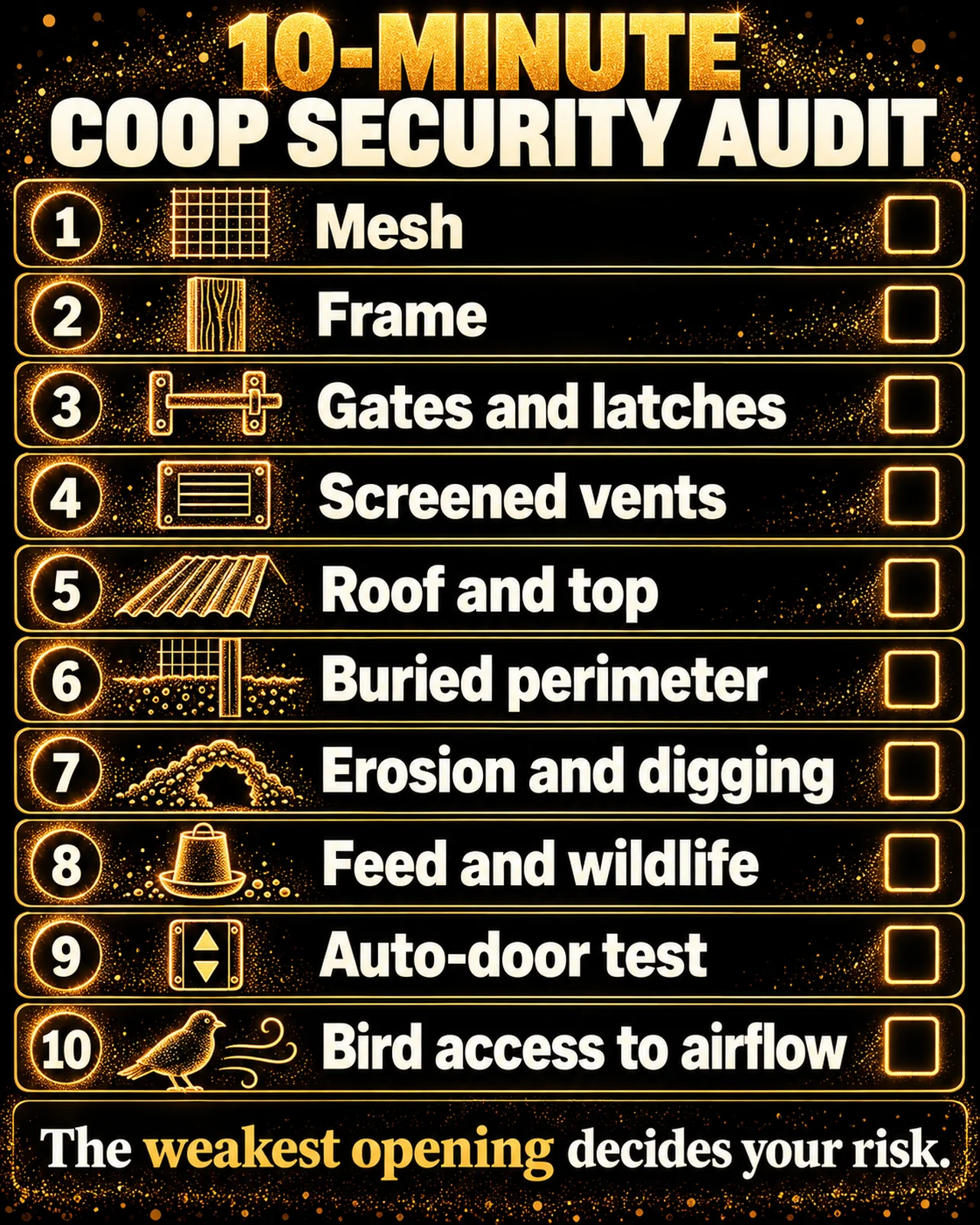
Once a week, and after storms, check:
- Every door and latch closes firmly.
- Mesh is not torn, rusted or pulled from its frame.
- Windows, vents and roof seams remain covered and ventilated.
- The ground perimeter has no fresh gaps, erosion or digging.
- Overhead protection is intact.
- Feed containers and drinkers are not drawing unnecessary wildlife.
- Any automatic door cycles correctly and all birds are inside at closing.
- Chickens can move, roost, drink and shelter safely without crowding.
The weakest opening often appears after construction, through wear, moisture or an overlooked repair.
Where Should You Spend Money First?
Fix the most dangerous exposed entry route first. In many backyard setups, a sensible order is reliable night confinement, secure doors and mesh, protection against digging, strong overhead covering, and only then extras such as cameras or deterrents.
A property with active digging may need an apron first; a coop with a failing main door needs that repair immediately. Do not follow a generic shopping list while leaving a visible breach unrepaired. Our chicken space guide and cost of raising chickens can help plan improvements without overcrowding or ignoring maintenance.
Predator Protection Is Stewardship
Proverbs 12:10 connects care for animals with right conduct. Chickens cannot install better mesh or notice that a latch has failed. Those jobs belong to us.
This is not a promise that no animal will ever be lost. It is a commitment to correct preventable risks without declaring war on every wild creature near the yard.
Build the barrier. Check the barrier. Bring the flock inside.
Frequently Asked Questions
What is the best wire for a chicken coop?
Properly installed, suitably strong welded hardware cloth with small openings is a conservative choice for vulnerable areas. Fasteners and frame strength matter too.
Can raccoons get through chicken wire?
They can exploit larger openings and weak attachments, and may reach through fencing without entering. Do not rely on lightweight chicken wire as your only predator barrier.
How deep should the fence be buried?
Maryland Extension recommends at least 12 inches down and an outward turn of another 8–10 inches for its described buried-fence design. An anchored horizontal apron is a different option.
Do chicken runs need roofs?
Overhead protection is strongly advisable where raptors or climbing predators are a concern. Use an appropriate secure material rather than assuming lightweight bird netting stops mammals.
Do motion lights repel predators?
They can deter some visits temporarily but are not reliable replacements for doors, mesh and a properly secured run.
Are automatic coop doors predator-proof?
Not inherently. Installation, security, function, power and actual chicken attendance all matter.
Are free-ranging chickens safe?
Free-ranging carries risk that a fully enclosed run can reduce. Even supervision does not eliminate attacks.
What should I do after an attack?
Secure survivors, assess injuries, document evidence and repair the opening before using the enclosure again.
Sources and Responsible Care
Technical recommendations draw on University of Maryland Extension, USDA APHIS wildlife biosecurity and the US Fish and Wildlife Service. Predator pressure, construction and laws vary; no design can guarantee complete safety.