
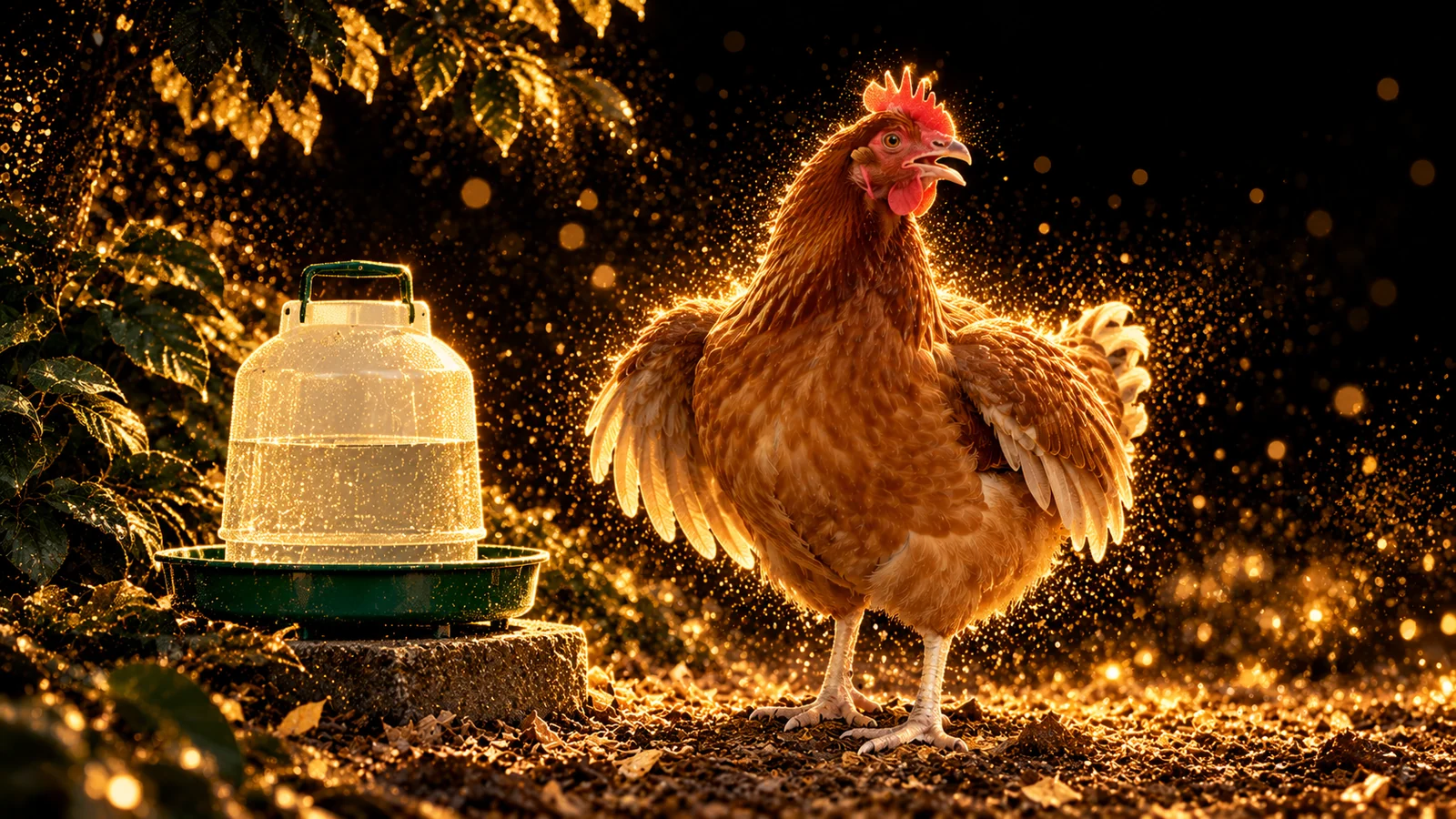

A hot summer afternoon can turn an otherwise ordinary chicken run into a difficult place to live. Hens stand in the shade, hold their wings away from their bodies and pant. Some drink more water. Others stop scratching and settle into the coolest patch of dirt they can find.
That does not mean every bird is in immediate danger. It does mean the environment deserves attention.
Chickens cannot sweat the way humans do. They rely partly on evaporative cooling through panting and on their surroundings to release body heat. When those mechanisms cannot keep up, heat stress can progress to a life-threatening emergency.
Good summer care makes cooling possible before the bird collapses.
GUIDED ARTICLE EXPERIENCE
Chicken Heat Stress: Warning Signs, Emergency Cooling & Summer Care
Read along as the narration moves through the article.
Private device narration · No hosted audio or tracking
CONTINUE GUIDED TOUR
Continue where you left off.
GUIDED TOUR COMPLETE
You have reached the end of this study.
Study record saved on this device.
GUIDED TOUR
Chicken Heat Stress: Warning Signs, Emergency Cooling & Summer Care
Narrator: Paranoid Prophet Recommended Voice Native device narration
Prepare to follow the article as it is narrated.
VOICE & TOUR OPTIONS
Voice & Listening
NARRATOR
Finding a narrator…
Checking the best narrator available on this device.
Restores the best curated narrator available on this device.
Narrator choices are curated for clear, long-form listening on this device.
Screen-awake support will be checked when narration starts.
CHOOSE A NARRATOR
Curated for this device
Choose a verified narrator for this browser, or use System Narrator. Automatic mode uses the best reliable route exposed by this device; your chosen narrator is preserved even if this device needs a temporary fallback.
Preparing the guided article experience…
RESUME GUIDED TOUR?
Continue where you left off.
GUIDED TOUR COMPLETE
You have reached the end of this study.
Article Guide17 sections
Quick Answer: How Do You Keep Chickens Cool?
Provide shade, continuously available cool clean water and effective airflow. Make sure all birds can reach shade throughout the hottest part of the day, inspect waterers more often, and keep the coop ventilated without exposing the flock to predators.
Panting and wings held out can be normal attempts to cool. Severe weakness, collapse, inability to stand, unresponsiveness or serious breathing trouble are emergency signs. Move the bird to cooler conditions, begin safe cooling and seek urgent poultry-veterinary advice. Mississippi State Extension’s June 2026 guidance supports shade, ventilation, cool water and careful lower-body cooling of overheated chickens.
How Hot Is Too Hot for Chickens?
There is no universal danger temperature for every bird. Breed, body condition, age, air movement, sunshine, enclosure design and especially humidity change risk.
University of Minnesota Extension identifies roughly 60–75°F as a thermoneutral range for many poultry. As temperatures rise toward about 85°F, birds may reduce feeding and adjust their behavior. The danger can become severe near 100°F without adequate cooling, but those points vary with conditions.
A hen in 90°F shade with airflow and plentiful water is not in the same position as one trapped in a still, sun-baked coop at the same air temperature.
Humidity changes the equation
Panting loses heat through evaporation. High humidity makes that evaporation less effective. That is why the combination of heat and moisture matters more than a single thermometer number. Minnesota Extension cautions that misting can increase relative humidity and worsen cooling when conditions are already too moist.
Check what is happening inside the coop and at bird level, not just the number in a weather app.
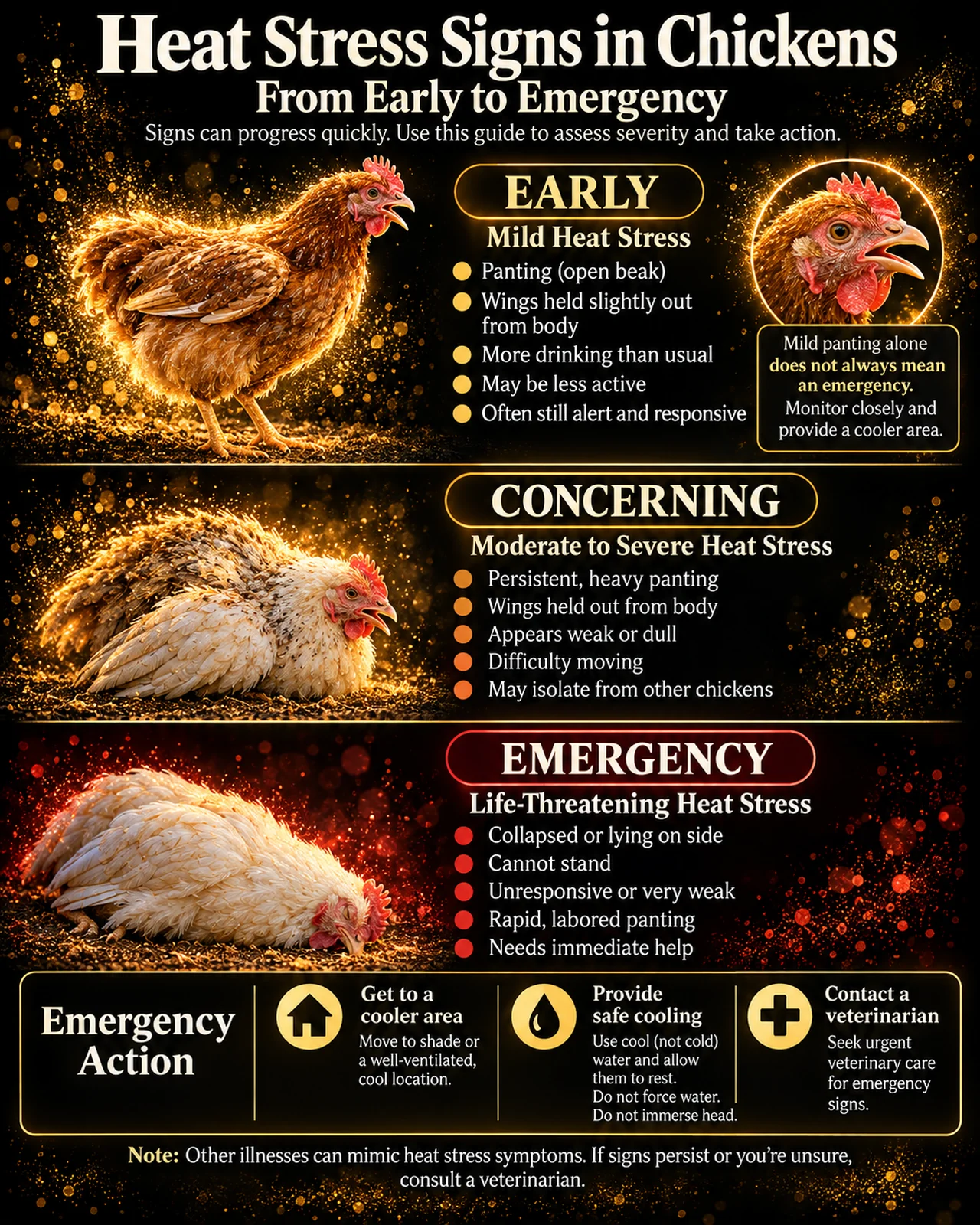
Heat-Stress Signs: Early, Concerning and Emergency
Early responses to heat
- Panting with the beak open.
- Wings held away from the body.
- Spending longer in shade or on cooler ground.
- Drinking more and eating less.
- Reduced afternoon activity.
These are reasons to improve conditions and monitor, not necessarily proof of imminent collapse. Penn State’s updated summer-flock guide explains how heat affects panting, water intake and production.
More concerning signs
- Persistent, intense panting even after access to shade.
- Increasing lethargy or reduced responsiveness.
- Weakness, difficulty walking or abnormal balance.
- Comb or wattle discoloration combined with distress.
- Refusal to drink or an inability to reach water.
Emergency signs
A chicken that collapses, cannot stand, is unresponsive or shows severe respiratory distress requires prompt cooling and urgent veterinary help. Do not wait for a treat, vitamin or different brand of drinker to work.
Heat is not the only cause of gasping, weakness or collapse. If the signs do not fit an obvious environmental heat problem, or several birds become ill or die unexpectedly, consult our Sick Chicken emergency guide and seek appropriate professional advice.
What to Do When a Chicken Is Overheating
1. Move the bird out of extreme heat
Carefully transfer the bird to a cooler shaded, well-ventilated poultry-care area if it is safe to do so. Reduce stressful handling. Keep poultry out of household living and food preparation areas, consistent with CDC guidance.
2. Offer cool water if she can swallow normally
Make clean water easy to reach. Do not force liquid down the throat of an unconscious, collapsed or profoundly weak bird. Aspiration is a serious risk when normal swallowing is impaired.
3. Begin gentle physical cooling
Mississippi State Extension recommends cooling an overheating chicken’s lower body in cool, not icy, water, while carefully keeping the head above water. Only use this method if the bird can be safely supported without compressing its body or submerging its airway. Never use an ice bath or put the head underwater.
A severely compromised bird needs veterinary support; do not persist with stressful home handling if safe cooling is not possible.
4. Improve airflow and watch the response
Keep the bird in a cooler environment with appropriate air movement. Monitor breathing, alertness and ability to stand. Temporary improvement does not rule out serious injury or another underlying condition.
5. Check the rest of the flock
Inspect shade, waterers, ventilation and signs in other hens. The first distressed bird may reveal a broader environmental failure.
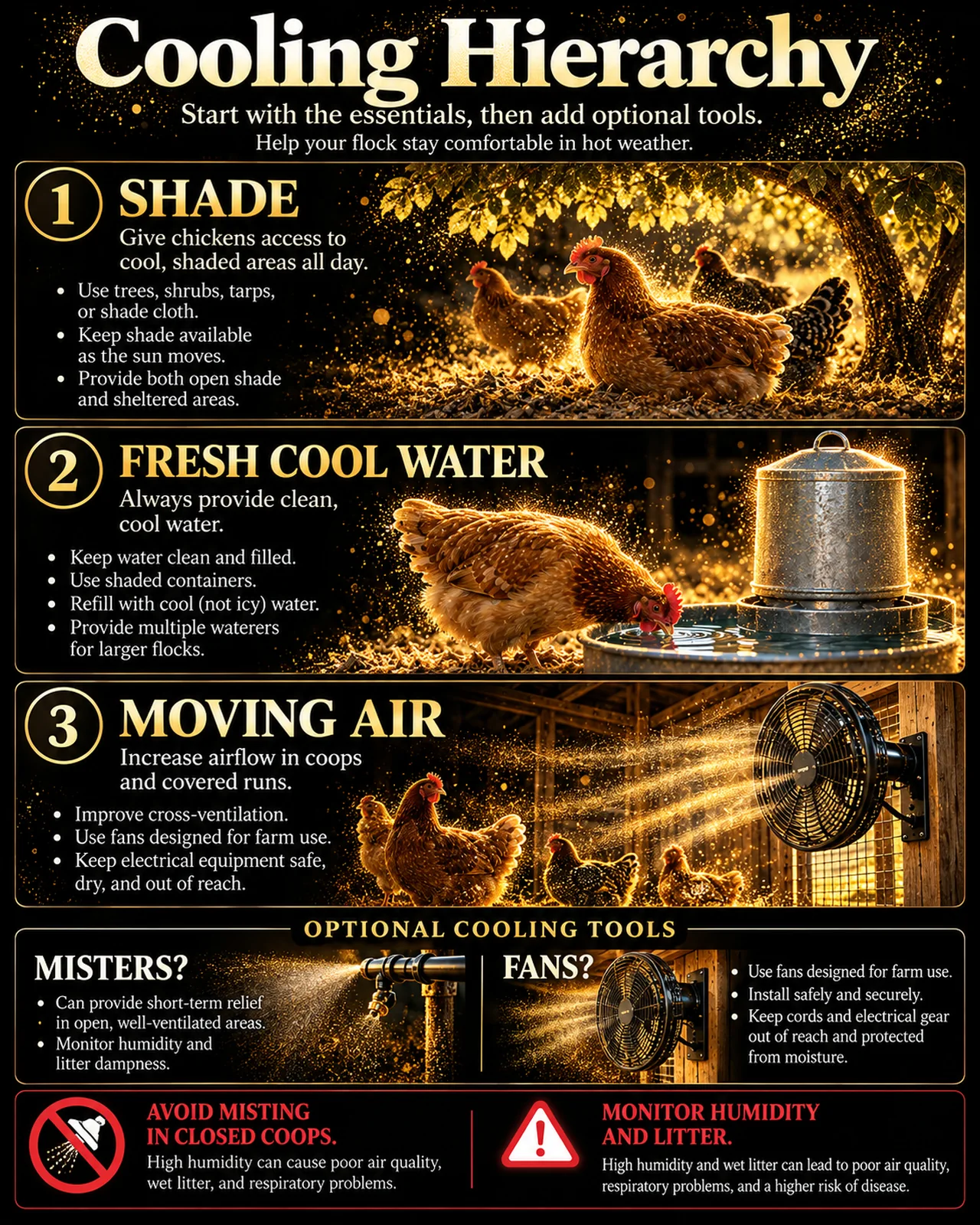
Shade Is the First Summer Upgrade
Look at shade throughout the day, not just early in the morning. A canopy that covers most of the run at 9 AM may protect very little of it by midafternoon.
Trees, sturdy shade cloth, roof extensions and other ventilated structures can help. Avoid trapping hot air under low, sealed tarps. Make sure the whole flock has access rather than allowing dominant hens to monopolize the only shaded corner.
Our flock has taught us how quickly chicken activity can change a yard. After roughly the first year with the original flock of 16 chickens and two ducks, the backyard had essentially no grass left. Shade and ground cover need deliberate maintenance; do not rely on a lawn or planting scheme that may disappear under daily scratching.
Useful shade is measured by whether the birds can actually occupy it during peak heat.
Water Is the Essential Summer Routine
Water consumption rises markedly during heat stress. Minnesota Extension notes that intake may increase two to four times under some conditions. The container that lasted until evening in spring may fail on a hot summer day.
Use multiple accessible stations in shade. Keep them clean, working and filled. Raise or protect drinkers to avoid contamination, and inspect the actual drinking nipples or openings rather than assuming a full reservoir guarantees water access.
Refresh warm water frequently. Ice cubes or frozen water bottles may help hold it cooler, as Penn State recommends during heat waves. Keep bedding around the stations reasonably dry.
Multiple drinking stations can also help lower-ranking hens that are chased away from a preferred spot.
Ventilate the Coop Without Sacrificing Security
An enclosed coop can accumulate heat, moisture and stale air. Air must be able to move at the birds’ level and hot air needs a practical exit route. Minnesota Extension emphasizes bird-level air movement as a primary heat-management tool.
Inspect vents, windows, roof openings and the hottest nest boxes. A fan may help when appropriately positioned, but use equipment rated for the setting and protect electrical connections from bedding, birds, splashing and weather. Do not run unsafe cords through wet poultry areas.
Keep vents predator-resistant rather than sealing them shut. Our predator-proof chicken coop guide explains the structural side; our winterizing guide discusses year-round airflow and moisture.
Misters: Helpful in Some Weather, Harmful in Other Conditions
Evaporation can cool a dry environment. But misting already humid air may add moisture while reducing the birds’ ability to release heat by panting.
Minnesota Extension specifically recommends monitoring humidity when misting or fogging. Use misters sparingly and only where air circulation makes them effective. Prevent soaked litter, pooled water and electrical hazards.
A clean shallow area that some chickens voluntarily stand in may offer additional cooling, provided footing is safe and it does not become a dirty, permanent mud hole. Do not force healthy birds into water.
Shade, cool drinking water and airflow come before optional misters.
Electrolytes and Supplements
Appropriate poultry electrolyte products can sometimes support birds through heat stress. However, they do not replace freely available drinking water and they are not treatment for collapse or severe heat illness. Use poultry-labeled products as directed or under veterinary advice.
Do not invent an untested salt, baking-soda or human sports-drink mixture. The Minnesota Extension heat guide discusses electrolyte loss during heat stress, but technical formulations should not be treated as casual backyard recipe instructions.
What Should Chickens Eat During Heat Waves?
Hot birds may eat less. Feeding or refreshing the complete ration during cooler morning and evening periods may encourage intake. Keep age-appropriate balanced feed accessible according to a sound feeding plan rather than replacing it with fruit or scratch.
Penn State warns that reduced intake can affect egg production and shell quality, and treats should remain moderate. Small frozen fruit or vegetable treats can provide enrichment but should never become the bulk of the ration.
Our chicken feeder placement guide addresses comfortable access and keeping feed clean. The what not to feed chickens page covers broader feed hazards; avoid using treats as medicine.
Why Egg Production Can Drop
Heat can reduce appetite, affect nutrition, and lower laying rate or shell quality. Mississippi State notes that production may not return immediately after a severe heat episode.
But not every decline during summer is caused by heat. Age, breed, molting, disease, day length and other conditions can contribute. Evaluate the whole flock and check whether nesting areas themselves become excessively hot.
Which Chickens Need Closer Monitoring?
Age, health, body condition, breed and feathering affect tolerance. Large or heavily feathered birds may have different needs from smaller or lighter breeds, though none is heat-proof. Our beginner chicken breed guide helps with climate planning.
Young chicks have a special situation: they still require an age-appropriate brooder temperature, but a brooder can overheat in summer if supplemental heat continues unchanged. Monitor the actual birds and conditions. Our raising baby chicks guide covers the difference.
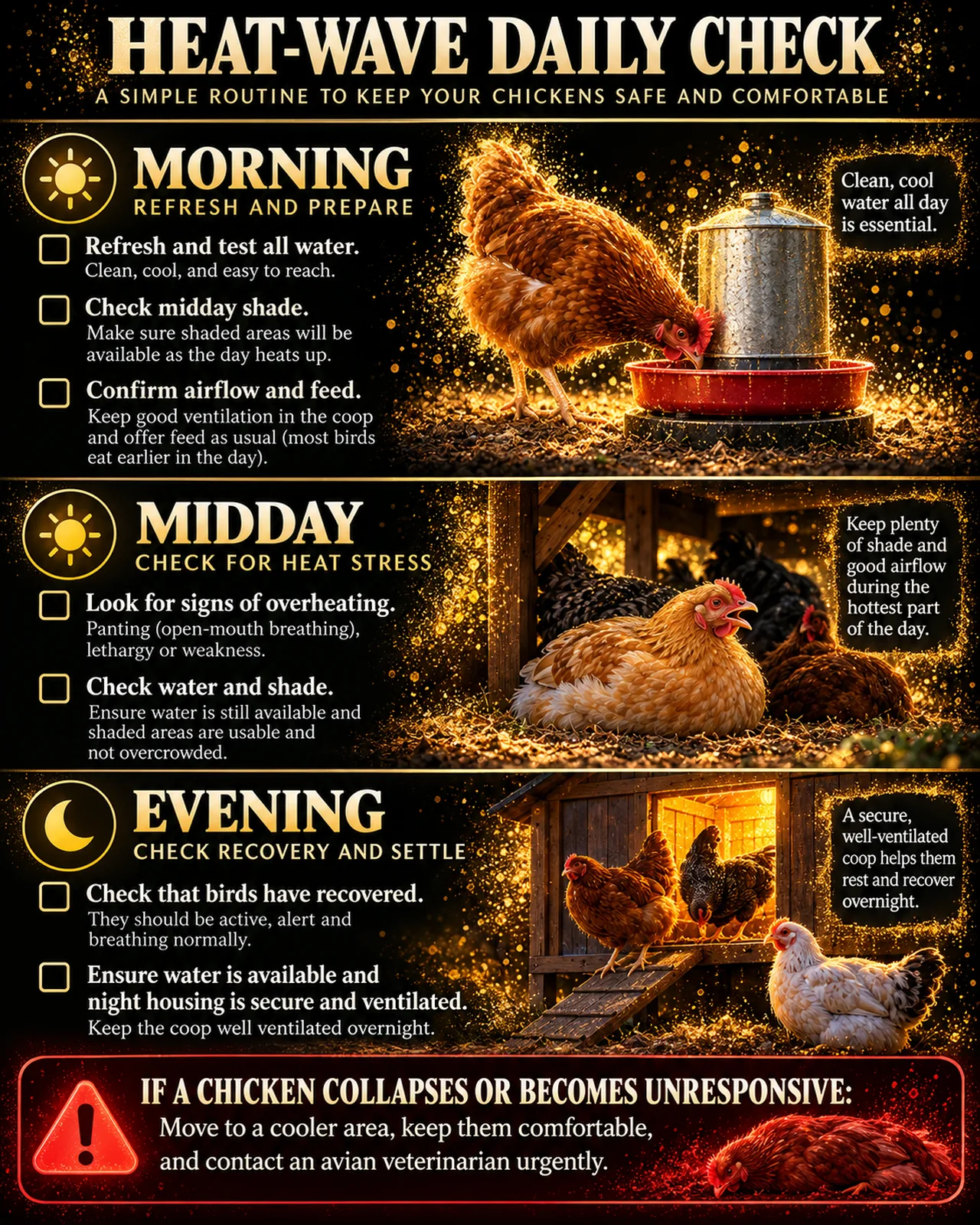
A Practical Daily Heat-Wave Routine
Morning
Fill and test drinkers. Confirm shade will cover enough space during peak heat. Check fans and airflow. Refresh complete feed while it is cooler. Look at vulnerable birds.
Hottest hours
Check the entire flock for changes in breathing, activity and access to shade. Test water again. Avoid unnecessary chasing, handling and transport. Check nest boxes and closed sections that may be hotter than the run.
Evening
Refresh water and evaluate whether birds return to normal as temperatures fall. Keep the coop ventilated and lock birds safely inside. Summer heat does not justify leaving hens exposed to predators overnight.
During a prolonged heat wave
Increase checks, prepare backup water and have a plan for equipment or power failure. Avoid assuming that because yesterday passed without a problem, tomorrow will be safe.
What Not to Do in Extreme Heat
- Do not depend on one uninspected waterer.
- Do not create shade by sealing a coop against airflow.
- Do not assume misting helps in humid weather.
- Do not use ice-water immersion for a distressed chicken.
- Do not force liquids into a bird that cannot safely swallow.
- Do not replace a complete ration with frozen treats.
- Do not assume panting proves heat is the only problem.
- Do not ignore weakness that persists after cooling.
Stewardship Means Preparing Before the Heat
Proverbs 12:10 asks us to care well for animals. Chickens cannot refill their water, extend a canopy or repair a fan. We have to notice when our original backyard arrangement no longer meets their needs.
Provide the shade. Keep water available. Move the air. Watch the birds.
That is less exciting than an elaborate summer hack, but it is good stewardship.
Frequently Asked Questions
How hot is too hot for chickens?
Heat stress can begin in the 80s°F, with risk increasing at higher temperatures. Humidity, airflow, shade, breed and individual health change the thresholds.
Why is my chicken panting?
Panting is a cooling response, but heavy persistent panting, weakness or breathing difficulty can signal serious trouble, including causes other than heat.
What are emergency signs of heat stroke in a chicken?
Collapse, severe weakness, unresponsiveness, inability to stand or serious respiratory distress. Begin safe cooling and get urgent veterinary help.
Can I cool a chicken with water?
Mississippi State recommends gently cooling an overheated bird’s lower body with cool—not icy—water while keeping its head safely above water.
Are fans necessary?
Not in every open run, but properly installed fans can improve airflow where it is stagnant or dangerously hot.
Do misters help?
They may help in low humidity. In humid conditions, added moisture can interfere with cooling and wet bedding.
Can chickens drink cold water?
Fresh cool water is useful in hot weather. Ice in a waterer is different from an unsafe ice bath for an overheating bird.
Can I give frozen watermelon?
In small amounts as an occasional treat, but not instead of complete feed or drinking water.
Why are my hens laying fewer eggs in summer?
Heat can reduce feed intake and production, but persistent changes can have other causes too.
What if a chicken stays weak after cooling?
Seek veterinary help promptly; apparent cooling does not guarantee recovery.
Sources and Responsible Care
The technical guidance uses University of Minnesota Extension, Penn State Extension, updated July 31, 2026, Mississippi State Extension, June 16, 2026 and CDC poultry hygiene. Heat injury can be life-threatening, and this article does not replace veterinary diagnosis or emergency care.