
Adding birds seems straightforward. You already have chickens, you acquire more, and eventually you want one flock.
But opening the gate and hoping they get along can create two different problems: disease transmission and injury during integration.
The safe process has two different jobs: first protect the established flock’s health, then help the birds become familiar without allowing serious aggression.
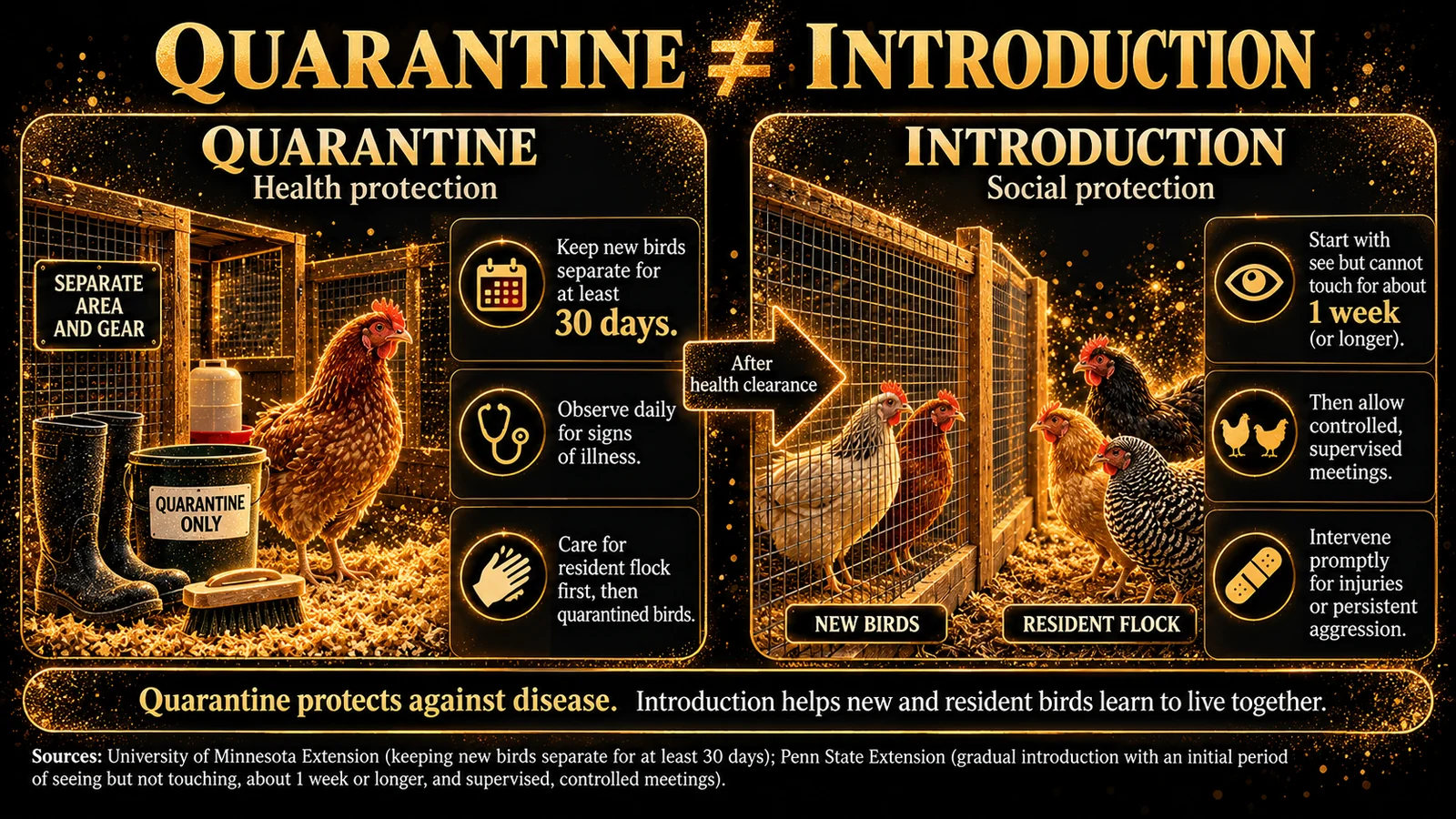
Quarantine and introduction are not the same thing.
GUIDED ARTICLE EXPERIENCE
How to Introduce New Chickens: Quarantine & Safe Flock Integration
Read along as the narration moves through the article.
Private device narration · No hosted audio or tracking
CONTINUE GUIDED TOUR
Continue where you left off.
GUIDED TOUR COMPLETE
You have reached the end of this study.
Study record saved on this device.
GUIDED TOUR
How to Introduce New Chickens: Quarantine & Safe Flock Integration
Narrator: Paranoid Prophet Recommended Voice Native device narration
Prepare to follow the article as it is narrated.
VOICE & TOUR OPTIONS
Voice & Listening
NARRATOR
Finding a narrator…
Checking the best narrator available on this device.
Restores the best curated narrator available on this device.
Narrator choices are curated for clear, long-form listening on this device.
Screen-awake support will be checked when narration starts.
CHOOSE A NARRATOR
Curated for this device
Choose a verified narrator for this browser, or use System Narrator. Automatic mode uses the best reliable route exposed by this device; your chosen narrator is preserved even if this device needs a temporary fallback.
Preparing the guided article experience…
RESUME GUIDED TOUR?
Continue where you left off.
GUIDED TOUR COMPLETE
You have reached the end of this study.
Minnesota recommends at least 30 days; Penn State describes at least four weeks. This guide uses the longer 30-day minimum, followed by a separate introduction stage. Neither duration guarantees disease freedom.
Article Guide18 sections
Quick Answer: How Do You Introduce New Chickens?
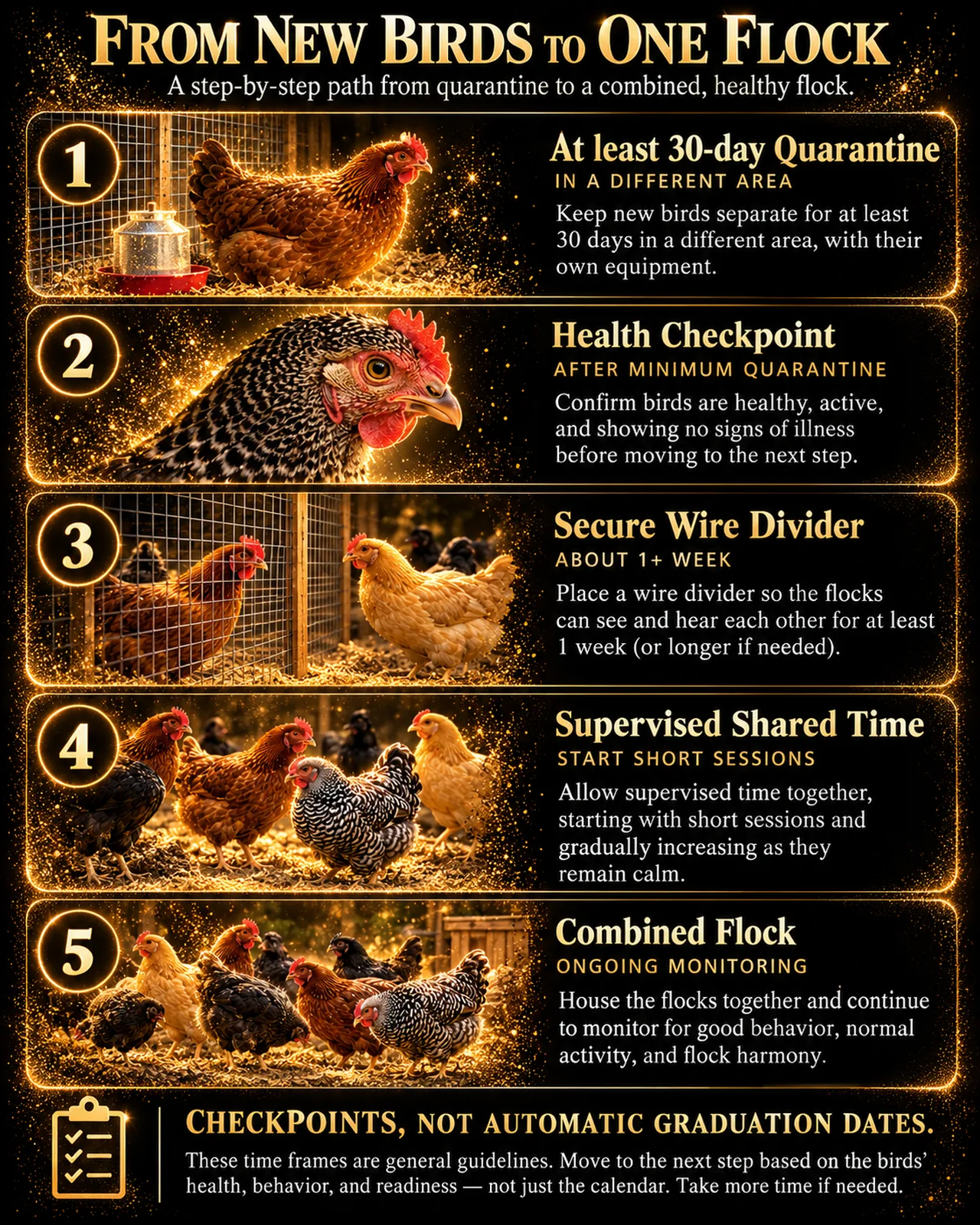
Quarantine newly acquired or returning birds for at least 30 days in a genuinely separate poultry area with dedicated feed, water and cleaning equipment. Observe for illness, care for the established flock first and keep traffic between groups under control. University of Minnesota Extension uses at least 30 days as its standard.
If the health assessment is satisfactory, begin a post-quarantine see-but-don’t-touch stage with a secure wire divider. Penn State Extension recommends at least about a week of visual familiarity before full contact. Begin short, supervised shared periods in a spacious area with multiple usable feed and water points. Intervene when birds are injured, cornered or prevented from eating or drinking.
The calendar is a checkpoint, not a guarantee. Health and observed behavior determine when to advance.
Why You Should Not Simply Add New Hens
A new chicken may look healthy while carrying an infection not yet producing obvious signs. Equally, an established flock may carry organisms that affect a stressed newcomer. Flocks also develop hierarchies, and sudden additions disrupt familiar relationships.
The goal is not a germ-free animal or a flock with no pecking. The goal is to avoid unnecessary disease exposure and prevent sustained harm while birds sort out a workable social order.
Quarantine Versus Introduction
Quarantine protects flock health. New birds should not share the immediate poultry environment, tools, water, litter, direct contact or routine contaminated traffic with residents.
Introduction protects social and physical safety. Once quarantine is complete, the groups can see and hear one another through a secure divider without biting, pecking or trapping one another.
A crate directly inside the established run may be useful for introduction, but it is not an adequate disease quarantine. The animals are already sharing the run environment.
Start With a Reputable Source, but Still Quarantine
Ask about the seller’s flock history, disease concerns and vaccination status. When available, look for a reputable participant in the National Poultry Improvement Plan (NPIP) and inspect which specific classifications apply.
Do not oversell the designation. USDA’s NPIP reference says it is a voluntary testing and certification program for defined poultry diseases and categories. Participation does not guarantee every bird is free of every pathogen or parasite.
Hatchery chicks, mature hens from a neighbor and birds acquired at swaps or auctions present different histories. Source quality changes risk, not the requirement to manage it.
How to Set Up a Real 30-Day Quarantine
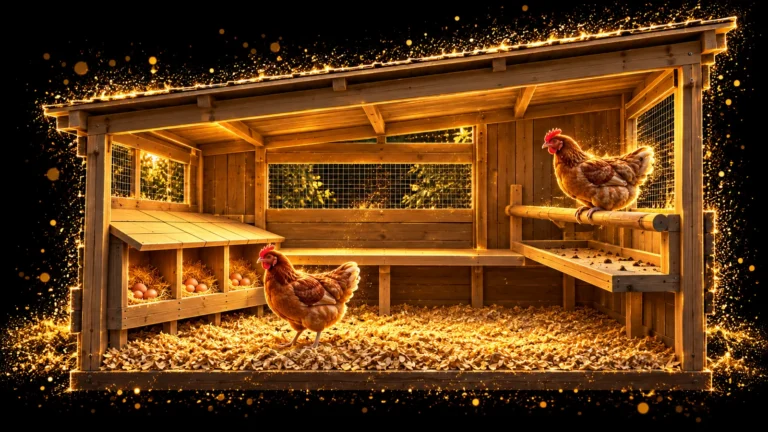
Quarantined chickens still require humane poultry housing: dry shelter, ventilation, adequate space, age-appropriate complete feed, continuous water, predator protection and weather protection.
Separation is what makes this area a quarantine area. Ask whether a person or ordinary routine can easily move droppings, water, feed, dirt, tools or birds between groups. If yes, improve the setup.
Separate equipment
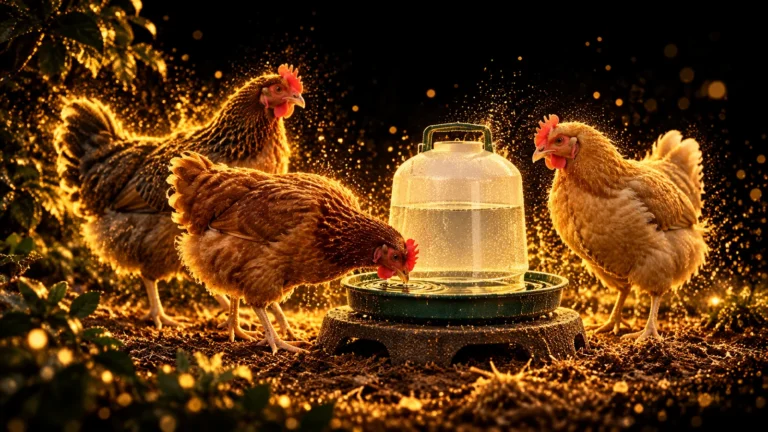
Use separate feeders, drinkers, scoops, crates and cleaning tools where practical. If equipment must change areas, physically remove organic debris, wash and appropriately disinfect it before reuse. USDA’s cleaning sequence explains why disinfectant does not work through layers of manure or dirt.
Care for residents first
Handle the existing healthy flock before the quarantined group. Wash hands and change or clean footwear and equipment as appropriate before returning to the established birds. USDA biosecurity guidance emphasizes clean dedicated clothing and tools.
What should you monitor for 30 days?
Look for changes in activity, appetite, drinking, breathing, eyes, nostrils, droppings, body condition, walking, external parasites, injuries and laying patterns. Get veterinary help when symptoms are unexplained or significant.
Thirty days is a minimum observation period, not proof that all infections have been excluded. If a bird becomes sick during quarantine, do not graduate the group on a schedule. Address the health issue first.
What if a Bird Gets Sick During Quarantine?
Stop the introduction plan. Keep the groups separate and consult a veterinarian for unclear or serious illness. If several birds become sick rapidly, die unexpectedly or display severe respiratory, neurologic, swelling or discoloration signs, avoid unprotected contact and unnecessary movement.
USDA APHIS advises contacting the State veterinarian or USDA at 1-866-536-7593 for concerning poultry illness. Do not sell or move potentially infectious birds to someone else’s flock.
Our Sick Chicken guide explains the triage and escalation principles in more detail.
After Quarantine: Begin “See but Don’t Touch”
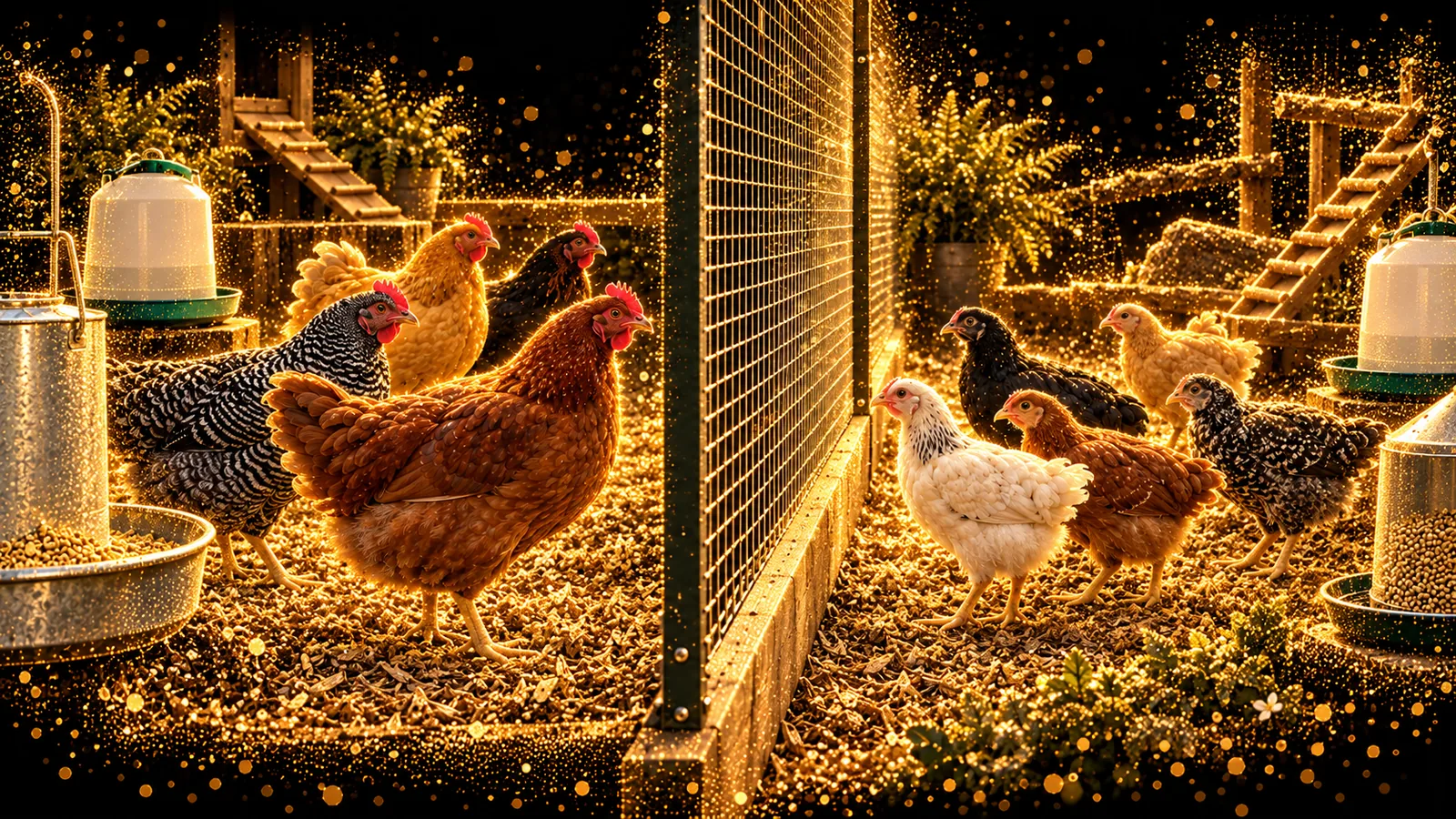
Now the goal changes from disease separation to social familiarity. Use two adjacent secure areas or a strong divider within the run. Birds should be able to see and hear one another but not peck heads, feet or exposed body parts through the barrier.
Penn State supports a wire-wall separation for at least about a week before physical mixing. At first the residents may pace, stare and posture. Over time, the new group should stop being a constant novelty.
The divider should not become a pecking wall. Cover dangerous gaps and avoid placing the only feeder beside the fence where dominant hens can guard access.
Then Try Supervised Physical Contact
Choose a time when you can actually supervise. Do not make the first introduction minutes before leaving home.
Provide room to move, routes around other birds, and multiple truly separate feed and water stations. Avoid narrow dead ends, small doorways and corners where a timid bird can be trapped. If needed, return to divider time and shorten the next shared session.
Do not expect every chicken to greet a newcomer politely. Their hierarchy will change. But monitor whether all birds are safe and functional.
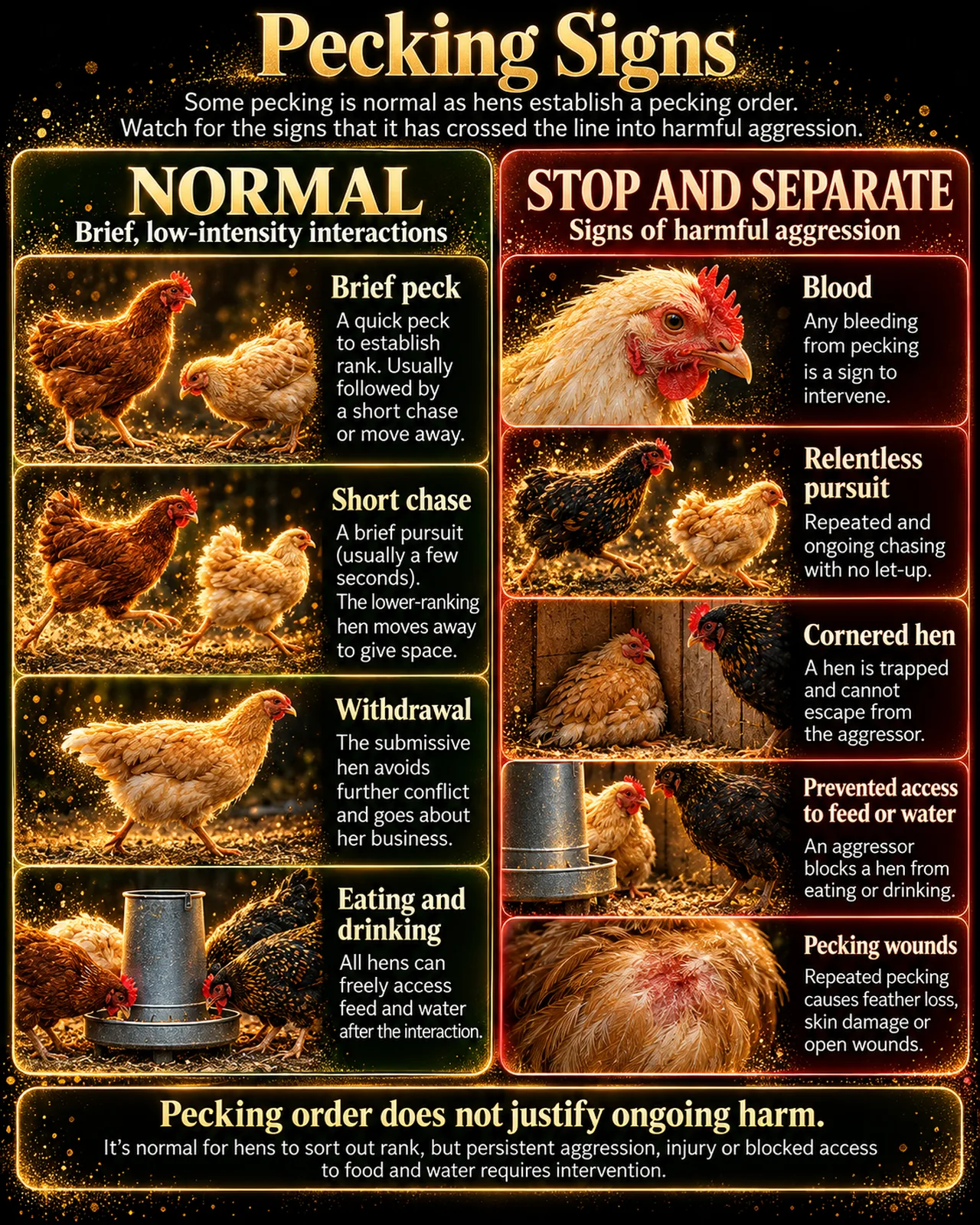
What can be normal?
- Brief pecks followed by disengagement.
- Short chases or displacement from a preferred position.
- Posturing and minor squawking.
- A bird moving away and then continuing to eat, drink and rest normally.
When do you separate the birds?
- Blood, wounds or repeated pecking at a wound, head or vent.
- Relentless pursuit or repeated pinning.
- Several birds mobbing one individual.
- A bird cornered or unable to escape.
- Sustained hiding or inability to access food, water or resting space.
Mississippi State Extension’s discussion of harmful feather pecking and Penn State’s guidance distinguish social interactions from injuries that can escalate. Our bully chicken action plan covers intervention when one bird is persistently targeted.
Pecking order is not permission for ongoing harm.
Space and Resources Can Make or Break Integration
A coop that comfortably houses its original flock may become congested after additions. Count usable space, not just square footage on a package: can a hen move around a stronger bird, access a roost, leave a doorway, reach shade and drink without being attacked?
Our chicken space requirements guide explains housing needs. During introduction, extra feeders and waterers should be placed far enough apart that a single dominant bird cannot guard all of them. Three feeders set immediately next to one another may function like a single station.
Introducing One Chicken or Several
A lone newcomer can be the focus of disproportionate attention. Introducing compatible new birds together may provide familiar company during the process, but this is not a reason to buy birds you do not have room or resources to keep.
The flock-size decision still comes first. Our how many chickens to start with guide describes why we would begin smaller than the original group of 16 chickens and two ducks.
Can Young Chickens Join Adult Hens?
Leaving the brooder and being ready for mature hens are separate milestones. A fully feathered youngster may handle outdoor weather yet be physically vulnerable to a full-grown chicken’s aggression.
Manage significant age and size differences cautiously. Growing birds also may need a feed different from adult layer ration. Arrange food access so juveniles receive suitable nutrition. See raising baby chicks for the brooder transition.
Does Putting Chickens on the Roost at Night Work?
Placing newcomers on a perch after dark is common advice. Penn State says it can help, but that does not make it a substitute for quarantine, visual familiarity or supervised contact.
A hen may be quiet at night and aggressive by morning. If nighttime roost placement is used at all, it should be a final convenience once prior introductions are going well, never a trick to skip the difficult part.
When Are Chickens Ready to Live Together Full-Time?
Do not use a fixed graduation day. Look for repeated successful supervised sessions, stable resource access, no accumulating injuries, safe use of roosts and doors, and birds behaving normally rather than hiding all day.
Continue checking for several days after removing the divider. Some problems appear around morning feed, nighttime roosting or close confinement rather than during open-run observation.
Everyday Backyard Biosecurity After Integration
Quarantine is not enough if the normal coop routine carries pathogens in and out. Practical habits include:
- Dedicated or clean footwear and handwashing.
- Limiting unnecessary visitors and shared equipment.
- Protecting feed and water from wild birds and rodents.
- Removing spilled feed and standing water.
- Checking birds for changes in appetite, breathing and egg production.
- Cleaning equipment before carrying it between poultry properties.
USDA’s Defend the Flock guidance emphasizes clean traffic, equipment and wildlife risk reduction. If keeping different bird species, remember that feed, housing and disease risks can differ; mixed poultry should not be treated as interchangeable animals.
What if illness begins after integration?
Switch from a social-management question to a flock-health question. Restrict movement, protect people, investigate exposures and contact the appropriate professionals for serious signs. See our Sick Chicken guide and USDA reporting guidance.
The Best Introduction Is Usually the Boring One
A good introduction removes surprises: 30 days of health separation, time behind a safe divider, enough space, separate resources, careful first contact and small course corrections as needed.
Eventually the newcomers stop being an event. They are simply chickens standing beside chickens.
Stewardship Protects Both Groups
Proverbs 27:23 calls us to know the condition of our flocks. New birds need responsible care, but so do the birds already depending on us. It would be poor stewardship to ignore the newcomers’ injuries, and equally poor stewardship to expose the established flock to preventable disease.
First prevent disease. Then manage the pecking order.
Frequently Asked Questions
How long should I quarantine new chickens?
At least 30 days before any shared-space introduction, with longer separation and professional guidance when unexplained illness occurs.
Does a crate in my existing run count as quarantine?
No. It can be useful for the later see-but-don’t-touch stage, but disease quarantine should be a genuinely separate environment.
Do NPIP birds still require quarantine?
Yes. The program addresses specified diseases and classifications, not every possible illness.
How long should chickens remain behind a divider?
Penn State recommends at least about one week as a starting point. Move on based on behavior, not merely the clock.
Is some pecking normal?
Brief displacement may be. Blood, injury, repeated cornering or preventing food and water access means separate and reassess.
Can I put the newcomers on the roost at night?
Not as a shortcut. If used, it should follow quarantine, visual introduction and successful supervised mixing.
Can chicks go directly from a brooder to mature hens?
No. Weather readiness, maturity, size, nutrition and social safety are different concerns.
What if a new bird gets sick during quarantine?
Stop progression and seek appropriate professional guidance. For signs of serious flock disease, contact the State veterinarian or USDA.
Sources and Responsible Care
This article uses University of Minnesota Extension, Penn State Extension, USDA NPIP, USDA biosecurity and Mississippi State Extension for the technical guidance. Timing and compatibility still depend on the health, housing and behavior of the actual birds.