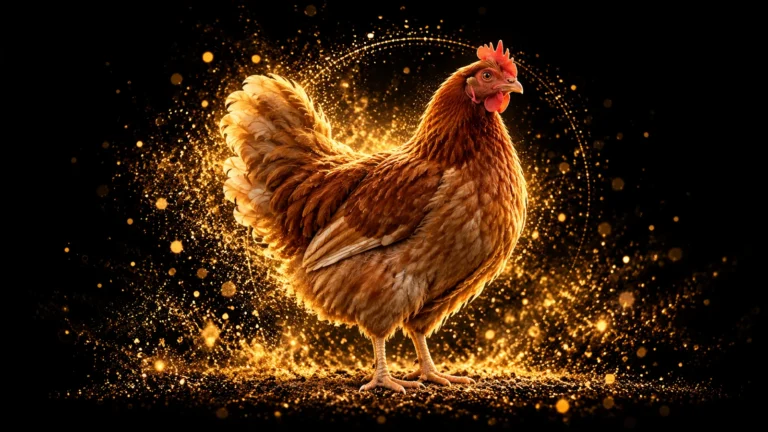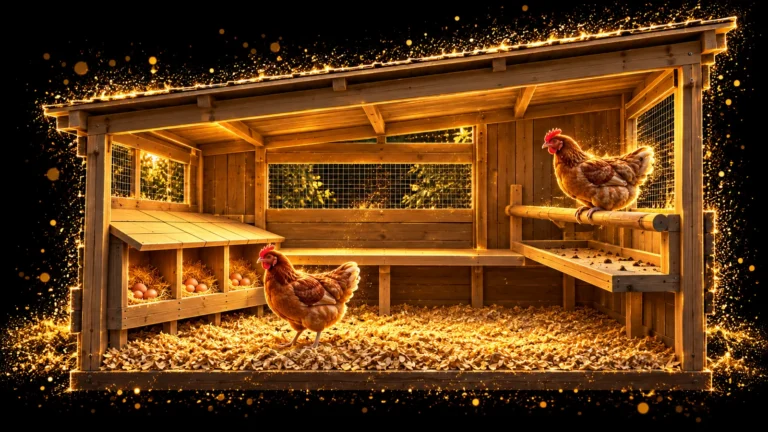
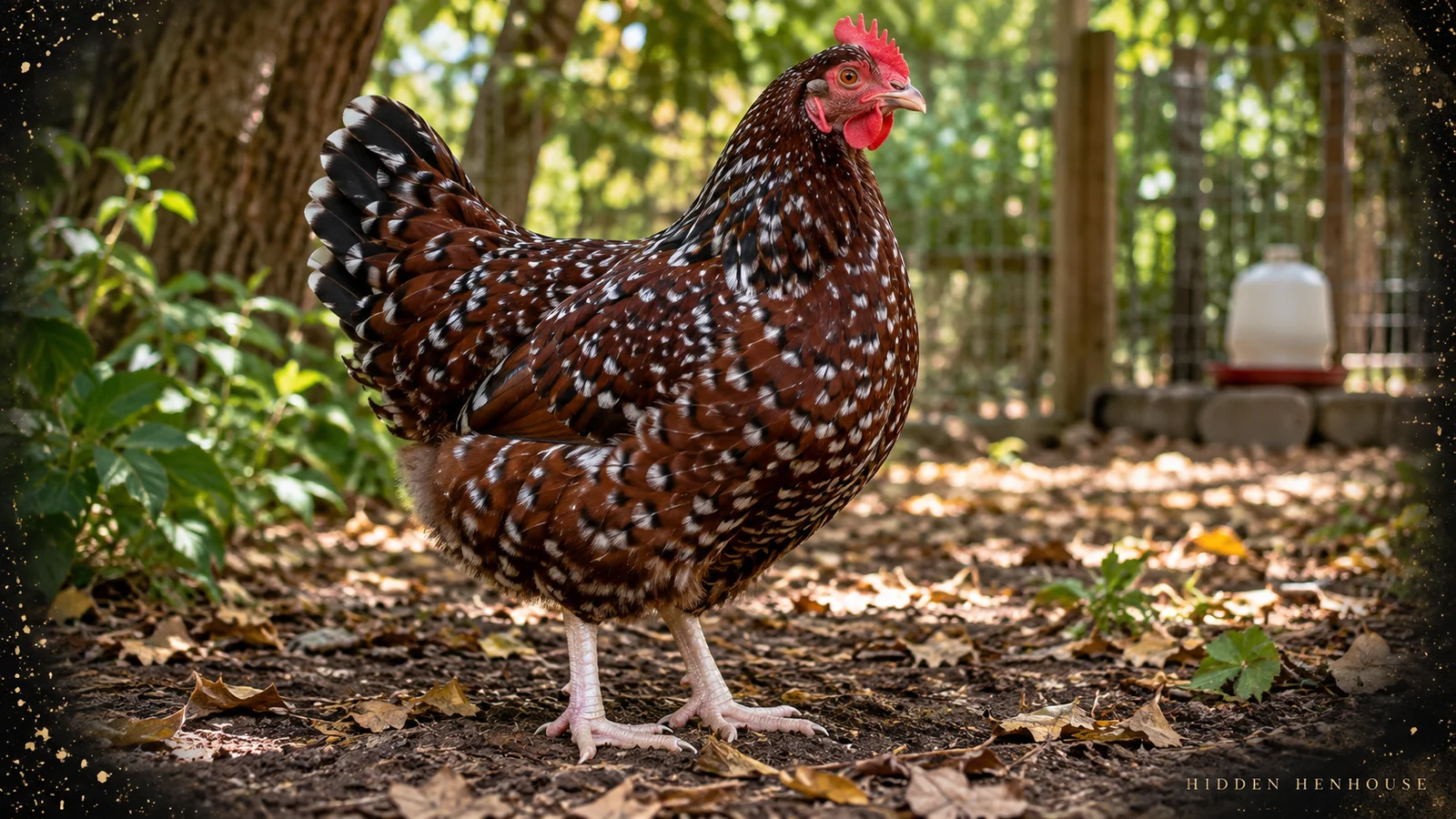

The Speckled Sussex is a large English dual-purpose chicken with one of the most recognizable color patterns in a backyard flock: rich mahogany feathers marked with black and white speckling.
It is also a useful bird, not just a decorative one. Authoritative breed sources describe Sussex as calm and curious, capable of respectable brown-egg production, and well suited to winter.
The important correction is heat. Speckled Sussex should not be marketed as an all-climate breed. The Livestock Conservancy specifically says Sussex are not fond of heat.
Updated October 6, 2026. Breed and husbandry sources checked for this remaster.
GUIDED ARTICLE EXPERIENCE
Speckled Sussex Chicken: Temperament, Eggs & Heat Tradeoffs
Read along as the narration moves through the article.
Private device narration · No hosted audio or tracking
CONTINUE GUIDED TOUR
Continue where you left off.
GUIDED TOUR COMPLETE
You have reached the end of this study.
Study record saved on this device.
GUIDED TOUR
Speckled Sussex Chicken: Temperament, Eggs & Heat Tradeoffs
Narrator: Paranoid Prophet Recommended Voice Native device narration
Prepare to follow the article as it is narrated.
VOICE & TOUR OPTIONS
Voice & Listening
NARRATOR
Finding a narrator…
Checking the best narrator available on this device.
Restores the best curated narrator available on this device.
Narrator choices are curated for clear, long-form listening on this device.
Screen-awake support will be checked when narration starts.
CHOOSE A NARRATOR
Curated for this device
Choose a verified narrator for this browser, or use System Narrator. Automatic mode uses the best reliable route exposed by this device; your chosen narrator is preserved even if this device needs a temporary fallback.
Preparing the guided article experience…
RESUME GUIDED TOUR?
Continue where you left off.
GUIDED TOUR COMPLETE
You have reached the end of this study.
For a broader comparison by flock priority, see Best Chicken Breeds for Beginners.
Article Guide14 sections
Speckled Sussex quick facts
| Trait | Practical answer |
|---|---|
| Identity | Speckled variety of the Sussex breed |
| Origin | England |
| APA class | English |
| APA recognition | Speckled Sussex recognized in 1914 |
| Purpose | Dual-purpose |
| Comb | Single |
| Egg color | Tan to brown |
| Egg size | Large |
| Egg production | Livestock Conservancy reports 200-250/year |
| Adult size | About 7 lb hens and 9 lb males |
| Temperament | Calm and curious tendency |
| Broodiness | Can become broody and can make good mothers |
| Climate | Good winter reputation; not fond of heat |
| Main drawback | Needs thoughtful summer heat management; can gain excess condition |
Speckled is the variety; Sussex is the breed
“Speckled Sussex” is correct everyday usage, but the classification still matters.
The breed is Sussex. Speckled is one of the American Poultry Association-recognized varieties.
The APA recognizes Speckled, Red and Light large-fowl Sussex varieties. The Livestock Conservancy notes that Speckled and Red were recognized in 1914, with Light added later.
That distinction keeps the article consistent with the rest of the breed cluster: breed and variety are not interchangeable terms.
Why people choose Speckled Sussex
The breed offers a useful middle ground for keepers who want more than one thing from a chicken.
Speckled Sussex are:
- substantial enough to remain genuine dual-purpose birds
- capable of useful brown-egg production
- generally calm and curious
- visually distinctive
- likely to benefit from room to explore and some protected ranging time
- capable of broodiness if natural hatching is desired
They are not the most specialized egg layer in this batch, and that can be a strength for someone who values balanced traits.
Temperament: curious and people-oriented tendency
The Livestock Conservancy describes Sussex as calm and curious.
Its breed profile also describes them as liking people and being suitable for beginners.
That is a good reason to consider them for a family flock, but it is not a promise that every hen will want to be carried or that every rooster will be gentle.
Use temperament as a selection tendency.
For children, keep supervision and poultry hygiene in place regardless of breed.
Egg production: useful, not industrial
The Livestock Conservancy reports 200 to 250 large tan/brown eggs per year.
That is enough to make Sussex a useful laying breed while still maintaining its traditional dual-purpose type.
As with every breed number, do not treat 200-250 as a guaranteed annual quota.
Actual production depends on:
- line
- age
- season
- daylight
- molt
- nutrition
- body condition
- health and stress
The Conservancy specifically notes that Sussex lay best if they are not allowed to become overly fat.
That makes body condition more relevant here than repeating a generic “feed-to-egg ratio.”
Climate: good winter bird, real summer caveat
This is the biggest correction to the legacy article.
The Livestock Conservancy says Sussex do well in the winter but are not fond of the heat.
That is materially different from calling them “all-climate.”
Source disagreement: The Conservancy’s 2026 comparison chart describes Sussex as good in hot and cold conditions and summarizes laying at about 200 eggs, while its detailed profile gives 200–250 and specifically cautions that they are not fond of heat. The newer chart does not explain those differences. We retain both descriptions rather than turn either into an all-weather guarantee; shade, airflow and attention to individual birds remain the practical recommendation. See the 2026 Conservancy comparison chart.
For a Southeastern backyard, that does not rule them out. It changes the setup you should demand.
Summer priorities include:
- dependable shade
- fresh cool water
- strong ventilation
- enough space to avoid crowding in hot zones
- regular heat-stress observation
If your run is exposed to intense afternoon sun and you cannot add good shade, choose with that limitation in mind.
Winter care still follows the site’s Winterizing guide rather than a breed-specific promise.
Broodiness and mothering
Sussex hens can go broody, and the Livestock Conservancy describes them as good mothers.
That can be a feature or a drawback.
If you want natural hatching, the tendency may be useful.
If your goal is uninterrupted egg production, broodiness can temporarily reduce output.
Individual hens still vary. Use the site’s Broody Hen Behavior guide for signs and management.
Mixed flock fit
The Livestock Conservancy describes Sussex as confident but not aggressive and notes that they may need monitoring around more assertive breeds.
That is an important nuance.
“Calm” does not always mean “dominant enough to defend every resource.”
In a mixed flock, watch actual access to:
- feed
- water
- roost space
- preferred nesting areas
- shade
The flock, not the breed chart, tells you whether a problem exists. Use Chicken Space Requirements to plan usable coop and run space.
Main drawbacks
Speckled Sussex may be a poor fit if:
- your summer setup has weak shade and poor airflow
- you want a light, highly specialized egg layer
- you want a breed with very little broodiness
- you are not prepared to monitor body condition in a large bird
- your established flock is unusually assertive and you cannot provide multiple resources
- you expect the “friendly breed” label to guarantee handling behavior
The breed’s beauty should not hide these practical considerations.
Who should choose a Speckled Sussex?
Consider the Speckled Sussex if you want:
- a calm and curious dual-purpose bird
- large brown eggs
- a visually distinctive heritage-style flock
- possible natural broodiness
- a breed that handles winter well
- enough summer shade to manage its heat tradeoff
A different breed may fit better if intense heat is your dominant environmental challenge.
What to ask a breeder or hatchery
- Is this line selected for utility, exhibition, backyard temperament or a mix?
- How do the adult hens handle your local summers?
- What is typical egg production for your line?
- How often do hens go broody?
- What adult weights are you seeing?
- What are parent birds like temperamentally?
- Does your stock maintain clear Speckled Sussex type and color?
Speckled Sussex FAQ
Is Speckled Sussex a breed?
Sussex is the breed. Speckled is a recognized variety of Sussex.
Are Speckled Sussex good for beginners?
They can be. Their calm, curious tendency and balanced dual-purpose traits make them a reasonable beginner option when the climate and setup fit.
How many eggs do they lay?
The Livestock Conservancy reports 200-250 large tan/brown eggs per year. Treat that as a source range rather than a guarantee.
Are they cold hardy?
The Livestock Conservancy says Sussex do well in winter.
Are they heat tolerant?
Do not call them an all-climate or heat-specialist breed. The Livestock Conservancy specifically says Sussex are not fond of heat.
Do they go broody?
They can, and the breed has a good mothering reputation. Individual hens still vary.
Good breed choice is part of good stewardship
The Speckled Sussex is easy to oversell because it is both attractive and useful.
A better approach is to choose it for what it actually is: a calm, substantial, brown-egg dual-purpose bird with a real winter strength and a real summer tradeoff.
Authoritative sources
- The Livestock Conservancy, Sussex Chicken
- American Poultry Association, Accepted Breeds & Varieties
- Mississippi State University Extension, Choosing the Right Breed for Your Backyard Flock
- University of Minnesota Extension, Preventing Heat Stress in Poultry
- Mississippi State University Extension, Protect Backyard Chickens from Extreme Heat