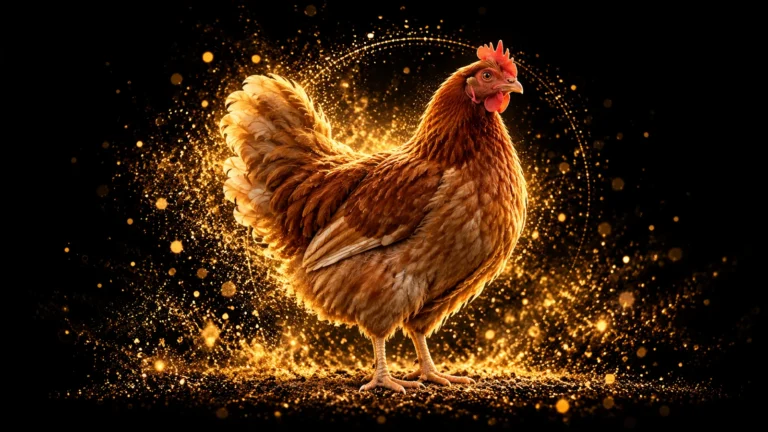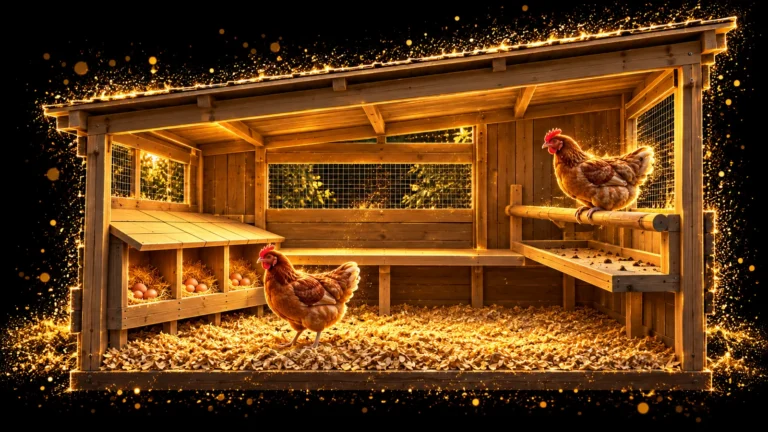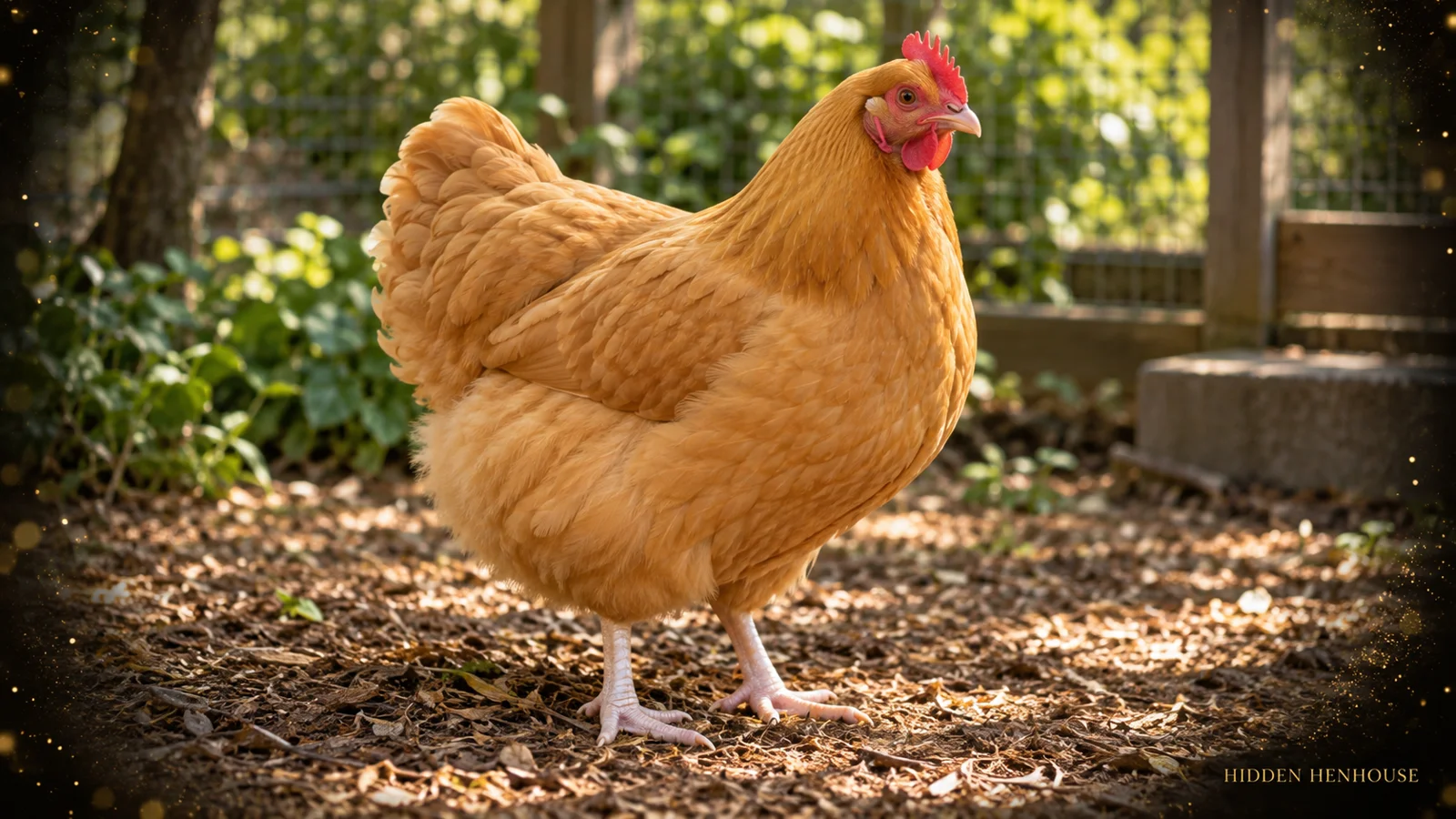

Buff Orpingtons have a deserved reputation for being calm, substantial backyard chickens. They are useful dual-purpose birds, lay brown eggs, and are one of the heavier breeds University of Minnesota Extension lists as overwintering well.
But the internet often pushes that reputation too far.
A Buff Orpington is not guaranteed to be a lap chicken, child-safe, non-aggressive or eager to be held. And Buff is not a separate breed. Orpington is the breed; Buff is the variety.
Updated October 6, 2026. Breed and husbandry sources checked for this remaster.
GUIDED ARTICLE EXPERIENCE
Buff Orpington Chicken: Temperament, Eggs & Backyard Fit
Read along as the narration moves through the article.
Private device narration · No hosted audio or tracking
CONTINUE GUIDED TOUR
Continue where you left off.
GUIDED TOUR COMPLETE
You have reached the end of this study.
Study record saved on this device.
GUIDED TOUR
Buff Orpington Chicken: Temperament, Eggs & Backyard Fit
Narrator: Paranoid Prophet Recommended Voice Native device narration
Prepare to follow the article as it is narrated.
VOICE & TOUR OPTIONS
Voice & Listening
NARRATOR
Finding a narrator…
Checking the best narrator available on this device.
Restores the best curated narrator available on this device.
Narrator choices are curated for clear, long-form listening on this device.
Screen-awake support will be checked when narration starts.
CHOOSE A NARRATOR
Curated for this device
Choose a verified narrator for this browser, or use System Narrator. Automatic mode uses the best reliable route exposed by this device; your chosen narrator is preserved even if this device needs a temporary fallback.
Preparing the guided article experience…
RESUME GUIDED TOUR?
Continue where you left off.
GUIDED TOUR COMPLETE
You have reached the end of this study.
Article Guide14 sections
Buff Orpington quick facts
| Trait | Practical answer |
|---|---|
| Identity | Orpington breed, Buff variety |
| Origin | England |
| Purpose | Dual-purpose |
| Egg color | Brown |
| Egg size | Large to extra large in Livestock Conservancy profile |
| Annual production | No single authoritative number used here; line and management matter |
| Adult size | Traditional profile roughly 8 lb hens and 10 lb males |
| Temperament | Calm, friendly / docile tendency |
| Broodiness | Mothering ability is a documented breed strength, but individuals vary |
| Winter fit | Heavy breed with good winter suitability |
| Main caveat | Large, loosely feathered bird; not a high-mobility foraging specialist |
Buff is a variety of Orpington
The correct classification is simple:
Breed: Orpington Variety: Buff
The Livestock Conservancy describes the Orpington as an English dual-purpose breed and notes U.S. recognition of Buff, Black, White and Blue varieties.
Buff was accepted into the American Standard in 1902.
That distinction matters because breed guides often turn color varieties into separate breeds. A Buff Orpington is an Orpington with the Buff variety’s color, not an unrelated chicken.
Why people choose Buff Orpingtons
The real appeal is not one extreme performance trait.
Orpingtons combine:
- large dual-purpose body size
- brown eggs
- a calm, friendly temperament tendency
- strong mothering history
- good winter suitability
- a distinctive full, loose-feathered appearance
That makes them a reasonable fit for keepers who value manageable temperament and traditional utility more than maximum egg output.
If you are comparing several birds, use the site’s Best Chicken Breeds for Beginners guide rather than assuming “friendliest breed” settles the decision.
Temperament: calm is supported; cuddly is not guaranteed
The Livestock Conservancy describes Orpington temperament as calm and friendly.
Mississippi State University Extension describes the breed as calm and docile.
That is good evidence for a generally manageable temperament.
It does not prove that every hen enjoys being picked up, that every rooster is gentle, or that the breed is automatically safe for young children.
Handling history, individual personality, sex, socialization and flock conditions still matter.
For a family flock, Orpingtons are reasonable birds to consider because the breed tendency is favorable. Children still need supervision and poultry hygiene.
Egg production: useful, but skip the fake precision
You will see precise annual egg totals in many breed guides.
The current authoritative sources used for this remaster support Orpingtons as useful layers of large brown eggs, but they do not give one current annual number strong enough to present as a universal backyard expectation.
That is okay.
A good breed guide does not need a number simply because search results expect one.
Egg output varies with:
- breeder line
- age
- daylight
- molt
- nutrition
- health
- body condition
- management
Ask the breeder or hatchery what their actual line produces.
Winter suitability is real
University of Minnesota Extension lists Orpingtons among heavier breeds that overwinter well.
That supports the breed’s cold-weather reputation better than slogans like “winter-proof.”
It still needs normal winter management:
- a dry coop
- ventilation
- protection from direct drafts
- unfrozen water
- complete feed
- observation for cold stress
Use the site’s Winterizing a Chicken Coop and Run guide for actual winter decisions.
What about hot weather?
Do not assume that good winter suitability means poor summer survival or that one breed label solves heat management.
Every flock in hot weather needs:
- dependable shade
- airflow
- abundant fresh cool water
- reduced crowding
- heat-stress observation
In the Southeast, good winter suitability does not remove the need for strong summer management. Plan dependable shade, airflow, fresh cool water and heat-stress observation instead of buying them under an “all-climate” promise.
Mothering and broodiness
Mississippi State Extension describes Orpingtons as having very good mothering abilities.
That is useful if natural hatching is part of your goals.
It can be less convenient if your priority is uninterrupted egg production.
Do not translate “good mothers” into “every Buff Orpington will definitely go broody.” Broodiness still varies among hens and lines.
Use the site’s Broody Hen Behavior guide when a hen actually shows persistent nesting behavior.
Foraging and activity
Mississippi State Extension says Orpingtons do not forage especially well.
That is a meaningful tradeoff.
A keeper who wants a highly active, wide-ranging bird may prefer a different breed.
A keeper who values a larger, calmer dual-purpose bird may see that lower activity as a better fit.
Housing decisions still belong in the site’s Chicken Space Requirements guide rather than a breed-specific square-foot formula.
Main drawbacks
A Buff Orpington may be a poor fit if:
- your first priority is maximum egg numbers
- you want a very active ranging bird
- you do not want any possibility of broodiness
- your setup is hot and exposed with weak shade or ventilation
- you want a small bird that eats less and takes less physical space
- you expect “friendly” to mean every bird loves handling
The breed is attractive because it is balanced, not because every internet superlative is true.
Who should choose a Buff Orpington?
Consider this variety if you want:
- calm temperament tendency
- traditional dual-purpose body size
- brown eggs
- strong winter suitability
- possible natural mothering
- a large, visually distinctive flock bird
Choose something else if your main priorities are high-mobility foraging, the lightest feed demand or the highest possible laying output.
What to ask the breeder or hatchery
- Is this line selected for exhibition, utility, temperament, egg production or a mix?
- What adult weights are you seeing?
- What egg production do you actually observe?
- How often does broodiness appear in your hens?
- What are the parent birds like temperamentally?
- How does this line perform in your local summer conditions?
- Is the stock true Buff Orpington rather than a similarly colored hybrid?
Buff Orpington FAQ
Is Buff Orpington a breed?
Orpington is the breed. Buff is a recognized variety.
Are Buff Orpingtons friendly?
Authoritative sources describe the breed as calm, friendly or docile. Individual birds still vary.
Are they good with children?
They can be a reasonable family-flock choice because of their temperament tendency, but no breed is child-safe by default. Supervision and hygiene still matter.
How many eggs do they lay?
This article does not use one universal annual number because the strongest current sources used here do not support one figure for every line. Expect brown eggs and ask the breeder for line-specific performance.
Are Buff Orpingtons cold hardy?
University of Minnesota Extension lists Orpington among heavier breeds that overwinter well.
Do they go broody?
They can, and Orpingtons have a strong mothering reputation. The tendency is not guaranteed in every individual.
Stewardship means choosing fit over reputation
Buff Orpingtons do not need to be “the friendliest chicken on earth” to be worth keeping.
They are large, useful, generally calm birds with real winter and mothering strengths. Choosing them because those traits fit your setup is better stewardship than choosing them because a breed chart promised a living stuffed animal.