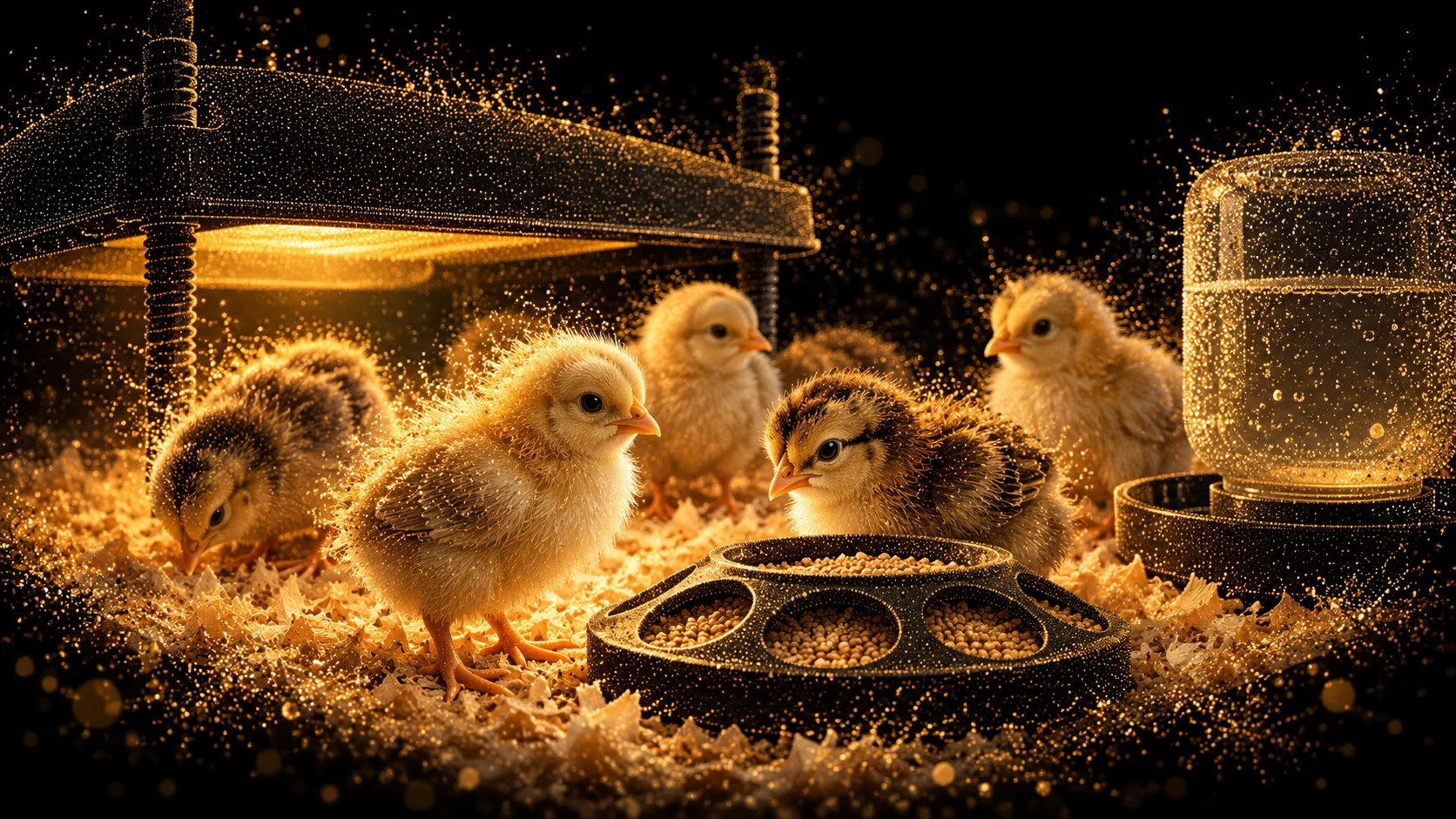

Raising baby chicks is not especially complicated, but the first weeks are less forgiving than caring for adult chickens.
A chick needs warmth with a way to move away from it, complete starter feed, clean water, dry bedding, room to grow and someone paying attention when its behavior changes.
That last part matters. A thermometer tells you what the brooder is doing. The chicks tell you whether it is working.
GUIDED ARTICLE EXPERIENCE
Raising Baby Chicks: Brooder Setup, Feed, Heat & First 8 Weeks
Read along as the narration moves through the article.
Private device narration · No hosted audio or tracking
CONTINUE GUIDED TOUR
Continue where you left off.
GUIDED TOUR COMPLETE
You have reached the end of this study.
Study record saved on this device.
GUIDED TOUR
Raising Baby Chicks: Brooder Setup, Feed, Heat & First 8 Weeks
Narrator: Paranoid Prophet Recommended Voice Native device narration
Prepare to follow the article as it is narrated.
VOICE & TOUR OPTIONS
Voice & Listening
NARRATOR
Finding a narrator…
Checking the best narrator available on this device.
Restores the best curated narrator available on this device.
Narrator choices are curated for clear, long-form listening on this device.
Screen-awake support will be checked when narration starts.
CHOOSE A NARRATOR
Curated for this device
Choose a verified narrator for this browser, or use System Narrator. Automatic mode uses the best reliable route exposed by this device; your chosen narrator is preserved even if this device needs a temporary fallback.
Preparing the guided article experience…
RESUME GUIDED TOUR?
Continue where you left off.
GUIDED TOUR COMPLETE
You have reached the end of this study.
Article Guide15 sections
Quick Answer: How Do You Raise Baby Chicks?
Prepare a secure brooder before the birds arrive. Provide a heated area around 90–95°F during the first week, measured at chick level for a conventional overhead heat setup, with cooler space available. Decrease supplemental heat gradually as chicks feather out, while watching whether they cluster under the heat or avoid it. Give them age-appropriate complete chick starter, clean fresh water and absorbent bedding. Penn State Extension’s brooding guide gives temperature targets, behavior clues and safety guidance.
Many chicks are fully feathered at around six to eight weeks, but moving outside depends on weather, nighttime temperatures, acclimation and each bird’s development. Texas A&M Veterinary Medicine emphasizes full feathering rather than a fixed birthday. Leaving the brooder is not permission to drop juveniles directly into an adult flock.
Plan for Adult Chickens Before Buying Chicks
The brooder stage is temporary. The chickens are not.
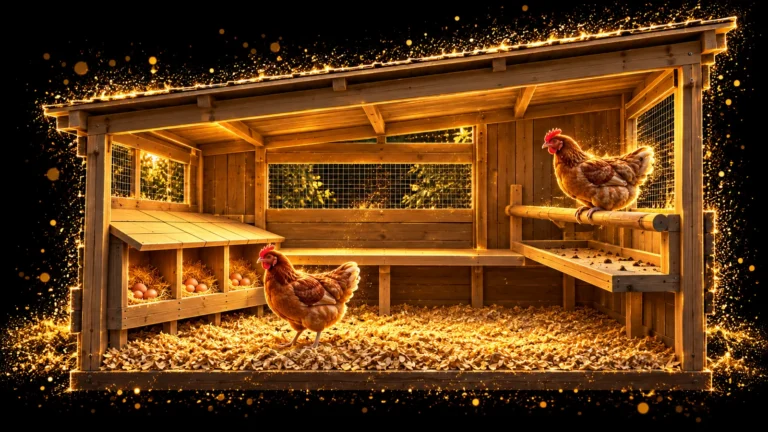
Our household began with 16 chickens and two ducks. Within roughly the first year, the flock had essentially stripped the backyard of grass. The birds were doing what chickens do; the lesson for us was that a flock changes its environment long after the feed-store excitement wears off.
Before buying, decide what the adult birds will need: adequate housing, run space, secure doors, ventilation, shade, feed, water, veterinary care, room to scratch and a routine somebody can maintain every day.
Read how many chickens to start with, then compare chicken space requirements and beginner-friendly chicken breeds. Minimum housing dimensions and a backyard’s ability to maintain grass are two different questions.
What Does a Baby-Chick Brooder Need?
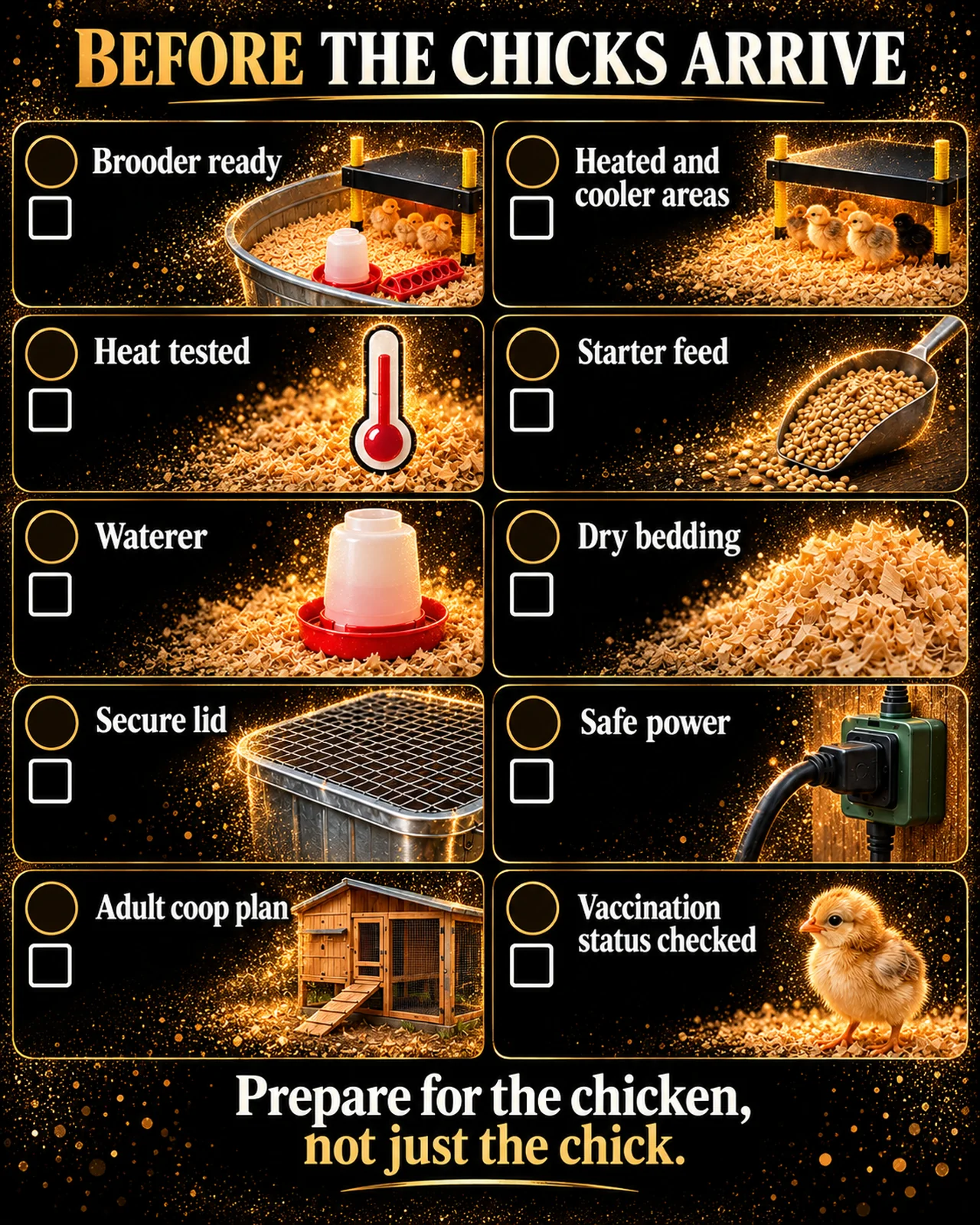
A brooder is a protected nursery where young chicks can stay warm without being trapped in heat. For a small backyard flock, start with:
- A secure, expandable enclosure with a heated zone and a cooler escape area.
- An appropriately installed heat source, such as a purpose-built brooder plate or safely suspended approved lamp.
- A thermometer used according to the heat-source manufacturer’s instructions.
- Clean, dry, absorbent bedding and secure footing.
- Chick-sized feeders and waterers.
- A complete chick starter appropriate for the birds’ age and purpose.
- Ventilation without drafts blowing directly on the chicks.
- A safe cover or lid as they become capable of jumping out.
Do not confuse a minimum with a good long-term setup. Penn State Extension provides age-based floor-space requirements that increase rapidly as chicks grow, while University of Minnesota Extension emphasizes keeping birds uncrowded and waterers clean. Start with room to expand rather than assuming the same small tub will work for eight weeks.
Where should the brooder go?
Choose a secure non-living area that can be kept dry, protected from predators and pets, and supplied with safe power and ventilation. The CDC backyard poultry guidance recommends keeping birds and their supplies out of the home because even healthy-looking poultry can carry Salmonella.
Do not place a brooder near food preparation or wash poultry equipment in a kitchen sink. Keep dedicated footwear in the poultry area and wash hands after contact. The CDC advises that children younger than five should not handle chicks or other poultry.
Brooder Temperature: A Week-by-Week Starting Guide
| Age | Approximate target for a conventional heated zone |
|---|---|
| Week 1 | 90–95°F |
| Week 2 | 85–90°F |
| Week 3 | 80–85°F |
| Week 4 | 75–80°F |
| Week 5 | Around 70–75°F if heat is still needed |
| Week 6 onward | Adjust according to feathering, behavior and environmental temperature |
The table is not a target for making every square inch of the brooder equally hot. It is a starting point for a conventional brooding setup. Radiant heat plates heat chicks differently from overhead lamps, so follow the device instructions and observe the birds. Penn State recommends a first-week chick-level target near 95°F and a reduction of about 5°F per week under conventional heating.
Read the chicks, not just the number
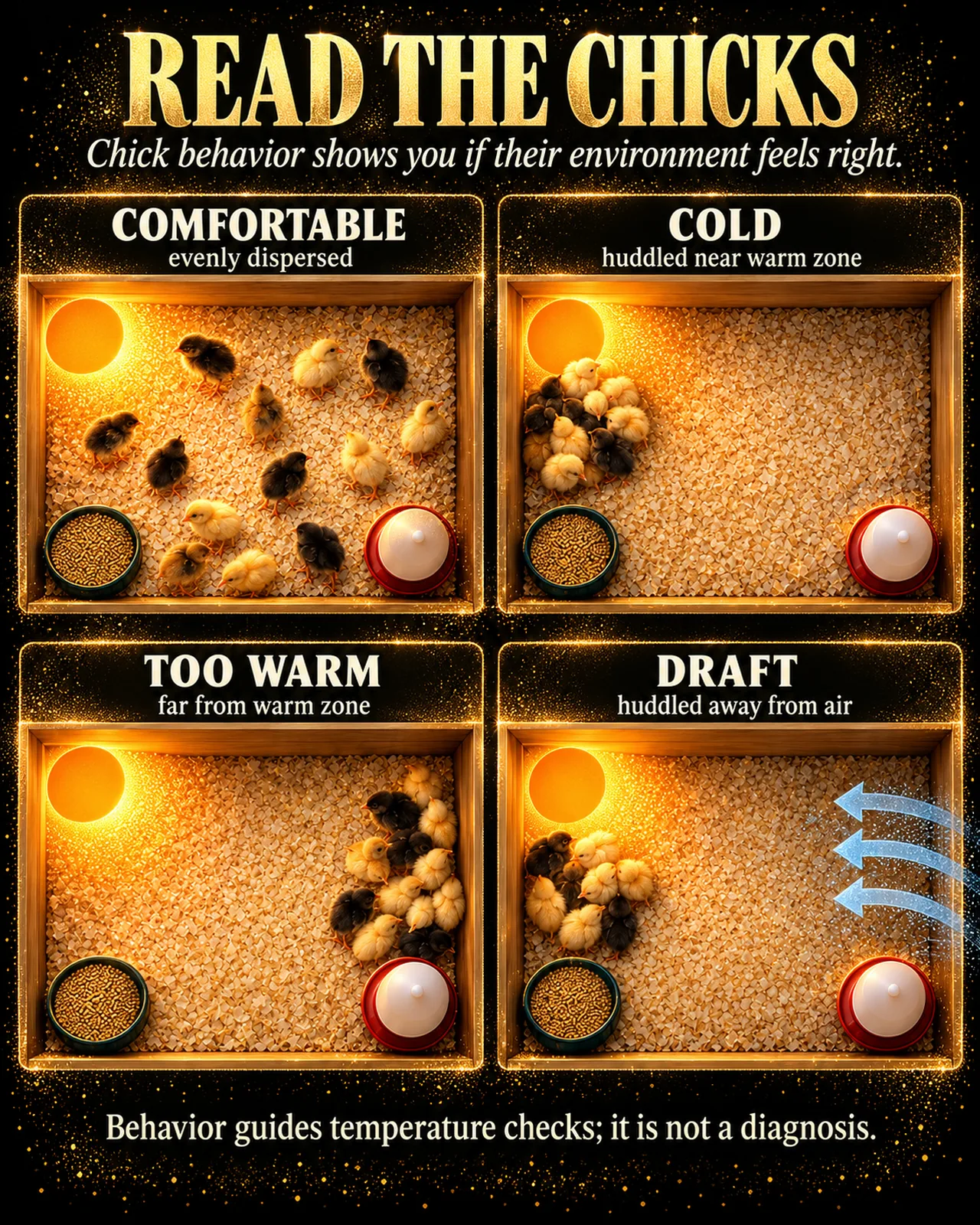
- Comfortable: chicks use different parts of the brooder, eat, drink and rest normally.
- Possibly cold: chicks huddle tightly near the heat and call persistently.
- Possibly overheated: chicks avoid the heater, spread far away or pant.
- Possible draft: chicks repeatedly bunch on one side away from moving air.
Fix the conditions rather than blindly chasing a number. The animals must always have a route away from the heat source.
Heat plate or heat lamp?
Both can be used when appropriate to their design. A purpose-built brooder plate often simplifies management for a small flock. If using a lamp, attach it mechanically with a suitable fixture, secondary restraint and safe separation from bedding and combustible surfaces. Do not suspend a lamp by its power cord. Penn State’s brooding safety guidance warns that unsecured heat sources and excess heat can injure chicks or start a fire.
The First 24 Hours
Have the brooder assembled, cleaned and tested before the chicks arrive. Penn State recommends preparing equipment in advance rather than discovering problems on arrival day.
Settle the chicks gently and immediately ensure they locate the waterer and feeder. Watch the group from a little distance; check whether every bird can move, drink and feed. Recheck the heat-source setting and distribution of chicks throughout the day. Provide rest and a quiet environment.
Do not make the first day an experiment with sugar water, kitchen remedies or an assortment of supplements. The baseline is complete chick starter, fresh water, warmth, hygiene and observation. Ask a veterinarian about special care for a compromised chick.
What Should Baby Chicks Eat?
Keep this chick-stage guidance separate from the adult ration. When planning the later laying stage, use the complete laying-hen feeding guide; high-calcium layer feed is not chick starter.
Use complete chick starter suitable for the bird’s age and production type. A complete ration supplies the protein, energy, vitamins and minerals required for rapid development. Follow the manufacturer’s feed program for starter-to-grower transitions: reputable programs differ, with starter commonly continuing for about six to eight weeks or longer. Texas A&M Veterinary Medicine recommends quality chick starter for at least the first eight weeks.
Do not replace complete feed with scratch grains, kitchen scraps or an improvised mix. Treats should not displace the nutrition that young birds actually need.
Do not feed layer ration to chicks
Layer feed has a calcium level designed for egg-producing hens. Penn State Extension explicitly warns against feeding it to young chicks because excessive calcium can harm growing birds.
Do chicks need grit?
If they are consuming only a suitable complete starter, they generally do not need a separate treat-based feeding program. Once you introduce foods that require grinding, use appropriate chick-sized insoluble grit as indicated by University of Minnesota Extension. Do not confuse grit with calcium-rich oyster shell meant for laying hens.
Clean Water and Dry Bedding
Chicks must have fresh water available continuously. Use a chick-safe shallow waterer, prevent tipping and check it often: bedding gets kicked into water surprisingly fast. Adjust height as birds grow. Minnesota Extension recommends platforms beneath waterers to reduce wet litter.
Clean, absorbent pine shavings are a practical default. Avoid slippery bare flooring and bedding that is constantly wet, caked or excessively dusty. Remove wet patches promptly and make sure litter stays dry enough for healthy feet and air quality. Our coop bedding guide compares materials used later in the birds’ lives.
Medicated Starter and Coccidiosis: Check Vaccination First
Coccidiosis is caused by intestinal protozoan parasites, and young chickens are vulnerable. Some prevention programs use vaccination; others use a coccidiostat in starter feed. Before choosing medicated feed, find out whether the chicks were vaccinated for coccidiosis and what medication the feed actually contains.
UF/IFAS Extension’s medicated-feed section specifically cautions that medicated starter can interfere with a live coccidiosis vaccine. Do not assume every medicated feed is appropriate for every vaccinated flock or improvise combinations. Ask the hatchery, feed manufacturer or veterinarian when vaccination status is unclear.
Penn State’s general brooding guide recommends medicated starter broadly, while UF/IFAS specifically warns against medicated feed when chicks have received a live coccidiosis vaccine. Those recommendations cannot be applied as one universal feeding rule: confirm vaccination status and the product’s ingredients with the hatchery, manufacturer or veterinarian.
The right rule is neither “always medicate” nor “never medicate.” It is know the birds’ status and follow a coherent prevention plan.
Check for Pasty Butt and Changes in Health
During the first days, inspect the vent area without overstressing the chicks. Dried droppings can occasionally block the vent. If this happens, soften the material gently with warm water and remove it carefully; do not pull adhered material dry and injure delicate skin. Dry the chick and restore appropriate warmth. Repeated obstruction, dehydration, lethargy or refusal to eat should prompt veterinary guidance.
Watch for unusually weak or unresponsive chicks, persistent isolation, significant breathing difficulty, poor growth, or refusal of feed and water. These are not problems to solve through a random series of internet remedies. Texas A&M Veterinary Medicine recommends contacting a veterinarian for lethargic chicks, those failing to grow, or those not eating or drinking.
For the broader flock-emergency framework, see our companion Sick Chicken guide.
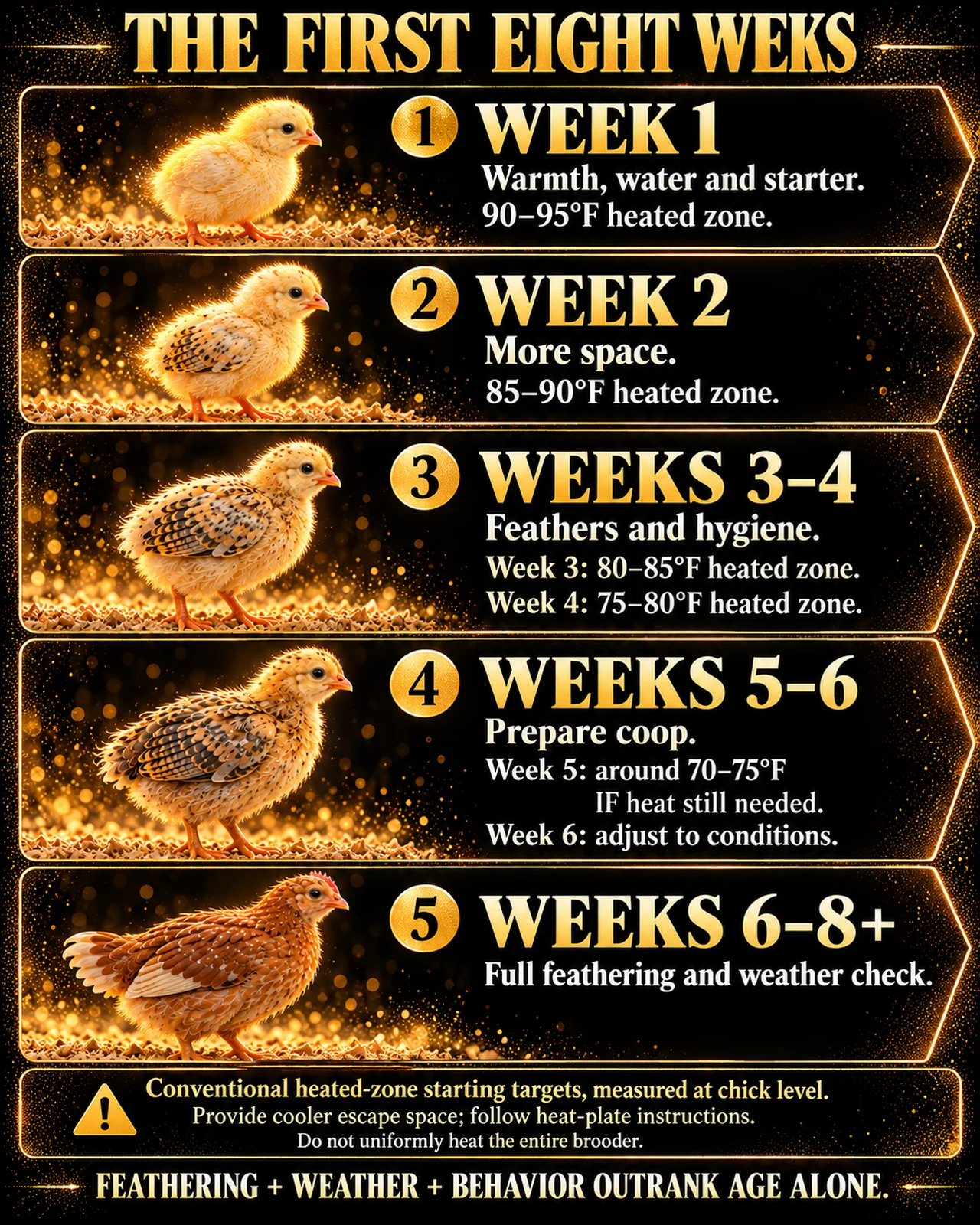
Raising Chicks Week by Week
Week 1: Stability
Focus on warmth, water, starter feed and regular observation. Check the vent, look for normal movement and keep bedding dry. Avoid overcrowding and needless handling.
Week 2: Growing and exploring
Reduce supplemental heat gradually in a conventional brooder, adapting to behavior and conditions. Expand usable floor area as the chicks become more active.
Weeks 3–4: Feathers and mess
The chicks begin jumping, scratching and producing more manure. Inspect the cover, feeder access and litter quality. An enclosure that fit newborn chicks may no longer be adequate.
Weeks 5–6: Prepare the permanent housing
Assess feather coverage and nighttime conditions rather than declaring all six-week-old chicks ready for outdoor life. Finish the secure coop and run before the birds outgrow the brooder.
Weeks 6–8 and beyond: Gradual transition
Fully feathered chicks may be ready for an age-appropriate outside enclosure in suitable weather. Give them time to acclimate and watch the forecast. Texas A&M gives six to eight weeks as a common window, but feathering and actual environmental conditions decide.
Can Chicks Go Straight Into an Adult Flock?
No. A juvenile may be ready for the weather and still be too small to withstand aggression from mature birds. Disease exposure and differences in feed also matter. Use age-appropriate housing and a staged introduction when birds are sufficiently mature. Our introducing new chickens and biosecurity guide covers separation and flock behavior.
Baby Chicks and Children
Chicks can teach older children observation and responsibility, but they may carry disease-causing germs without appearing ill. Follow CDC poultry hygiene rules: wash hands after poultry contact, keep equipment out of living areas, avoid kissing chicks and do not allow children under five to handle poultry. Our raising chickens with kids guide addresses chores and household routines.
Stewardship Begins Before the First Chick Arrives
Proverbs 12:10 links righteousness with care for animals. That idea is practical here. Chicks cannot refill a waterer, escape a failing enclosure or build the adult coop they will need. Those responsibilities belong to the people who bring them home.
Prepare first. Pay attention. Correct problems early. Then enjoy watching a handful of fluff become a flock.
Frequently Asked Questions
What temperature do baby chicks need?
For a conventional heated brooder, roughly 90–95°F at chick level near the heat during week one, reduced gradually. Always provide a cooler zone and observe the birds.
When can chicks move outside?
Often once fully feathered around six to eight weeks, but actual nighttime weather, acclimation and individual development take precedence.
Can chicks eat adult layer feed?
No. Use complete chick starter and follow an age-appropriate feed schedule; layer ration has excessive calcium for growing chicks.
Do chicks need medicated starter?
Not universally. Check coccidiosis vaccination status and the feed label before deciding.
Do chicks need grit?
Appropriately sized grit becomes relevant when eating foods beyond the complete starter ration. Avoid adult oyster shell for chicks.
Can I keep chicks in the house?
CDC advises keeping poultry and their equipment outside household living areas because healthy birds may carry Salmonella.
Can newly feathered chicks join my established adult hens?
Not automatically. Outdoor readiness and social introduction are separate milestones.
Sources and Responsible Care
This guide combines real backyard-flock observations with technical husbandry guidance from Penn State Extension, University of Minnesota Extension, Texas A&M Veterinary Medicine, UF/IFAS, and the CDC. Technical advice should be checked against individual animals, current manufacturer guidance and qualified veterinary advice when illness appears.