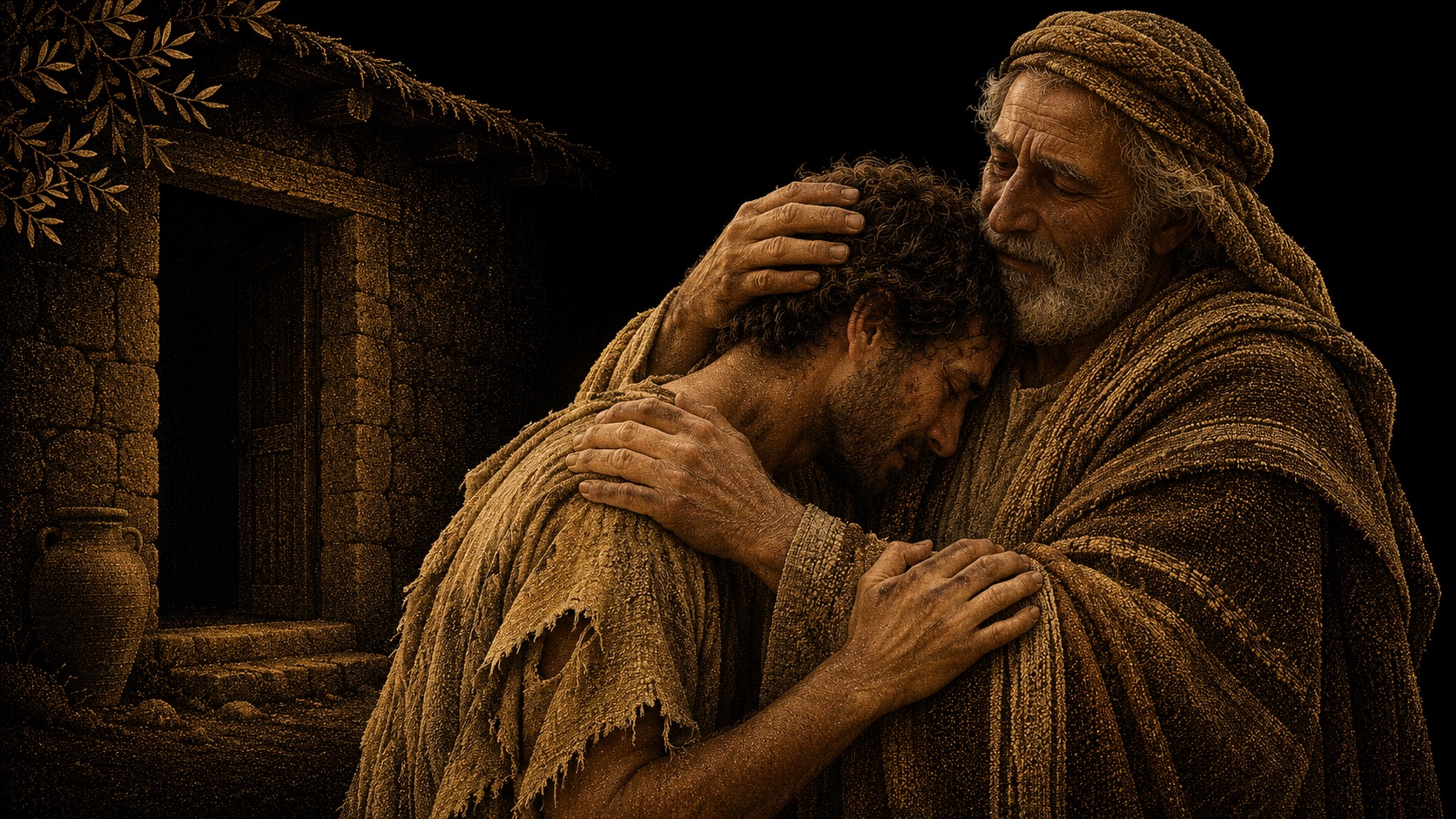
Repentance means turning from sin toward God. Faith means trusting Jesus Christ, the crucified and risen Lord, for forgiveness and new life. The gospel announces what He has done for sinners and calls us to this response, even while we face questions, weakness, and habits we need help to leave behind.
These questions matter because careless answers can send people in opposite directions. Some think they must repair their whole life before God will receive them. Others assume that agreeing with Christian ideas makes repentance unnecessary. Scripture directs us toward the crucified and risen Savior, with honest acknowledgment of our sin and real dependence on His mercy.
GUIDED ARTICLE EXPERIENCE
Repentance and Faith: How Do We Respond to the Gospel?
Read along as the narration moves through the article.
Browser narration · No stored audio or site tracking
CONTINUE GUIDED TOUR
Continue where you left off.
GUIDED TOUR COMPLETE
You have reached the end of this study.
Study record saved on this device.
GUIDED TOUR
Repentance and Faith: How Do We Respond to the Gospel?
Narrator: Paranoid Prophet Recommended Voice Native device narration
Prepare to follow the article as it is narrated.
VOICE & TOUR OPTIONS
Voice & Listening
NARRATOR
Finding a narrator…
Checking the best narrator available on this device.
Restores the site recommendations available in this browser.
Our listening picks lead when available; other voices are ranked for narration. Known novelty voices are hidden. Browser-provided voices may use an online voice service.
Screen-awake support will be checked when narration starts.
Optional: improve your device voices
Listening works with the voices already available here. Your device may offer additional free voices through its own settings.
iPhone or iPad: Settings → Accessibility → Read & Speak (or Spoken Content) → Voices → English. Look for Premium or Enhanced choices, then return here.
If offered, preview Ava or Zoe for U.S. English, or Serena or Jamie for British English. An explicit Premium or Enhanced version can improve on its compact version.
Mac: System Settings → Accessibility → Read & Speak → System voice. Open the voice list to preview or download additional choices.
Windows: Settings → Accessibility → Narrator → Add natural voices. Browser availability varies; a Narrator voice may not appear on websites. Edge may also expose online Natural voices without a model download.
Android: Open Accessibility → Text-to-speech output (the location varies by device). In the preferred engine settings, look for voice data and English choices.
Download sizes vary; some enhanced voices exceed 100 MB. This website cannot install system voices, and an installed voice appears here only if your browser exposes it.
Apple voice guide · Windows voice guide · Android voice guide
CHOOSE A NARRATOR
Recommended on this device
Our listening picks: Aaron, Martha, then Daniel, when available here. Otherwise, automatic uses the highest-ranked suitable voice. Preview alternatives or save your own choice.
Preparing the guided article experience…
RESUME GUIDED TOUR?
Continue where you left off.
GUIDED TOUR COMPLETE
You have reached the end of this study.
Article Guide12 sections
The Short Answer: What Are Repentance and Faith?
Turning and trusting belong together: we turn away from what opposes God and entrust ourselves to the Savior. Neither earns salvation. God’s grace receives undeserving people and begins a life of growing obedience.
Jesus joins repentance and belief when announcing God’s kingdom. Paul likewise describes his message in terms of turning to God and trusting the Lord Jesus. Read Mark 1:14–15 and Acts 20:17–21.
If you are working through a specific concern, read about sorrow and repentance, repeated struggle and doubt, or repair and protective boundaries.
Begin With What Christ Has Done
Repentance makes sense within the gospel’s account of God, humanity, and Christ. Sin concerns our relationship to the holy God who made us. It includes our wrongdoing, distorted loyalties, and refusal to love God and our neighbors as we should. We need forgiveness and restoration that moral improvement alone cannot provide.
In Luke’s account, the risen Jesus connects His suffering and resurrection with the proclamation of repentance and forgiveness to the nations. The invitation rests on His saving work. It does not begin with a demand that people prove themselves worth saving. Luke 24:44–49.
This order protects the meaning of repentance. We come to Christ because we need Him. We do not first manufacture an acceptable version of ourselves and then ask Him to approve it. For the larger explanation of His saving work, see Why Did Jesus Die?.
What Does Biblical Repentance Involve?
Repentance includes a changed judgment about ourselves and our sin, but it reaches further than accepting a new opinion. It involves turning toward God in a way that changes what we seek, defend, and practice.
Paul describes the Thessalonians as leaving idols behind to serve God and await His risen Son. Their response had a direction and an object: away from false worship, toward the living God. 1 Thessalonians 1:8–10.
In Acts, Paul describes preaching repentance, a turn to God, and conduct consistent with that response. The changed conduct belongs with repentance, while remaining distinguishable from it. Acts 26:19–20.
In ordinary life, this can involve:
- Acknowledging a wrong truthfully rather than hiding behind excuses.
- Turning from a practice we have been defending.
- Asking God for forgiveness and help.
These actions do not purchase God’s mercy. They are ways a genuine change of direction becomes visible. The person who repents may still need sustained help, patient correction, and repeated resistance to temptation.
Is Repentance the Same as Feeling Sorry?
Sorrow can lead toward repentance, but the two are distinguishable. Someone can regret embarrassment, consequences, or a damaged reputation while still protecting the behavior that caused the harm.
Paul makes this distinction when discussing a painful letter to the Corinthians. He values their sorrow because of the response it produced: renewed seriousness, concern, and readiness to address the wrong. His focus is on where sorrow leads, rather than how dramatic it looks. 2 Corinthians 7:8–11.
This passage should not become a test of whether someone cried enough. People express grief differently. The question is whether we are responding honestly to God and taking the wrong seriously.
Must I Stop Every Sin Before Coming to Jesus?
No. If complete moral repair were the entrance requirement, no sinner could come. Repentance involves a real turn from sin, not a claim that temptation and failure have already disappeared.
There is a difference between confessing, “This is wrong, and I need God’s help to leave it,” and insisting that God must approve it. The first can coexist with struggle. The second refuses the change being asked of us.
Do not postpone turning to Christ until you can present Him with a record of perfect obedience. Come honestly, then take the next faithful step with the help He provides.
What Does It Mean to Have Faith in Jesus?
Christian faith has definite content. It concerns who Jesus is and what God has done through Him. Paul connects faith with Jesus’ lordship and God’s raising Him from the dead. The message calls people to trust and openly acknowledge this Savior. Romans 10:9–13.
Faith therefore involves more than finding Jesus inspiring or accepting that He existed. It means relying on Him for what we cannot accomplish for ourselves: reconciliation with God, forgiveness, and life.
It also differs from trusting the strength of our own belief. Someone may ask whether their faith feels sufficiently intense or uninterrupted. The proper focus is Christ’s faithfulness and saving work. Faith receives what He gives; it does not turn our psychological confidence into the price of salvation.
The Christian claim remains open to serious examination. Questions about Jesus’ identity, death, and resurrection deserve more than a command to stop thinking. The site’s historical and biblical case for Jesus as the Son of God provides a place to investigate them.
How Do Repentance and Faith Belong Together?
Repentance and faith describe distinguishable aspects of one response to God. Repentance emphasizes turning from sin and false loyalties. Faith emphasizes trusting Christ and His promise. Scripture can emphasize either aspect without making the other irrelevant.
Consider a person who has relied on religious achievement to establish their worth before God. Turning from that self-reliance and trusting Christ belong together. Consider someone who has defended dishonesty. Coming to Christ includes admitting the wrong and relinquishing the claim that it should remain unquestioned.
Neither example requires a precisely measured interval between repentance and faith. Acts 20:21 presents both as central to Paul’s proclamation, not as a stopwatch sequence for anxious readers to reconstruct.
Christian traditions sometimes organize the vocabulary differently. The Lutheran Augsburg Confession, Article XII uses repentance broadly enough to include both contrition and faith in Christ’s forgiveness. The Southern Baptist Baptist Faith and Message, Article IV distinguishes repentance and faith while treating them as inseparable responses enabled by grace. These examples clarify language; neither confession replaces Scripture or speaks for every Protestant.
The shared practical concern is clear: honest turning toward God and reliance on Christ belong together. We should avoid making repentance a payment added to Jesus’ work, or treating faith as permission to remain indifferent to sin.
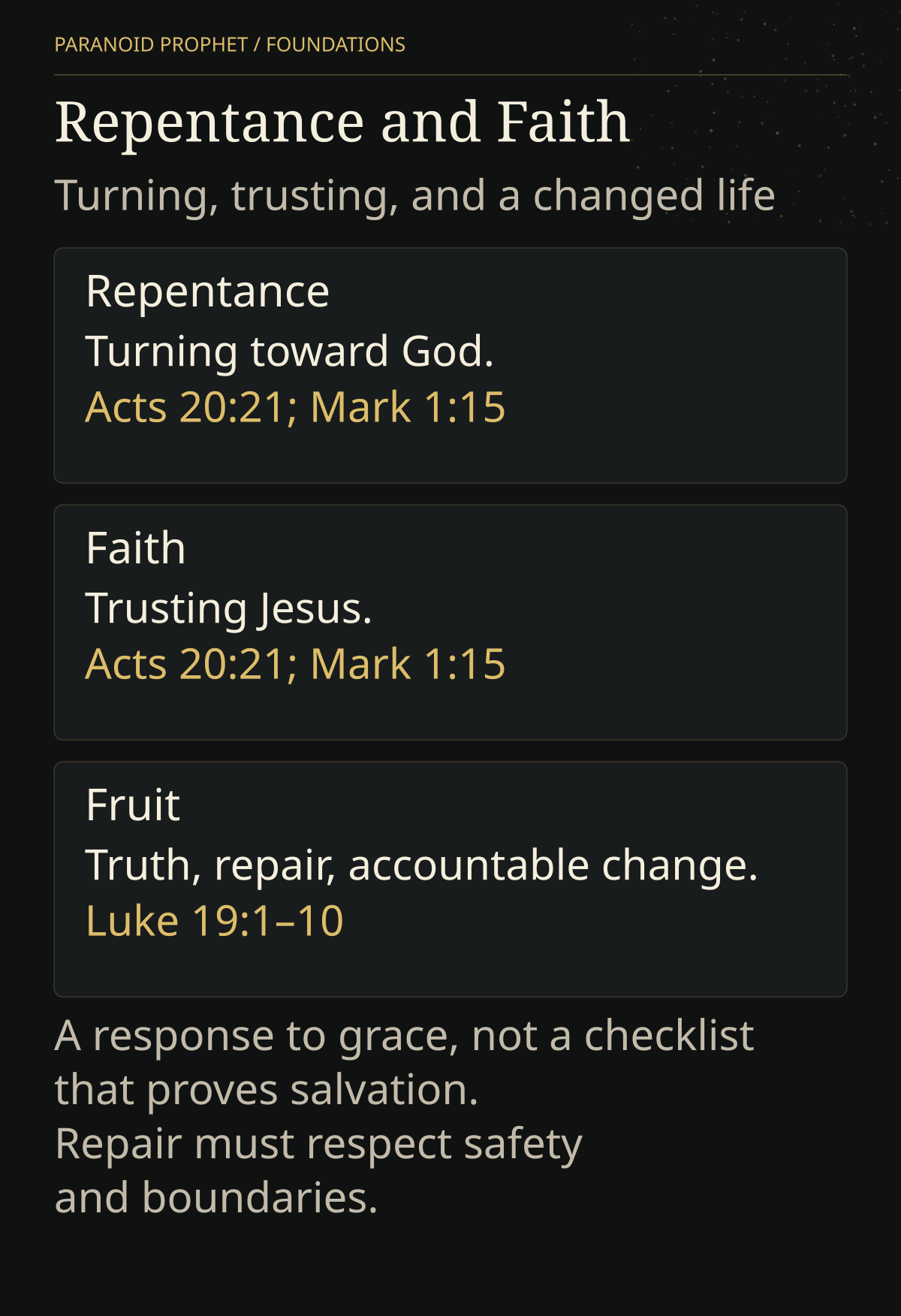
Repentance and Faith (image text)
Turning, trusting, and a changed life
- Repentance
Turning toward God.
Acts 20:21; Mark 1:15 - Faith
Trusting Jesus.
Acts 20:21; Mark 1:15 - Fruit
Truth, repair, accountable change.
Luke 19:1–10
A response to grace, not a checklist that proves salvation. Repair must respect safety and boundaries.
PARANOID PROPHET / FOUNDATIONS
Is Repentance Something We Earn or Something God Gives?
The New Testament calls people to repent and also attributes repentance to God’s gracious action. Paul connects God’s patience and kindness with His purpose of drawing people to repentance. After hearing Peter’s account of Gentiles receiving the Spirit, believers praise God for granting them repentance leading to life. Romans 2:1–4; Acts 11:15–18.
These passages resist spiritual pride. We cannot congratulate ourselves as though repentance proves we were more deserving than our neighbors. They also give us reason to ask for help. We can pray for honesty, softened resistance, and the willingness to obey.
Christians disagree about how to explain the relationship between God’s enabling grace and human response, including the order of regeneration and faith. Those larger debates deserve careful study. They do not require us to suppress either part of the biblical presentation: God acts graciously, and people are called to respond.
What Does Repentance Look Like When Someone Has Been Harmed?
Luke’s account of Zacchaeus places a concrete commitment to generosity and restitution beside Jesus’ announcement of salvation. Zacchaeus addresses his possessions and the possibility of having defrauded others. The narrative directs attention to the Savior who seeks the lost, while refusing to leave changed conduct abstract. Luke 19:1–10.
The practical implication is that forgiveness should never become a way to avoid responsibility. Someone who has lied can correct the lie. Someone who has stolen can seek to return what was taken. Someone who has used power abusively can stop, submit to appropriate accountability, and respect protective boundaries.
An apology does not create a right to renewed access, leadership, or another person’s immediate trust. Serious wrongdoing may have lasting consequences. Where contact would create danger or violate a boundary, seek appropriate guidance rather than using confession as a reason to intrude.
These are applications of repentance, not a claim that every situation has the same remedy. Repair should serve truth and the people harmed, rather than the offender’s wish to feel absolved quickly.

What If I Still Struggle or Have Doubts?
Continued struggle deserves honest attention, but it does not make every profession of faith fraudulent. John warns believers against denying their sin, points them toward confession, and identifies Jesus as their advocate. He also makes clear that his purpose is to call them away from sin. Mercy and moral seriousness remain together. 1 John 1:8–2:2.
The response to failure is to return honestly to Christ, address the wrong, and seek help. Shame-driven concealment leaves a person isolated. Casual excuses leave the harm untouched. Confession and accountable change offer a better direction.
Questions and uncertainty also need care. In Mark 9, a desperate father acknowledges both belief and unbelief while asking Jesus for help. This healing account is not a complete explanation of saving faith, but it shows that an honest admission of weakness can be brought to Jesus. It should not be used to promise that sufficient confidence guarantees a particular healing. Mark 9:14–29.
Bring questions into prayer, Scripture study, and conversation with trustworthy Christians. If fear repeatedly drives you to review every thought or confession, talk with a wise pastor; appropriate mental-health support can also help. An article cannot pronounce a final verdict on your spiritual condition, and relentless self-testing should not replace looking to Christ.
For a fuller treatment of these fears, including the Bible’s promises and warning passages, read Can a Christian Be Sure of Salvation?.
Where Do Baptism and the Church Fit?
In Acts 2, the response to the apostolic message includes repentance, baptism, and participation in a community devoted to teaching, fellowship, the breaking of bread, and prayer. The Christian life begins a shared pattern of worship and discipleship. Acts 2:37–42.
Christians disagree about baptism’s precise relationship to regeneration and forgiveness, as well as whom to baptize. This introductory study does not settle those questions. It does recognize that the apostles did not present allegiance to Jesus as a permanently isolated spirituality.
If you are turning to Christ, seek a healthy congregation where Scripture is taught, Jesus is central, questions can be asked, and leaders are accountable. Discuss baptism and learn how that church understands the relevant passages. Faithful community should support growth without demanding secrecy, unquestioning loyalty to a leader, or acceptance of abuse.
For the changes conversion brings and practical first steps, continue with What Happens When You Become a Christian?.
Responding to Christ Today
You can begin by speaking honestly to God. Acknowledge the sin you know. Ask for mercy because of Jesus’ death and resurrection. Entrust yourself to Him, ask for the Spirit’s help, and take the next clear step of obedience.
No prescribed sequence of words makes God your debtor. Prayer can express faith, but a script cannot guarantee a changed heart. Romans 10 directs us to the living Lord on whom we call.
Read the Gospel accounts. Look carefully at who Jesus is. Bring your questions. Speak with mature Christians. Make repair where you can, and accept help where you need it.
The foundation remains the Savior who receives sinners and leads them into new life. Repentance and faith turn us toward Him, and the Christian life continues in dependence on His grace.
Frequently Asked Questions
Is repentance required if salvation is a gift?
Jesus calls people to repent and believe. Repentance is a response to God’s grace, not an achievement that purchases it. We should neither remove repentance from the gospel’s call nor turn it into a demand for complete moral reform before coming to Christ.
Do I need to say a particular prayer to become a Christian?
Scripture calls people to turn to God, trust Christ, and call on Him. It does not prescribe one universal conversion prayer. Your words can express honest faith, but their exact wording is not what saves you.
Sources and Further Study
The biblical passages linked throughout are the primary sources. They open in the New International Version for consistency with the site’s usual reading practice; the explanations above are paraphrase and commentary.
- Jesus and the apostolic call: Mark 1:14–15; Luke 24:44–49; Acts 20:17–21; Romans 10:9–13.
- Repentance, grace, and changed conduct: Acts 11:15–18; Acts 26:19–20; Romans 2:1–4; 2 Corinthians 7:8–11; 1 Thessalonians 1:8–10; Luke 19:1–10.
- Continuing faith and community: 1 John 1:8–2:2; Mark 9:14–29; Acts 2:37–42.
- Representative Protestant formulations: Augsburg Confession, Article XII: Repentance; Baptist Faith and Message 2000, Article IV: Salvation. These are sources for the named traditions, not authorities above Scripture.
- Continue within this site: Why Did Jesus Die?; Christian Foundations; Sources and Verification.
Continue studying: Begin with the gospel of Jesus Christ, explore why sin requires reconciliation with God, and consider how living faith bears fruit without earning salvation.