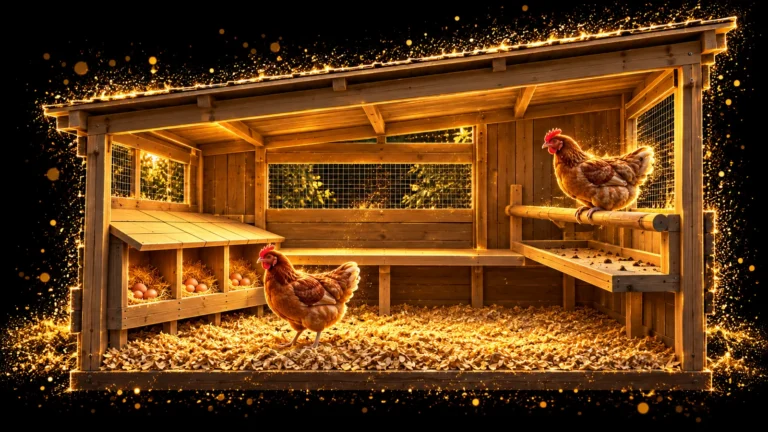
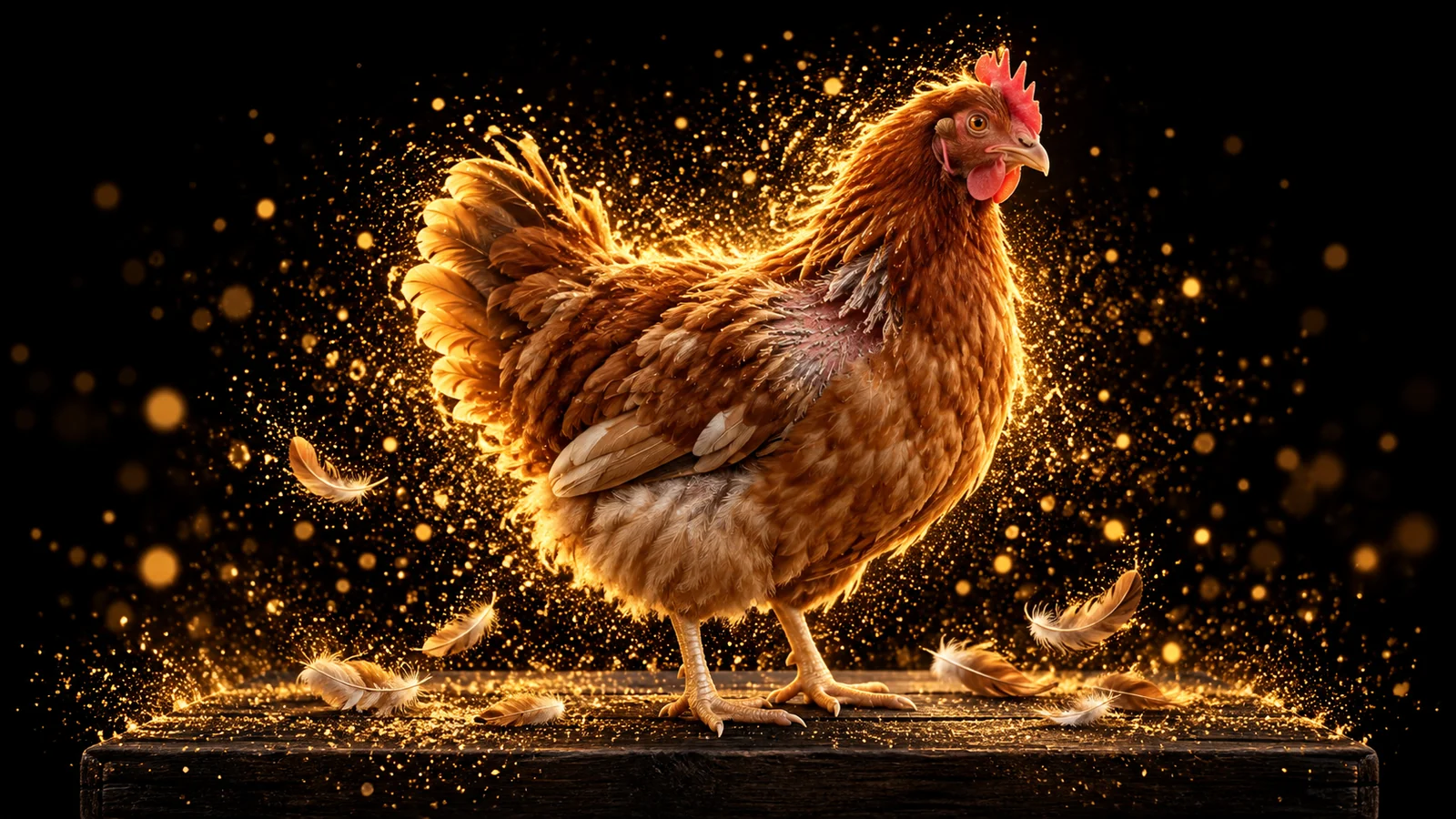

Feathers on the coop floor can make a healthy flock look as though something terrible happened overnight. Then you notice the egg basket getting lighter. A natural molt may explain both changes, but it should never become an excuse to ignore a bird that is unwell.
The useful question is not simply whether a hen is losing feathers. It is whether she is replacing them normally while continuing to eat, drink and function comfortably.
GUIDED ARTICLE EXPERIENCE
Chicken Molting Explained: Feather Loss, Egg Pauses & Care
Read along as the narration moves through the article.
Private device narration · No hosted audio or tracking
CONTINUE GUIDED TOUR
Continue where you left off.
GUIDED TOUR COMPLETE
You have reached the end of this study.
Study record saved on this device.
GUIDED TOUR
Chicken Molting Explained: Feather Loss, Egg Pauses & Care
Narrator: Paranoid Prophet Recommended Voice Native device narration
Prepare to follow the article as it is narrated.
VOICE & TOUR OPTIONS
Voice & Listening
NARRATOR
Finding a narrator…
Checking the best narrator available on this device.
Restores the best curated narrator available on this device.
Narrator choices are curated for clear, long-form listening on this device.
Screen-awake support will be checked when narration starts.
CHOOSE A NARRATOR
Curated for this device
Choose a verified narrator for this browser, or use System Narrator. Automatic mode uses the best reliable route exposed by this device; your chosen narrator is preserved even if this device needs a temporary fallback.
Preparing the guided article experience…
RESUME GUIDED TOUR?
Continue where you left off.
GUIDED TOUR COMPLETE
You have reached the end of this study.
Article Guide12 sections
Quick Answer: What Is Chicken Molting?
Molting is the replacement of older feathers with new growth. Adult hens commonly molt as days shorten, and laying often slows or pauses. Timing, severity and duration vary. Emerging pin feathers support the possibility of replacement, but they do not rule out parasites, pecking or another problem occurring at the same time.
Bleeding, damaged skin, marked weakness, poor appetite, breathing difficulty or an isolated bird that is deteriorating need assessment. Do not wait for a supposed molt deadline. Start with our Sick Chicken guide and contact a poultry veterinarian for concerning signs.
What Normal Feather Replacement Looks Like
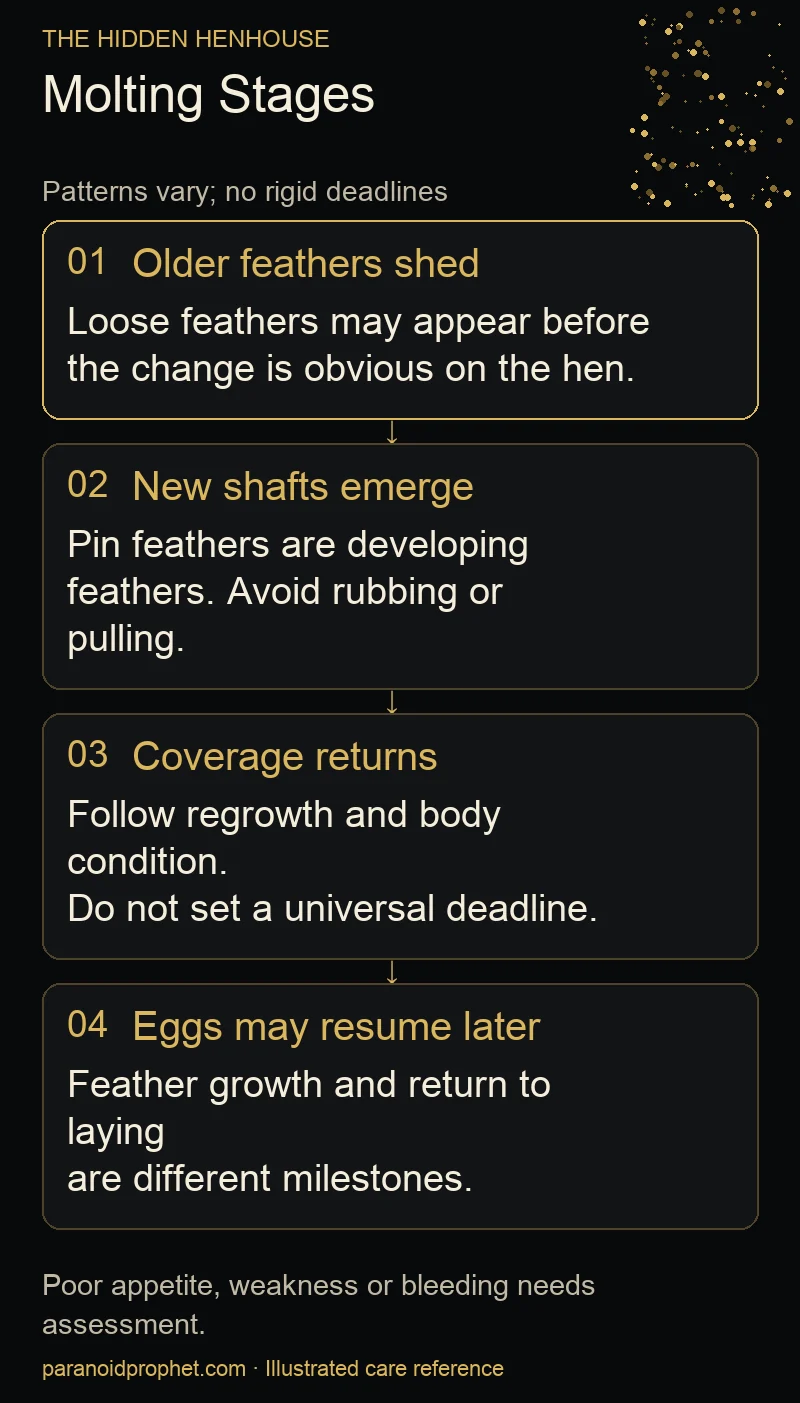
You may find loose feathers while the hen still looks fairly tidy, or notice a much more ragged appearance. Look for new shafts among the remaining plumage and gradual progress toward fuller feather coverage. Compare observations over time rather than trying to identify a molt from one picture.
A pin feather is a developing feather. Growing feathers have a blood supply and can bleed if damaged. That is a reason for gentle handling, not an invitation to pull feathers or peel their coverings. If a feather is bleeding or a bird has a wound, ask a veterinarian how to proceed.
The pattern matters. A persistent bare area with broken feathers, irritated skin or observed pecking deserves investigation. So does feather loss accompanied by declining appetite or activity. An ordinary molt and a separate health problem can overlap.
First Adult Molt and Seasonal Patterns
The first obvious adult molt often appears after the initial laying season. Wyoming Extension’s backyard guide places it around 18 months, but that is an approximate pattern, not a birthday appointment. Hatching season, strain, lighting and individual development affect what you see.
Young birds also replace developing plumage as they grow. Do not use an adult autumn timetable to explain every feather change in a chick, or assume a younger hen cannot have an unusual replacement pattern.
Fall is a common setting for adult molt. A hen losing feathers in another season deserves a careful look at recent stress, feeding, flock interactions and health. Season helps interpret the evidence; it does not diagnose the bird.
Why Eggs Pause and How Long a Molt Lasts
Feather renewal accompanies physiological changes, including changes in the reproductive system. Many hens stop laying for a time, though some modern laying strains continue producing while replacing feathers. A laying pause does not mean the hen needs an egg-boosting supplement.
Published timelines differ. Wyoming gives roughly four to eight weeks of feather loss and regrowth, sometimes up to sixteen. Penn State describes about ten to twelve weeks for a managed flock to complete molt and resume production. The University of Kentucky poultry Extension resource distinguishes faster, concentrated molts from slower feather replacement that can extend for months.
These descriptions cover different birds, molt patterns and production endpoints. Feather coverage, the completion of a molt and the return of eggs are not interchangeable milestones. None supplies a universal deadline for your hen.
Record whether new feathers are developing, whether the bird is maintaining her condition and whether her behavior is normal. If she is worsening, seek help immediately. If regrowth appears stalled or the explanation remains unclear, obtain advice rather than extending the waiting period indefinitely.
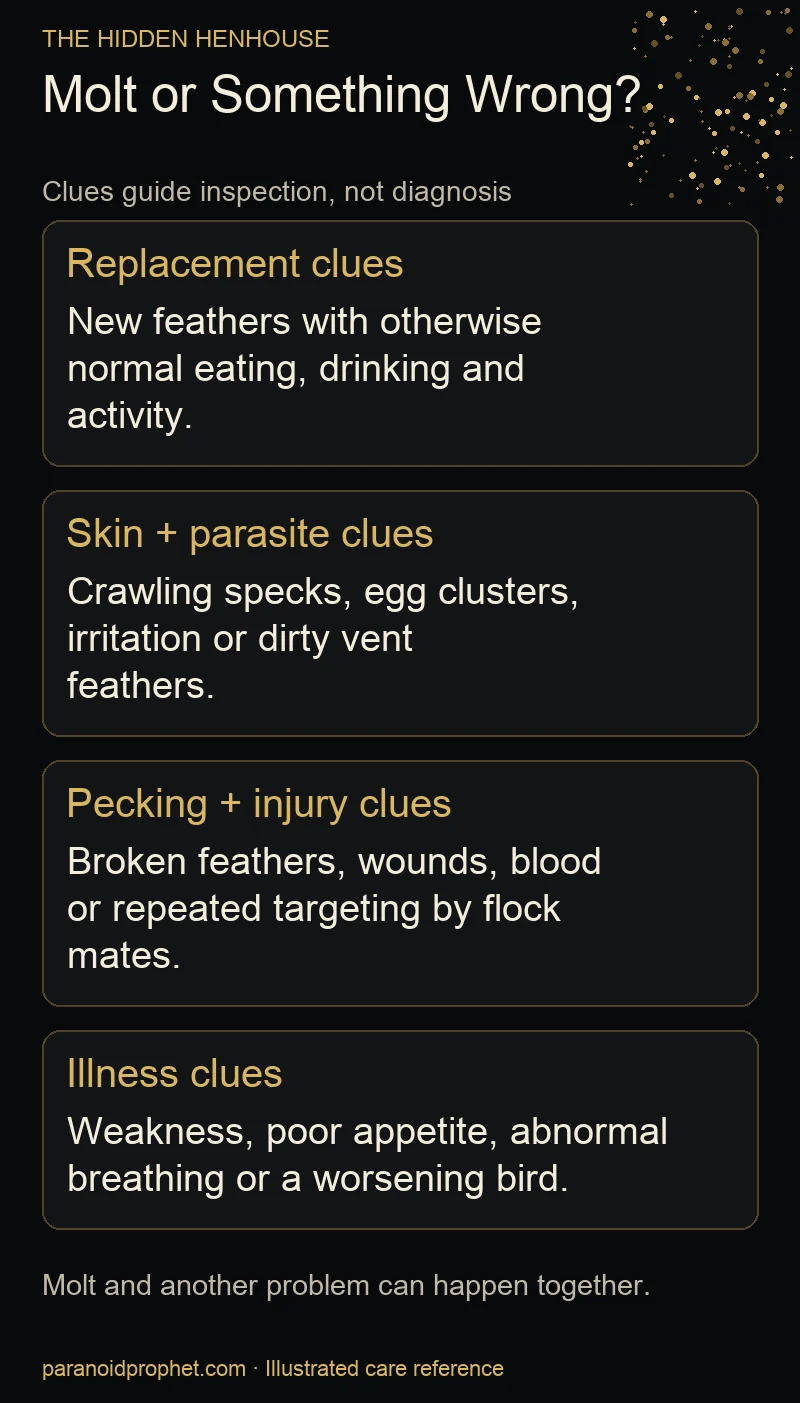
Molt or Something Wrong? Check the Whole Bird
- More consistent with replacement: loose older feathers, emerging new feathers and otherwise normal eating, drinking and activity.
- Investigate external parasites: crawling specks, feather-base egg clusters, irritated skin or dirty-looking vent feathers. Not every speck is a parasite, and species identification may need help.
- Investigate pecking or injury: broken feathers, damaged skin, blood or flock mates repeatedly targeting one bird.
- Investigate illness: weakness, loss of appetite, abnormal breathing, unusual droppings or an increasingly withdrawn bird.
Maryland Extension’s feather-pecking guidance identifies crowding, resource restriction, heat, excessive light and dietary imbalance as relevant risks. It does not establish that every bare patch is pecking, or that a well-managed flock can never develop the problem.
If a bird is being injured, protect her from further attacks while arranging care. Avoid squeezing or restraining a weak bird for a lengthy examination. A veterinarian can assess wounds and help separate feather replacement from skin disease or systemic illness.
Feeding a Molting Flock Without Chasing Supplements
The complete feeding guide explains life-stage rations, mixed-flock considerations and calcium versus grit without promising a supplement-driven return to laying.
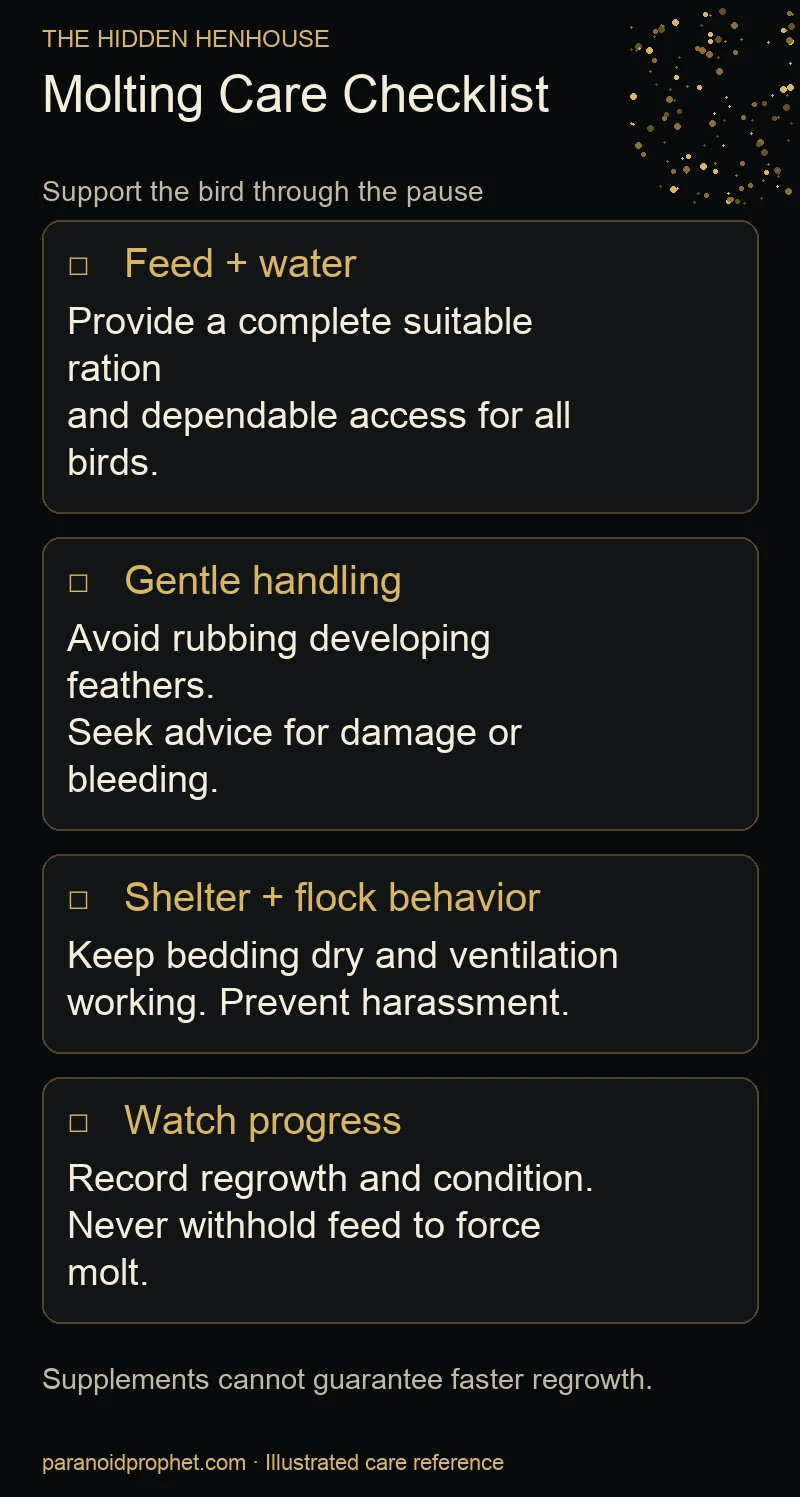
Feathers require adequate nutrition, including protein and its component amino acids. Begin by checking that every bird can eat a complete, appropriate ration. A bag’s protein percentage is only one part of a balanced feed.
Do not replace that ration with scratch, kitchen scraps or a large serving of one high-protein treat. Such additions can dilute the balance you meant to improve. Maryland’s guidance connects low protein or amino-acid imbalance with feather-pecking risk; it does not prescribe one universal high-protein molt diet.
Some keepers use a complete maintenance or all-flock ration for nonlaying adults, with separately available calcium for hens still laying. That choice needs to fit the feed label and the whole flock. Ask Extension or a poultry nutrition adviser about a mixed-age flock or a change in ration. Chicks should not be given an adult high-calcium layer diet simply because another bird is molting.
Check actual water and feeder access, including timid birds. Keep feed dry and suitable for use. No supplement can promise faster feather growth or a fixed date for eggs to return.
Handling Pin Feathers and Managing the Environment
Make necessary handling gentle and brief
Give a molting hen space from unnecessary petting or repeated picking up. When handling is necessary, support her normally and avoid rubbing developing feather shafts. Do not force open new feathers. Watch for blood, wounds and other birds pecking at exposed areas.
Protect birds with reduced feather coverage
Keep bedding dry and ventilation functioning. Protection from rain and direct drafts becomes especially important when feather coverage is poor. Do not seal a coop so tightly that moisture and ammonia accumulate.
Maryland’s winter guidance distinguishes fully feathered adults from molting birds that may need extra protection or warmth. That does not establish a universal heating temperature. Consider feather coverage, weather, housing and the bird’s condition, and use professional advice if she cannot stay comfortable. Any heat equipment introduces fire and burn risks and must be designed and installed safely. See Winterizing the Coop and Run for the broader housing decisions.
Reduce avoidable flock pressure
Make sure a timid hen has reliable access to resources and a safe place away from harassment. Avoid an unnecessary introduction during a difficult molt. If adding birds cannot wait, use the quarantine and integration guide. Appropriate coop bedding helps manage moisture, but it cannot treat feather loss.
Do Not Force a Backyard Molt
Older commercial literature describes induced molting programs. Those production systems are not a home-care recipe. Do not withhold feed or water, sharply restrict nutrients or improvise a lighting regime to make your birds molt together.
This guide supports natural feather replacement with consistent food, water, shelter and observation. An egg pause is not a problem that justifies depriving a hen of essentials. For other causes of an empty basket, use Why Chickens Stop Laying Eggs.
A Simple Molt Observation Log
Note the start of visible feather loss, areas affected, signs of regrowth, eggs collected and any management changes. Check appetite, activity, water access and skin condition daily. A brief dated photo can help show progress without repeatedly handling the bird.
Bring the feed label and observations when seeking advice. Keep dates separate from guesses: “first noticed on Monday” is useful; “definitely a three-week molt” may imply more certainty than you have.
Frequently Asked Questions
Can a hen molt and still lay eggs?
Yes. Many pause, but some continue laying during feather replacement. The egg count alone cannot confirm or exclude a molt.
Is every bald patch a normal molt?
No. Pecking, parasites, injury and illness can cause feather loss. Examine the pattern and the bird’s overall condition.
Should I increase protein to a particular percentage?
There is no single molt percentage established here for every backyard flock. Use a complete ration that fits the birds and seek nutrition advice before making a substantial change.
Should I remove the coverings from pin feathers?
No. Avoid manipulating developing feathers. Damaged growing feathers can bleed, and concerning injuries need veterinary advice.
Care Through the Unproductive Weeks
A hen does not become less deserving of care when feathers look untidy and eggs disappear. Christian stewardship asks us to attend to the creature’s needs through those quieter weeks. Good care may look ordinary: fresh water, a balanced ration, a dry resting place and the patience to notice whether she is truly doing well.
Sources and Responsible Care
Sources checked October 8, 2026. This guide concerns natural backyard molt. Commercial induced-molt instructions in older publications are not adopted.
- Wyoming Extension: Raising Backyard Chickens April 2023; first adult molt, variability and continuing production in some strains.
- Poultry Extension: Feeding Chickens for Egg Production By Dr. Jacquie Jacob, University of Kentucky; nutrition and differing molt patterns.
- Penn State: Management Requirements for Laying Flocks Updated May 2016; managed-flock timing and complete diets.
- Poultry Extension: Pin Feathers Developing feathers and their blood supply. Its feather-removal instruction is not reproduced as home treatment.
- Maryland Extension: Feather Pecking and Cannibalism Updated December 2021; nutrition, management risks and damaged birds.
- Maryland Extension: Winter Weather and Small Flocks Updated January 2023; molting birds’ need for additional protection.
- Merck: Management-Related Backyard Poultry Problems Updated April 2025; general illness signs and assessment.